





Marble Base Clock
These marble base clock designs combine heavy stone plinths with precise horology, offering striking desktop timepieces that anchor any mantel.
Understanding the marble base clock
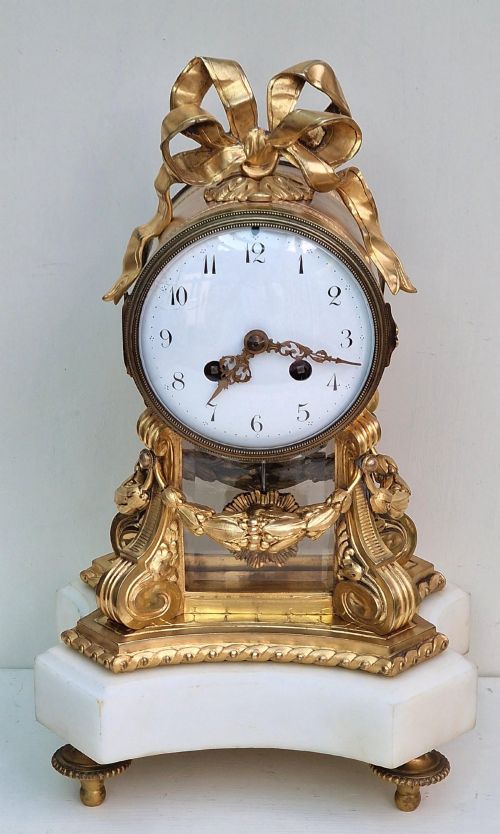
A marble base clock pairs functional timekeeping with sculptural presence, resting firmly upon a solid stone plinth. These pieces range from restrained Regency timepieces to elaborate French animalier compositions and geometric Art Deco designs.
The selections available here showcase significant variation in form, running from brass skeleton movements to gilt bronze garniture sets and architectural marble bodies. Most examples sit within the nineteenth century and Victorian periods, though earlier Regency work and later Art Deco creations also appear.
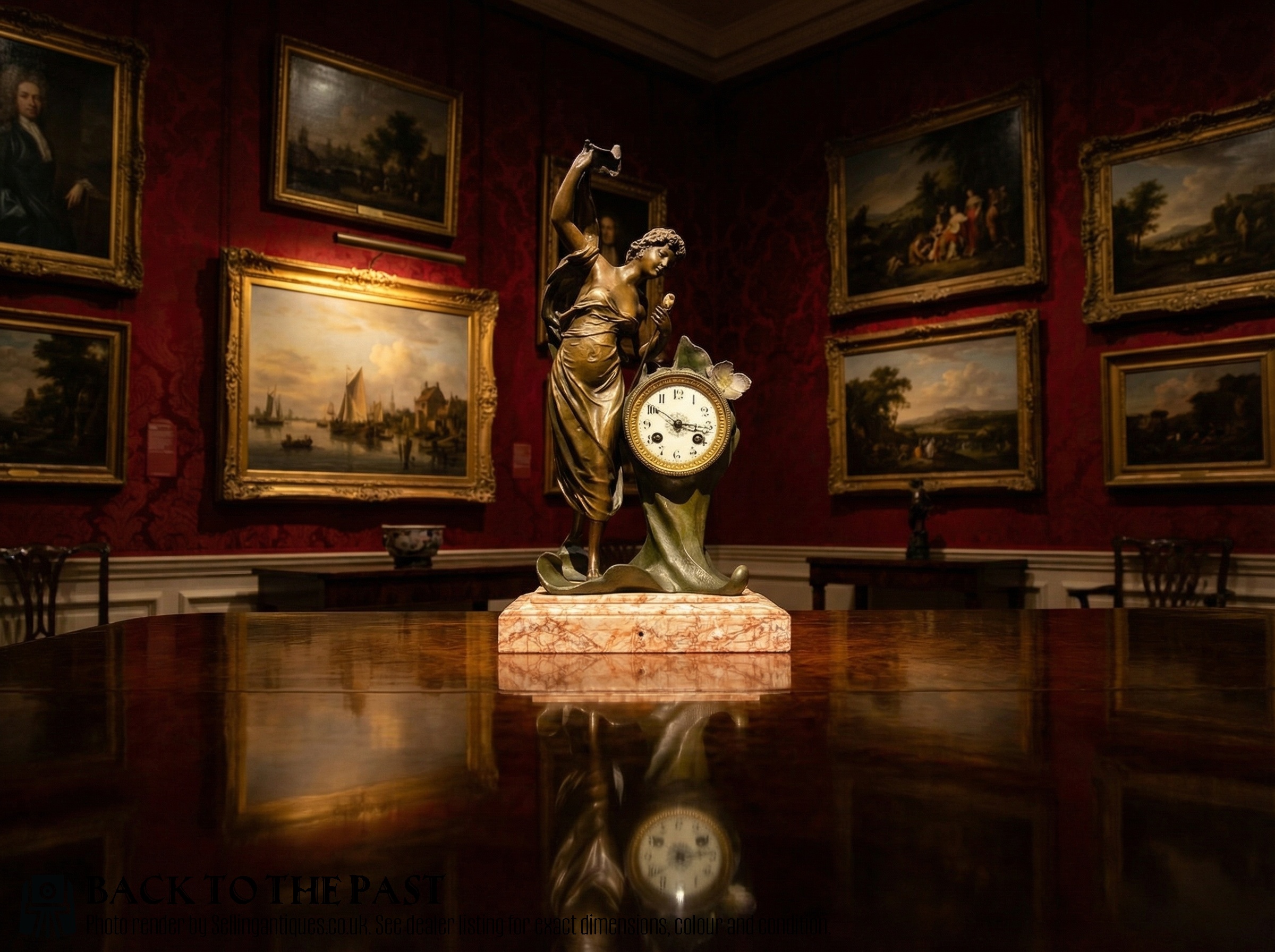
Mantel clocks form the core of this category, often incorporating exposed mechanisms, enamel dials, and contrasting ormolu mounts. The stone footings themselves vary widely in colour and cut, providing a cool visual counterweight to warm brass and bronze.
Materials and construction
Makers built these pieces using dense quarried marble for the heavy structural bases, paired with brass, bronze, and ormolu for the clock cases and sculptural elements. Enamel provides the clean surface for roman or arabic numerals on the dials, while protective glass bezels shield the delicate hands.
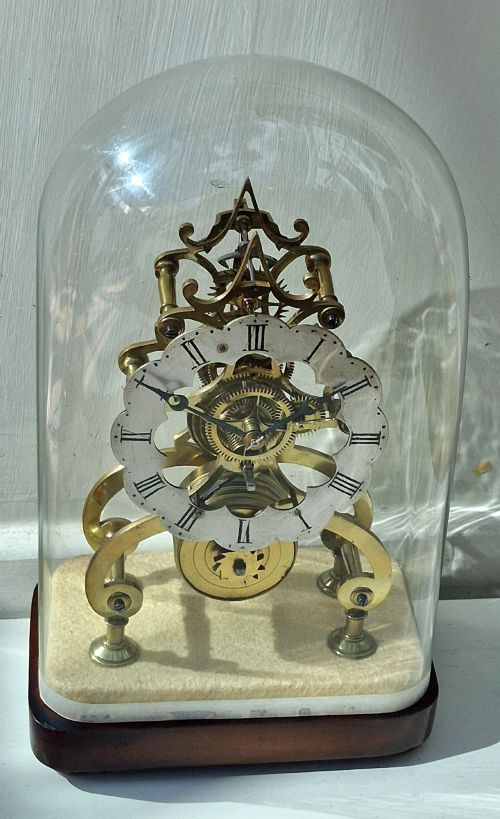
Metalworking techniques include casting, chasing, and gilding to produce intricate figures, bezels, and decorative mounts. Skeleton movements reveal the complex gear trains directly, demanding precise hand-finishing of brass plates and wheels to ensure reliable timekeeping.
Retail Price Guide 2026
Typical UK retail prices for marble base clock, calculated from the Sellingantiques database of over a million retail prices indexed since 2003. This retail price guide relies exclusively on Sellingantiques data; no external sources or auction records are used, so the figures do not describe the wider market.
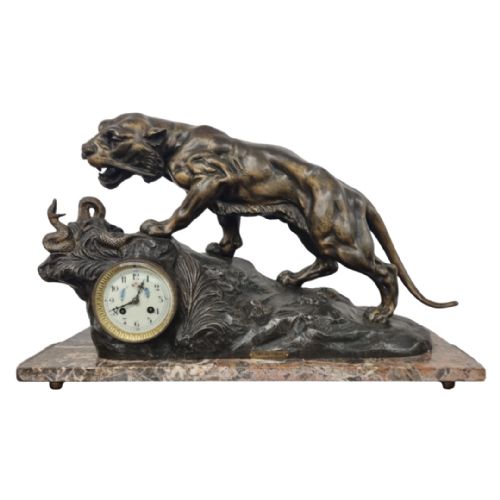
Tigers, serpents, and caged birds occasionally keep watch over the passing hours from their perches upon the heavy stone plinths.
Assessing quality and execution
The distinction between ordinary and exceptional pieces lies in the crispness of the metal casting and the depth of the stone polishing. Finer examples display meticulously hand-chased bronzes and balanced proportions where the marble plinth complements rather than overpowers the movement.
Movement quality separates basic production from master horology, seen in the smooth operation of fusee mechanisms and signed dial work. The integration between the stone base and the upper case reveals the maker's care, with seamless mounts and stable construction.
R Varnier·Thwaites of London·William Hardy London·Jaeger-LeCoultre·E White Of Manchester·Allen Colyer
The Marble Base Clock Glossary
- Ormolu
- Gilded bronze produced through a mercury amalgamation process that leaves a rich, durable golden finish on decorative mounts. This technique was widely utilised by French and English makers throughout the nineteenth century.
- Skeleton clock
- A timepiece with openwork plates that exposes the entire gear train to view, often sheltered beneath a glass dome. This design allows the owner to watch the mechanical interaction of wheels and escapement.
- Fusee
- A conical pulley used in better quality clocks to maintain equal force on the gear train as the mainspring unwinds. It ensures consistent timekeeping throughout the duration of the wind.
- Enamel
- Fused glass powder fired onto a metal dial face to create a smooth, glossy, brilliant white surface for numerals. It provides high contrast and resists tarnishing over decades of use.
Frequently Asked Questions
How do I wind a fusee movement?
A fusee movement requires a specific winding key inserted into the dial or backplate, turned gently until resistance indicates a full spring. Care must be taken not to overwind these older mechanisms.
Most traditional mechanical clocks run for eight days per wind, though shorter or longer durations do occur depending on the specific gear train configuration.
Where should I place a marble base clock?
These pieces need a sturdy, level surface such as a mantelpiece, heavy sideboard, or dedicated console table. The considerable weight of the stone base demands proper structural support.
Direct sunlight and damp environments should be avoided to protect the delicate enamel dials and prevent tarnishing of the brass and bronze elements.
What is an animalier clock?
An animalier clock incorporates realistic sculptural figures of animals, often cast in bronze, integrated directly into the clock case or resting upon the marble base. Popular subjects include big cats, birds, and serpents rendered with naturalistic energy.
This style gained prominence during the nineteenth century, particularly within French decorative arts, combining zoological study with domestic horology.
How do I distinguish Regency from Victorian pieces?
Regency pieces typically exhibit neoclassical restraint, clean lines, and precise ormolu mounts dating from the early decades of the nineteenth century. They often favour architectural forms and geometric balance.
Victorian designs tend towards greater ornamentation, heavier proportions, and eclectic revivals ranging from rococo curves to industrial skeleton movements.