




Fusee Skeleton Clock
A fusee skeleton clock lays bare the intricate mechanics of timekeeping beneath a glass dome, offering a kinetic sculpture for the mantelpiece.
Fusee Skeleton Clock
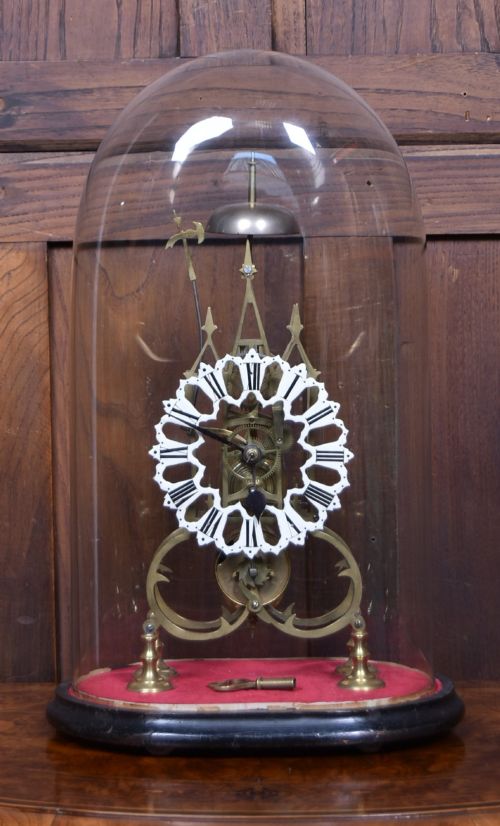
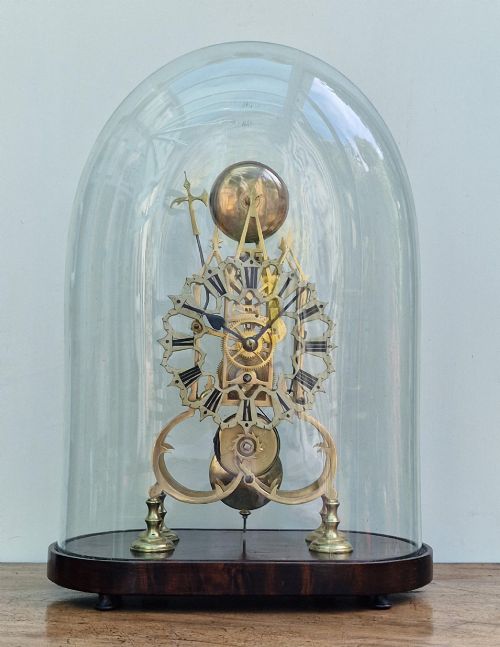
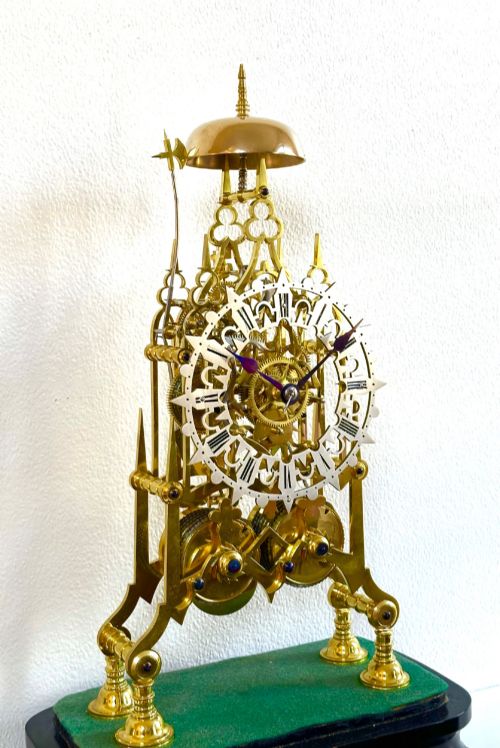
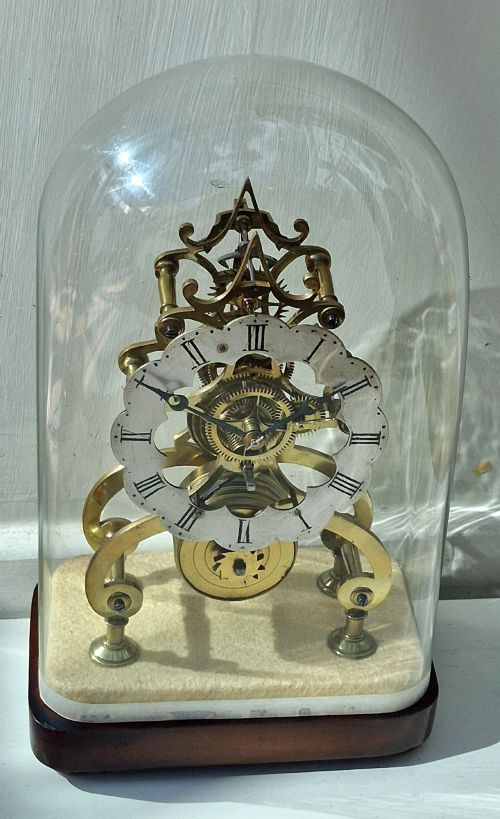
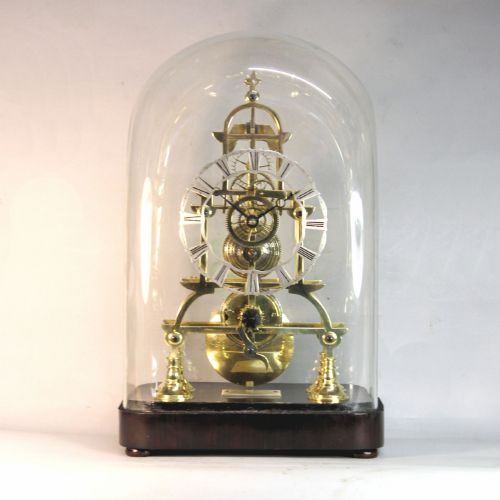
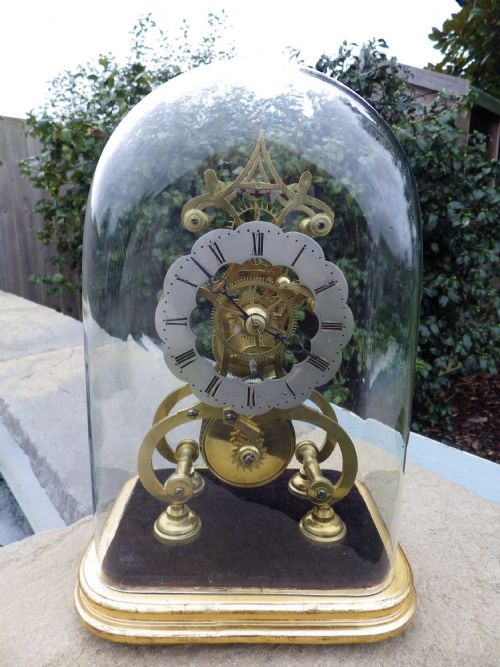
When searching for a fusee skeleton clock, buyers encounter remarkable 19th-century English timepieces engineered to expose the gear train and escapement to full view. Most examples seen here date from the Victorian era, particularly the mid-to-late nineteenth century, spanning various scales from miniature models to grand architectural library pieces.
These clocks typically sit upon a wooden base, which is frequently constructed from mahogany, rosewood, or ebonised wood, and are protected by an original glass dome. Regional variations and specific architectural inspirations, such as cathedral designs or memorial forms, appear alongside classic brass plate configurations.
What Varies in Quality
The refinement of the wheel work and the intricacy of the brass skeletonisation define the upper tier of these timepieces. Elaborate plate designs, such as lyre shapes or architectural cathedral motifs, combined with complex movements like double fusee striking mechanisms or epicyclic gearing, distinguish superior examples.
The presence of the original glass dome and a matching fitted wooden or marble base substantially impacts the integrity of the piece. Master makers signed their brass dial plates or movements, elevating the standing of a clock above unmarked production models.
Fusee Skeleton Clock Retail Price Guide 2026
Typical asking prices for fusee skeleton clock among the pieces listed under this phrase on Sellingantiques today, from the lower quarter to the upper quarter. They describe what is for sale here now, not the wider market.
The selection here demonstrates brass and steel movements housed under glass domes, spanning the Victorian era into the 1930s.
Richard Winter of Chieveley·Thwaites of London·Charles Frodsham London·Dent·T. Gibbs Stratford-on-Avon
The Fusee Skeleton Clock Glossary
- Fusee
- A conical pulley used in mechanical clocks to maintain an even pull on the gear train as the mainspring loses tension. This device ensures consistent amplitude throughout the running cycle.
- Skeleton clock
- A timepiece designed with open metal plates that expose the wheels, barrels, and escapement to view. The style gained immense popularity during the Victorian period.
- Glass dome
- A blown glass cover that sits over the clock on a matching base to keep out dust and atmospheric moisture. Original domes are a significant asset for collectors.
- Double fusee
- A movement incorporating two separate fusees and gear trains, typically separating the timekeeping function from the striking or chiming mechanism. This setup provides greater mechanical complexity.
Fusee Skeleton Clock: Frequently Asked Questions
How do I wind a fusee skeleton clock?
Wind the clock slowly using the appropriate key inserted into the winding square on the dial or movement plates. Take care not to overwind the mainspring.
Ensure the key turns smoothly and matches the winding square precisely to avoid damaging the delicate brass arbor.
What is the purpose of the glass dome?
The glass dome protects the exposed mechanical components from dust, greasy fingerprints, and accidental damage in the room. It also helps stabilise the interior air temperature around the brass movement.
Most surviving period clocks retain their original blown glass covers, which rest on wooden or marble plinths.
How do single and double fusee movements differ?
A single fusee movement drives only the timekeeping function of the clock. These models are typically timepieces without striking capabilities.
A double fusee movement includes a second train of wheels and a separate fusee to power a striking or chiming mechanism. This adds considerable mechanical complexity and weight to the frame.
How can I date a Victorian skeleton clock?
Examine the style of the brass plate skeletonisation, the escapement type, and any engraved signatures on the movement backplate. Architectural Gothic influences and memorial styles often point towards specific decades in the mid-to-late nineteenth century.
Makers' records and hallmarks on associated components provide further chronological reference points for English examples.