



Gothic Skeleton Clock
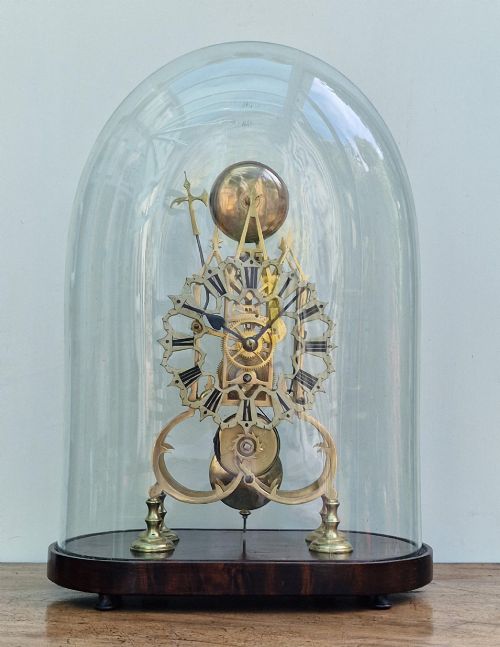
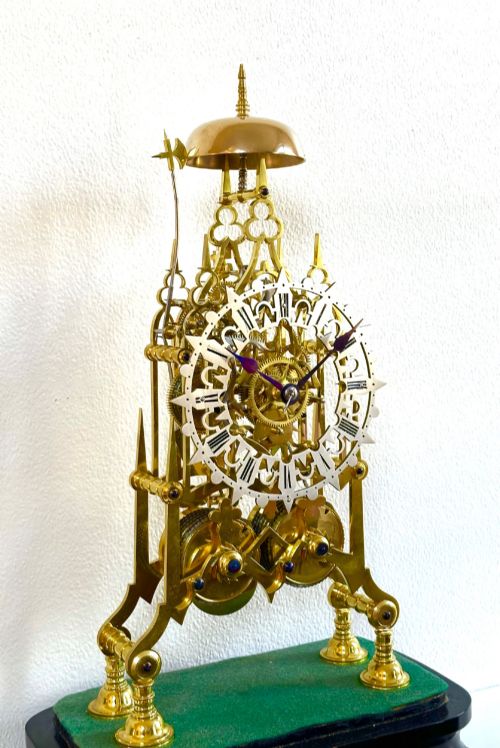
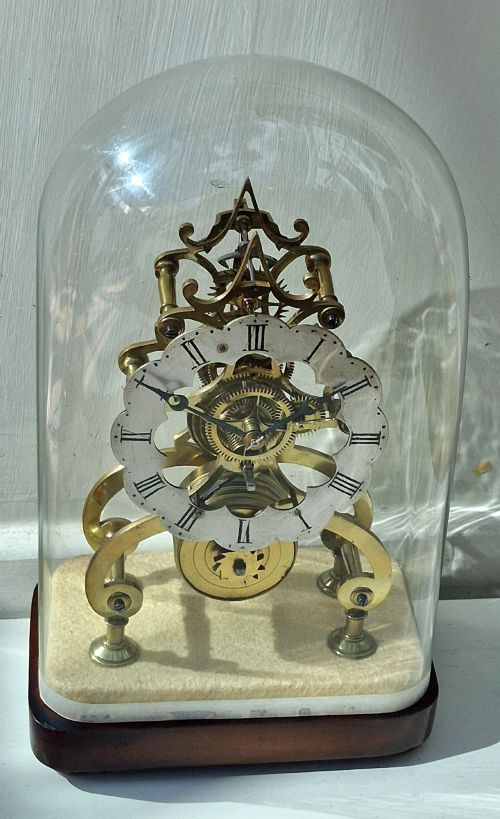
These gothic skeleton clock pieces strip away the usual wooden case to expose a fascinating brass and steel mechanism under glass.
What a gothic skeleton clock is
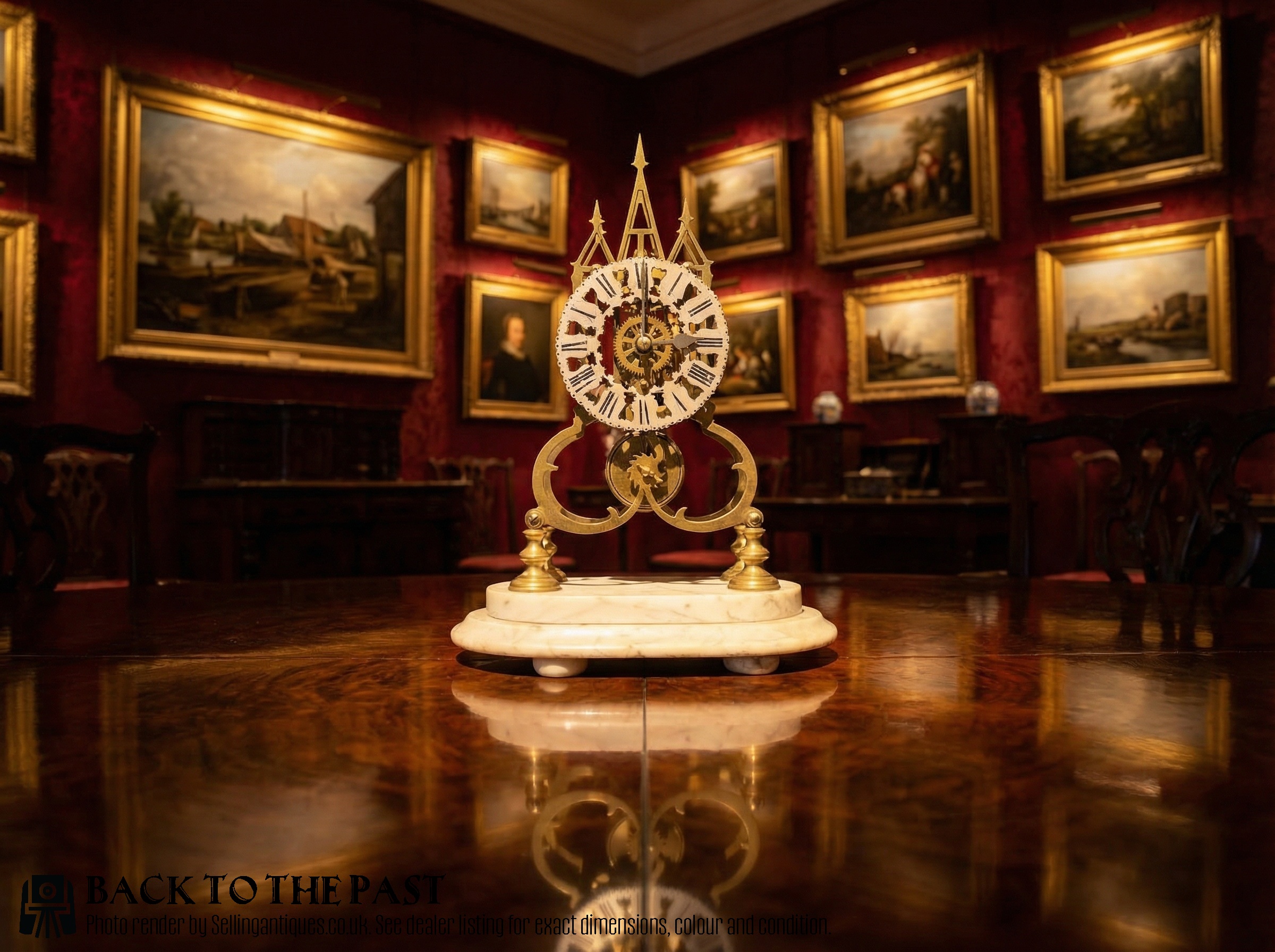
A gothic skeleton clock exposes the brass and steel movement in full view, often protected by a glass dome. These architectural timepieces draw on Victorian gothic design principles to create an imposing visual presence on a mantel.
The versions you encounter on this page span the Victorian period, through eighteen-sixty, nineteen-thirty, and up to nineteen-fifty. Mantel clocks of this design frequently incorporate fusee movements and sometimes include passing strike mechanisms.
How they were made
Makers constructed the visible frames and gear trains from polished brass and steel, housing the delicate components beneath glass domes. Many examples sit upon wooden bases fashioned from mahogany or marble to anchor the heavy movement.
The manufacturing process required skilled metalwork to skeletonise the brass plates, removing all surplus metal while maintaining the structural integrity necessary to sustain the tension of the springs or weights.
Retail Price Guide 2026
Typical UK retail prices for gothic skeleton clock, calculated from the Sellingantiques database of over a million retail prices indexed since 2003. This retail price guide relies exclusively on Sellingantiques data; no external sources or auction records are used, so the figures do not describe the wider market.
These clocks let you watch every single tooth in the brass gear train turn in plain sight.
What varies in quality
Quality reveals itself in the crispness of the brass cutting and the architectural ambition of the frame design. Superior examples feature intricate gothic fretwork that mimics cathedral stonework, whereas simpler iterations rely on plain plates.
The presence of original glass domes and fitted wooden bases distinguishes complete survivals from pieces that have lost their protective housing over time. Movement complexity, such as the inclusion of a fusee drive or a passing strike, further elevates the piece.
Richard Winter of Chieveley
The Gothic Skeleton Clock Glossary
- Fusee
- A conical pulley used in better clocks to maintain an even pull on the movement as the mainspring unwinds. This mechanism ensures more accurate timekeeping throughout the duration of the wind.
- Skeleton clock
- A timepiece designed with open metal plates that expose the gear train and escapement to view. They emerged during the nineteenth century as both technical displays and decorative objects.
- Passing strike
- A mechanism that sounds a single chime on the hour or half-hour without counting the full time. It offers an audible feature distinct from a full clock chime.
- Glass dome
- A blown glass cover designed to protect delicate exposed movements from dust and accidental damage. These covers sit flush on wooden or marble bases.
Frequently Asked Questions
What is a gothic skeleton clock?
A gothic skeleton clock is a timepiece with an exposed brass and steel movement built to architectural gothic designs, usually protected beneath a glass dome.
These pieces were made to display the intricate mechanics of gear trains and escapements openly on a mantelpiece rather than hiding them inside a wooden box.
How do you care for a glass dome?
Lift the glass dome carefully using both hands only when necessary, and clean the glass with a soft, lint-free cloth without using harsh chemical sprays.
Keeping the dome intact protects the exposed brass and steel mechanism from dust accumulation and accidental knocks in a busy room.
When were these clocks made?
The pieces seen here date primarily from the Victorian era, including examples from eighteen-sixty, alongside later twentieth-century iterations from nineteen-thirty and nineteen-fifty.
Victorian makers established the traditional styles of exposed brass and architectural framing that later makers adapted.
What does a fusee movement do?
A fusee movement uses a conical pulley to equalise the force of the mainspring as it runs down, providing steady power to the gear train.
This technical refinement improves the accuracy of the clock by ensuring the force driving the hands remains constant from full wind to empty.