




Clock Under Glass Dome
A clock under glass dome is a precision timekeeper protected by a blown glass cover, prized for keeping delicate movements free from dust.
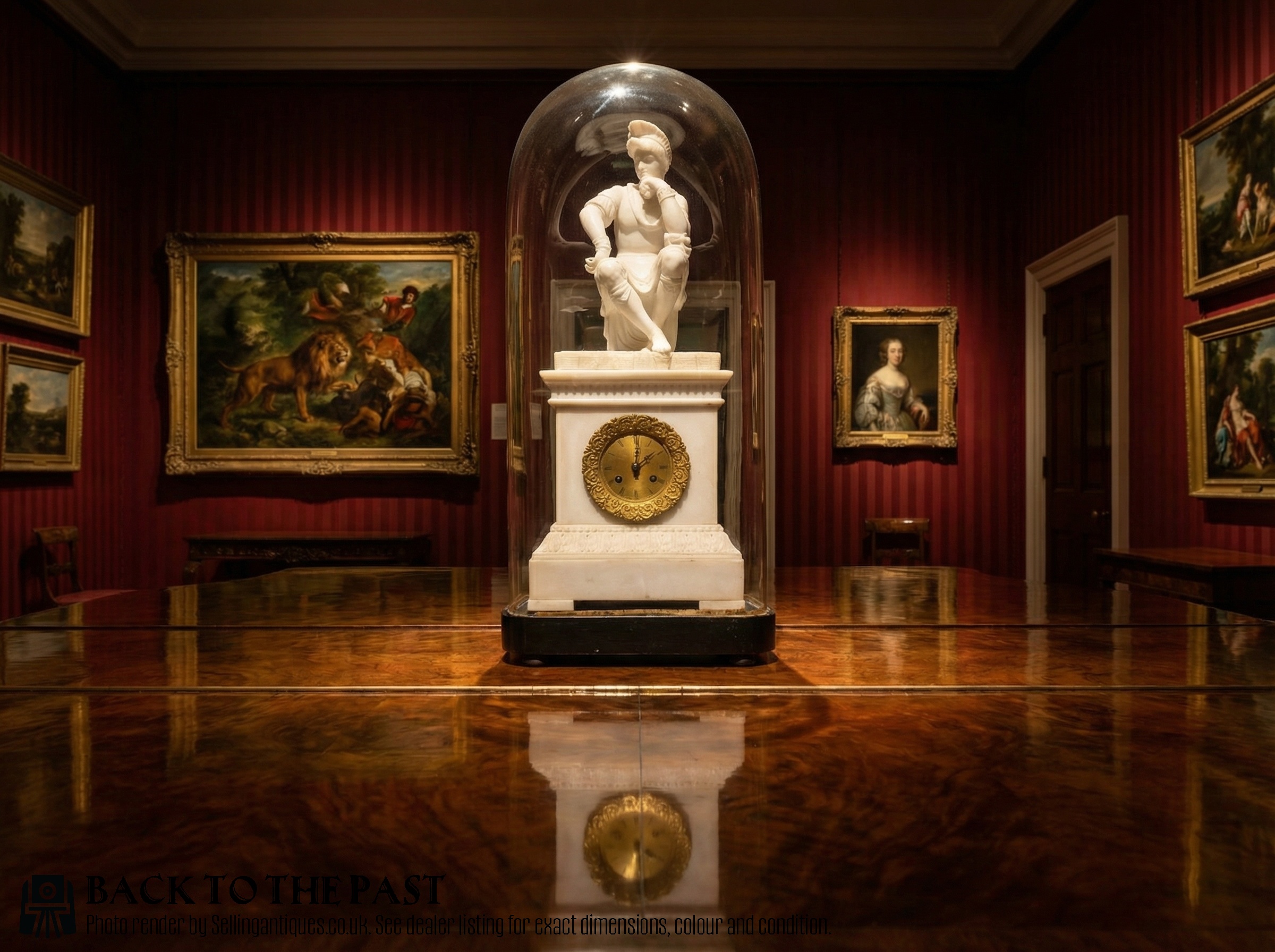
Clock Under Glass Dome
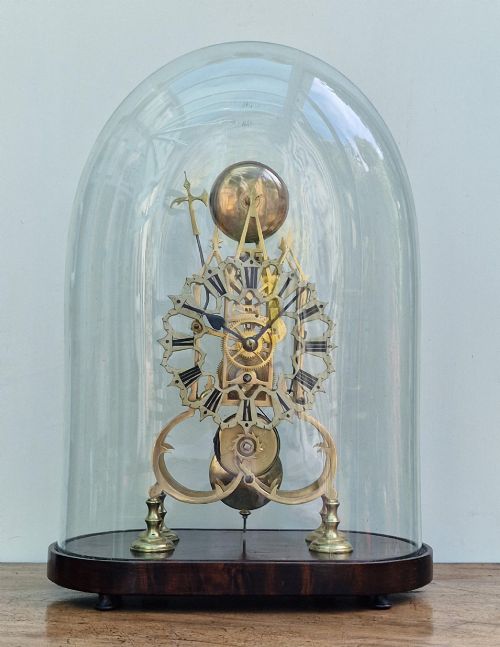
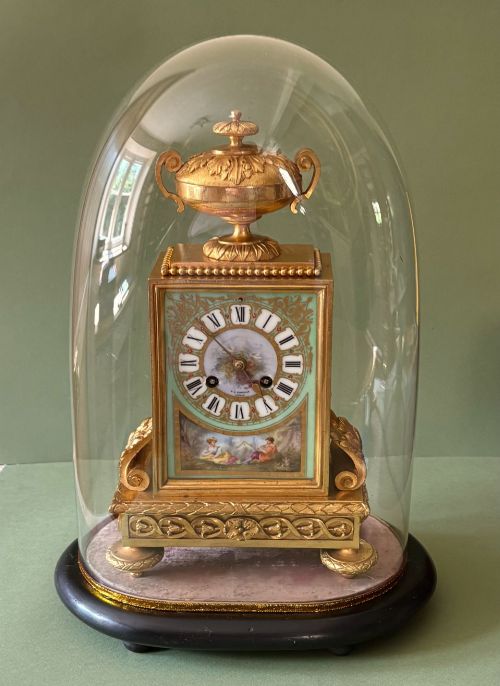
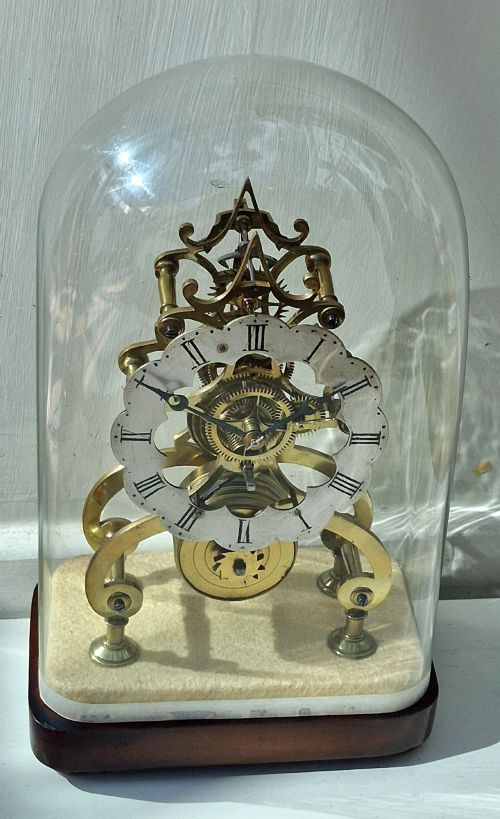
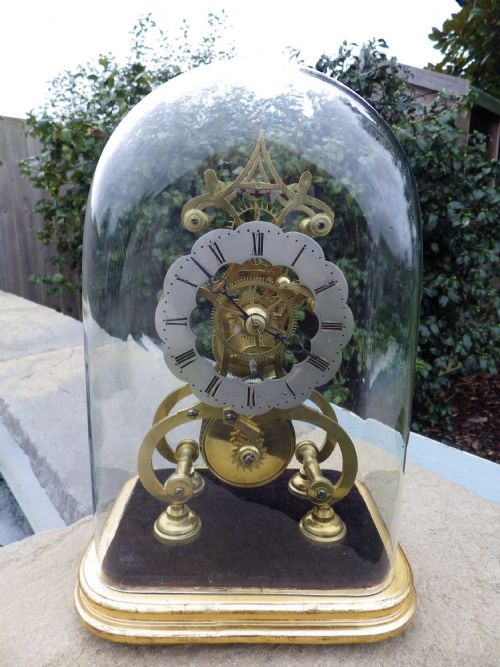
When you search for a clock under glass dome, you meet Victorian skeleton clocks, French portico clocks, and porcelain-mounted mantel pieces. These items bring together mechanical complexity and clean glass protection.
The most common examples on this page are Victorian skeleton clocks and French ormolu designs dating from the mid-nineteenth century. They range from small English timepieces to large garniture sets.
Makers housed movements under blown glass covers to shield brass wheels and delicate escapements from dust in Victorian rooms. This combination of clock and cover survived together down the decades.
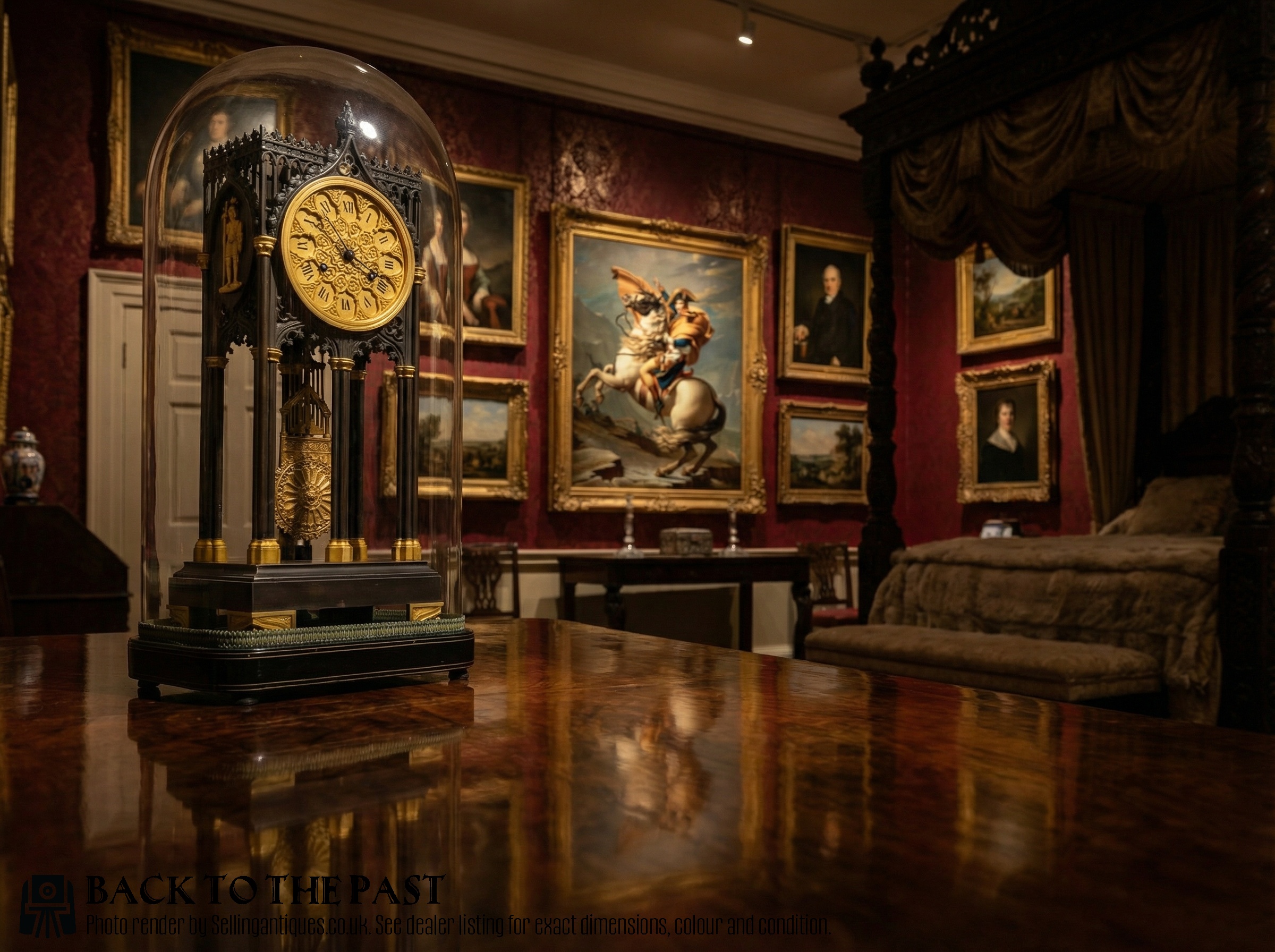
How they were made
Craftsmen built these items using brass, ormolu, and ebonised wood bases to support heavy glass covers blown by hand. The glass sat upon a wooden or velvet-lined plinth designed to match the movement.
Movements relied on fusee or spring-driven mechanisms, often featuring skeleton plate work, passing strikes, and porcelain panels. Metal components were cast, polished, and fire-gilded before final assembly.
Clock Under Glass Dome Retail Price Guide 2026
Typical asking prices for clock under glass dome among the pieces listed under this phrase on Sellingantiques today, from the lower quarter to the upper quarter. They describe what is for sale here now, not the wider market.
Materials appearing across these items include ebonised wood, mahogany, porcelain, steel, and heavy cast brass beneath blown glass covers.
What varies in quality
The quality of a clock under glass dome rests in the crispness of the wheelwork and the clarity of the original hand-blown cover. Early blown glass with natural ripples shows greater authenticity than flat replacement panes.
Finer examples display intricate skeleton frames, six-spoke wheel work, and fire-gilded ormolu mounts rather than plain cast brass. The presence of the matching wooden plinth and sound movement elevates the piece.
The Clock Under Glass Dome Glossary
- Fusee
- A conical pulley used in mechanical clocks to maintain even power as the mainspring unwinds. This mechanism improves timekeeping accuracy across the power reserve.
- Skeleton clock
- A timepiece with openwork brass plates that expose the gear train and escapement to view. These designs let light pass straight through the movement.
- Ormolu
- Gilt bronze created by applying a mixture of gold and mercury to a bronze base and heating it. This technique produced a rich, durable golden finish.
- Garniture
- A set of matching decorative objects, typically a central clock accompanied by side vases or urns. They were designed to sit together on a mantelpiece.
- Portico clock
- A architectural clock style modelled after classical temples with supporting columns. They often featured pendulum swings visible between the pillars.
Clock Under Glass Dome: Frequently Asked Questions
How do I clean a glass dome?
Lift the glass cover using both hands and place it on a stable, flat surface away from the edge.
Use a soft microfibre cloth and mild glass cleaner to wipe the exterior, ensuring no liquid seeps onto the antique wood base.
Are the glass domes original?
Many pieces retain their original hand-blown glass covers, which often display subtle ripples, tiny air bubbles, and slight thickness variations.
Replacement domes generally feature perfectly uniform modern glass without these traditional manufacturing traits.
What is a fusee movement?
A fusee movement uses a conical drum and cord to equalise the declining force of the mainspring as it runs down.
This sophisticated system ensures the clock maintains steady tension and accurate timekeeping from the first hour to the last.
How should I house my clock?
Position the piece on a sturdy, level mantelpiece or table away from direct sunlight and sudden temperature changes.
Keep the glass dome in place at all times to prevent dust accumulation on the delicate brass wheels and escapement.