


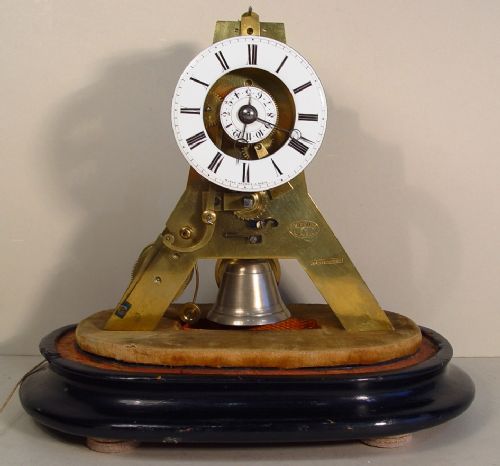

French Skeleton Clock
A french skeleton clock strips away the wooden case to expose the brass movement, offering collectors a mesmerising view of spinning wheels and escaping anchors.
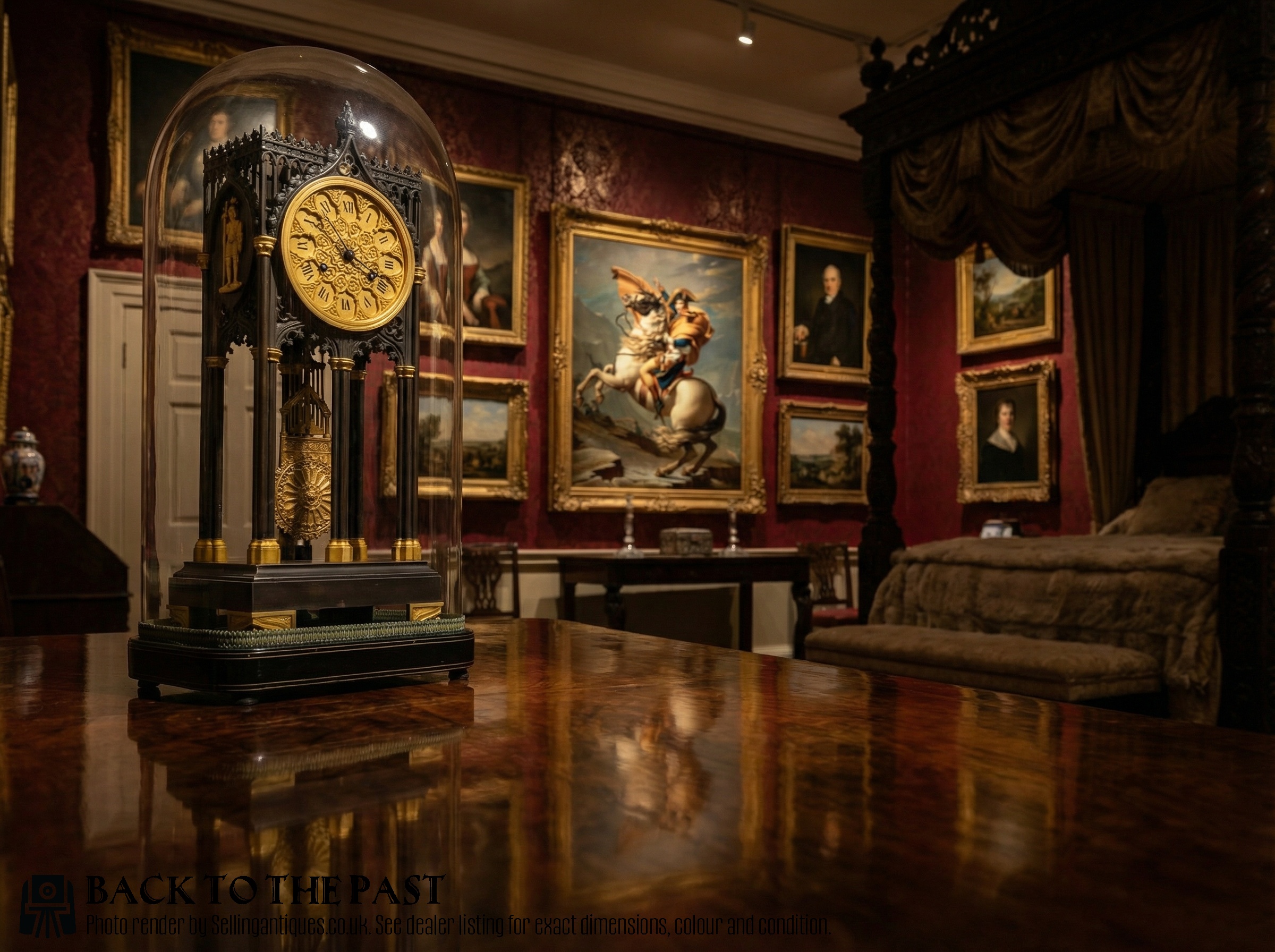
French Skeleton Clock
When you search for a french skeleton clock, you enter a world of exposed brass gear trains, delicate escapements, and protective glass domes. These mechanical timepieces abandon traditional box enclosures so that the intricate interplay of cogs remains visible from every angle.
You are most likely to encounter nineteenth-century examples on this page, often styled as four-glass mantel clocks or miniature timepieces. They range from architectural cathedral designs to simpler arched brass frames sitting upon wood or marble plinths.
Makers occasionally introduced complications like pull alarms, or shifted into twentieth-century idioms with Art Deco mystery movements and electric mechanisms. Yet the core appeal remains the transparent architecture that lays bare the mechanics of timekeeping.
How they were made
Clockmakers constructed the structural skeleton from brass or gilt brass, cutting openwork plates to support the wheel trains without blocking the light. Enamel dials, sometimes featuring delicate roman numerals, were mounted within the open framework.
Many of these timepieces were paired with blown or cast glass domes resting on wood or mahogany bases to protect the delicate motion from dust. Gilt finishes and chrome appear across different periods to catch the light behind the glass.
One exceptional timepiece includes a miniature ships wheel integrated into the design, proving that Victorian horologists loved a nautical touch.
What varies in quality
The sophistication of the movement dictates the standing of the piece, moving from simple timepieces to striking mechanisms with alarm complications. The crispness of the brass openwork and the delicacy of the wheel cutting separate ordinary production from finer work.
Original components matter greatly, particularly retaining the matching glass dome and the original mercury or pendulum bob. The presence of signed maker dials or specialised escapements elevates an example above standard domestic mantel pieces.
Maurice & Marcel Moulin Favre-Bulle·Jaeger-LeCoultre·Ferdinand Barbedienne·BULLE
The French Skeleton Clock Glossary
- Skeleton clock
- A timekeeper built without a solid case, exposing the wheels, plates, and escapement to view. This design became popular in the nineteenth century for domestic display.
- Four glass clock
- A mantel clock housed in a brass frame with glass panels on all four sides and the top. This style lets light flood through the movement.
- Garniture
- A set consisting of a central clock flanked by matching decorative objects such as urns or vases. These sets were designed to sit symmetrically on a mantelpiece.
- Escapement
- The mechanism that transforms rotational energy into impulses to keep the pendulum swinging or balance wheel ticking. It is the literal heartbeat of the clock.
- Mystery clock
- A timepiece where the drive mechanism is concealed or appears unconnected to the hands. These designs often date to the Art Deco period.
French Skeleton Clock: Frequently Asked Questions
What is a french skeleton clock?
A french skeleton clock is a timepiece designed without a traditional wooden case, leaving the brass plates and gear trains exposed to view. These pieces often sit beneath glass domes to protect the delicate machinery.
Originating largely in the nineteenth century, they transform internal mechanics into decorative art. Collectors prize them for their visual complexity and mechanical transparency.
How do you wind a skeleton clock?
Winding involves inserting a small key into the winding squares on the dial or movement plates to tension the mainspring. Care must be taken not to overwind the mechanism.
Some twentieth-century variations on this page utilise electric movements instead of traditional springs and weights. For these, the power source differs entirely from standard manual winding.
Why are they called four glass clocks?
Four glass clocks feature glazed panels on the front, back, and both sides, allowing an unobstructed view of the movement from every angle. Brass frames hold the glass panes together in an architectural housing.
This style emerged as an evolution of the skeleton clock, offering both visibility and protection against dust. They frequently sit upon wooden or mahogany bases.
How do I tell periods apart?
Nineteenth-century examples often feature Gothic Revival details, cathedral styling, or traditional brass framing with pendulum swings. They rely on mechanical weight or spring drives.
Twentieth-century pieces shift toward Art Deco aesthetics, chrome materials, and electric mechanisms by makers like Jaeger-LeCoultre or Bulle. The overall design language helps point toward the correct era of manufacture.