


Bronze and Gilt Candelabra
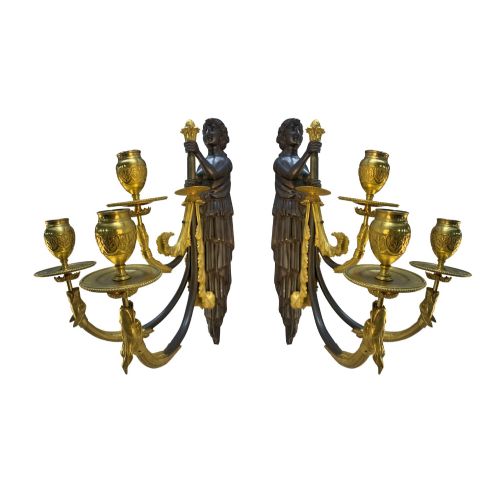
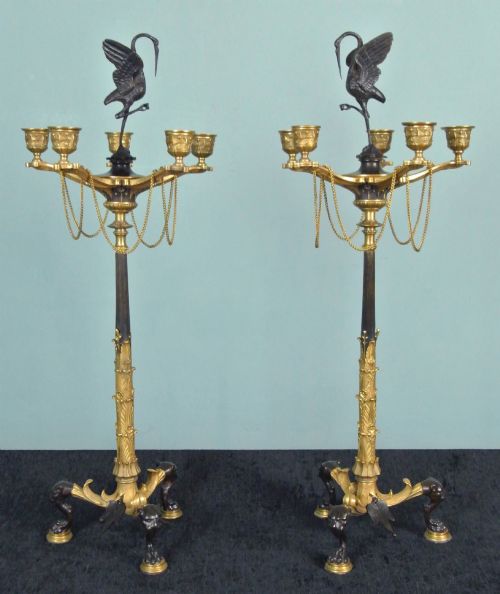
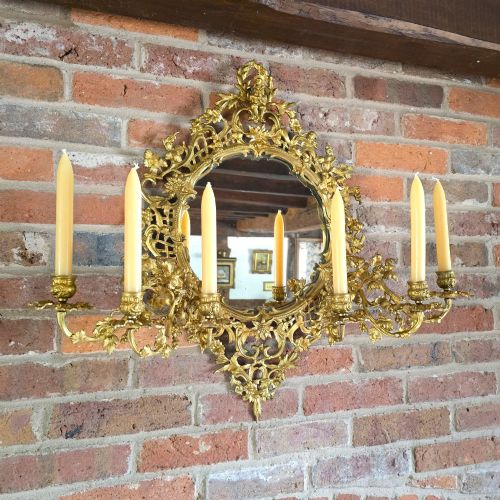
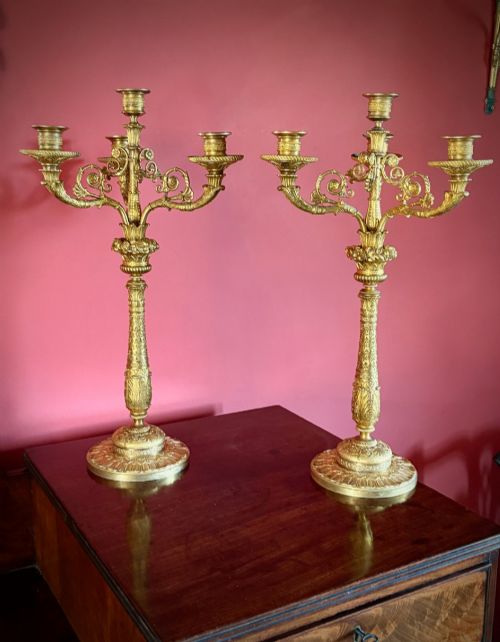
These bronze and gilt candelabra bring the heavy, gleaming presence of nineteenth-century French and English drawing rooms directly into modern rooms.
Bronze and Gilt Candelabra
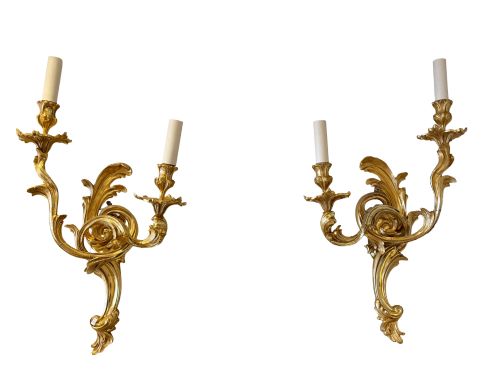
When hunting for bronze and gilt candelabra, buyers encounter domestic lighting accessories that evolved from functional sources of illumination into decorative centerpieces for mantelpieces and tables. Most examples on this page date from the nineteenth century, spanning periods like the Victorian era, the 1860s, and the 1880s.
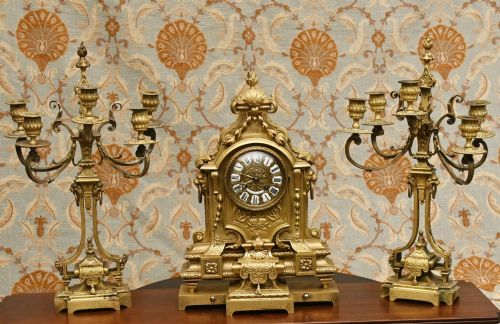
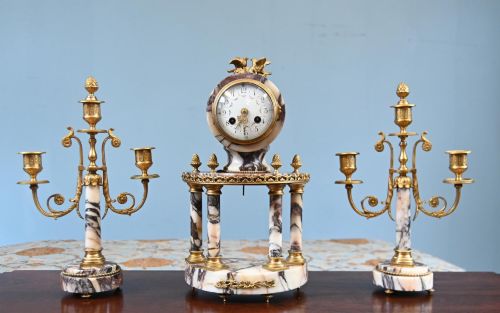
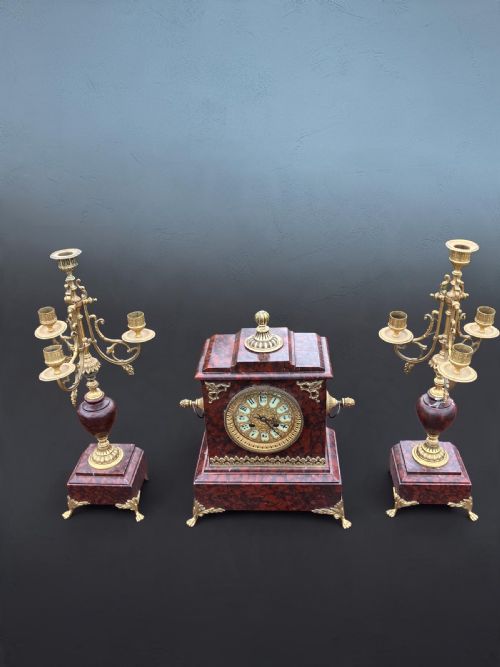
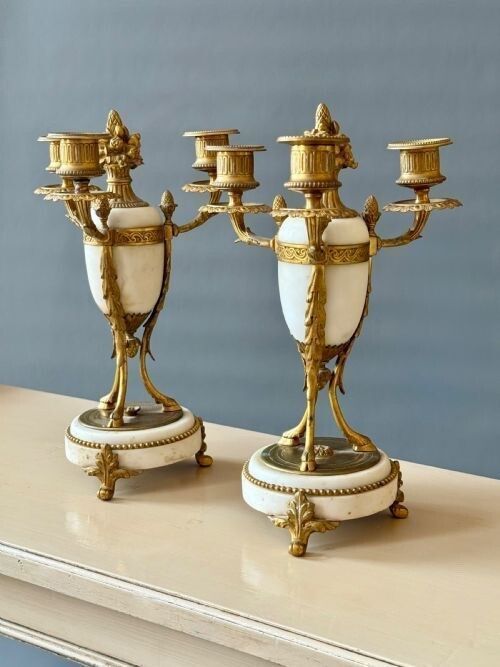
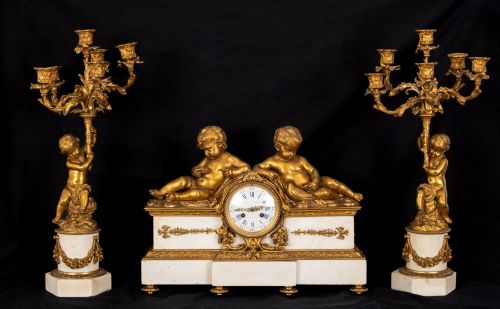
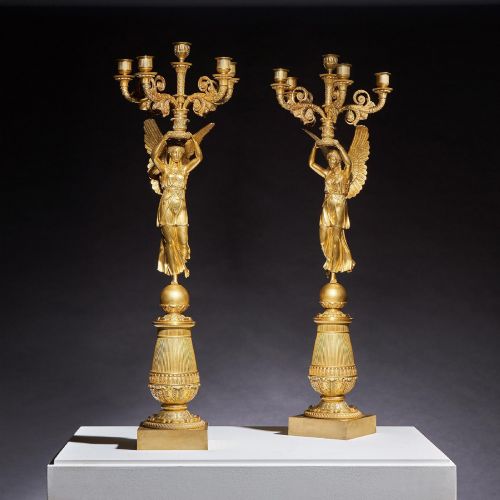
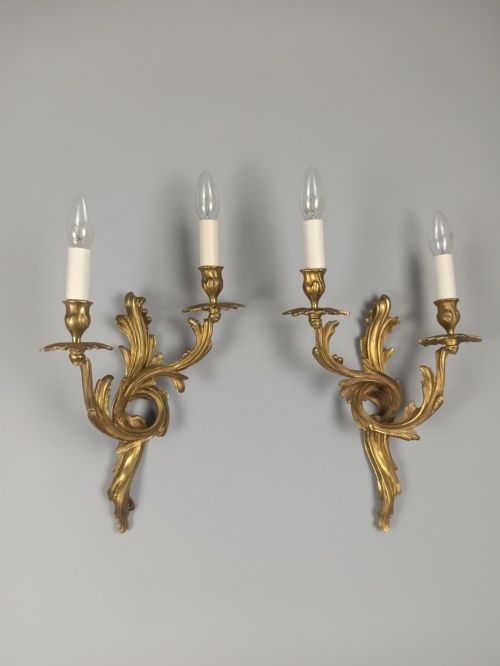
The selections run from pairs of four-arm candelabra to wall lights, wall sconces, clock garnitures, and candlesticks. Styles lean heavily towards French Empire, Louis XVI Revival, Rococo, and Gothic revival, reflecting popular nineteenth-century revivals of earlier court aesthetics.
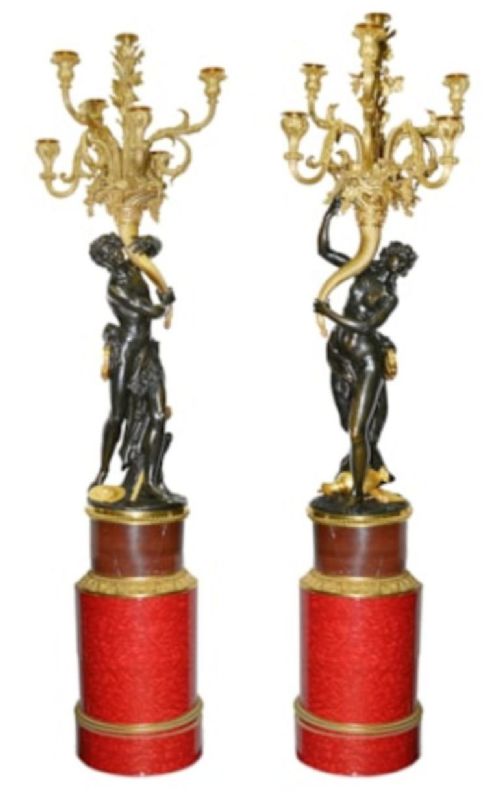
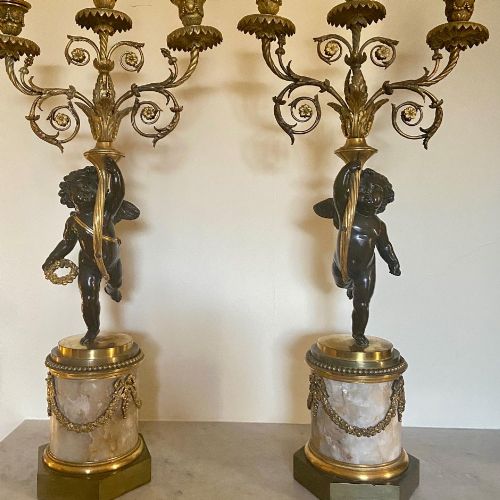
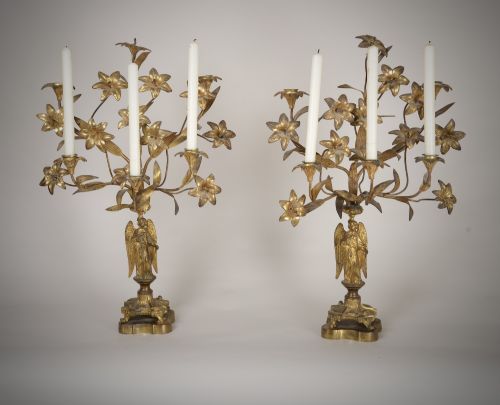
Formats vary widely in scale, from intimate two-branch wall lights to imposing sixteen-light chandeliers and large multi-armed candelabra. Many pieces incorporate figural elements such as putti, cherubs, stags, or classical figures alongside structural candle branches.
How they were made
The construction relies on the pairing of cast bronze and patinated bronze with bright ormolu, which is finely ground gold mercury amalgamation applied to copper or bronze. Workshops combined these metallic elements with contrasting solid supports like white marble, onyx, brass, porcelain, and enamel.
Makers employed meticulous lost-wax and sand casting techniques to render complex figural details, acanthus leaves, and scrolling arms with crisp definition. Hand-chasing and gilding followed the casting process to enhance the relief, giving specific surfaces a distinct matte or polished finish.
Bronze and Gilt Candelabra Retail Price Guide 2026
Typical asking prices for bronze and gilt candelabra among the pieces listed under this phrase on Sellingantiques today, from the lower quarter to the upper quarter. They describe what is for sale here now, not the wider market.
Stag and doe lustre candlesticks stand ready to illuminate nineteenth-century forest scenes right from your sideboard.
What varies in quality
The division between ordinary and exceptional items rests primarily on the crispness of the bronze chasing and the depth of the original gilding. Finer pieces display sharply defined facial expressions on putti or classical figures, deeply undercut foliage, and secure joinery between the heavy metal components and marble bases.
Secondary materials also dictate value, with dense white marble, fluorspar, or champlevé enamel inserts indicating ambitious workshop production. Pieces bearing attribution or signatures from known makers command greater attention due to superior foundry execution.
Barbedienne·Francois Redmond·Pierre Philippe Thomire·Rabiat
The Bronze and Gilt Candelabra Glossary
- Ormolu
- Gilded bronze, where a layer of gold amalgam is applied to a bronze base and heated to drive off the mercury. This technique produced a rich, durable golden surface characteristic of fine nineteenth-century French metalwork.
- Garniture
- A coordinated set of decorative objects, typically comprising a mantel clock flanked by matching candelabra or vases. These sets were designed to sit symmetrically on a fireplace mantelpiece.
- Champlevé
- An enamelling technique where troughs or cells are hollowed out of the metal surface and filled with vitreous enamel powder before firing. The resulting coloured patterns sit flush with the surrounding metal frame.
- Patinated bronze
- Bronze that has been chemically treated to produce a dark brown, green, or black surface colour. This dark finish provided a strong visual contrast against bright ormolu mountings.
- Candelabra
- A branched candlestick designed to hold multiple candles simultaneously. They range in size from small table ornaments to large floor-standing fixtures.
Bronze and Gilt Candelabra: Frequently Asked Questions
What is a clock garniture?
A clock garniture is a matched decorative set consisting of a central mantel clock accompanied by two side pieces, which are frequently candelabra or vases. These sets were manufactured to create visual balance when arranged across a fireplace mantel.
The matching items share identical materials, such as bronze, ormolu, and white marble, tying the decorative scheme of a nineteenth-century interior together into a unified display.
How do I clean gilt bronze?
Cleaning gilt bronze and ormolu requires a gentle approach to protect the delicate gold layer from abrasion or harsh chemical stripping. Dusting with a soft, dry brush is generally sufficient for regular maintenance.
Avoid commercial metal polishes entirely, as abrasive compounds will wear away the thin layer of gold leaf or mercury gilding, exposing the base bronze underneath.
Were these originally wired for electricity?
Nineteenth-century candelabra were made strictly for wax candles and oil illumination long before domestic electric wiring existed. Many surviving examples have been converted carefully to table lamps or wired for electric bulbs in modern times.
Buyers should inspect the wiring pathways to see if historic components were altered during any twentieth-century electrical conversions.
How can I tell Empire style?
French Empire style draws heavily on classical Greco-Roman, Egyptian, and military motifs inspired by the Napoleonic era. Look for symmetrical designs incorporating figures like Hercules, sphinxes, laurel wreaths, and crisp geometric patterns.
The metalwork in this style typically contrasts dark patinated bronze surfaces with bright, highly polished ormolu mountings.