


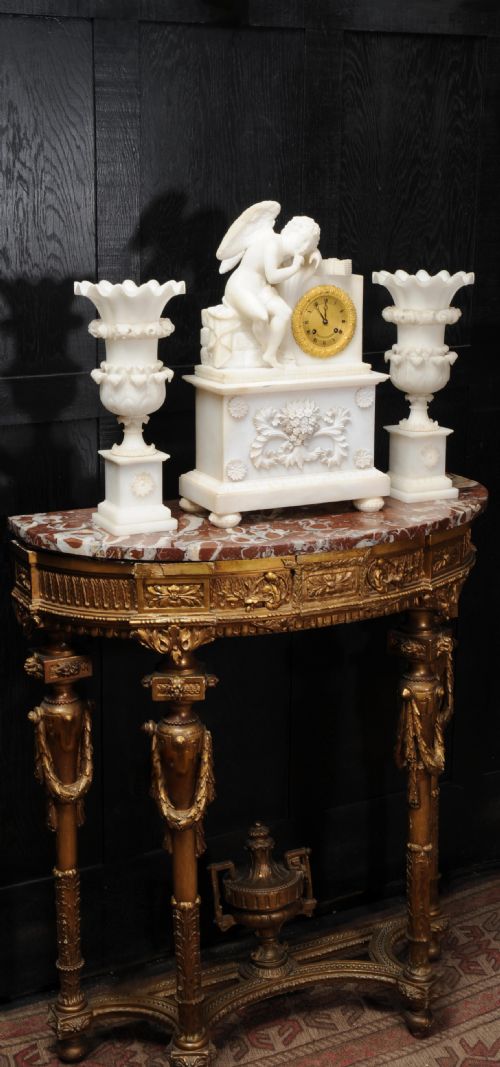

White Alabaster Clock
White alabaster clock selections bring together pale stone and gilt mounts to grace a mantelpiece with nineteenth-century refinement.
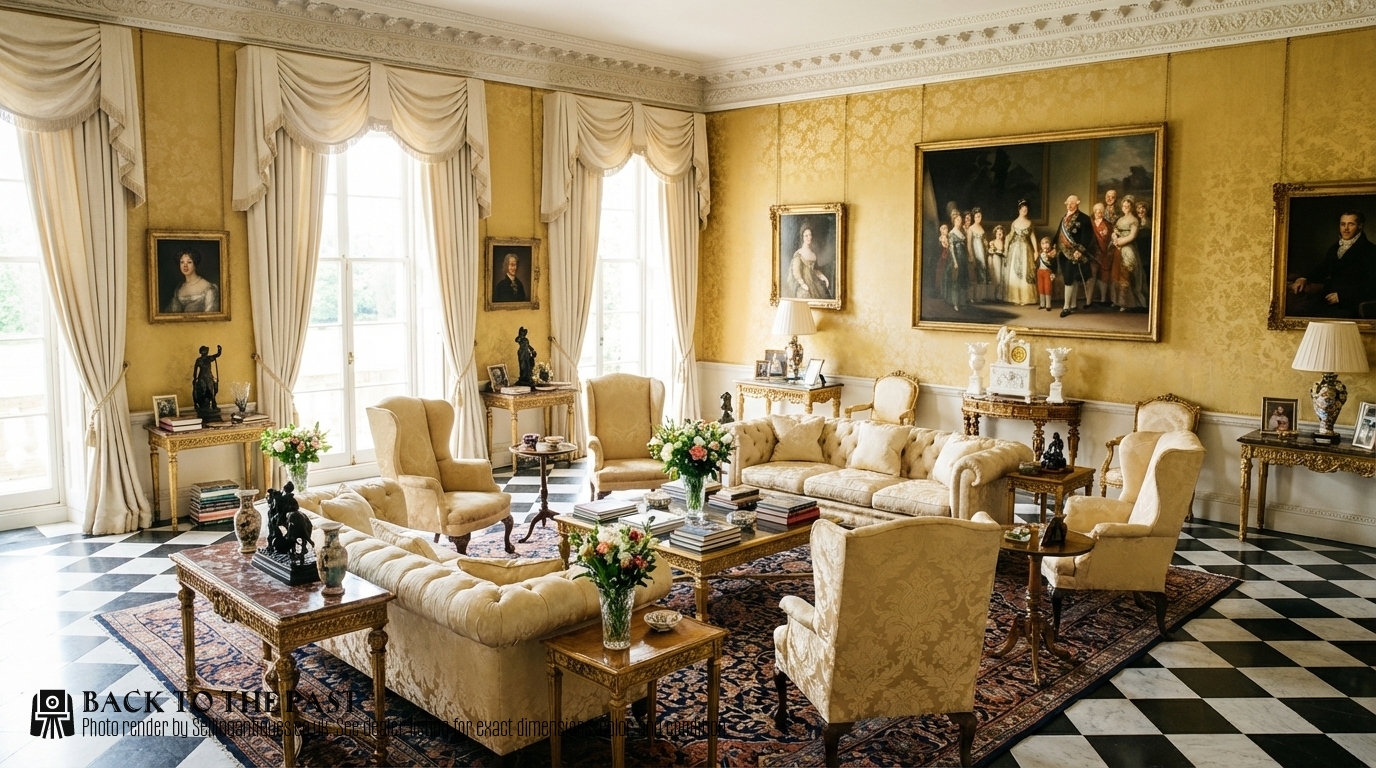
White Alabaster Clock
A white alabaster clock provides a decorative timekeeper housed in smooth pale stone, frequently accompanied by matched garniture sets or candelabras. These pieces date across the nineteenth century, including specific years from the eighteen-fifties through to nineteen hundred.
Makers often drew upon French Louis XVI, Neoclassical, and Empire styles, shaping the stone into portico forms, lyre designs, or simple architectural cases. Many incorporate gilt bronze or ormolu mounts alongside enamel dials and glass domes.
Buyers meet both small standalone timepieces and larger three-piece garniture suites across Victorian and continental workshops. The combination of translucent white stone with brass and bronze creates a distinct visual balance typical of the period.
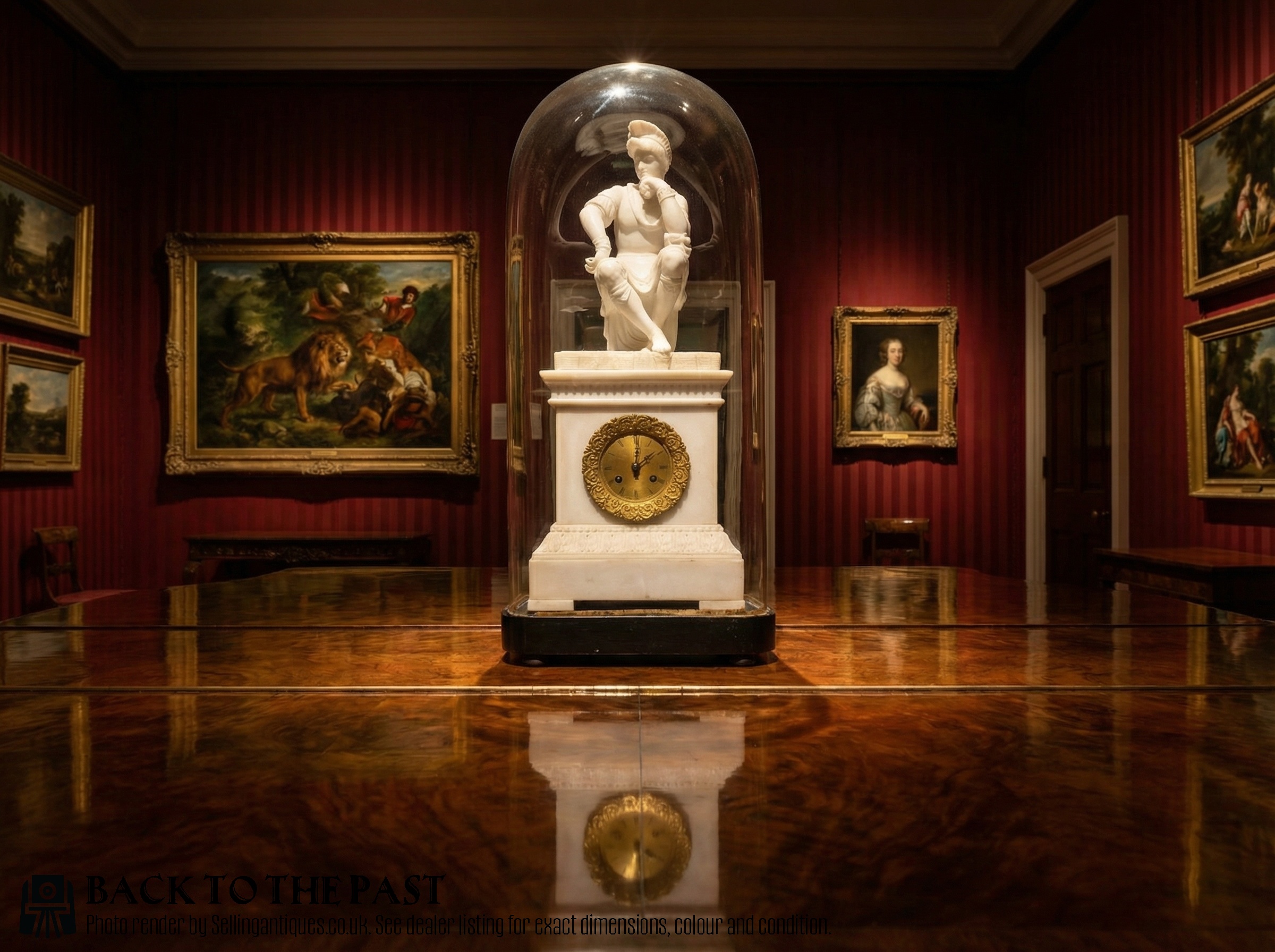
How they were made
Craftsmen shaped soft alabaster and white marble by hand, carving architectural columns and sweeping curves for portico and mantel formats. These stone bodies were combined with cast gilt bronze or ormolu mounts, securing decorative elements directly to the mineral case.
Mechanical components, including French movements and fusee mechanisms, were fitted internally to drive enamel dials. Finished pieces were frequently paired with glass domes to protect the delicate stone and metalwork from dust.
White Alabaster Clock Retail Price Guide 2026
Typical asking prices for white alabaster clock among the pieces listed under this phrase on Sellingantiques today, from the lower quarter to the upper quarter. They describe what is for sale here now, not the wider market.
Listings span the Victorian era alongside specific years from eighteen-fifty to nineteen hundred, showcasing French and Italian craftsmanship.
What varies in quality
The precision of the stone carving and the crispness of the gilt bronze mounts dictate the visual standing of an example. Finer pieces display deeply detailed cast ornaments and clean, unblemished alabaster surfaces.
Movement sophistication also distinguishes the range, moving from standard eight-day timepieces to complex fusee mechanisms and mystery clocks. The presence of matching candelabras or original glass domes elevates the completeness of a garniture set.
James Ritchie And Son·Etienne Maurice Falconet
The White Alabaster Clock Glossary
- Alabaster
- A fine-grained, translucent stone used extensively for nineteenth-century clock cases and sculptural ornaments. Its pale appearance accepts detailed carving.
- Ormolu
- Gilt bronze created by applying a mercury and gold amalgam to a bronze base, then firing to leave a rich golden layer. It provides bright contrast against white stone.
- Garniture
- A set of matching decorative objects, typically a central clock accompanied by flanking candelabras or urns designed for a mantelpiece.
- Portico clock
- A timekeeper built in the architectural form of a portico, featuring vertical columns supporting a lintel that houses the dial and movement.
- Fusee
- A conical pulley used within clock movements to maintain even tension on the drive chain as the mainspring unwinds, improving timekeeping accuracy.
White Alabaster Clock: Frequently Asked Questions
How do I wind my clock?
Most eight-day movements require a key to wind the springs through holes in the enamel dial. Care must be taken not to overwind the mechanism.
Consulting a professional horologist for initial setup ensures the pendulum and beat remain correctly adjusted after transport.
Are these clocks suitable for daily use?
While many retain working movements, antique timepieces benefit from gentle handling and regular professional servicing rather than heavy daily reliance.
Placing them on a stable, level mantelpiece away from direct sunlight protects both the delicate alabaster and internal gears.
How do I clean white alabaster?
Alabaster is a soft and porous stone that dissolves easily in water, meaning moisture should be avoided entirely during cleaning. Dusting gently with a dry, soft cloth is the safest method to maintain the surface.
Harsh chemical cleaners or damp cloths will damage the polish and texture of the stone permanently.
What is a glass dome for?
Glass domes protected nineteenth-century clocks from coal smoke, dust, and accidental knocks in busy domestic rooms. They also helped preserve the gilt finish on ormolu mounts.
Original domes add significant authenticity and value to surviving mantel clocks and garnitures.