



19th Century Clock Set
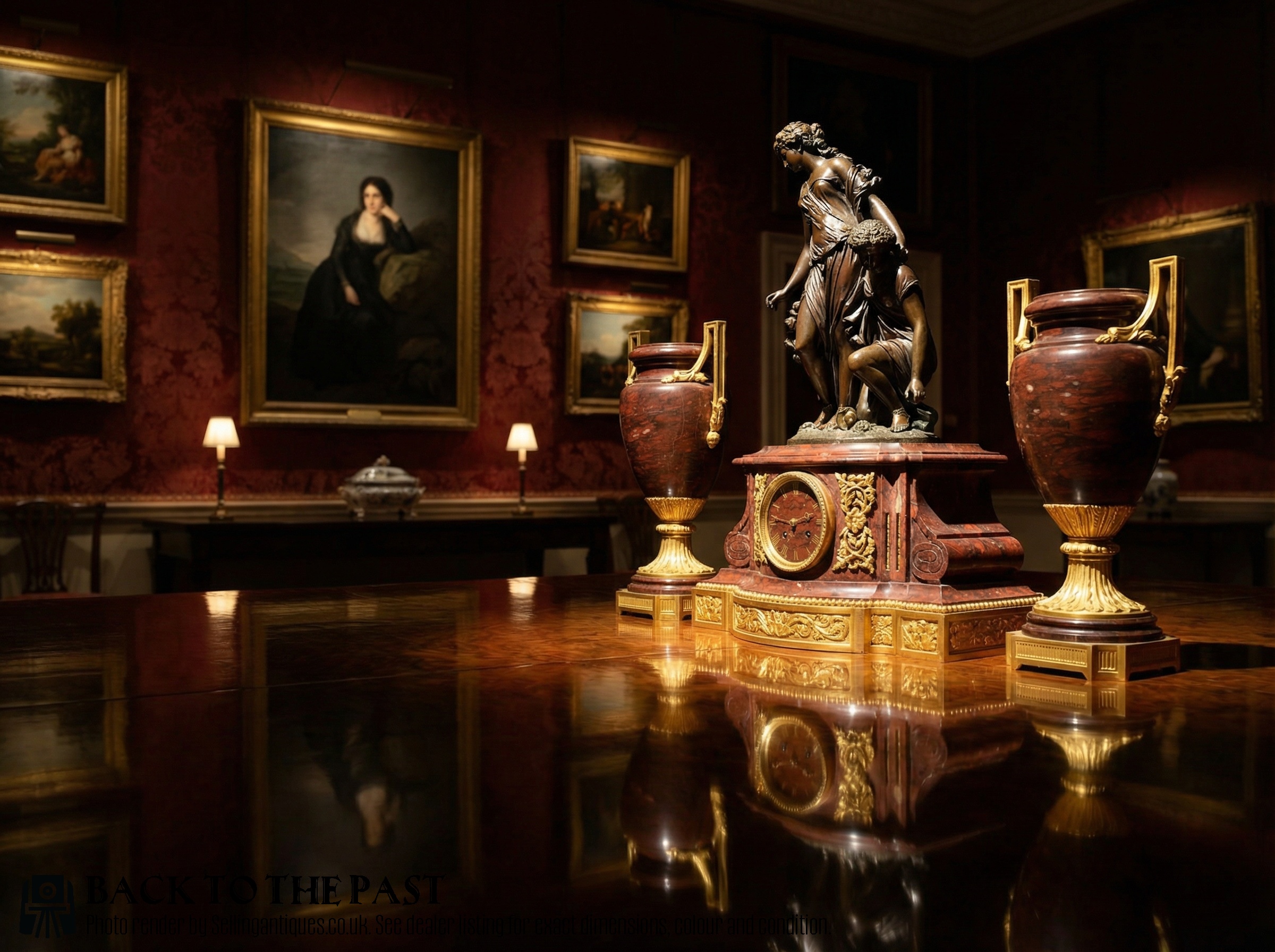
A 19th century clock set brings together a central mantel timepiece and matching ornamental garnitures to create a unified focal point.
19th Century Clock Set
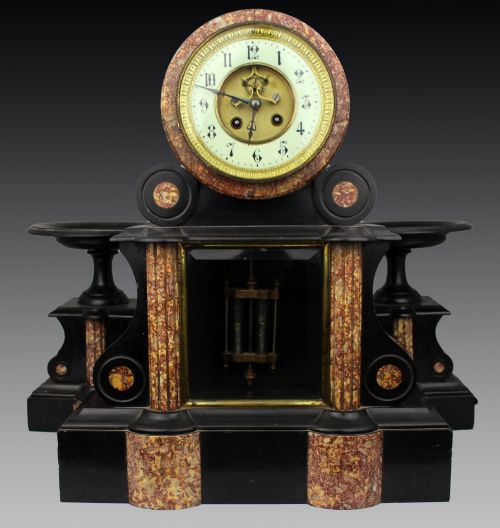
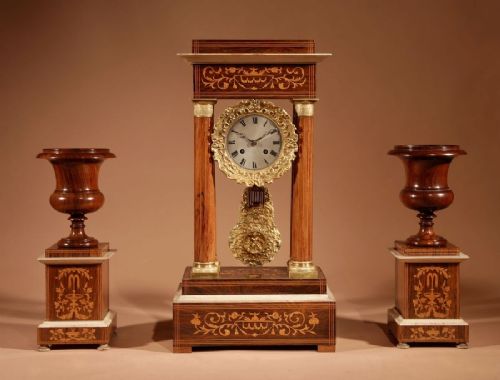
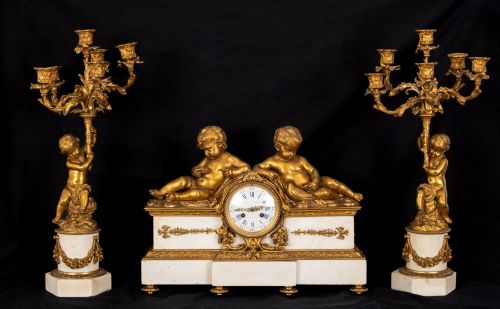
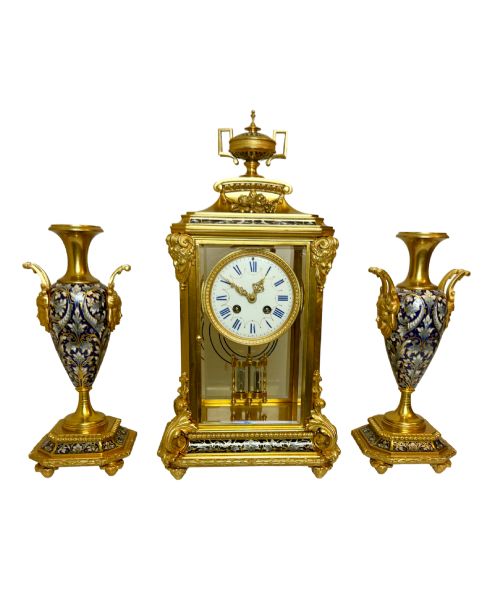
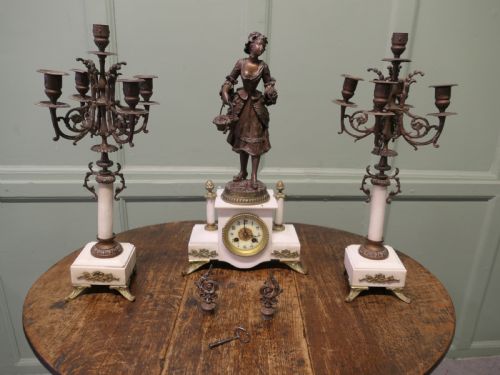
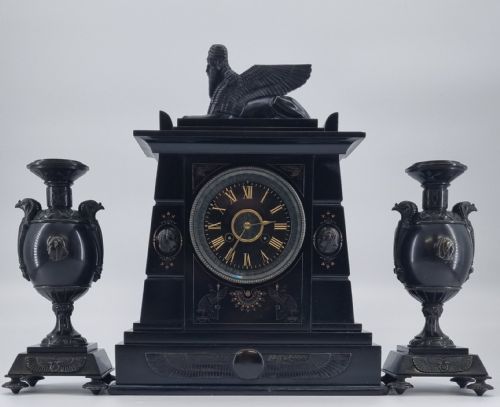
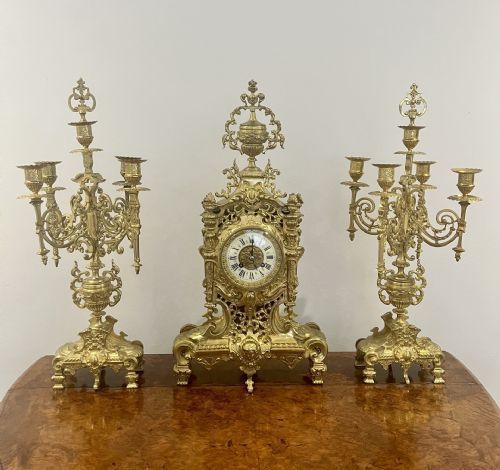
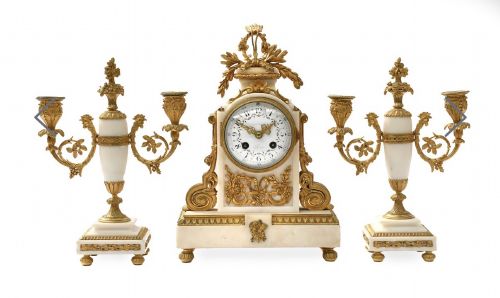
A 19th century clock set comprises a striking mantel clock accompanied by matching side pieces such as urns, candelabra or vases, forming a complete decorative garniture. These suites originate primarily from French workshops and embrace diverse historical revivals from the era, including Louis XVI, Second Empire and Rococo styles.
The version most commonly encountered on this page pairs a central marble, slate or gilt bronze timepiece with a matching pair of side ornaments designed for a mantlepiece or console table. Such assemblies reflect the Victorian appetite for symmetry and opulent interior decoration.

How They Were Made
Maker's workshops combined cast metals like ormolu, gilt bronze and brass with natural stones including white marble, black slate, rouge marble and onyx. These structural elements frequently incorporated delicate enamel dials, porcelain panels in the Sèvres or Meissen tradition, and intricate champlevé or cloisonné enamel work.
Casting and fire-gilding provided the metallic lustre, while skilled lapidaries shaped the heavy stone bases and surrounds that housed the eight-day striking movements. Artisans united these disparate materials into balanced suites, often protecting the more delicate arrangements under glass domes.
19th Century Clock Set Retail Price Guide 2026
Typical asking prices for 19th century clock set among the pieces listed under this phrase on Sellingantiques today, from the lower quarter to the upper quarter. They describe what is for sale here now, not the wider market.
What Varies in Quality
The standard of a 19th century clock set depends on the crispness of the bronze casting, the depth of the gilding, and the harmony between the central timepiece and its garnitures. Finer examples display meticulously hand-chased ornamentation and high-grade porcelain or enamel work produced by established makers.
Weight and choice of materials also distinguish the tier of a piece, with dense natural marbles, solid onyx and substantial gilt bronze outperforming lighter base metals and painted substitutes. Complete, well-matched sets that retain their original mercury gilding and matching movements occupy the upper reaches of the range.

Japy Frères·Henry Dasson·A.D Mougin
The 19th Century Clock Set Glossary
- Garniture
- A set of matching decorative objects designed to be displayed together on a mantelpiece or furniture top, usually consisting of a clock flanked by two matching vases, urns or candelabra.
- Ormolu
- Finely ground high-carat gold applied to a bronze base using a mercury amalgamation technique, yielding a rich, lasting metallic finish typical of French luxury pieces.
- Champlevé
- An enamelling technique where troughs are dug into a metal surface and filled with vitreous enamel powder before firing, creating colourful decorative patterns.
- Cloisonné
- A method of decorating metalwork objects by soldering flat metal wire to the base to form compartments, which are then filled with enamel paste and fired.
- Portico clock
- A specific architectural mantel clock design supported by four columns resembling a classical portico, often housing a pendulum swinging within the open central space.
19th Century Clock Set: Frequently Asked Questions
What is included in a clock garniture?
A clock garniture consists of a central mantel clock accompanied by two matching ornamental pieces, such as candelabra, urns or vases. These companion pieces mirror the materials and design motifs of the clock itself.
Together, the three pieces form a balanced decorative arrangement designed specifically for display on a mantelpiece, sideboard or large console.
How do I care for marble and gilt bronze?
Maintenance requires gentle dusting with a soft, dry cloth to prevent the accumulation of dirt in the crevices of the cast metal. Water and chemical cleaning products should be avoided entirely, as they can damage the delicate fire-gilded surfaces and stain porous marble.
Placement away from direct sunlight and heat sources ensures the materials and internal clock mechanisms remain stable over time.
What movements do these clocks use?
Most period examples feature mechanical eight-day spring-driven or weight-driven movements that require periodic manual winding with a matching key. These mechanisms typically strike the hours and half-hours on a bell or gongs.
Professional servicing helps maintain the reliability of these traditional brass gear trains.
How do I identify Louis XVI style pieces?
Louis XVI style pieces display neoclassical design elements such as straight lines, symmetrical proportions, architectural columns, and restrained foliate motifs. They frequently combine white or coloured marble with gilt bronze mounts.
This aesthetic contrasts with the more asymmetrical and exuberant curves typical of earlier Rococo revival items.