


French Bronze Clock
A french bronze clock brings nineteenth-century casting and timekeeping together in heavy, decorative mantel pieces and clock sets.
Identifying a French Bronze Clock
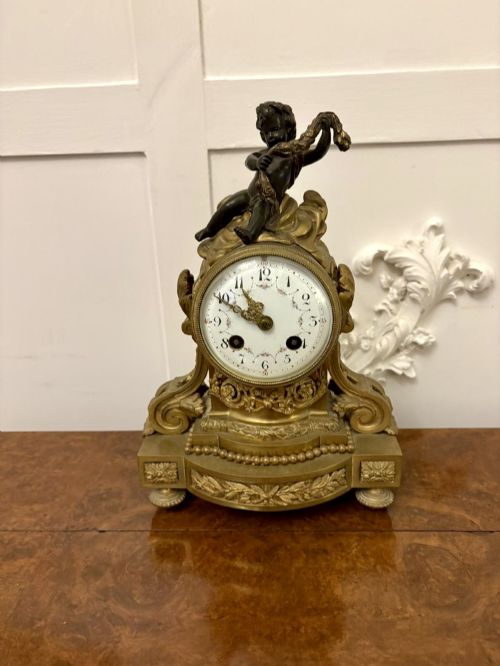
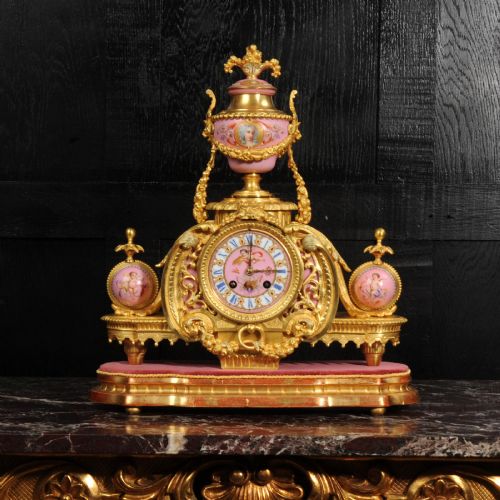
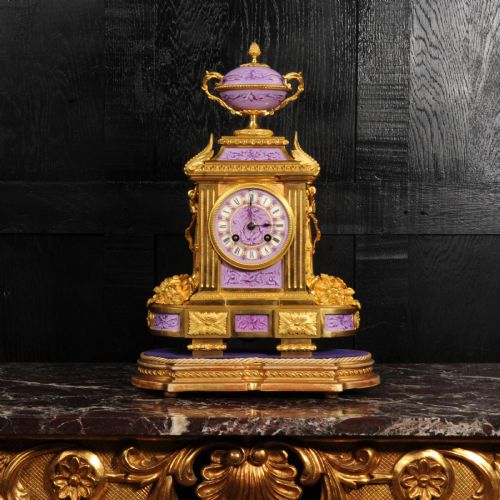
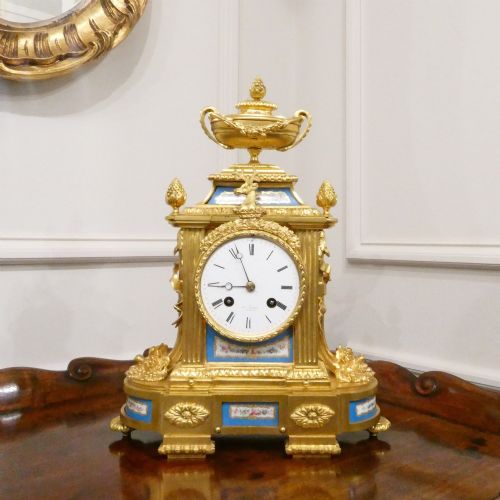
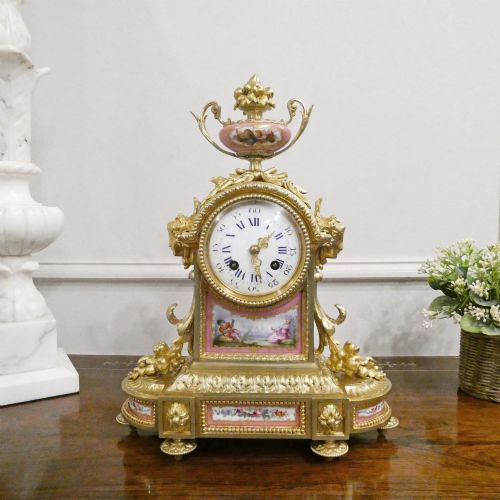
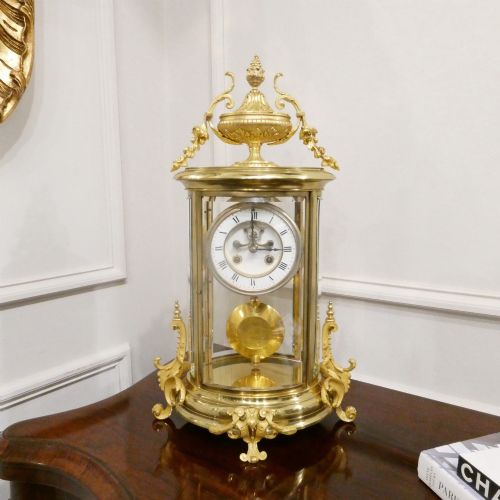
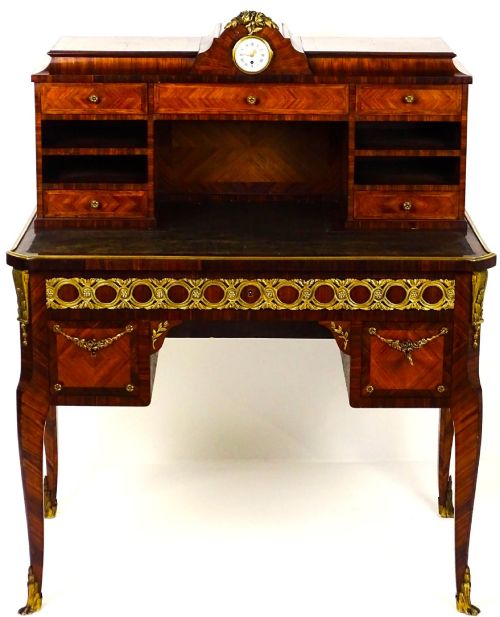
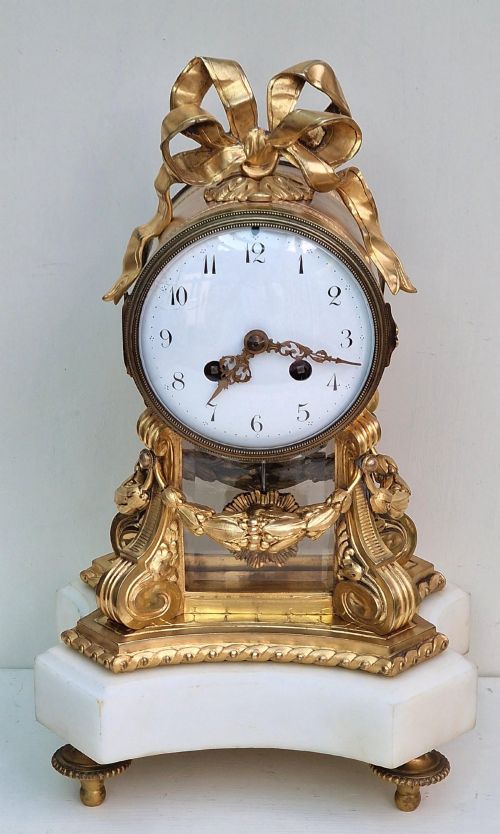
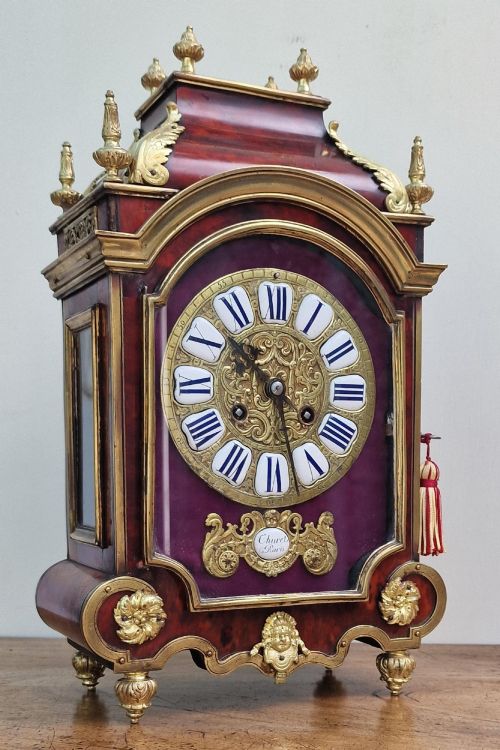
A french bronze clock encompasses heavy mantel clocks, wall-hung cartel clocks, and multi-piece clock garnitures originating from nineteenth-century workshops. The most common examples seen here are nineteenth-century mantel clocks and clock sets cast in bronze, patinated bronze, and gilded ormolu.
Makers and makers' marks often point to established Paris firms and movement houses like Japy Freres, Vincenti, Samuel Marti, and Henry Dasson. These pieces span revival movements including Louis XVI style, French Rococo, Second Empire, and Baroque tastes.
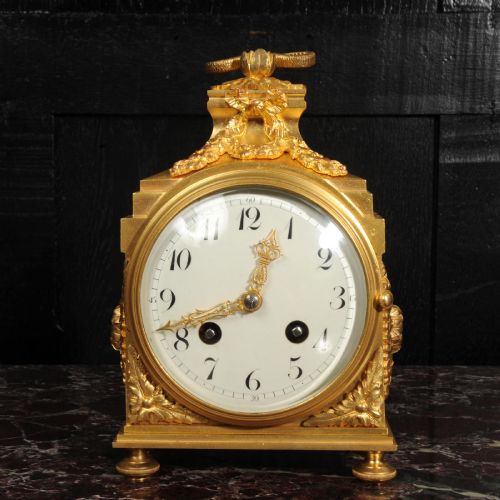
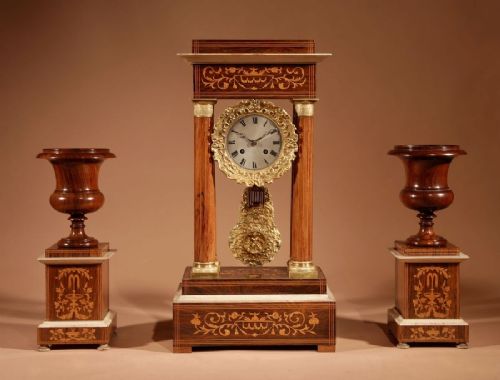
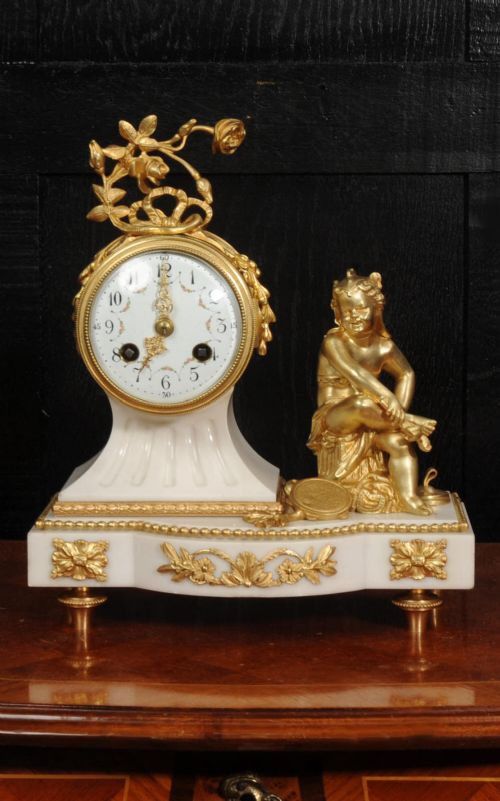
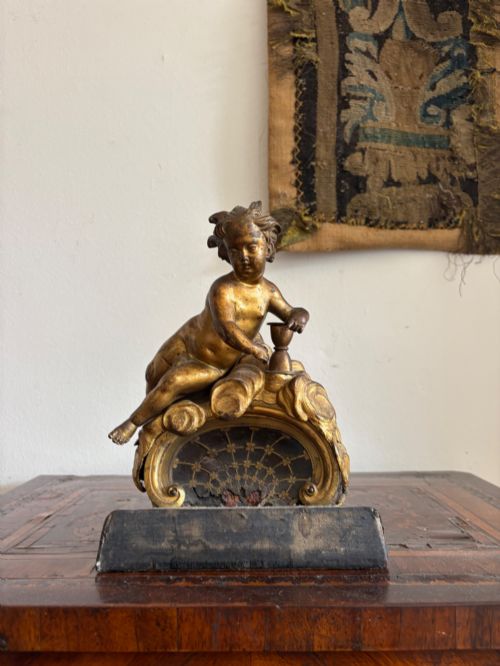
Formats range from simple drum head desk timepieces to elaborate figural compositions featuring classical figures, architectural marble bases, and matching side garnitures. Many retain their original mechanical movements designed to strike the hours.
Materials and Casting Techniques
Foundries utilised traditional lost-wax or sand-casting methods to shape bronze and ormolu mounts into ornate scrolls, figures, and architectural cases. Patinated bronze provided dark, textured surfaces, whilst gilt bronze and ormolu introduced bright, mercury-gilded highlights.
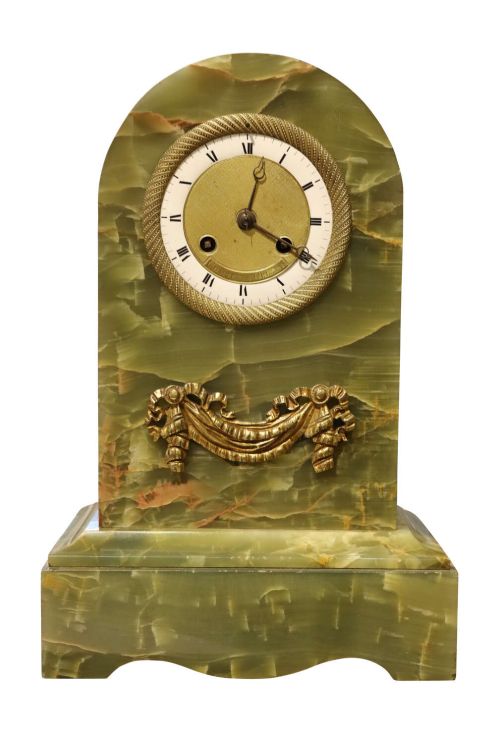
Dials frequently combined painted enamel numerals on white porcelain or convex glass faces, framed by cast bezels. Stonework elements such as black, pink, or white marble and slate were integrated into the bases alongside Sevres-style porcelain panels.
Retail Price Guide 2026
Typical UK retail prices for french bronze clock, calculated from the Sellingantiques database of over a million retail prices indexed since 2003. This retail price guide relies exclusively on Sellingantiques data; no external sources or auction records are used, so the figures do not describe the wider market.
Distinctions in Quality
Quality rests in the crispness of the bronze chasing and the depth of the original gilding rather than sheer scale alone. Finer examples display hand-tooled surface details where hair, drapery, and acanthus leaves remain sharp and well-defined.
The mechanical movement inside dictates much of the standing of a piece, with signed plates from renowned makers like Japy Freres or Henry Dasson indicating superior clockmaking standards. Associated marble bases and porcelain plaques that match the primary casting without later replacement preserve historical integrity.
Japy Freres·Henry Dasson·Samuel Marti·Vincenti·Tiffany & Co
The French Bronze Clock Glossary
- Ormolu
- Gilt bronze produced by applying a mercury and gold amalgam to a bronze base and firing it. This creates a durable, bright golden finish common on luxury French cases.
- Garniture
- A set consisting of a central clock flanked by matching ornamental pieces such as urns or candelabras. These were designed to sit symmetrically on a mantelpiece.
- Cartel clock
- A wall-mounted clock housed in an ornate, scrollwork frame made of bronze or gilt metal. They lack a traditional pedestal base and hang directly from a wall bracket.
- Drum head clock
- A clock featuring a circular movement housing shaped like a drum, often raised on a marble or architectural plinth. This form highlights the dial directly.
- Silk suspension
- A delicate clock suspension mechanism where the pendulum hangs from a fine silk thread. It is typically found on early nineteenth-century and Empire period movements.
Frequently Asked Questions
How do I wind my french bronze clock?
Most mechanical models use a double-ended winding key inserted into the dial holes to tension the mainsprings for time and strike trains.
Care should be taken not to overwind the springs, stopping as soon as resistance is felt.
Are these clocks suitable for daily use?
Nineteenth-century movements can keep reliable time if serviced correctly by a professional clockmaker.
They require a stable, level surface and careful handling due to the heavy bronze and marble cases.
What is a clock garniture?
A garniture pairs a main mantel clock with two matching side ornaments, such as decorative urns or candelabras.
These sets were created to provide a balanced, unified display across a fireplace mantle.
How do I identify the period?
Stylistic cues like Louis XVI swags, Rococo asymmetry, or Empire classical motifs point to specific revival eras and casting dates.
Signatures on the movement backplate or dial often supply additional maker and production data.