
Gold Bronze Clock
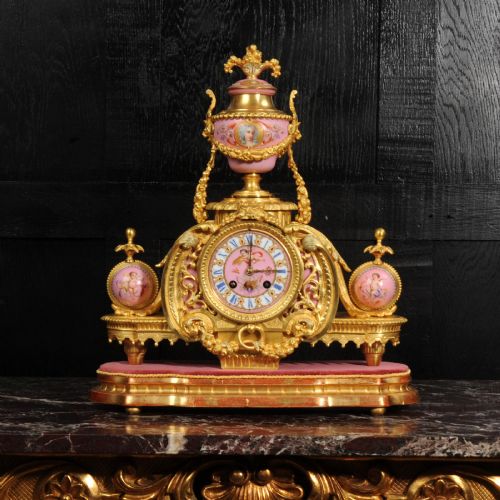
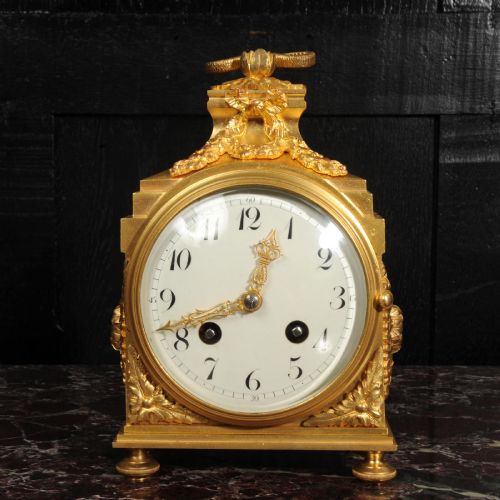
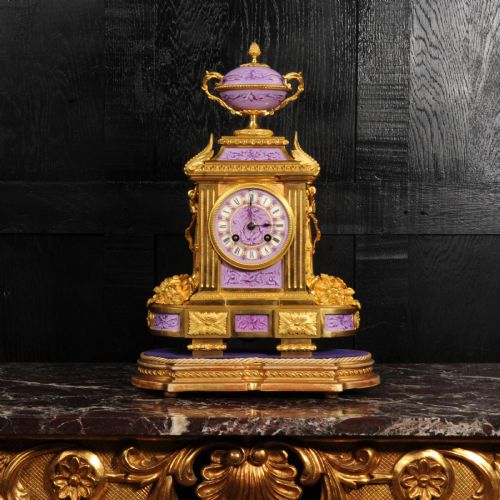
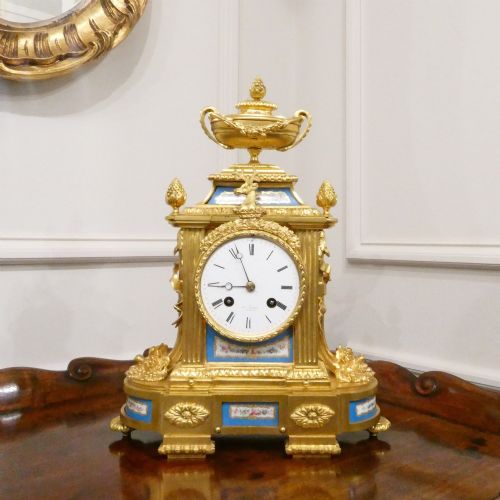
A gold bronze clock brings the gleam of nineteenth-century French metalwork and porcelain into a room.
Gold Bronze Clock
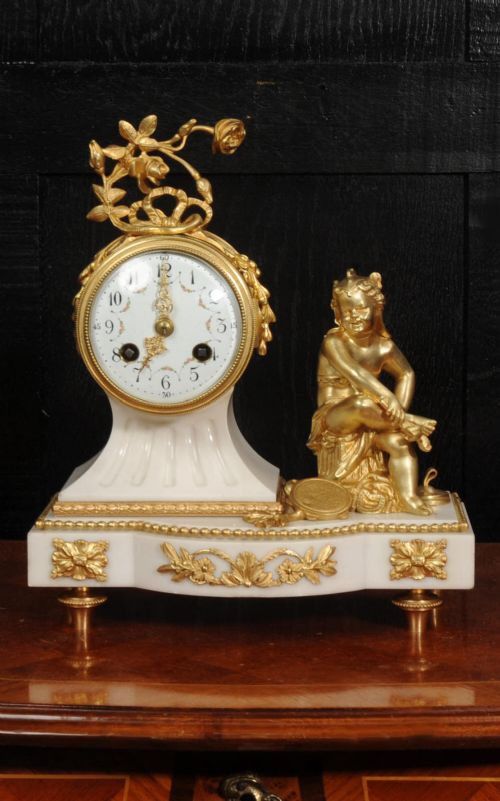
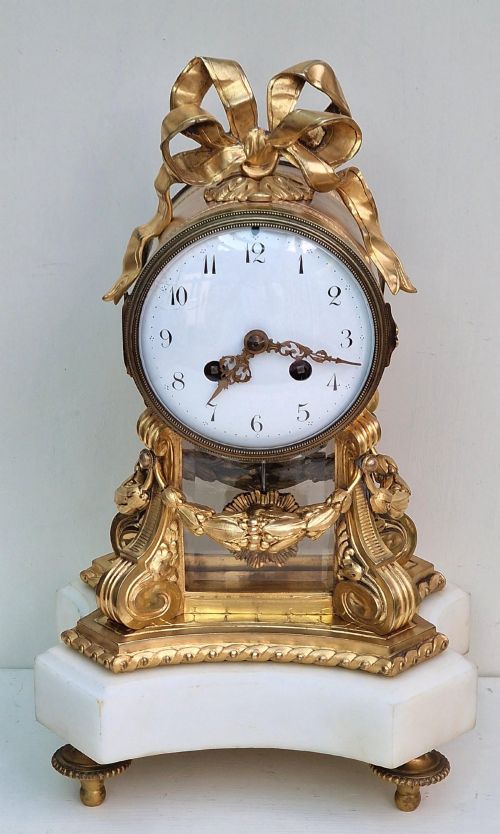
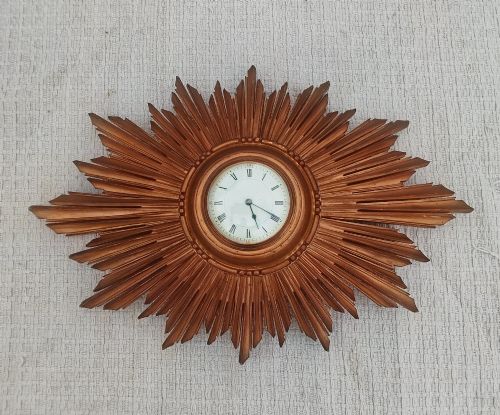
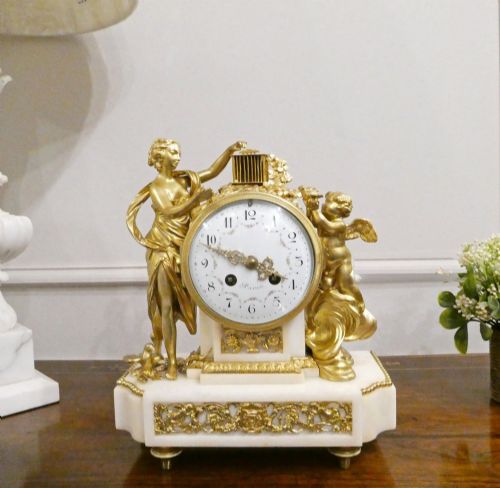
A gold bronze clock stands as a prominent furnishing designed to keep time while dominating a mantelpiece or shelf. Most examples belong to the nineteenth century, reflecting periods such as the Victorian era, the French Empire, and various revivals of Louis XVI and Rococo styles.
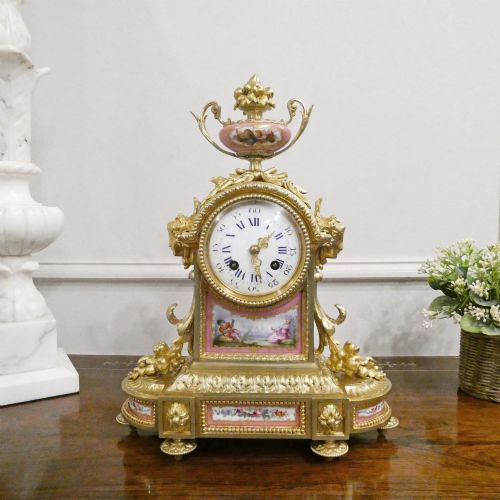
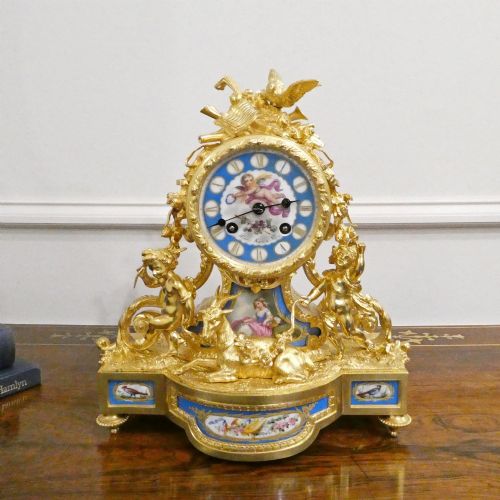
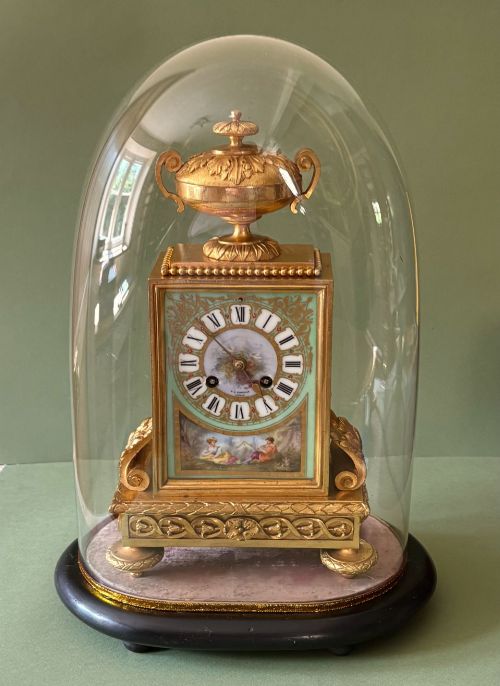
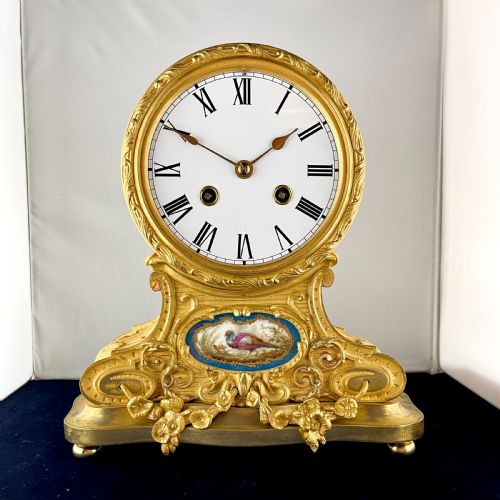
The buyer meets mantel clocks most frequently, alongside carriage clocks, wall clocks, and occasional garniture sets. Many house porcelain panels or dials from factories like Sèvres, paired with cast metal cases in architectural, figural, or urn shapes.
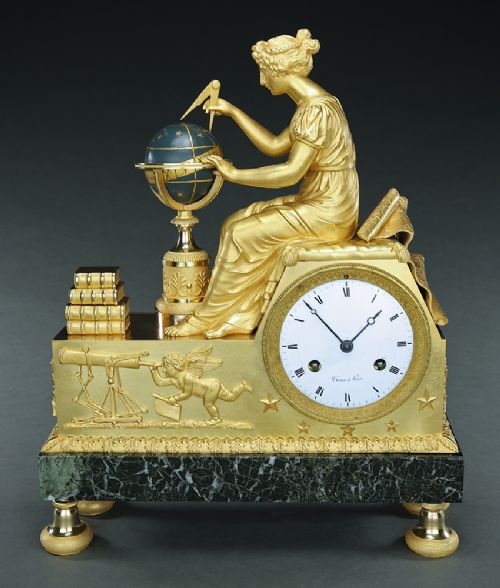
Origins trace largely to continental workshops, particularly in France, where makers combined gilt bronze, brass, and ormolu with white marble or enamel. These objects range from modest domestic timepieces to large sculptural works featuring mythological or allegorical themes.
How they were made
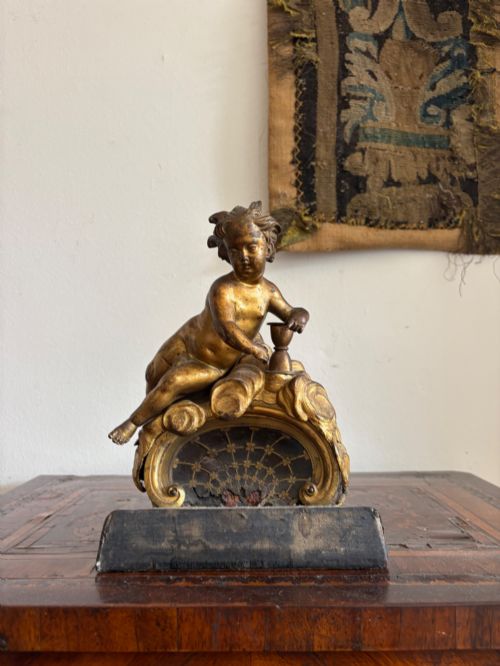
The construction relies heavily on metal casting, using bronze, brass, and gilt ormolu to form intricate cases and mounts. Artisans chased the metal surfaces by hand to sharpen the detail on foliate scrolls, figures, and architectural motifs.
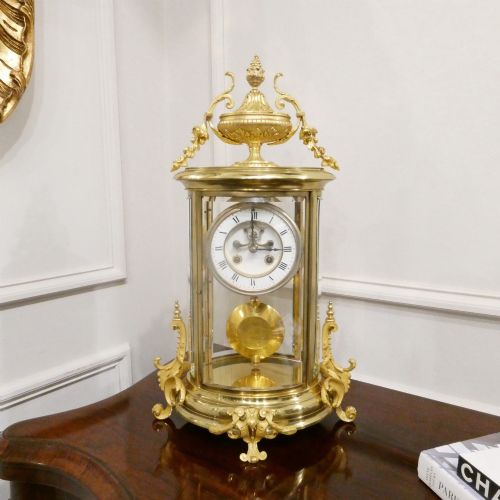
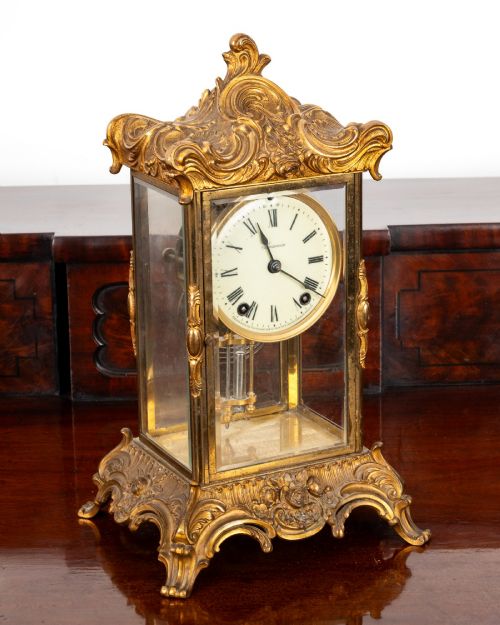
Porcelain and enamel elements are integrated directly into the design, appearing on dial faces and decorated side panels. Glass panels frequently enclose the movement in four-glass models, while marble blocks provide stable bases for heavier works.
Gold Bronze Clock Retail Price Guide 2026
Typical asking prices for gold bronze clock among the pieces listed under this phrase on Sellingantiques today, from the lower quarter to the upper quarter. They describe what is for sale here now, not the wider market.
Listings feature periods from the eighteenth century through the late Victorian era, alongside styles spanning French Empire, Rococo, and Neoclassical designs.
What varies in quality
The crispness of the chasing separates standard castings from exceptional work, as finer pieces retain sharp edges and deep relief rather than soft, rounded details. The quality of the original gilding, whether bright ormolu or patinated bronze, dictates how well the surface catches the light.
The integration of the movement with the case matters greatly, where signed mechanisms by established makers elevate the standing of the clock. Superior examples maintain harmony between the decorative porcelain plaques, marble plinths, and cast metal elements.
Achille Brocot·Henry Marc·Japy Freres·Samuel Marti·Henry Dasson·Etienne Lenoir·Delettrez
The Gold Bronze Clock Glossary
- Ormolu
- Gilt bronze produced by applying a mixture of gold and mercury to a bronze base and heating it. This technique creates a rich golden finish characteristic of French decorative arts.
- Chasing
- The manual process of refining cast metal surfaces with hammers and punches. It adds texture and definition to floral, figurative, and geometric ornaments.
- Garniture
- A set of matching decorative objects, such as a clock accompanied by side candelabra or urns. These sets were designed to sit symmetrically on a mantelpiece.
- Pendule d'Officier
- A type of military or travelling clock fitted with a handle and often a striking mechanism. Originating in France, these pieces combine portability with formal styling.
- Crystal Regulator
- A clock encased in glass panels that allow the mechanical movement to be viewed from multiple sides. These pieces often feature mercury pendulums and ornate brass frames.
Gold Bronze Clock: Frequently Asked Questions
How do I wind a gold bronze clock?
Winding requires a key matched to the square arbor on the dial face, turning it gently until resistance is felt. Care must be taken not to overwind the mainspring, which can damage the internal mechanism.
Most nineteenth-century movements run for eight days and regulate time through a pendulum. Adjusting the pendulum slow or fast should only be done while the clock is stationary.
Where should I place a heavy mantel clock?
A sturdy surface like a slate or marble mantelpiece provides the necessary support for heavy bronze and marble clocks. The weight demands a level foundation to ensure the pendulum swings evenly without catching.
Placement should avoid direct sunlight and damp environments to protect the enamel dials and the gilded ormolu finish from gradual degradation.
How do I identify a Louis XVI style clock?
Louis XVI style pieces display neoclassical symmetry, straight architectural lines, and decorative motifs such as urns, ribbons, and laurel wreaths. These designs contrast with the curving asymmetry of earlier Rococo models.
Materials typically include gilt bronze paired with white marble bases and enamel dials bearing Roman or Arabic numerals.
What is a champleve clock?
A champleve clock incorporates enamel work where troughs are carved into the metal surface and filled with coloured glass paste. The piece is then fired and polished flush with the surrounding brass or bronze mount.
This technique creates vibrant, patterned borders around the dial or across the case, popular during the Victorian period.