
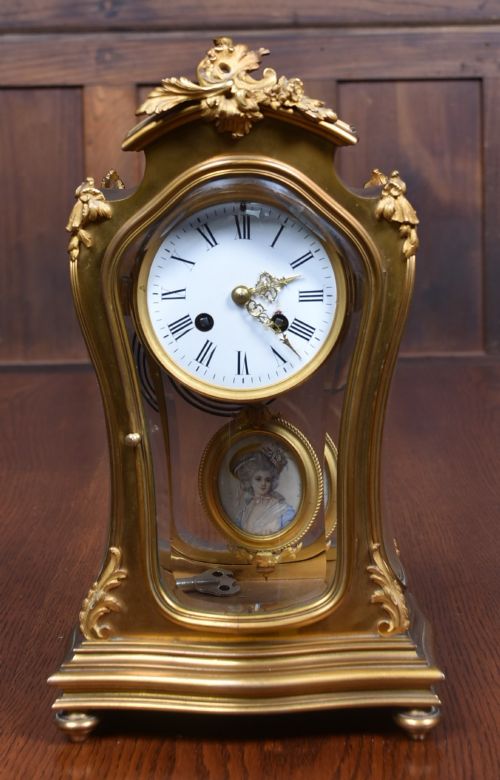


Empire Style Clock
These empire style clock pieces bring formal Neoclassical presence to a room, driven by bold architectural forms and patinated metal figures.
What an empire style clock is
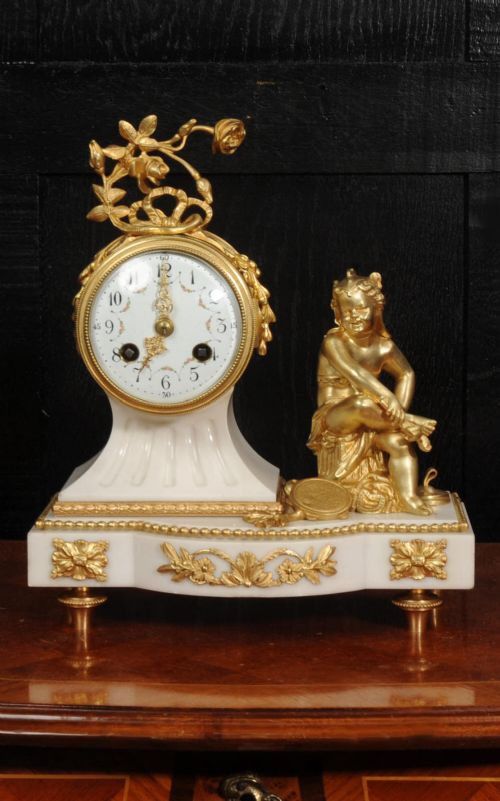
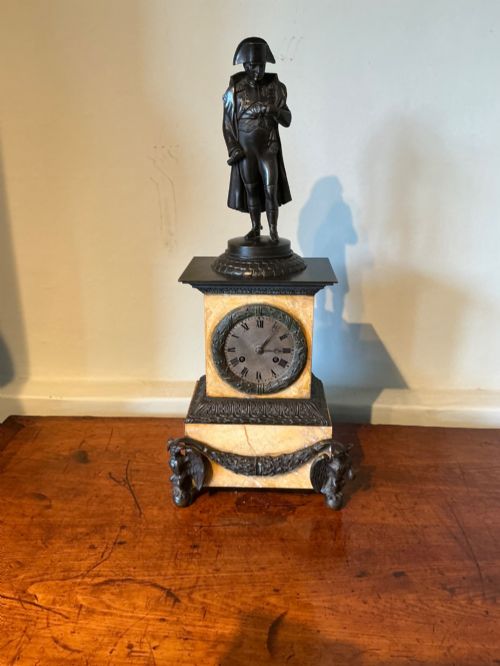
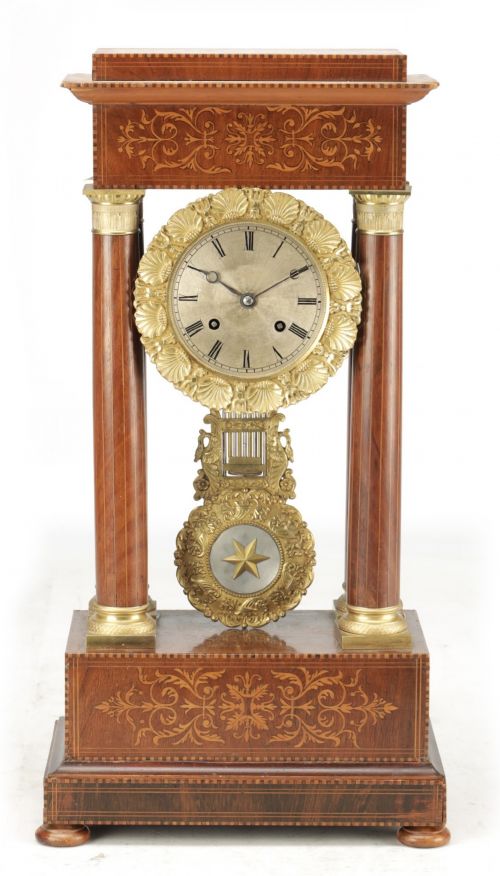
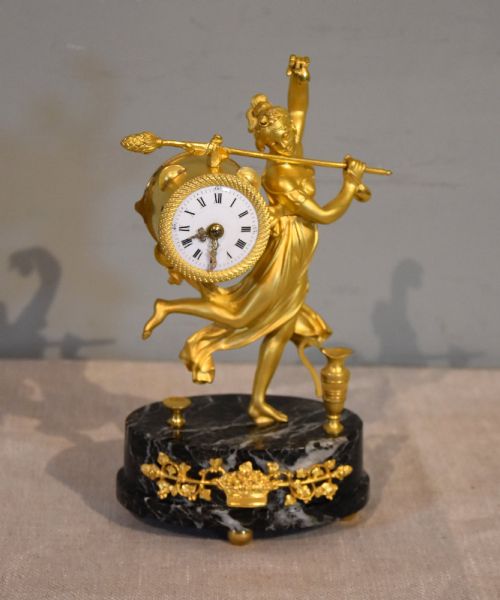
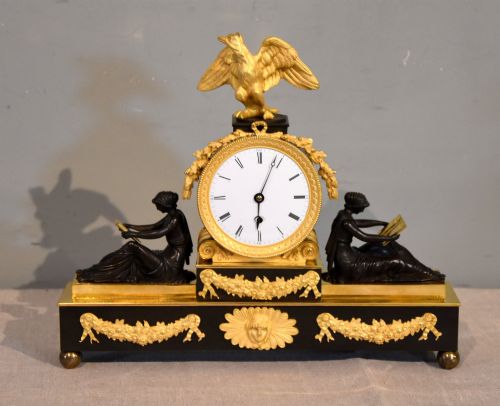
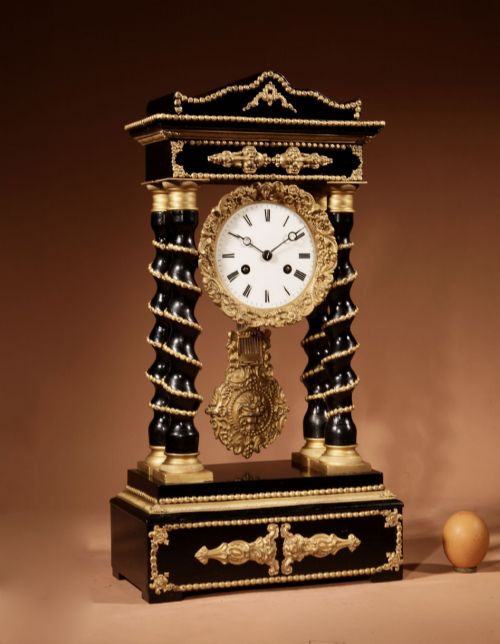
When you search for an empire style clock, you encounter substantial mantel clocks drawing heavily on French Empire, French Restoration, and Regency design principles. The forms range from strict architectural portico designs to figural mantel clocks depicting Napoleon or classical subjects.
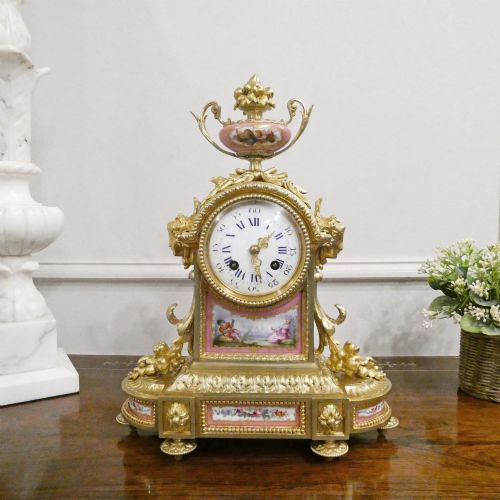
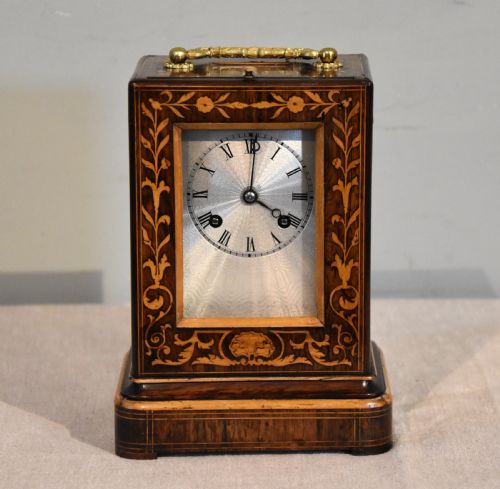
You are most likely to meet pieces housed in ebonised wood, sienna marble, white marble, and mahogany, frequently elevated by ormolu, gilt bronze, and gilt metal mounts. The dial layouts often feature enamel numerals housed within structured, symmetrical cases.
The selection bridges the nineteenth century, encompassing Victorian interpretations, specific dated examples from eighteen-sixty and eighteen-ninety, and earlier Regency productions originating from London and French workshops.

Materials and construction
The makers built these cases using dense woods like mahogany and ebonised timber, alongside natural stones including sienna and white marble. These durable foundations supported heavy metalwork components and provided stability for tall portico structures.
Gilding techniques applied to bronze, ormolu, and base metals created striking visual contrast against dark marble or ebonised wood. Enamel dials provided a crisp, readable surface, while mechanical movements relied on established fusee and pendulum configurations.
Retail Price Guide 2026
Typical UK retail prices for empire style clock, calculated from the Sellingantiques database of over a million retail prices indexed since 2003. This retail price guide relies exclusively on Sellingantiques data; no external sources or auction records are used, so the figures do not describe the wider market.
Several clocks preserve the unmistakable gaze of Napoleon watching the minutes tick away from the mantelpiece.
What separates the tiers
Quality rests heavily on the crispness of the cast metal mounts and the depth of the gilding on the bronze and ormolu elements. Superior examples display sharply defined figural work and seamless integration between stone or wood cases and their metallic ornamentation.
The sophistication of the movement and the integrity of the marble or mahogany housing further distinguish standard production from exceptional work. Precision in the enamel dials and the weight of the bronze case components signal the upper tier of execution.
Baltazart·Bently and Beck London
The Empire Style Clock Glossary
- Ormolu
- Gilded bronze, where finely ground gold is amalgamated with mercury and applied to a bronze base through heat. This technique creates a rich, durable golden finish characteristic of high-end decorative objects.
- Portico clock
- An architectural mantel clock supported by four or more columns, often arranged in a temple-like structure. This design gained prominence during the neoclassical periods.
- Fusee
- A conical pulley used in clock mechanisms to maintain even driving force as the mainspring unwinds. It ensures consistent timekeeping across the power reserve.
- Sienna marble
- A decorative yellow-brown marble quarried in Italy, featuring dark purple or grey veining. It was widely utilised for luxurious nineteenth-century mantel clock cases.
Frequently Asked Questions
What is an empire style clock?
An empire style clock is a decorative timepiece rooted in neoclassical design, typically featuring bronze, ormolu, marble, or ebonised wood.
These pieces draw on French and Regency aesthetics, often incorporating architectural portico shapes or figural elements related to Napoleon.
How do I date a portico clock?
Dating relies on examining the materials, dial construction, and style of the bronze mounts. Nineteenth-century examples often combine sienna marble with architectural columns.
Specific periods like the Regency era or Victorian decades show distinct preferences for mahogany, ebonised wood, and gilt metal details.
Where were these clocks made?
Many surviving examples originate from French workshops, reflecting French Empire and Restoration tastes. Others were produced in London, demonstrating the cross-channel influence on Regency design.
Maker signatures on dials or movements occasionally point to specific urban workshops.
How do I maintain marble cases?
Marble housings require gentle dusting with a dry, soft cloth to protect the polished surface. Avoid chemical cleaners that can damage natural stone or adjacent ormolu mounts.
Keeping the clock in a stable environment prevents thermal stress on the stone and metal components.