
Antique Travelling Clock
These small timekeepers are antique travelling clock examples designed to go on journeys, built to keep time reliably in a carriage or on a bedside table.
Antique Travelling Clock
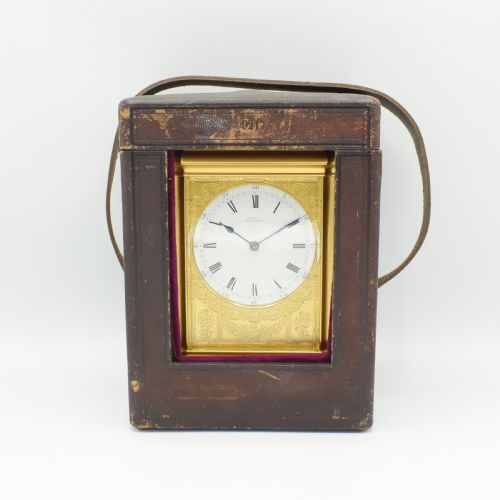
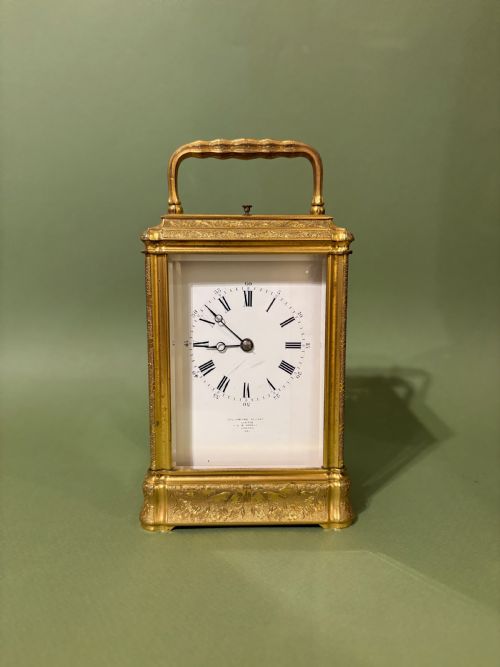
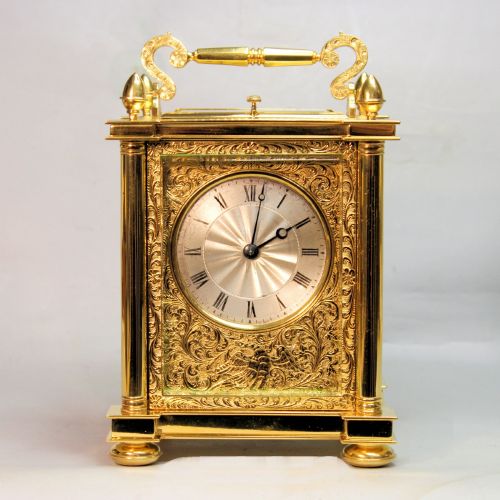
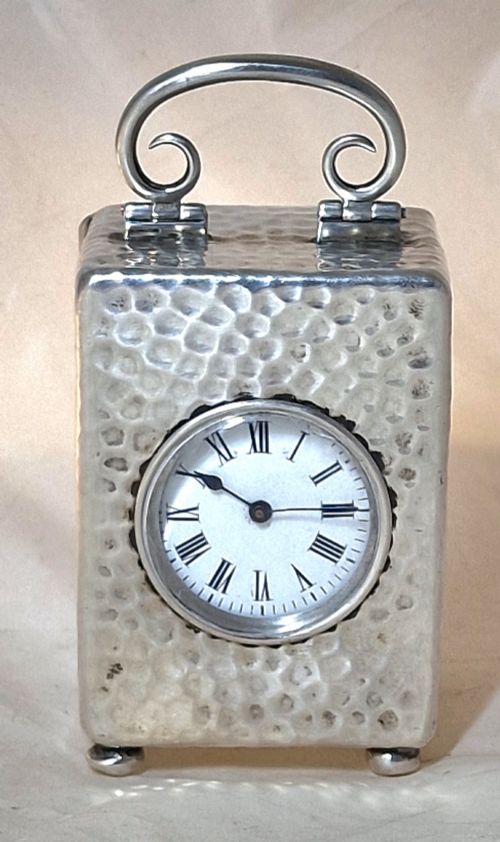
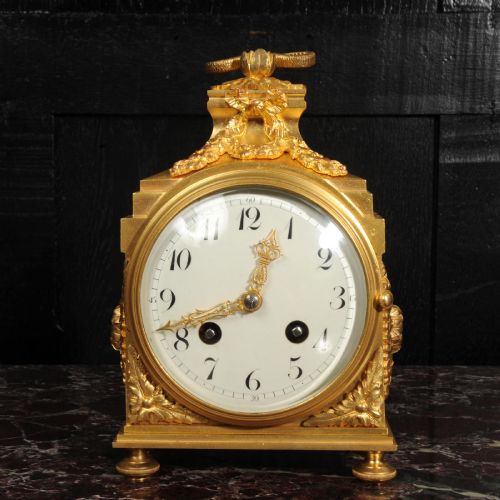
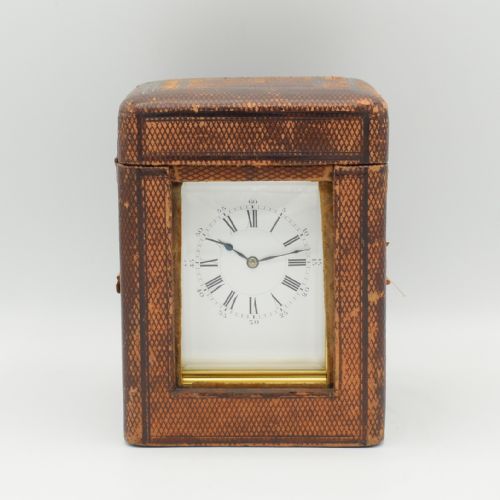
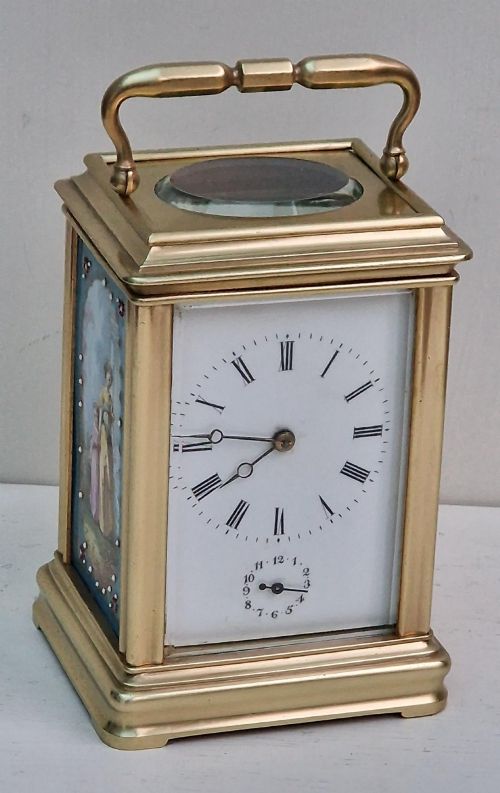
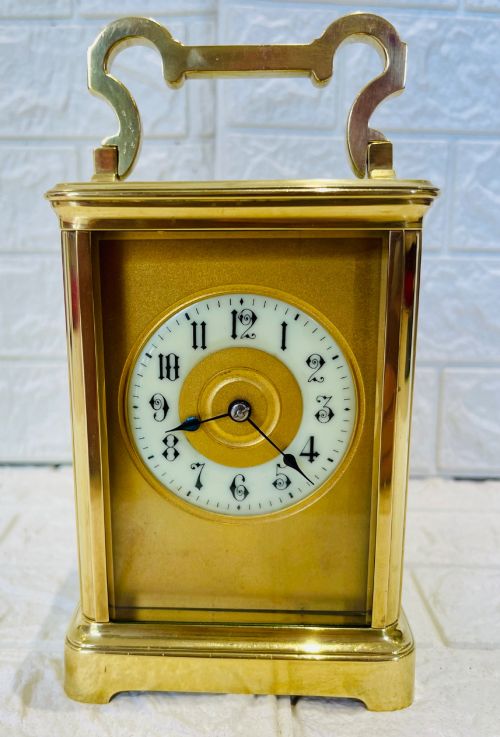
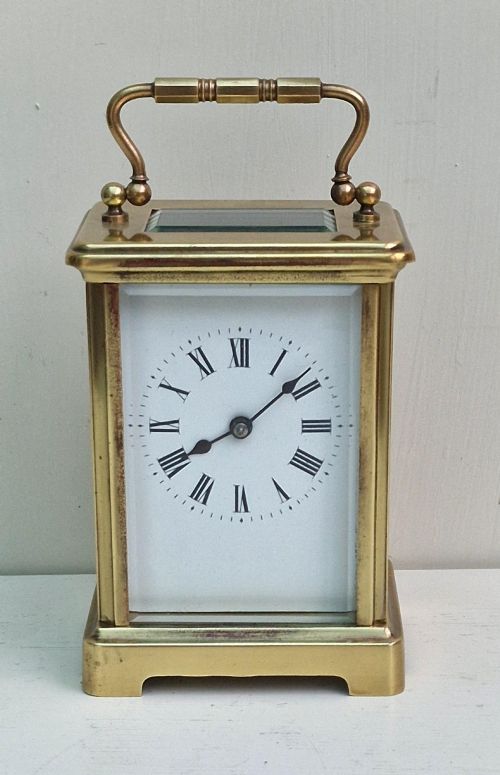
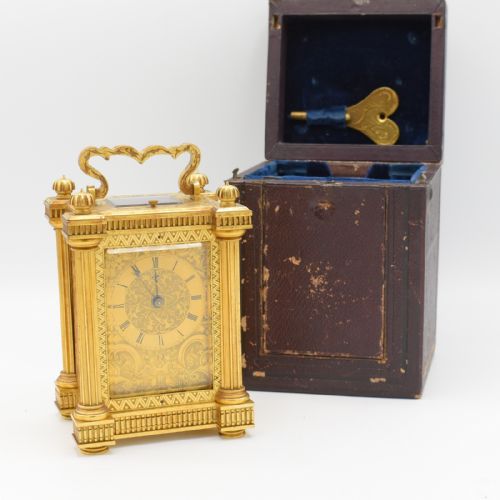
An antique travelling clock is primarily represented on this page by carriage clocks and pocket watches originating from the nineteenth century into the Edwardian period. Buyers encounter brass and gilt brass cases enclosing mechanical movements, often accompanied by original leather travel cases for protection on the road.
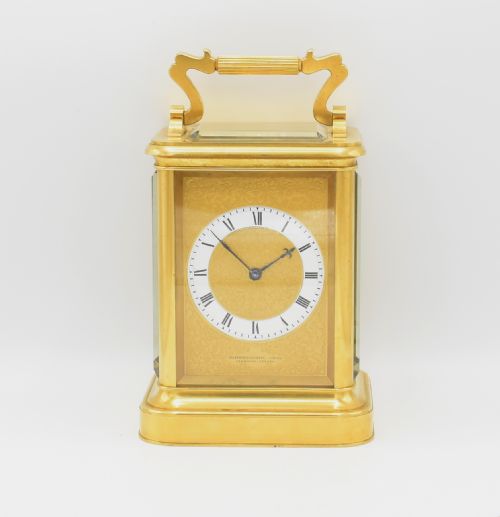
French makers dominate the regional origins, alongside notable English makers working in London during the Victorian and Edwardian eras. Forms range from miniature carriage clocks and porcelain panelled timepieces to large repeating clocks with striking mechanisms.
Materials and Construction
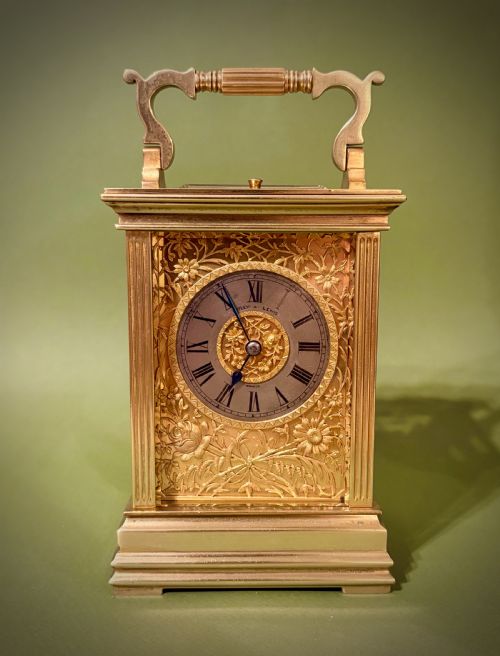
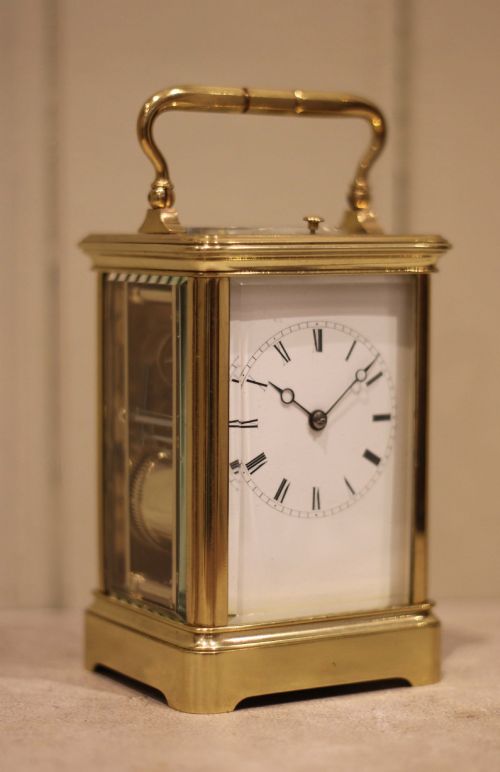
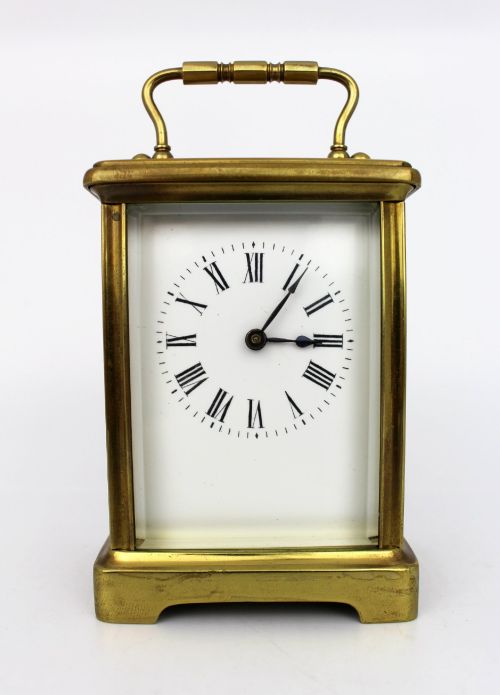
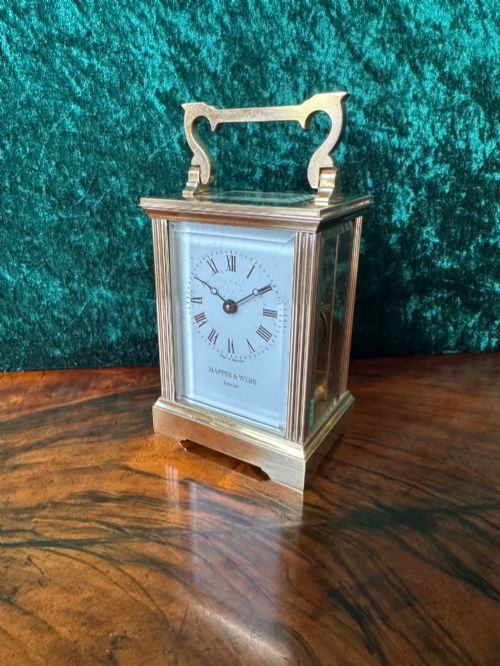
Brass, gilt brass, and silver form the structural framework for the cases, glazed with bevelled glass panels to reveal the interior escapement. Dials frequently incorporate white enamel with Roman numerals, while select models feature hand-painted porcelain panels set into the metal housing.
Movements rely on steel components, fusee mechanisms in English examples, and platform escapements designed to absorb the motion of travel. Leather cases lined with velvet or silk were constructed specifically to house these heavy brass frames during transit.
Antique Travelling Clock Retail Price Guide 2026
Typical asking prices for travelling clock among the pieces listed under this phrase on Sellingantiques today, from the lower quarter to the upper quarter. They describe what is for sale here now, not the wider market.
The selection includes pieces spanning the Victorian and Edwardian eras, utilising brass, porcelain, silver, and leather.
Distinctions in Quality
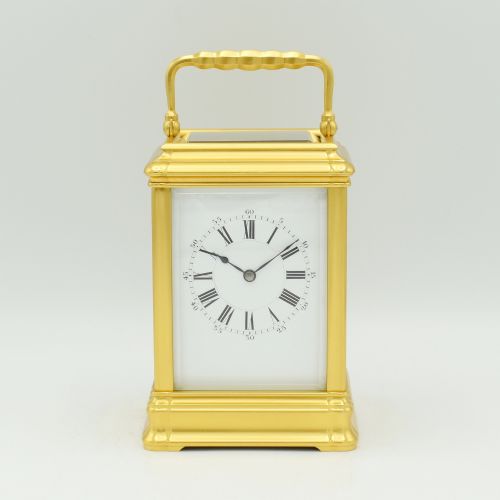
The degree of hand-engraving across the gilt brass gorge or corniche case distinguishes standard production from finer workshop output. Crisp finishing on the movement plates and the inclusion of striking and repeating complications elevate certain pieces above simple timepieces.
The survival of original fitted leather travelling cases and clearly signed maker movements on the backplate or dial add significant weight to a piece. Heavy gauge brass and unblemished enamel dials further separate robust examples from lesser items.
HENRI JACOT·COUSENS & WHITESIDE·Howell & James·Mappin & Webb·C. Detouche Paris·DROCOURT PARIS·T. Martin & Co
The Antique Travelling Clock Glossary
- Carriage clock
- A portable spring-driven clock designed for travel during the nineteenth century. These clocks typically feature a rectangular brass case with a handle on top and glass panels on all sides.
- Repeating movement
- A mechanism that sounds the last hour or quarter-hour on demand when a pendant or button is pressed. This complication was essential for telling time in the dark during journeys.
- Fusee
- A conical pulley used in English clocks to maintain equal power as the mainspring unwinds. This mechanical device improves timekeeping accuracy across the power reserve.
- Gorge case
- A specific style of brass carriage case featuring stepped mouldings at the top and bottom. It represents a classic French housing design for high-grade movements.
- Platform escapement
- The miniature horizontal assembly containing the balance wheel and escapement in a portable clock. It allows a mechanical clock to keep time while upright or in motion.
Antique Travelling Clock: Frequently Asked Questions
How do I wind a carriage clock?
Most carriage clocks use a dedicated winding key inserted into arbors located on the backplate of the movement. Turn the key gently until resistance is felt, taking care not to over-wind the mainspring.
Striking and repeating models often require winding multiple trains for the time and the strike functions separately through dedicated apertures.
Did all travelling clocks have leather cases?
Many fine pieces were originally supplied with stout leather outer cases lined with velvet or silk to protect the brass and glass during transit. Surviving original cases add context to how these objects moved between locations in the nineteenth century.
Some examples survive without cases, having spent their working lives stationary on a mantelpiece or desk.
How do I tell French and English clocks apart?
French pieces of this era generally utilise platform escapements visible through glass panels and often feature striking or repeating complications driven by small barrels. English examples frequently incorporate fusee movements within heavier brass frames signed by London makers.
Dial signatures and the style of case engraving also point clearly to their workshop origins in either Paris or London.