


French Repeater Clock
A french repeater clock brings the mechanical mastery of the nineteenth century into the room, chiming the hours and quarters at the push of a button.
French Repeater Clock
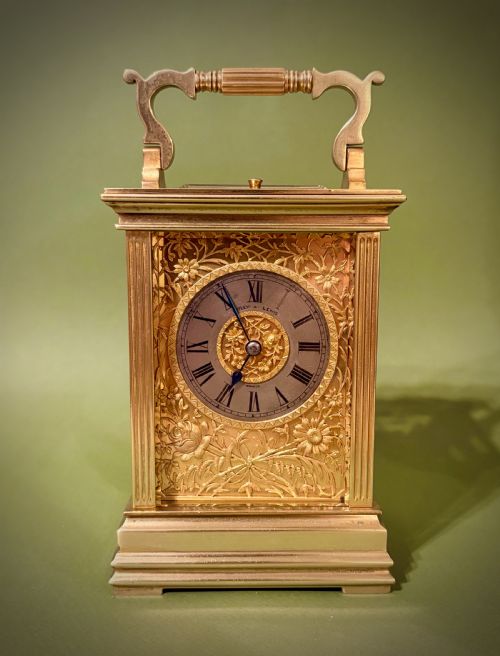
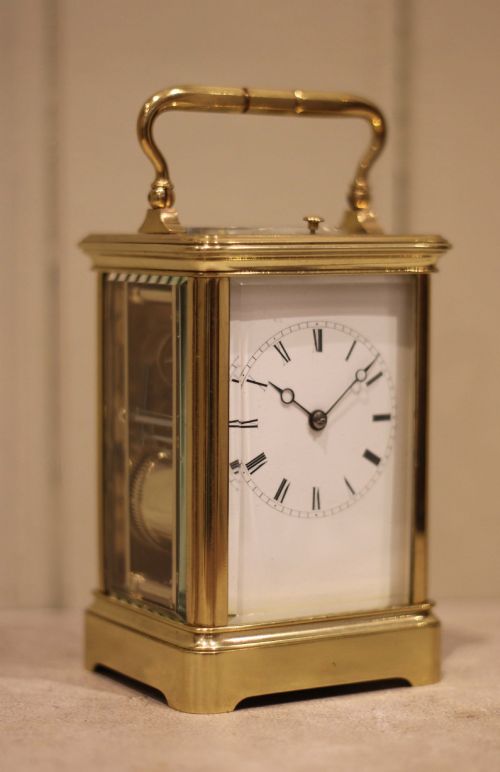
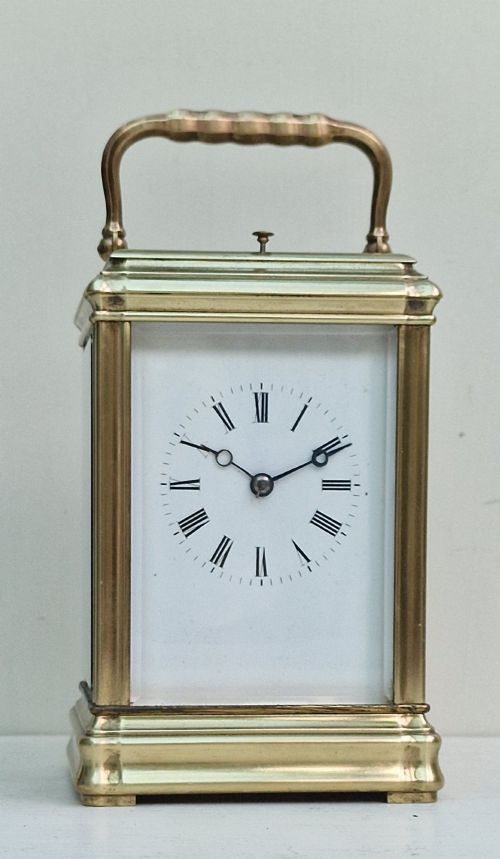
A french repeater clock is a portable timepiece designed for travel and domestic use during the nineteenth and early twentieth centuries. These pieces typically take the form of carriage clocks housed in brass frames fitted with bevelled glass panels.
The objects seen here span periods from the mid nineteenth century through to the Edwardian era, with Victorian examples appearing frequently. Makers and retailers from Paris and London feature across the selection, alongside unsigned pieces.
Most examples function as striking clocks with the addition of a repeat mechanism activated by a button on top. Variations in casing include standard pillared shapes, gorge cases, and oval configurations.
Materials and construction
Brass forms the structural core of these clocks, often finished with gilt or silver gilding to create a bright exterior. Steel components drive the intricate gear trains within the movement, while glass panels protect the dial and expose the inner workings.
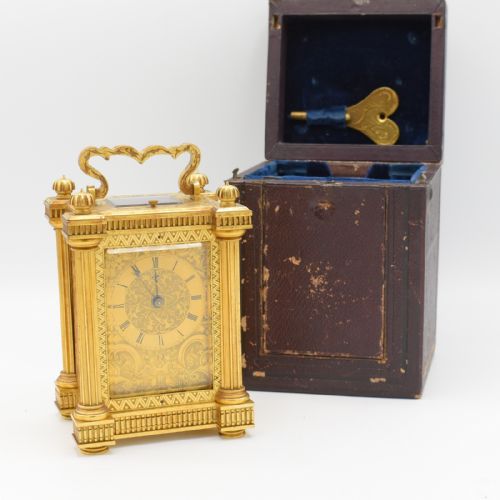
Enamel provides the surface for the clock faces, frequently decorated with hand painted floral motifs or numeral chapters. Leather frequently appears as the exterior material for fitted travel cases accompanying the timepieces.
French Repeater Clock Retail Price Guide 2026
Typical asking prices for french repeater clock among the pieces listed under this phrase on Sellingantiques today, from the lower quarter to the upper quarter. They describe what is for sale here now, not the wider market.
Certain nineteenth century examples include race horse interest engraved on the case, pairing mechanical horology with sporting pedigree.
Differentiating quality in timepieces
The refinement of the movement dictates much of the standing of a french repeater clock, with grande sonnerie and quarter chiming mechanisms representing higher complexity than standard hour strikers. Signed movements by notable makers demonstrate superior workshop standards compared to anonymous workshop output.
Case decoration also separates examples, as hand painted enamel panels and deeply engraved brass frames require specialised artisan skill. Original accessories such as matching numbered keys and fitted leather transport boxes elevate the completeness of a piece.
Brunelot·L Epee·J F Bautte Et Cie·Bourdin Paris·Alfred Drocourt·Henry Jacot·Howell And James London
The French Repeater Clock Glossary
- Repeater
- A mechanical complication that strikes the last hour or quarter hour when a plunger or button is pressed. This function allowed users to check the time in the dark.
- Gorge case
- A distinct rectangular carriage clock case style featuring stepped mouldings at the top and base. It represents a robust architectural housing for the movement.
- Grande sonnerie
- A complex striking train that chimes the hours and the quarters automatically on every quarter hour, in addition to repeating the hours on demand.
- Enamel dial
- A clock face created by fusing powdered glass to a metal substrate at high heat. This technique produces a smooth, durable white surface for painted numerals.
- Platform escapement
- The small self contained assembly holding the balance wheel and escapement on top of the movement. It replaced the pendulum to allow portable timekeeping.
French Repeater Clock: Frequently Asked Questions
How do I operate the repeater mechanism?
Press the button or plunger located on the top of the case to activate the striking train. The movement will sound the last elapsed hour and quarters.
Allow the strike sequence to finish completely before moving the clock or pressing the button again. Avoid forcing the plunger if resistance is felt.
How do I wind a carriage clock?
Insert the matching key into the appropriate square arbour on the floor or backplate of the movement. Turn the key gently until you feel firm resistance, indicating a full mainspring.
Keep track of the winding intervals to ensure the timekeeping remains consistent. Do not overwind the springs, as this can cause internal damage.
Why does the clock run fast or slow?
The regulating lever visible on the platform escapement allows small adjustments to the rate. Move the pointer toward fast or slow according to the timekeeping deviation.
Ensure the clock rests on a completely level surface to maintain an even beat. Fluctuations in room temperature can also influence the expansion of internal metal parts.