



Brass Repeater Clock
These brass repeater clocks are sophisticated mechanical timekeepers housed in glazed metal cases, offering portability and the ability to strike the hours on demand.

Brass Repeater Clock
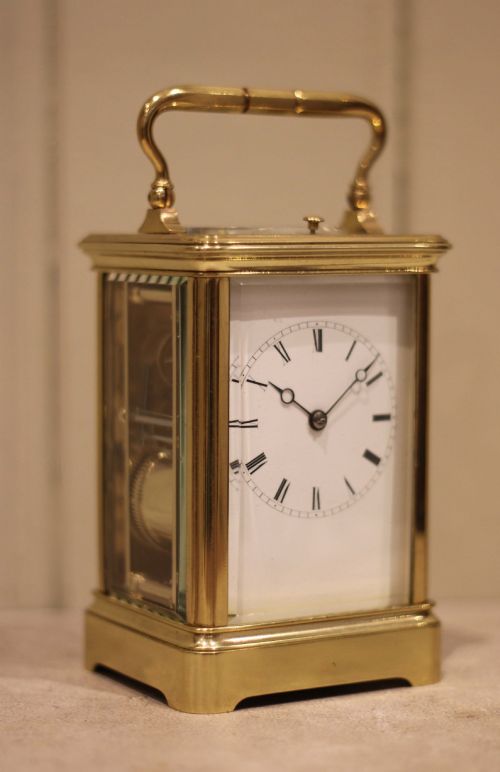
A brass repeater clock combines portability with a striking mechanism that chimes the last hour and quarter-hour when a button or plunger is pressed. These pieces date from the nineteenth century, spanning the Victorian period through to nineteen hundred, and predominantly originate from French workshops.
Makers such as Brunelot and retailers like Mappin and Webb appear alongside provincial English names like Bishop of Bournemouth, reflecting the international market for these sophisticated mechanical items.
Materials and Construction
Construction relies heavily on robust brass frames fitted with bevelled glass panels that allow a clear view of the internal escapement and gear trains. Gilt brass surfaces provide a rich, reflective finish, while metal components are shaped and fitted by hand.
Brass Repeater Clock Retail Price Guide 2026
Typical asking prices for brass repeater clock among the pieces listed under this phrase on Sellingantiques today, from the lower quarter to the upper quarter. They describe what is for sale here now, not the wider market.
Travellers once relied on these heavy brass clocks to wake them in draughty coaching inns before the invention of reliable electrical alarms.
Assessing Quality and Merit
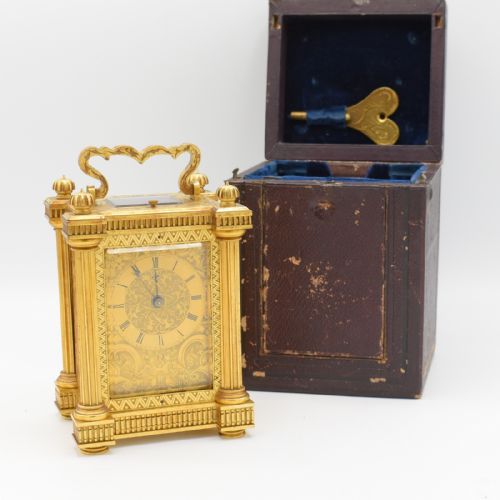
Quality rests in the crispness of the case engraving, the retention of original gilding, and the complexity of the movement. Examples with fully gilded surfaces and decorative top and side panels sit at the upper end of the scale.
The presence of signed movements by known makers elevates an example, as does the integration of extra complications such as alarm functions and fully restored, original mechanical trains.
Brunelot·Bishop Bournemouth·Mappin and Webb
The Brass Repeater Clock Glossary
- Repeater
- A mechanism that sounds the time on gongs or bells when a button or pendant is pressed, allowing the owner to check the hour in the dark.
- Carriage clock
- A small, spring-driven timekeeper with a handle, originally designed for officers and travellers during the nineteenth century.
- Gilt brass
- Base metal treated with a thin layer of gold or gold-coloured alloy to give a rich, bright finish.
- Enamel dial
- A metal face coated with fused glass powder, fired at high temperatures to create a durable, smooth surface for painted numerals.
- Escapement
- The internal mechanism that controls the release of power in the gear train, maintaining the regular beats of the clock.
Brass Repeater Clock: Frequently Asked Questions
How do I use the repeater function?
Press the button or plunger on the top of the case to activate the striking mechanism. The clock will sound the last elapsed hour and quarters.
Ensure you press the plunger firmly until it stops to complete the cycle before releasing it.
Why does the clock need winding?
These pieces use internal mainsprings rather than hanging weights to store energy. As the spring unwinds over several days, it powers the gear train.
Wind both the time and strike trains carefully using a matching key through the holes in the back plate.
How do I date a brass repeater clock?
Examine the style of the case, the shape of the escapement visible through the dial, and any signatures on the movement back plate. Nineteenth-century French pieces often show specific stylistic shifts in handle design and engraving.
Maker records and retailer signatures help narrow down the decade of production.
Where should I place my carriage clock?
Position the clock on a stable, level surface away from direct sunlight, drafts, and sources of moisture. A solid mantelpiece or desk prevents vibrations that might interfere with the delicate balance wheel.
Avoid placing it near edge surfaces where it could be easily knocked over.