

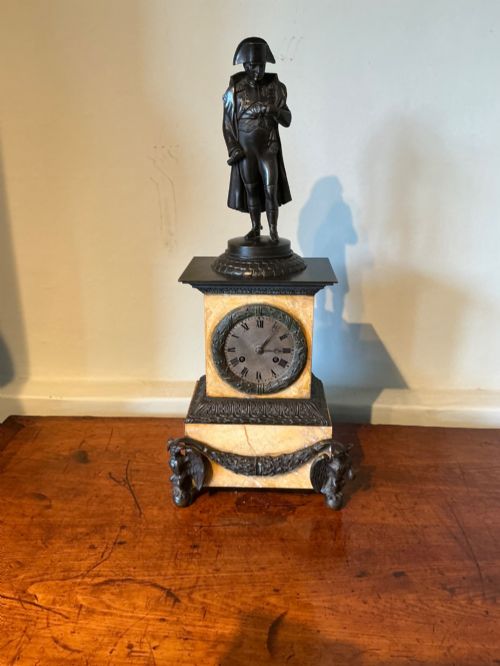


Yellow Marble Clock
A yellow marble clock brings warmth and architectural presence to a mantelpiece, combining rich stone with classical bronze work.
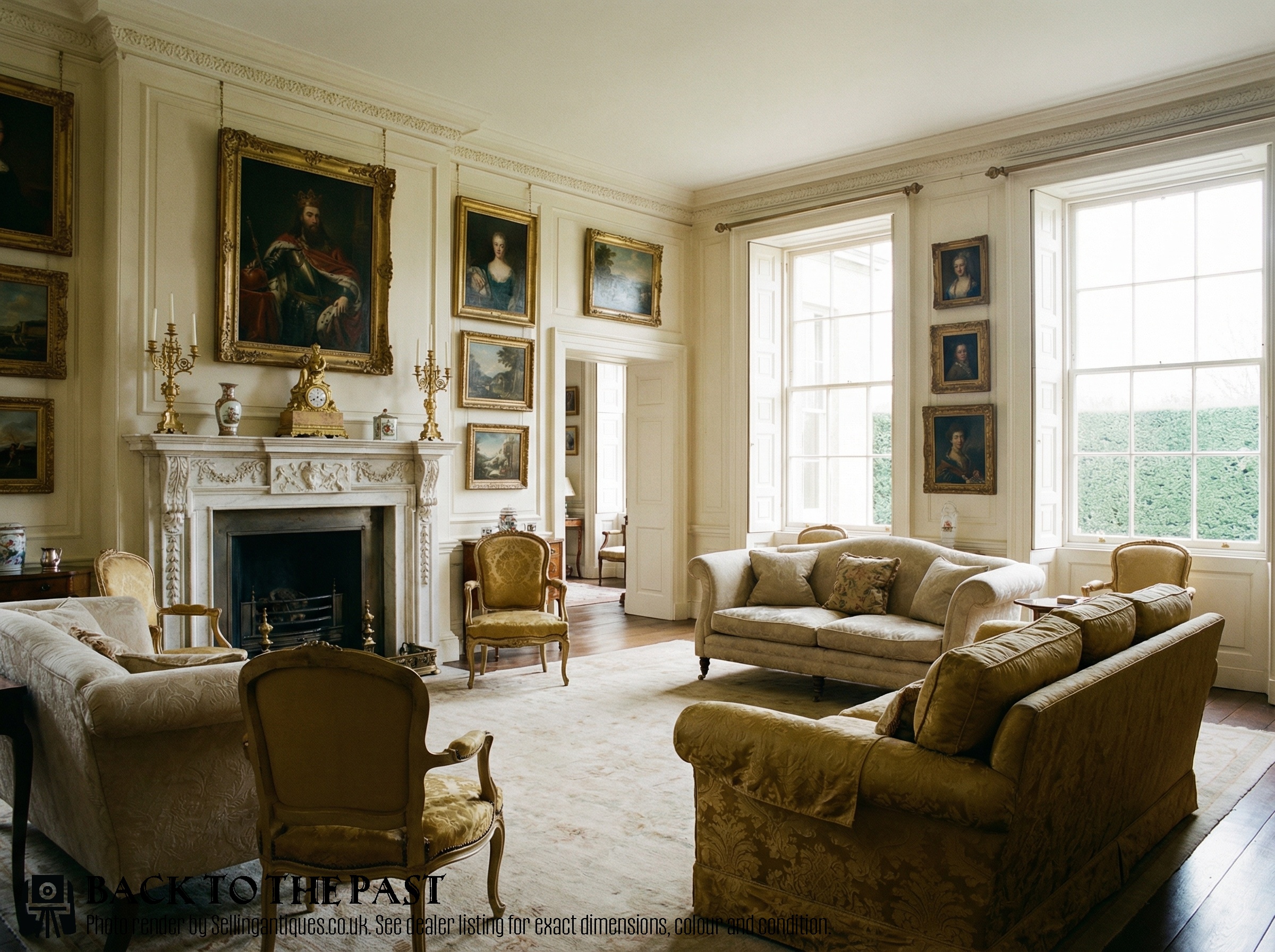
Yellow Marble Clock
When you search for a yellow marble clock, you encounter pieces primarily constructed from Sienna marble, often paired with contrasting patinated or gilt bronze figures and mounts. These heavy timepieces date predominantly from the nineteenth century, spanning Victorian, French Empire, and Napoleon III periods.
The forms range from simple architectural mantel clocks to elaborate sets that include matching garnitures. Many examples incorporate classical motifs, French styling, and figures such as Napoleon or rearing stallions.
You are most likely to meet French and English mantel designs on this page, utilising rich yellow and sienna tones alongside enamel dials and brass clock movements. These pieces served as both functional timekeepers and striking decorative centrepieces for period interiors.
How they were made
The construction relies on heavy blocks of Sienna marble shaped to form architectural cases, housing mechanical movements behind glass and enamel dials. Artisans cut and polished the stone to expose the rich yellow and brown veining characteristic of the material.
Bronze and brass components, including gilt ormolu mounts, figures, and bezel rings, were cast and chased separately before being affixed to the marble body. Details such as cherubs, horses, or military figures required skilled metalworking to complement the stony mass.
Yellow Marble Clock Retail Price Guide 2026
Typical asking prices for yellow marble clock among the pieces listed under this phrase on Sellingantiques today, from the lower quarter to the upper quarter. They describe what is for sale here now, not the wider market.
Napoleon keeps watch over many of these hours, cast in bronze and standing guard above the ticking brass.
What varies in quality
The standard of a yellow marble clock rests upon the depth of the marble figuring and the crispness of the bronze chasing. Finer examples display richly mottled Sienna stone paired with sharply detailed cast metal figures rather than plain, uniform surfaces.
The integration of the clock garniture and the harmony between the metalwork and the stone indicate the original ambition of the piece. Superior construction shows careful alignment of the bronze mounts and clean enamel dials without hairline fractures.
Henry Berkeley Square London·Gillion
The Yellow Marble Clock Glossary
- Sienna Marble
- A striking yellow-gold decorative marble characterised by deep brown and purple veining. It originates from quarries in Italy and gained great popularity in nineteenth-century mantel clocks.
- Ormolu
- Gilded bronze produced by applying a mercury and gold amalgam to a bronze base and heating it. This technique gives the metal a rich, matte gold appearance.
- Garniture
- A set of matching decorative objects designed to be displayed together on a mantelpiece, typically comprising a central clock flanked by matching vases or candelabra.
- Fusee
- A conical pulley used in clock movements to equalize the declining power of the mainspring as it unwinds. It ensures more accurate timekeeping across the duration of the wind.
- Enamel Dial
- A metal dial face coated with fused glass powder and fired in a kiln to create a smooth, white surface. Numerals are painted onto this durable, glossy ground.
Yellow Marble Clock: Frequently Asked Questions
What is a yellow marble clock?
A yellow marble clock is a heavy mantel timepiece typically constructed from Sienna marble and accented with bronze or gilt brass mounts. These pieces date largely from the nineteenth century and reflect neoclassical or empire tastes.
They function as both timekeepers and sculptural ornaments, frequently incorporating detailed metal figures or matching garniture sets to dominate a fireplace mantel.
How do I date a yellow marble clock?
Dating relies on examining the style of the bronze mounts, the form of the marble case, and the materials of the dial and movement. Nineteenth-century examples often display French Empire, Victorian, or Napoleon III characteristics.
Inscriptions on the enamel dial or backplate can also point towards specific decades or makers, while the presence of a fusee movement often suggests English craftsmanship.
How were clock garnitures used?
Clock garnitures were designed as symmetrical decorative sets for the mantelpiece, placing the main clock in the centre flanked by matching ornamental pieces. They created a balanced, formal display favoured in nineteenth-century drawing rooms.
The matching side pieces often echoed the marble and bronze materials of the clock itself, tying the decorative scheme of the fireplace together.
How do I care for Sienna marble?
Sienna marble requires gentle dusting with a soft, dry cloth to protect its polished surface from abrasive particles. Avoid using chemical cleaners or excessive moisture, which can damage both the stone and the antique bronze mounts.
Keep the clock away from direct sources of heat or strong sunlight to preserve the finish of the marble and the integrity of the internal mechanical movement.