
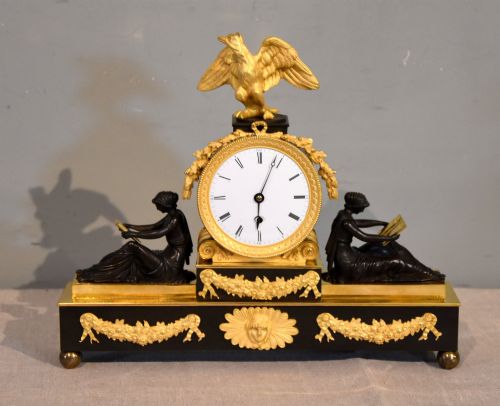
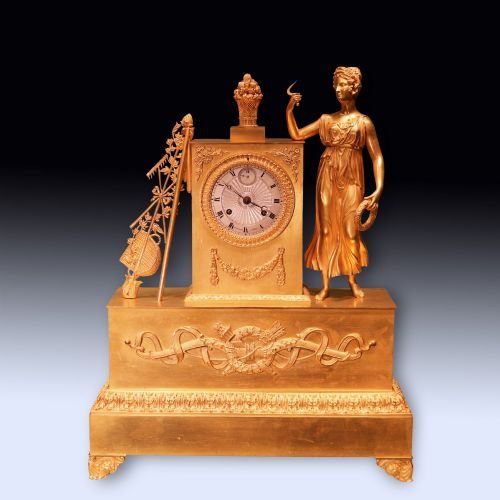


Classical Figural Clock
A classical figural clock combines timekeeping with sculptural narrative, anchoring a mantelpiece with nineteenth-century bronze and marble.
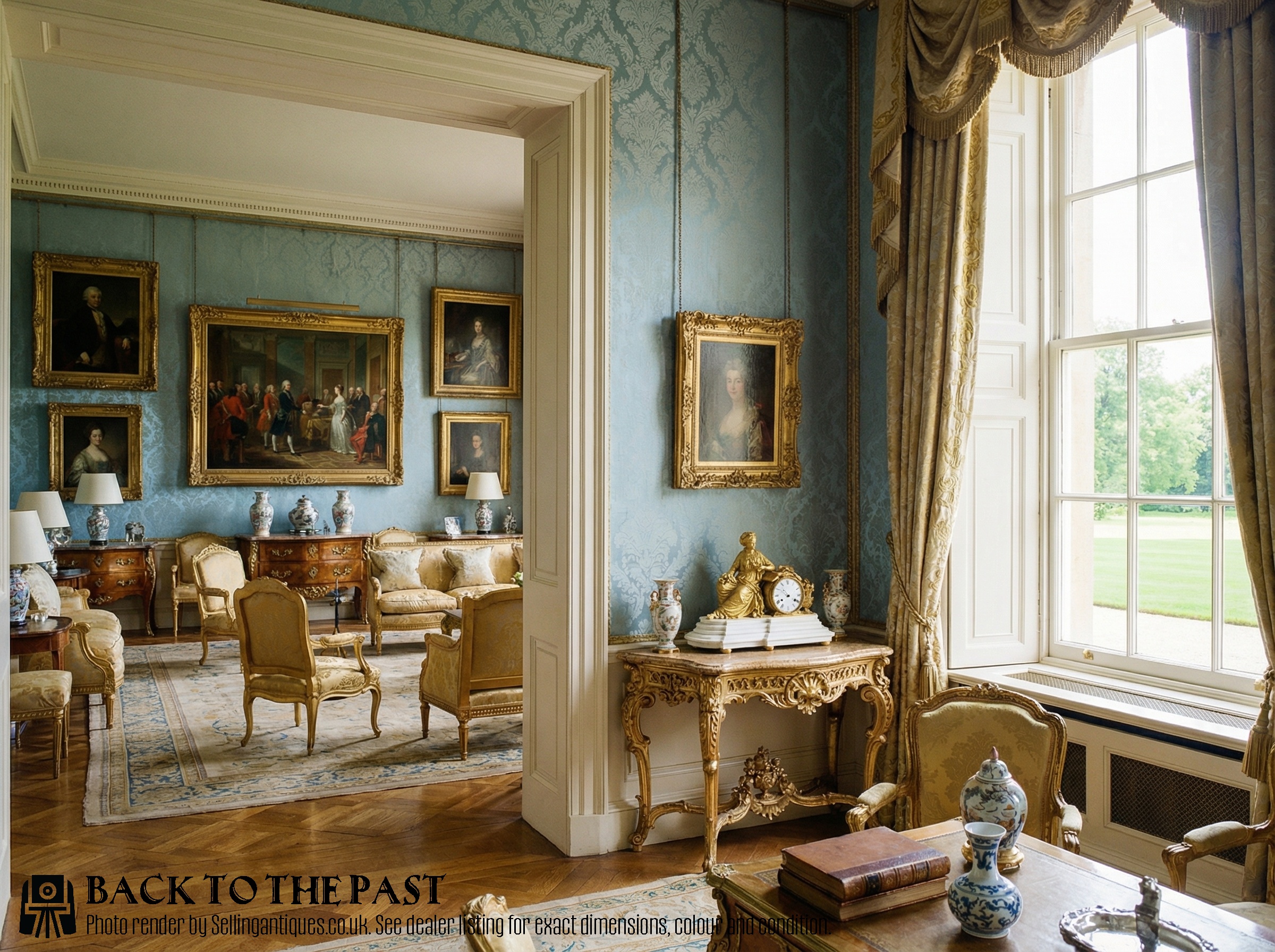
Classical Figural Clock
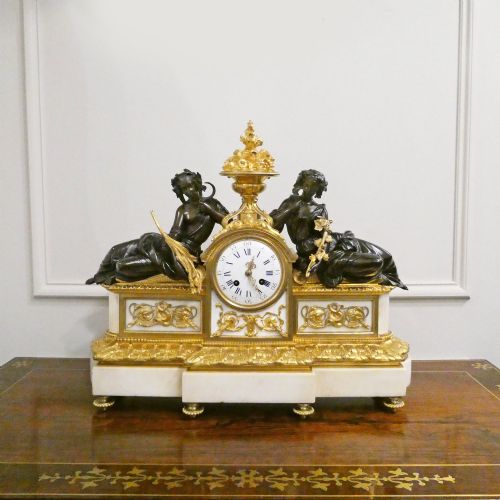
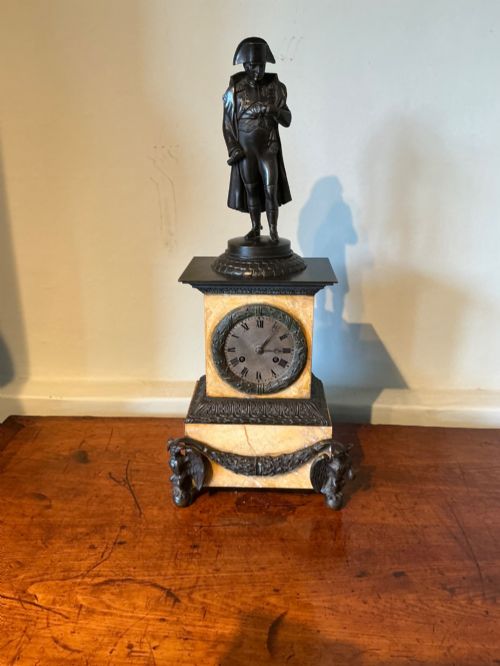
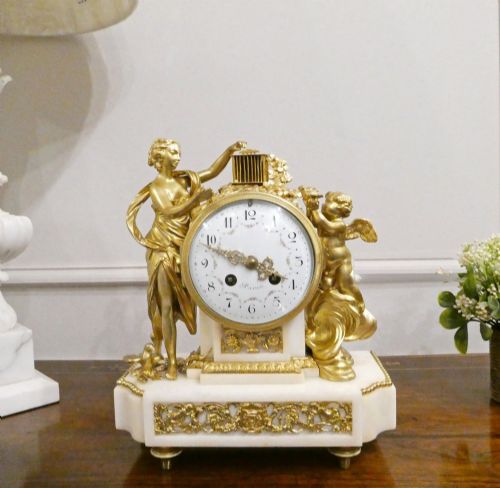
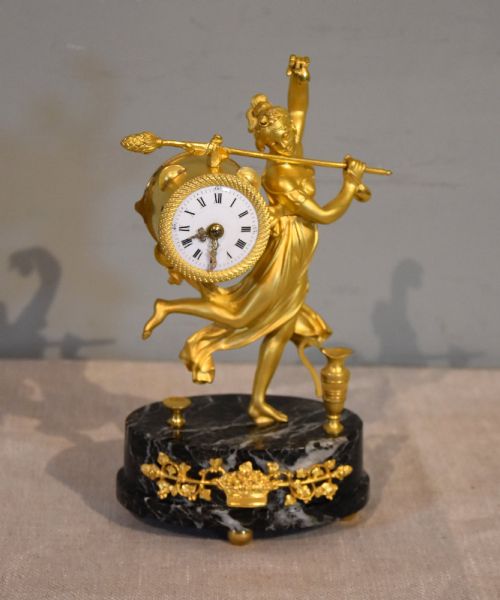
A classical figural clock places a distinct sculptural subject upon a architectural base, drawing heavily from French Empire, Louis XVI, and Victorian design. These pieces take the form of mantel clocks and clock garnitures, often accompanied by matching side pieces.
Most examples found here originate from nineteenth-century French workshops, spanning periods from 1800 to 1900. Subjects range from allegorical figures and historical leaders like Napoleon to mythological deities positioned beside the dial.
Buyers encounter standalone mantel clocks alongside larger three-piece sets mounted on rouge, green, or white marble bases. The integration of the figure with the dial housing defines the archetype.
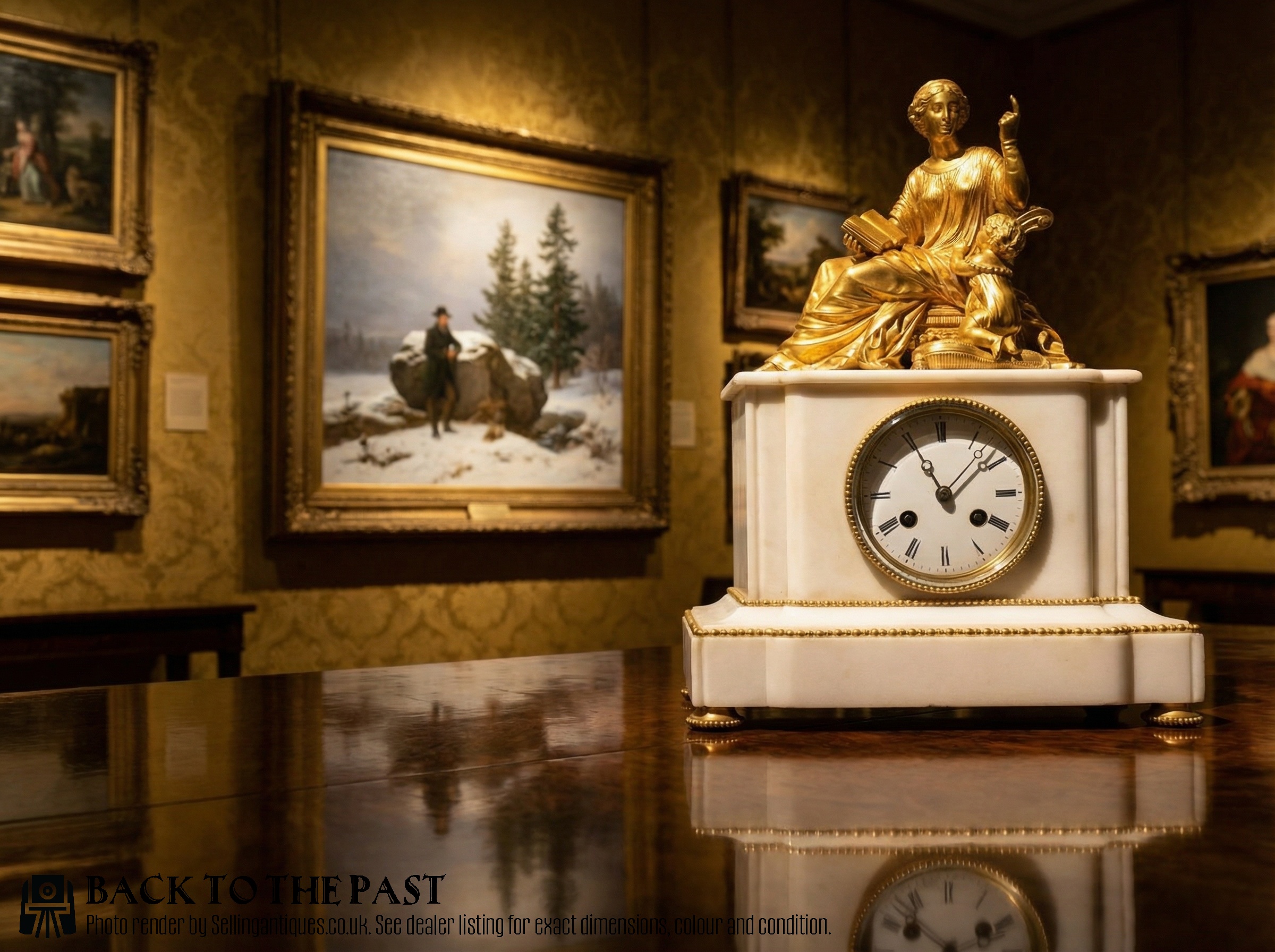
Materials and construction
Foundries cast these figures in bronze, ormolu, and gilt bronze, frequently combining patinated surfaces with polished highlights. Spelter and gilt metal also appear in later nineteenth-century manufacturing.
Bases combine heavy carved marble, alabaster, and brass, housing mechanical movements often protected by glass domes. Enamel dials feature individual chapter rings for hours and minutes.
Gilding techniques applied mercury or fire gilt layers to bronze surfaces, producing a durable finish characteristic of French horology.
Classical Figural Clock Retail Price Guide 2026
Typical asking prices for classical figural clock among the pieces listed under this phrase on Sellingantiques today, from the lower quarter to the upper quarter. They describe what is for sale here now, not the wider market.
Listings feature nineteenth-century French and English pieces utilising marble, gilt bronze, ormolu, enamel, and glass.
Distinctions in craftsmanship
The precision of the bronze casting and the crispness of the chasing separate standard production from superior work. Master founders achieved depth in drapery, hair, and facial expressions that lesser workshops missed.
The integration between the sculptural subject and the marble base indicates overall ambition. Top-tier pieces use substantial, richly veined marble and heavy fire-gilded bronze rather than lighter brass and painted spelter.
Movement maker marks indicate workshop standing, linking specific pieces to recognised clockmakers who supplied reliable eight-day striking mechanisms.
Vincenti·Baetens London·Canaillor of Paris·Japy Freres·Deniere Et Fils·Deniere and Cailleaux·Perigal and Duterrau·Freres Raingo·Gillion
The Classical Figural Clock Glossary
- Ormolu
- Finely chopped gold or gold leaf applied to a bronze base through a mercury amalgamation process. This technique creates a rich, matte yellow surface that resists tarnish.
- Garniture
- A set of three matching decorative objects designed for a mantelpiece, usually comprising a central clock flanked by two matching vases or candelabra.
- Spelter
- A zinc alloy used as a cheaper alternative to bronze for sculptural castings in the nineteenth century. It is lighter and softer than bronze.
- Timepiece
- A clock that indicates the time but lacks a striking mechanism or musical train. These require winding only for the going train.
- Fusee
- A conical pulley used in portable clocks to maintain equal force on the train as the mainspring unwinds. This mechanism improves timekeeping accuracy.
Classical Figural Clock: Frequently Asked Questions
Where should I place a heavy marble clock?
Support these pieces on a sturdy mantelpiece or heavy sideboard capable of bearing substantial marble and bronze weight. Keep them away from direct heat sources and sunlight to protect marble and enamel.
Ensure the surface is completely level so the pendulum swings evenly and the escapement ticks in a steady beat.
How do I distinguish bronze from spelter?
Bronze feels heavier, sounds more resonant when tapped, and takes a deeper patination or fire gilt finish. Spelter is softer, shows lighter weight, and often reveals grey metal beneath worn paint.
Magnification reveals the sharper chasing lines characteristic of bronze compared to the softer edges of moulded spelter.
What maintenance do these movements require?
Mechanical clocks benefit from professional cleaning and lubrication every few years to remove old oil and dust from pivots and gears. Keep the glass door closed to prevent dust accumulation on the dial.
Moving the clock requires securing or removing the pendulum to protect the suspension spring from damage.