
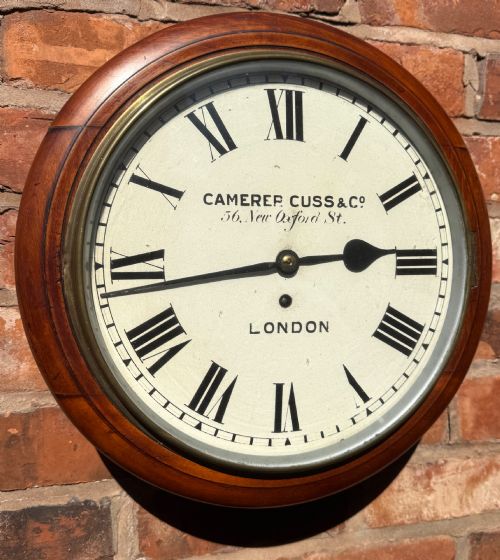
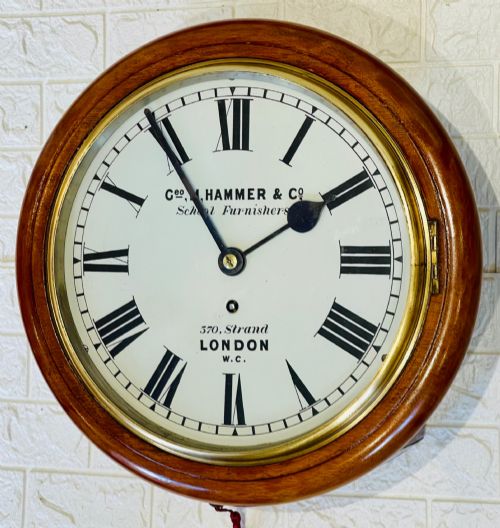
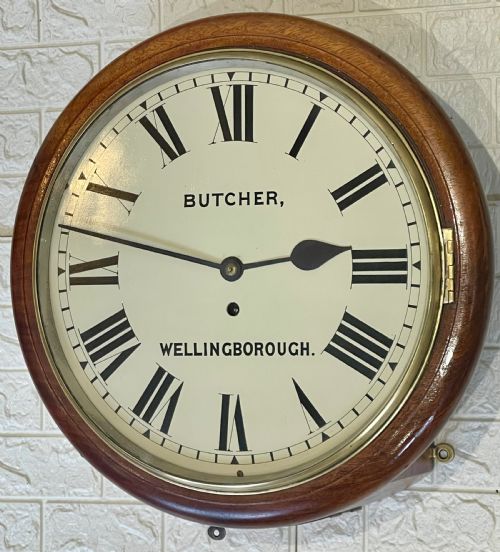
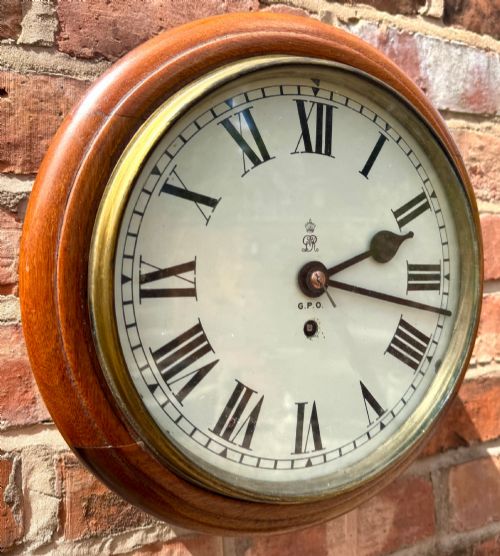


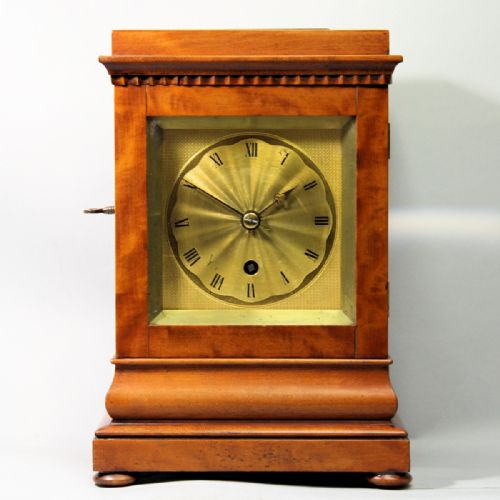


Chain Fusee Clock
A chain fusee clock holds power steady through a tapered drum and chain, bringing precise nineteenth century movement to mahogany and bronze cases.
Understanding chain fusee clock pieces
A chain fusee clock uses a specialised mechanical movement where a fine steel chain unwinds from a fusee cone to equalise the declining pull of the mainspring as it runs down. Buyers searching for a chain fusee clock encounter diverse forms, with wall clocks and mantel clocks appearing most frequently in the record.
The material vocabulary spans rich timbers like mahogany, rosewood, oak, walnut and satinwood alongside cast metals including brass, bronze, ormolu and nickel-plated brass. Cases range from simple mahogany dial wall clocks to elaborate rococo revival and architectural five-glass library designs.
Origins stretch across the nineteenth century into the Edwardian era and the nineteen-twenties, incorporating maritime instruments, railway timepieces and domestic bracket clocks. Regency and Victorian examples dominate, often housed in inlaid wood or gilded bronze cases.
Distinctions in quality
Quality rests upon the crispness of the movement assembly and the precision of the fusee chain engagement, where finer hand-finished components ensure a smoother transfer of power. Case craftsmanship creates another clear division, distinguishing simply constructed wall dial surrounds from elaborately cast ormolu, gilt bronze and intricately carved cabinet work.
The reputation of the maker shapes value significantly, with signed dials and movements by noted London and provincial clockmakers commanding particular attention. The integration of complex architectural or decorative elements, such as multi-glass panels, engine-turned gilded dials or specialised striking trains, further elevates the piece.
Retail Price Guide 2026
Typical UK retail prices for chain fusee clock, calculated from the Sellingantiques database of over a million retail prices indexed since 2003. This retail price guide relies exclusively on Sellingantiques data; no external sources or auction records are used, so the figures do not describe the wider market.
Recorded materials span brass, glass, enamel, steel, ormolu, gilt bronze, mahogany, and nickel-plated brass across multiple periods.
Prescot Clock Co·Kelvin White & Hutton·Perigal & Duterrau·Payne & Co London·Dent·Ingram Brothers Wood Green·Rieder & Co·Winterhalder & Hofmeier·Fisher Old Bond Street Bath·Barwise London·Baetens London·Brockbank & Atkins London·Bolton Smith London·Hennessy Swansea·Robins Charing Cross·Purvis London·P Forrester Hull·Granges London·Clarke York·Harris Cornhill
The Chain Fusee Clock Glossary
- Fusee
- A conical pulley used in mechanical clocks to counteract the declining force of the mainspring as it unwinds. This clever cone ensures even tension across the entire running period.
- Chain
- A microscopic linkage of steel links that connects the barrel to the fusee cone, replacing the gut string found in earlier mechanisms. It provides immense durability and strength.
- Dial
- The visible face of the clock where hours and minutes are marked. Enamel, silvered brass and painted wood are common variations seen on these pieces.
- Ormolu
- Finely ground high-carat gold mercury-gilded onto a bronze base. This technique creates a rich golden surface found frequently on nineteenth-century French and English decorative cases.
- Library clock
- A substantial portable clock, often featuring multiple glass panels that expose the movement within a wooden or metal housing. They were designed for study or desk placement.
Frequently Asked Questions
What is a chain fusee clock?
A chain fusee clock is a mechanical timekeeper that uses a conical pulley and a delicate steel chain to regulate power from the mainspring.
This system ensures the driving force remains uniform from the moment the clock is fully wound until it runs down, improving timekeeping accuracy.
How do I wind a chain fusee clock?
Winding requires a key inserted into the dial aperture to tension the mainspring via the gear train.
Care must be taken not to overwind, ensuring the chain seats properly onto the spiral grooves of the fusee cone.
Where were chain fusee clocks used?
These clocks served in various settings, from domestic mantelpieces and libraries to railway stations, ships and offices.
Wall-mounted dial clocks were particularly common in public spaces and transit hubs for clear visibility.
How do I date a chain fusee clock?
Dating relies on stylistic clues in the case work, materials utilised, and signatures inscribed on the dial or movement backplate.
Georgian, Regency, Victorian and Edwardian periods each brought distinct aesthetic preferences to case design.