
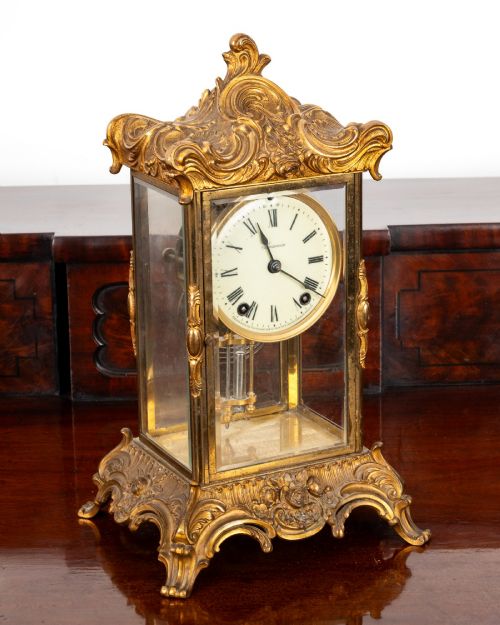
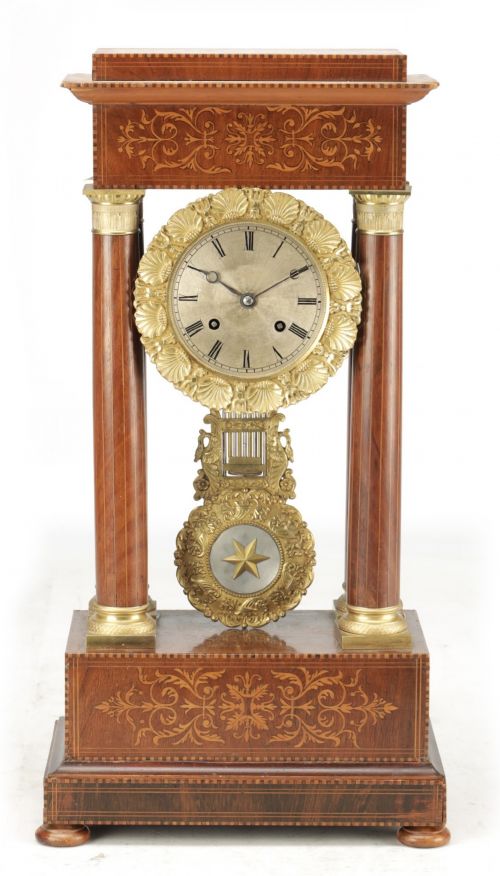
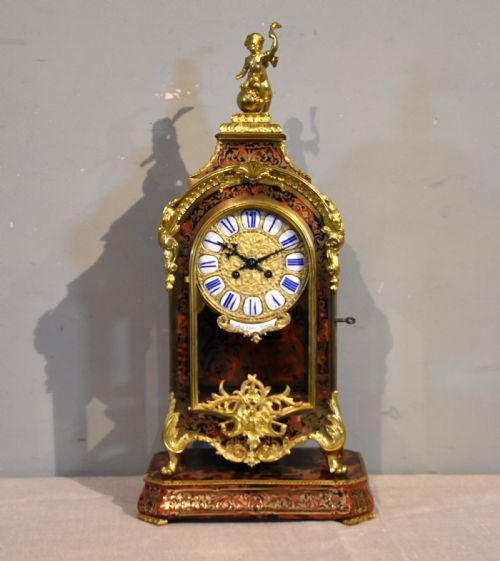


Victorian Ormolu Clock
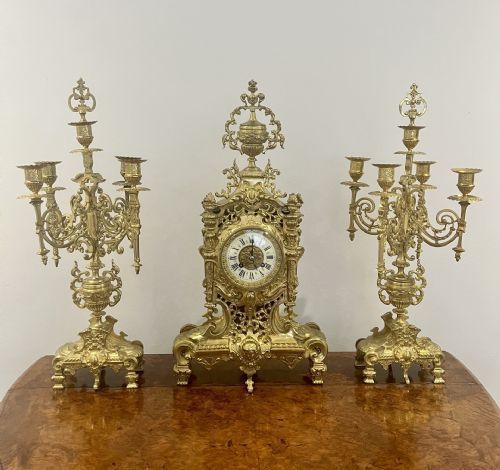
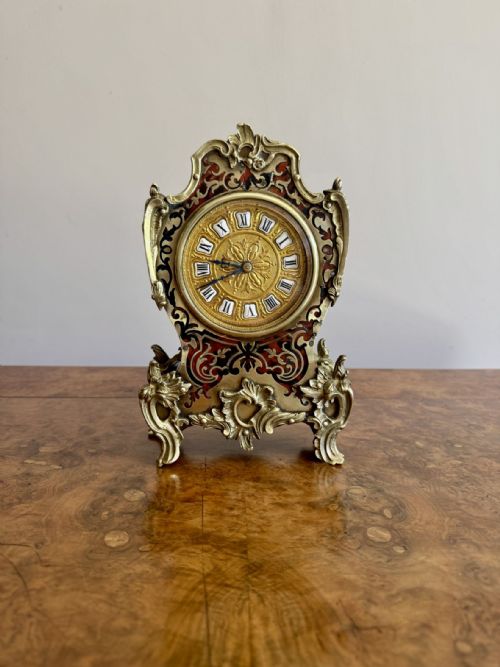
A victorian ormolu clock brings heavy gilded metalwork and ornate French revival styling straight to the mantelpiece.
What they are
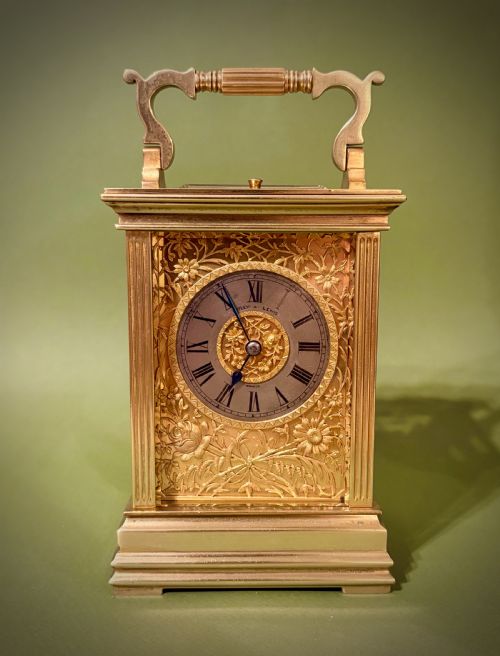
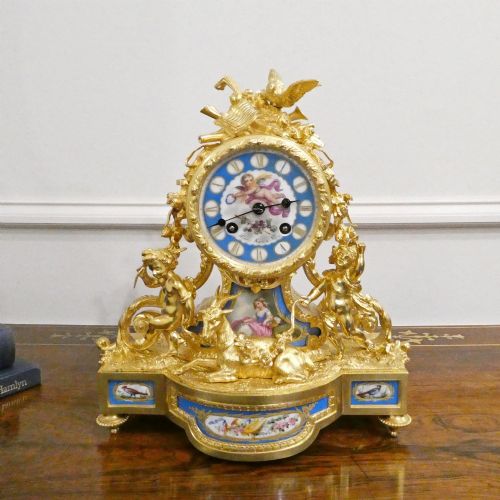
When you search for a victorian ormolu clock, you are looking at substantial mantel timepieces defined by their rich, golden metallic surfaces. These objects date across the nineteenth century, from the eighteen sixties through to eighteen eighty, drawing heavily upon continental aesthetics.
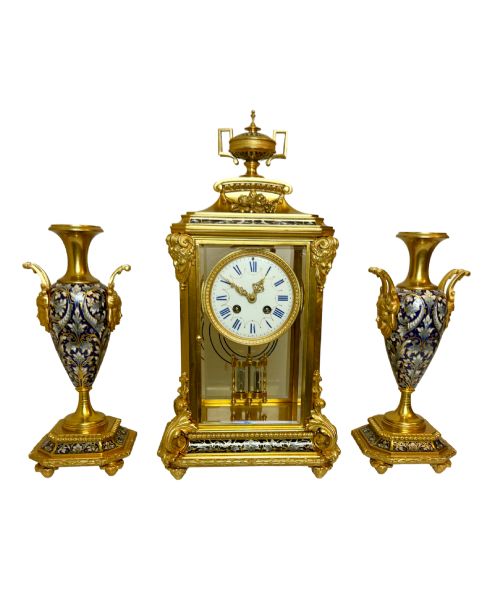
The dominant forms on this page are mantel clocks and clock garnitures, often accompanied by matching side pieces. Most examples adopt French design influences, ranging from Louis the fourteenth styles to exuberant rococo revival and second empire forms.
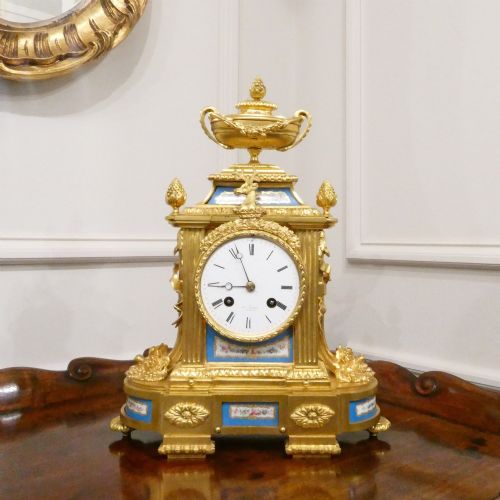
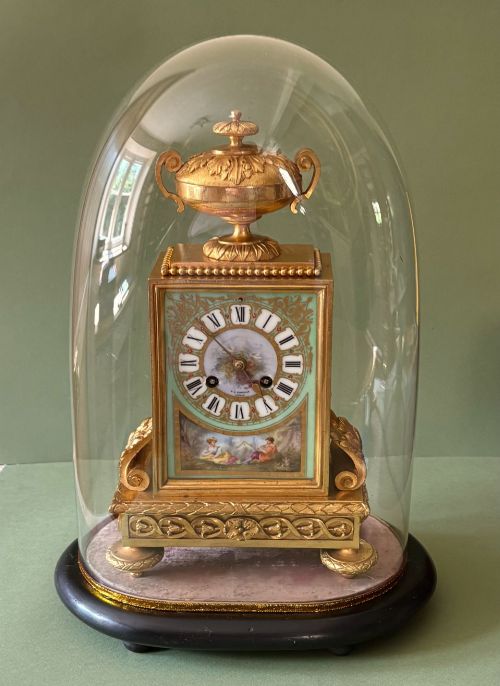
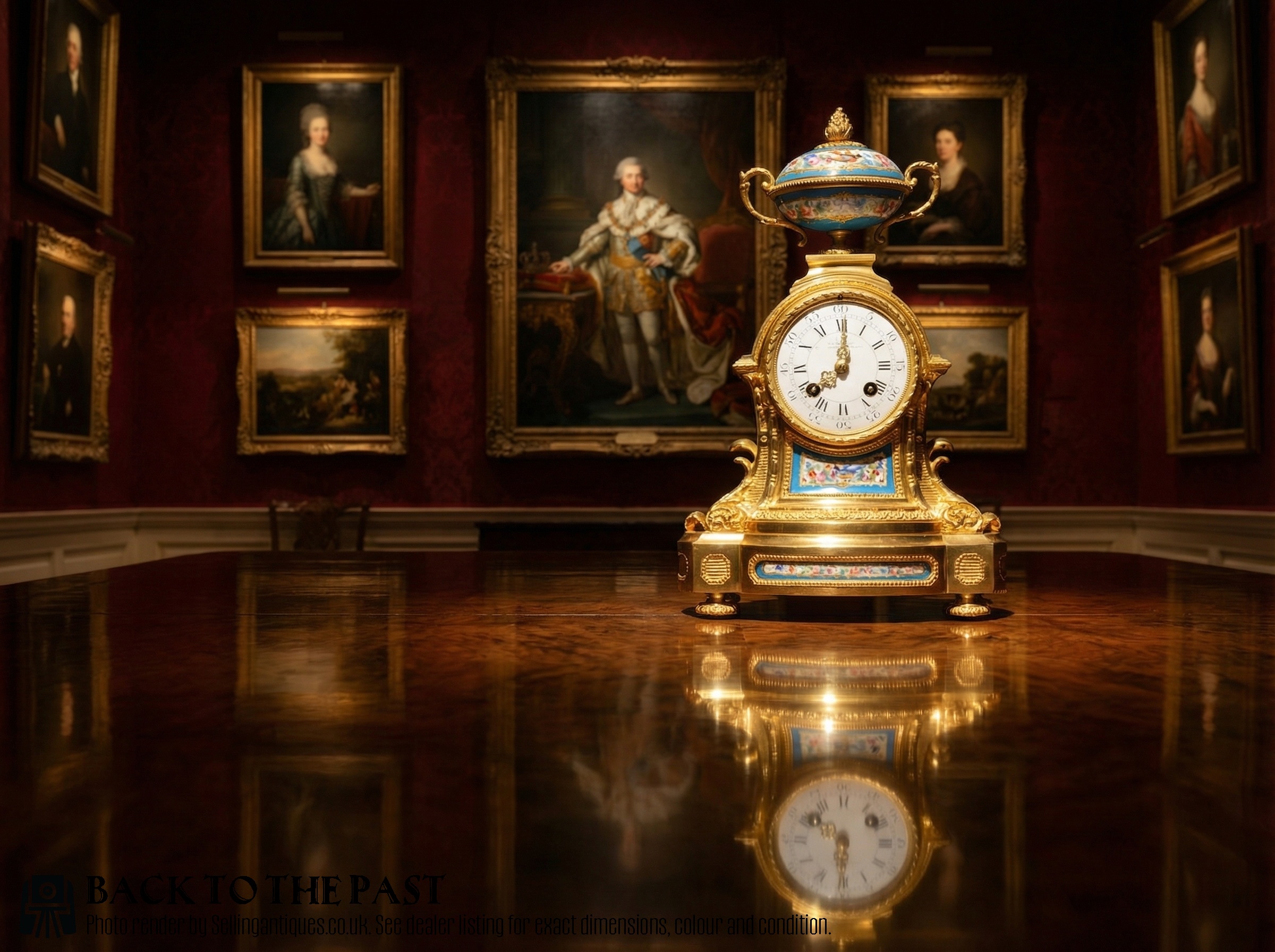
You will encounter pieces housed in elaborate gilt bronze or ormolu cases, frequently paired with contrasting materials. White marble, alabaster and painted porcelain feature prominently alongside the gleaming metalwork.
How they were made
These clocks combine metal casting, fire gilding, and precision horology. The cases utilise gilt bronze and ormolu, creating deep, lasting golden finishes that reflect the light.
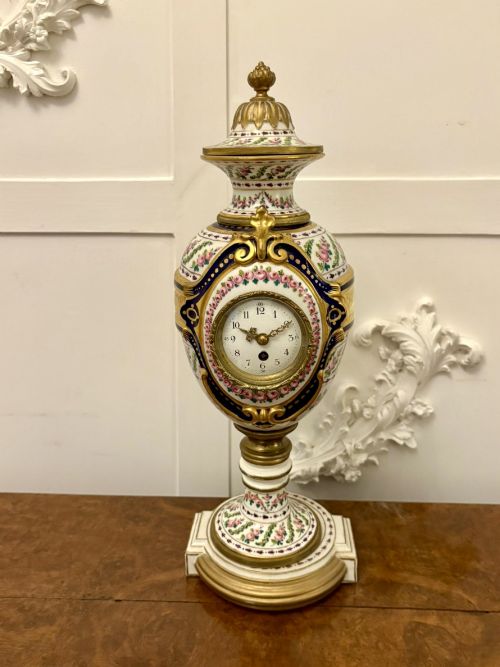
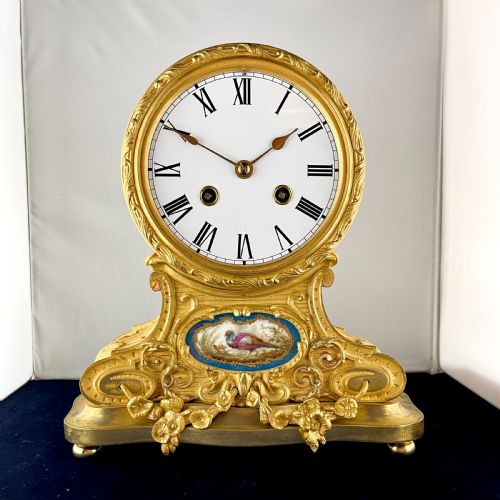
Makers integrated delicate decorative elements such as hand-painted porcelain panels and enamel dials. Structural components frequently incorporated white marble, alabaster, brass, and glass elements.
Retail Price Guide 2026
Typical UK retail prices for victorian ormolu clock, calculated from the Sellingantiques database of over a million retail prices indexed since 2003. This retail price guide relies exclusively on Sellingantiques data; no external sources or auction records are used, so the figures do not describe the wider market.
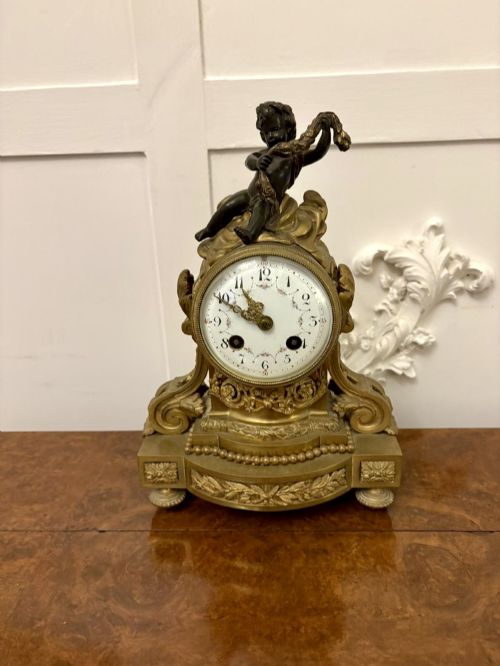
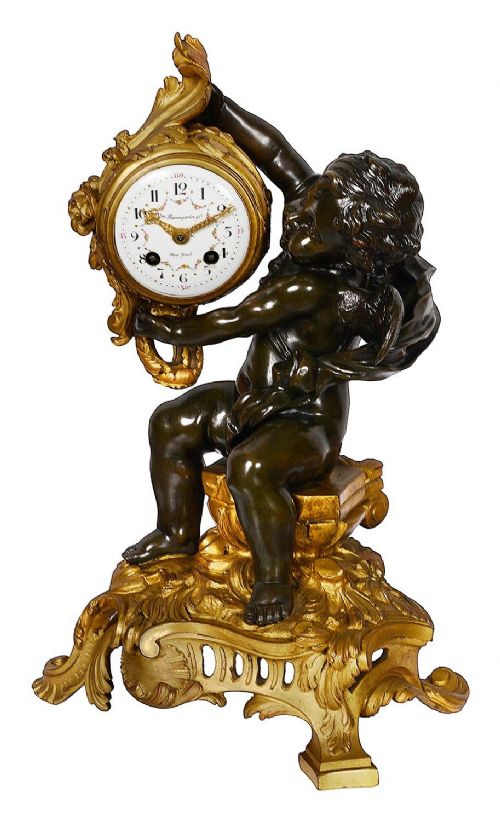
A solitary cherub keeps watch from a London mantelpiece, presiding over the ticking gears.
What varies in quality
The hierarchy of these timepieces rests upon the crispness of the bronze casting and the depth of the gilding. Finer examples display deeply chased ornamentation where every scroll and floral motif remains sharp.
Integration of secondary materials dictates the upper tier of the range. Incorporating hand-painted Sevres porcelain panels or substantial white marble bases elevates a piece far above simpler brass and gilt variants.

JP Delettrez·Miroy Frères·Fisher Braithwaite·A D Mougin
The Victorian Ormolu Clock Glossary
- Ormolu
- Gilded bronze produced by applying a mercury and gold amalgam to a bronze base and heating it. This historic technique creates a warm, enduring golden lustre.
- Gilt Bronze
- Bronze metal that has been coated with a thin layer of gold leaf or gold paint. It provides a bright decorative finish similar to ormolu.
- Fusee
- A conical pulley used within clock movements to maintain equal driving force as the mainspring unwinds. It ensures consistent timekeeping.
- Garniture
- A set of matching ornamental objects designed to be displayed together on a mantelpiece. These usually comprise a central clock flanked by two matching urns or candelabra.
- Enamel
- A glassy substance fused to metal dial plates through firing. It offers a smooth, durable white surface for painted clock numerals.
Frequently Asked Questions
What is a clock garniture?
A clock garniture is a matched set designed for display as a cohesive unit across a fireplace mantel. The arrangement typically pairs a central clock with two matching decorative side pieces such as urns or candelabra.
These sets were popular in grand nineteenth century interiors to create a balanced, symmetrical decorative scheme. The materials and motifs of the side pieces directly mirror the central clock case.
How do these clocks work?
These timepieces rely on mechanical movements driven by springs or weights, often featuring pendulum regulation. Some advanced examples utilise chain fusee mechanisms to maintain steady power delivery.
Owners must wind the movement periodically using an appropriate key. Careful placement on a level surface ensures the pendulum swings evenly for accurate timekeeping.
Where were these clocks placed?
They were designed as principal display objects for reception rooms, drawing rooms, and formal dining spaces. The mantelpiece above the fireplace served as their traditional home.
Because they were made to be seen from the front and sides, they commanded attention within the room. Garniture sets required wider ledges to accommodate the flanking ornaments.
How do I identify French styles?
French styles appear through distinct decorative vocabulary such as asymmetrical rococo scrolls, classical urns, and exuberant second empire motifs. The integration of painted porcelain and white marble often signals continental influence.
Maker signatures on the dial or movement backplate frequently confirm French origin. Comparing the casting detail helps distinguish mass-produced models from high-end workshop pieces.