

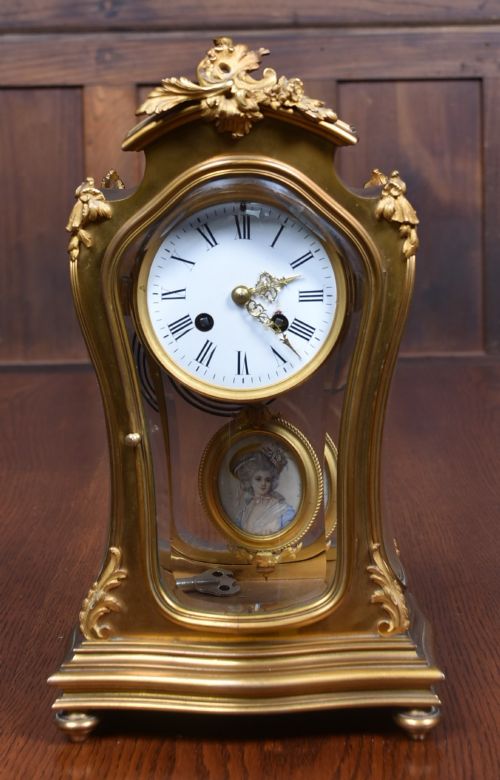
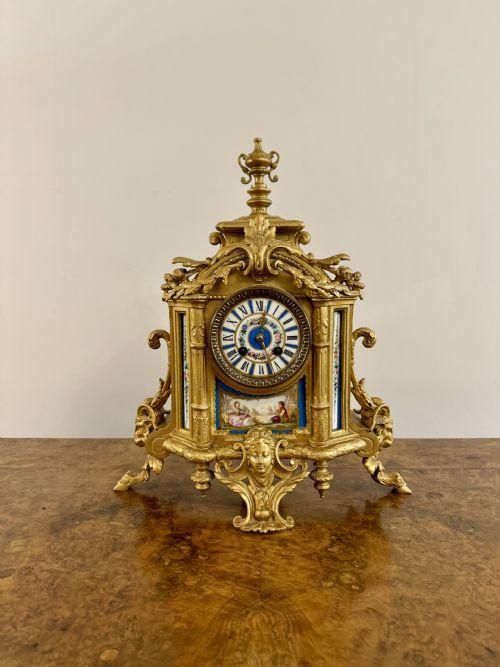


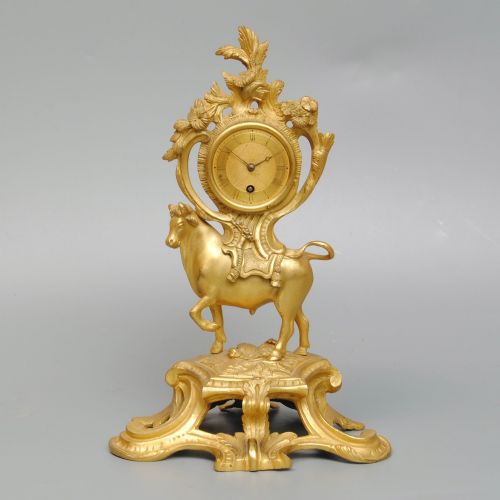

Rococo Style Clock
A rococo style clock brings elaborate, asymmetric curves and ornate gilt metalwork into a room.
Rococo Style Clock
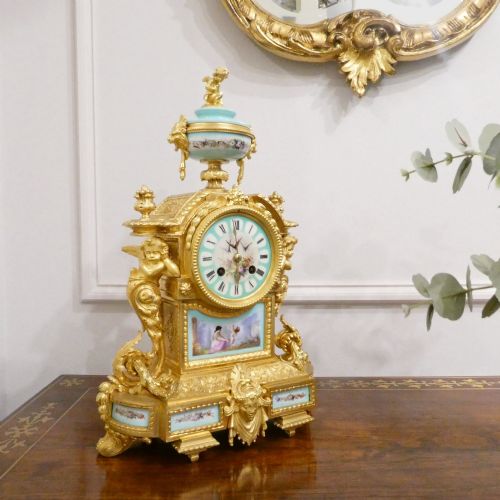
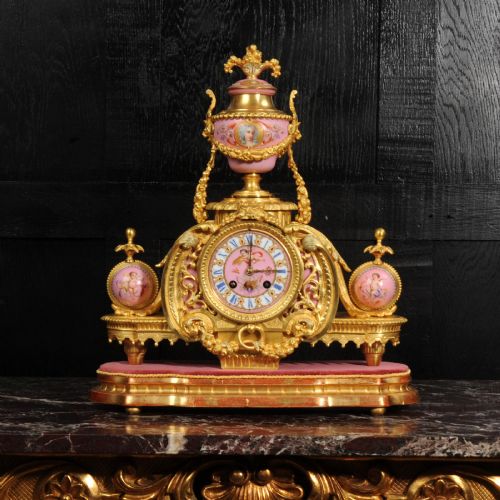
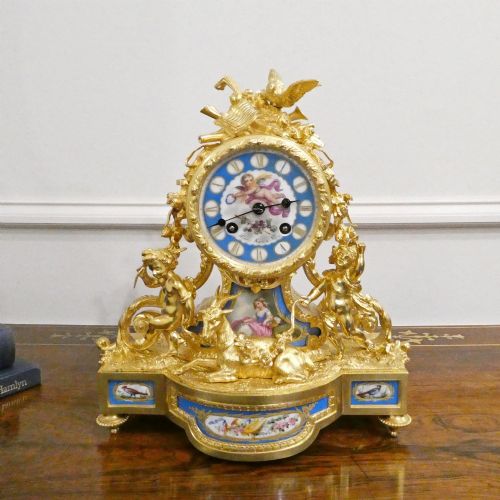
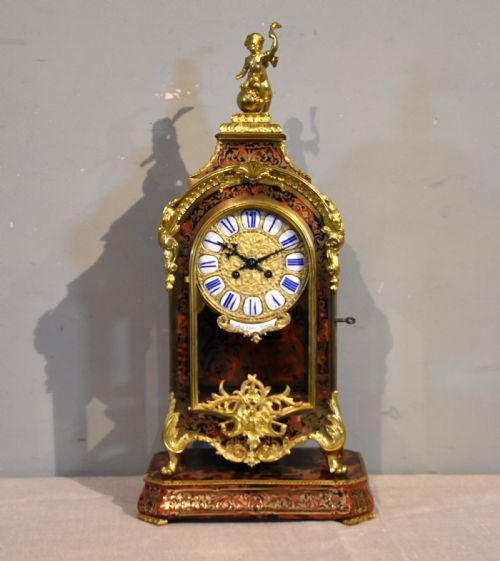
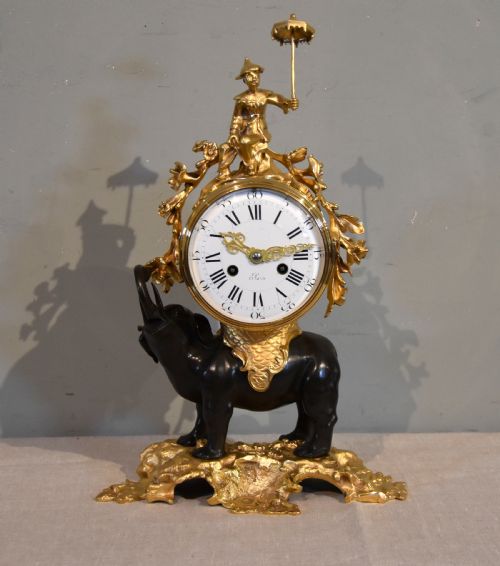
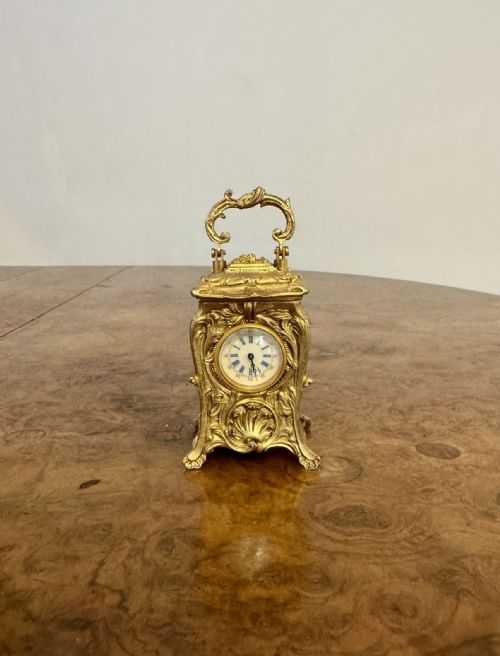
A rococo style clock is primarily a mantel clock housed in an asymmetrical, highly decorative case influenced by Louis XV and French revival designs. These pieces often feature scrolling foliage, C-scrolls and organic motifs rendered in cast metal.
Buyers encounter everything from simple gilt brass housings to elaborate compositions combining porcelain plaques, marble bases and tortoiseshell veneer. The underlying movement dictates the functional nature of each piece, ranging from standard pendulum setups to fusee mechanisms.
How they were made
Cases rely heavily on cast ormolu, gilt bronze, brass and gilt metal, often shaped through intricate sand-casting methods to achieve sweeping rococo forms. Artisans then chased and gilded these metal surfaces to produce deep lustre.
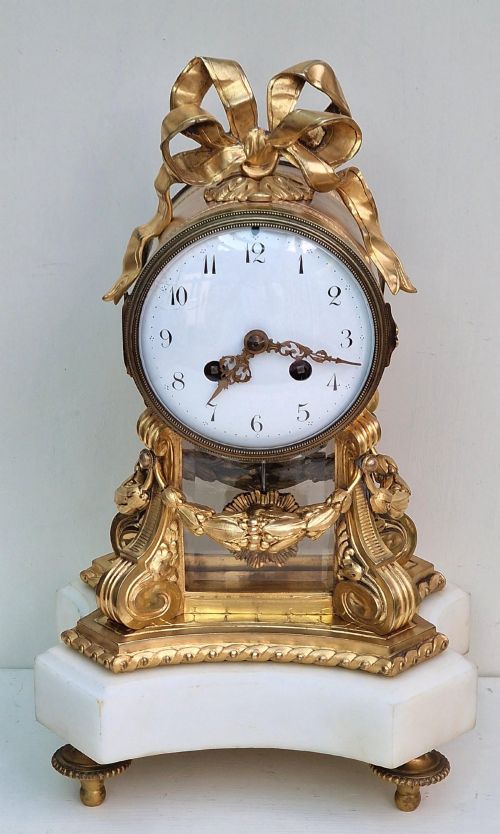
Many examples incorporate fragile decorative elements such as hand-painted Sèvres porcelain panels, white marble plinths, enamel dials and polished glass. Boullework cases utilise tortoiseshell inlaid with brass, demanding precise cabinetmaking techniques.
Interior clockwork movements were produced by specialist horological workshops, incorporating gear trains, escapements and pendulum controls. These movements were frequently signed by the maker on the backplate or painted directly onto the enamel dial.
Rococo Style Clock Retail Price Guide 2026
Typical asking prices for rococo style clock among the pieces listed under this phrase on Sellingantiques today, from the lower quarter to the upper quarter. They describe what is for sale here now, not the wider market.
Listings feature items spanning the Victorian, Regency, and Napoleon III periods, constructed from gilt bronze, porcelain, tortoiseshell, and marble.
What varies in quality
The crispness of the chasing on the ormolu or gilt bronze separates standard production from superior examples. Sharp, deep detailing in the cast foliage and asymmetry shows superior craftsmanship.
The integration of secondary materials drives distinction, particularly hand-painted porcelain panels or finely executed tortoiseshell veneer. Original matching garniture sets and signed movements by known makers elevate a piece.
The overall balance and proportion of the asymmetrical case dictate aesthetic success. Superior clocks maintain harmonious curves where the movement fits seamlessly within the sculptural bronze or wooden housing.
Achille Brocot·Henry Marc·Japy Frères·Leroy Paris·Leon Message·Jollet et Cie·Samuel Marti·Connell of London·John Barwise·PH Mourey·LE ROY FILS·VINCENTI·JOHN PETERKIN·G Viot
The Rococo Style Clock Glossary
- Ormolu
- Gilded bronze produced by applying a mercury and gold amalgam to a bronze base and heating it. This technique creates a durable, warm golden finish characteristic of fine antique clock cases.
- Garniture
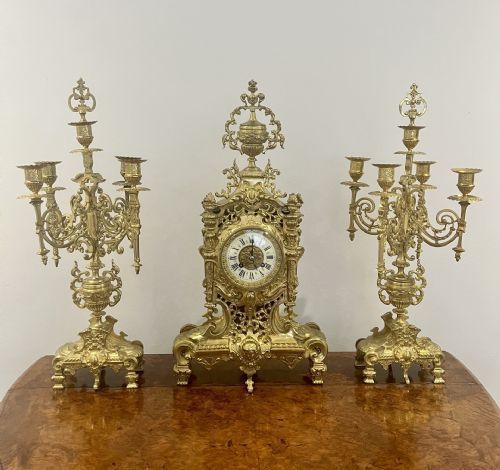
- A set of matching ornamental objects designed to sit together on a mantelpiece, typically comprising a central clock flanked by matching vases or candelabra. These sets share the same decorative style and materials.
- Cartel clock
- A wall-mounted clock housed in an ornate, decorative frame made of metal or wood. They are designed to hang directly on a wall rather than rest on a mantel.
- Fusee movement
- A conical pulley mechanism used in clockwork to ensure even tension on the gear train as the mainspring unwinds. This improves timekeeping accuracy across the power reserve.
- Boullework
- A form of marquetry inlay using brass and tortoiseshell developed in France. The contrasting materials are cut together to create intricate, mirrored patterns across wooden furniture and clock cases.
Rococo Style Clock: Frequently Asked Questions
What is a rococo style clock?
A rococo style clock is a decorative timepiece featuring ornate, asymmetrical designs, C-scrolls, and naturalistic motifs inspired by eighteenth-century French aesthetics. Most examples date from the nineteenth century during various revival periods.
These pieces use housings made from gilt bronze, ormolu, porcelain, and tortoiseshell, designed primarily as ornamental mantelpieces for formal rooms.
How do I wind these clocks?
Winding typically involves inserting a specific key into the winding holes on the enamel dial to tension the mainspring inside the movement. Care must be taken not to overwind the mechanism.
Many antique movements require a pendulum to be properly hung and levelled on a flat surface to keep accurate time.
Are these clocks suitable for daily use?
While many mechanical movements are fully restored and capable of keeping time, antique clocks require regular professional servicing and gentle handling. They function best as stable decorative objects that are wound periodically.
Moving the clock frequently or placing it in areas with fluctuating temperatures can disrupt the delicate balance of the pendulum and gear train.
What is a clock garniture?
A clock garniture is a matching set consisting of a central mantel clock accompanied by two side pieces, such as candelabra, urns, or vases. These items were manufactured together to create a symmetrical display on a fireplace mantel.
The side pieces repeat the exact materials, metalwork style, and decorative motifs found on the main clock case.