


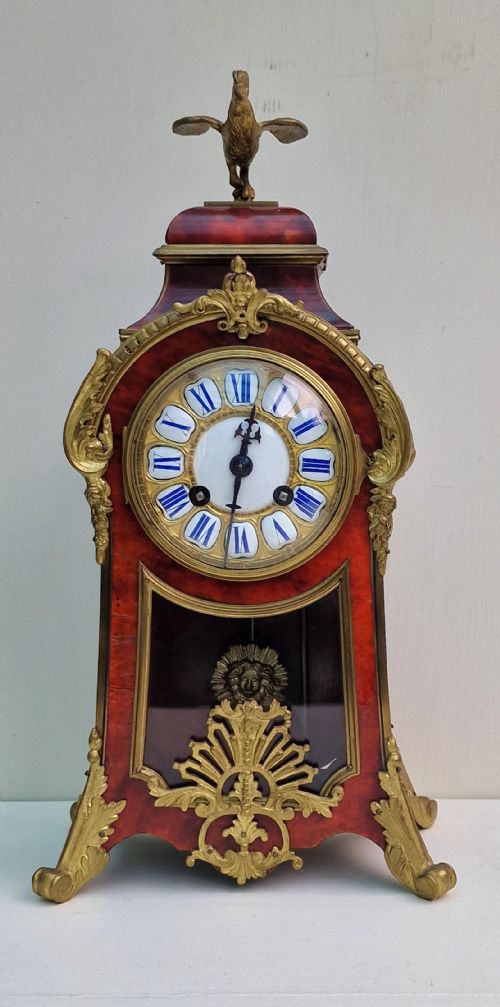
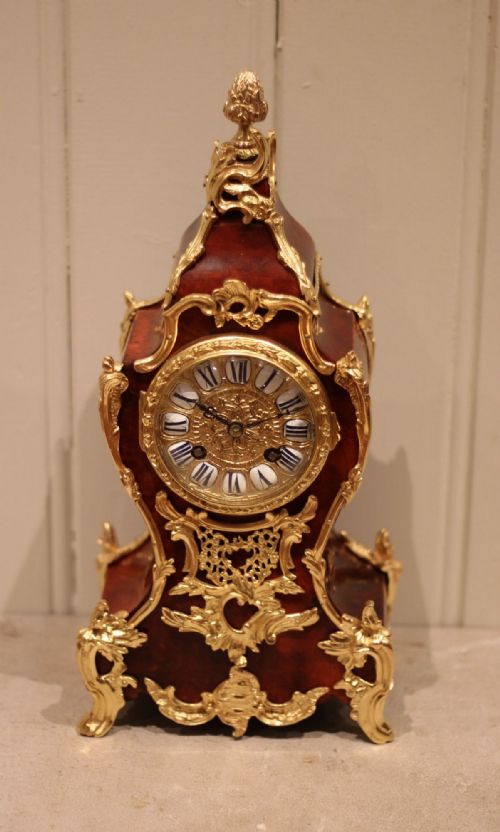


Tortoiseshell Mantel Clock
A tortoiseshell mantel clock brings rich marquetry and metallic warmth to a room, combining practical timekeeping with decorative luxury.

Tortoiseshell Mantel Clock
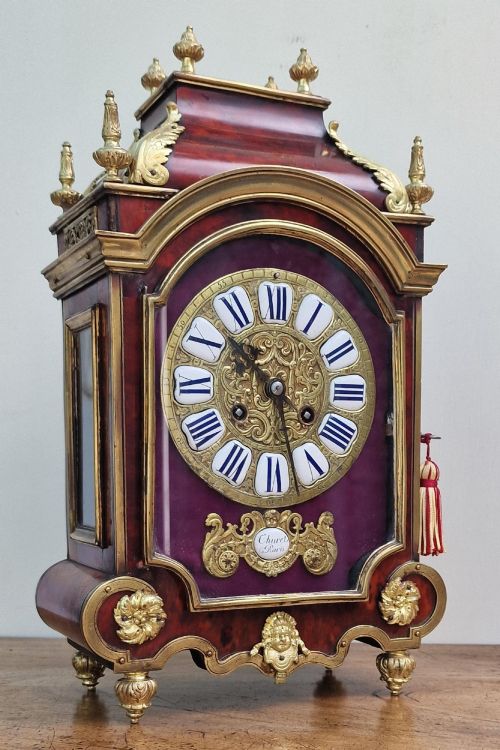
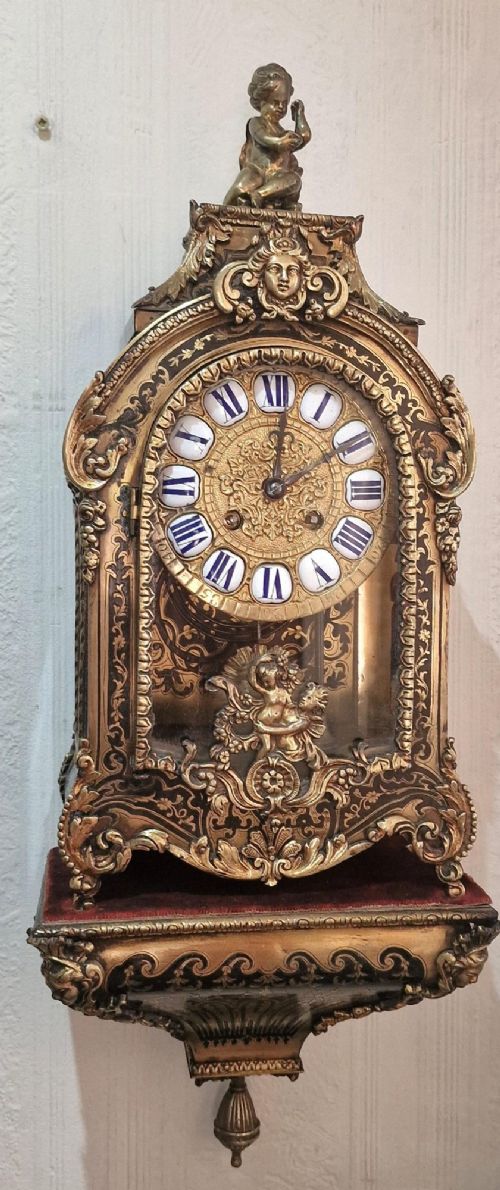
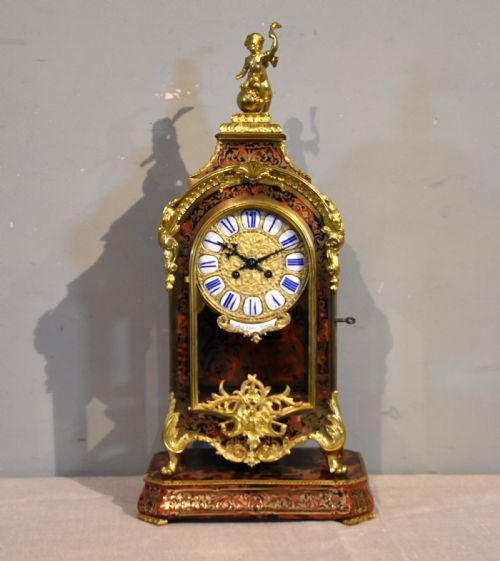
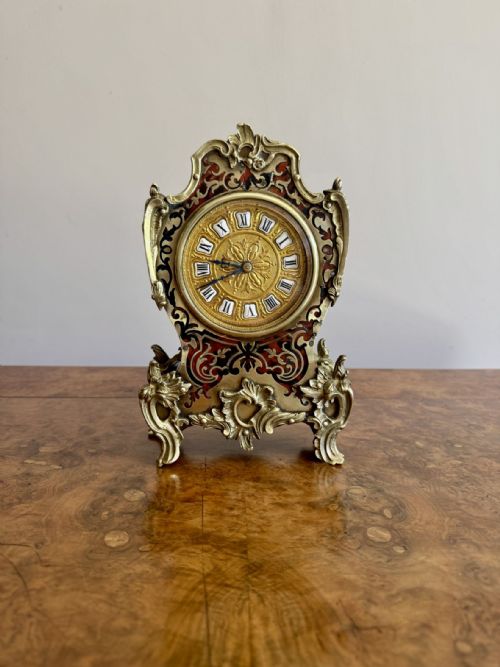
When you search for a tortoiseshell mantel clock, you enter a world of decorative horology largely shaped by nineteenth-century French makers and British workshops. These timepieces range from modest desk accessories to grand bracket clocks accompanied by matching wall supports or pedestals.
The version you are most likely to encounter on this page is a French timepiece from the Victorian era, executed in the Boulle manner with elaborate brass and tortoiseshell inlay. Alongside traditional amber and dark shell, variants in green and red appear, often framed by cast or gilded mounts.

Materials and Craftsmanship
The construction of these clocks relies heavily on tortoiseshell veneer applied to a wooden carcass, frequently paired with intricate brass and metal inlay known as Boullework. Craftsmen cut contrasting sheets of metal and shell together to create precise, interlocking patterns of exceptional detail.
Gilt bronze, ormolu, and cast brass mounts accent the corners, bezels, and feet of the cases. Enamel dials, sometimes featuring individual cartouche numerals, house eight-day movements or fusee mechanisms designed to keep accurate time.
Tortoiseshell Mantel Clock Retail Price Guide 2026
Typical asking prices for tortoiseshell mantel clock among the pieces listed under this phrase on Sellingantiques today, from the lower quarter to the upper quarter. They describe what is for sale here now, not the wider market.
Listings feature clocks spanning the Regency period through the Edwardian era, with a strong concentration of nineteenth-century French manufacture.
Judging Quality and Execution
Quality in these pieces rests upon the crispness of the brass inlay and the depth of the tortoiseshell veneer. Superior examples show seamless integration between the metallic mounts and the organic shell, with minimal shrinkage or cracking across the wooden core.
The sophistication of the internal movement and the reputation of the maker or retailer further elevate a piece. Finer clocks feature signed backplates, quarter-striking gear, and well-cast ormolu that retains its original fire-gilded finish.

Thuret·William Comyns·J Batson and Son·Samuel Marti·William Hardy London·A D Mougin·Payne London
The Tortoiseshell Mantel Clock Glossary
- Boullework
- A method of marquetry using brass and tortoiseshell inlaid in contrasting positive and negative patterns. Developed in France during the reign of Louis XIV, this technique defines many nineteenth-century mantel clocks.
- Ormolu
- Gilt bronze created by applying a mixture of mercury and gold to cast bronze. The mercury is then driven off by heat, leaving a durable golden coating on decorative mounts.
- Fusee
- A conical pulley used in clock movements to maintain even tension on the gear train as the mainspring winds down. This mechanism helps ensure steady timekeeping throughout the power reserve.
- Bracket Clock
- A portable clock originally designed to sit on a wall bracket to aid resonance and visibility. Many surviving examples retain their matching wooden wall brackets or display stands.
- Cartouche
- A small enamelled plaque bearing a single numeral on a clock dial. These individual plates are typical of better French and English clock faces from the period.
Tortoiseshell Mantel Clock: Frequently Asked Questions
How do I wind an antique mantel clock?
Most mechanical clocks use a key inserted into the dial to tension the mainspring barrels or fusee chains. Care should be taken not to overwind the mechanism.
Consult the specific movement type, as eight-day clocks require winding once a week while fusee timepieces follow their own intervals.
Where should I place a tortoiseshell clock?
Position the clock on a stable mantelpiece, desk, or shelf away from direct sunlight and damp conditions. Organic shell and wood veneer react poorly to dramatic temperature fluctuations.
Ensure the surface is level so the pendulum beats evenly and the movement maintains a reliable rhythm.
How do I tell if the Boullework is authentic?
Examine the surface under a magnifying glass to check for the natural grain, warmth, and slight irregularities of genuine tortoiseshell rather than uniform plastic or synthetic substitutes. The brass inlay should sit flush with the shell.
Older French and British pieces often display microscopic gaps or hand-cut precision that modern reproductions cannot replicate.
What is the difference between a timepiece and a clock?
In horological terms, a timepiece indicates the hours and minutes without possessing a striking train or chiming mechanism. Mantel clocks often include bell-striking or quarter-striking capabilities.
Both styles utilise similar external cabinet designs, but the internal movement dictates whether the piece sounds the hours.