

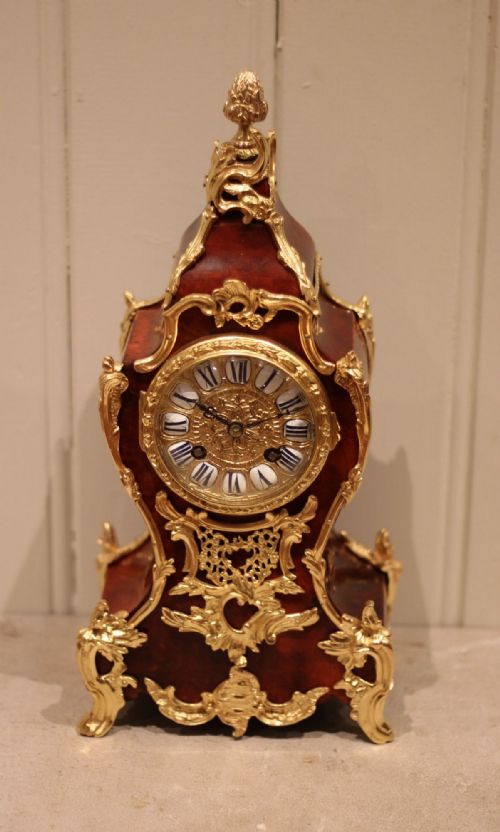


Boulle Style Mantel Clock
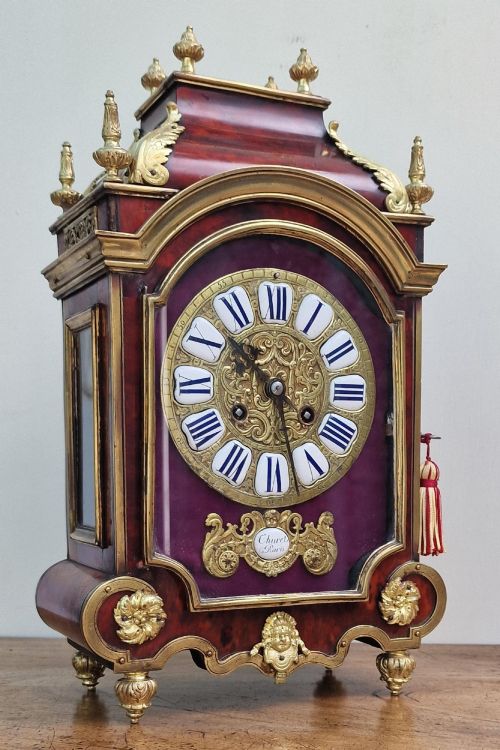
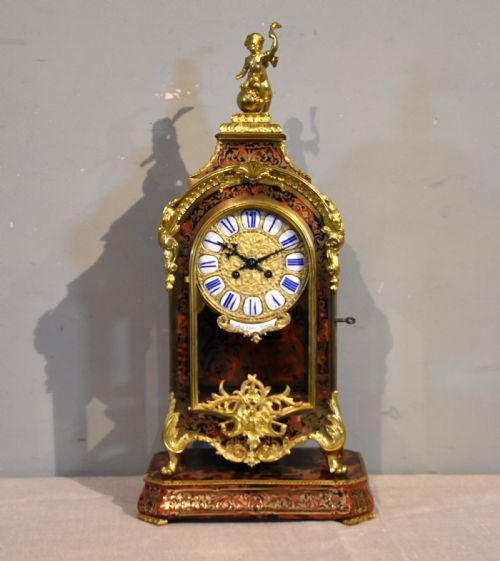
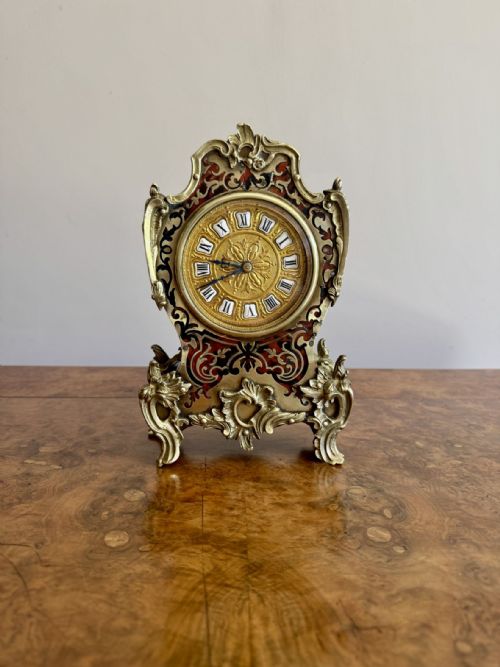
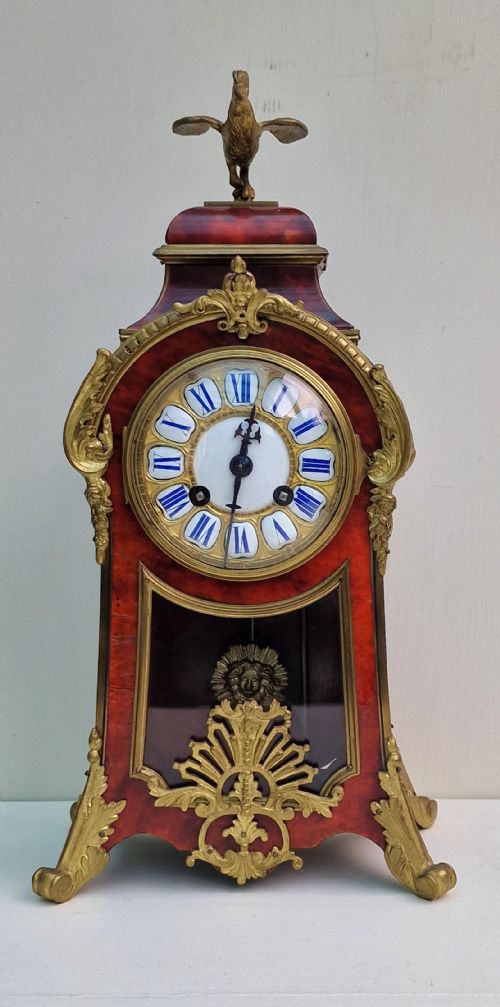
These pieces take the form of a boulle style mantel clock, bringing dramatic tortoiseshell and brass marquetry into domestic interiors.

Boulle Style Mantel Clock
A boulle style mantel clock is a striking horological object typically housed in a wooden case veneered with tortoiseshell and inlaid with cut brass. These decorative pieces draw heavily on French design vocabularies, frequently appearing in forms that reflect the Louis XIV, Louis XV and Louis XVI styles.
The version most commonly met on this page is a nineteenth century French mantel clock, often incorporating ormolu mounts and standing on bracket feet. Makers and workshops from this period produced both miniature and larger bracket clocks driven by eight day movements.
Beyond standard tortoiseshell veneers, variations include green stained variants and ebonised woods. Styles lean towards French Baroque and Rococo Revival, showing elaborate scrolls, cartouches and classical figures.
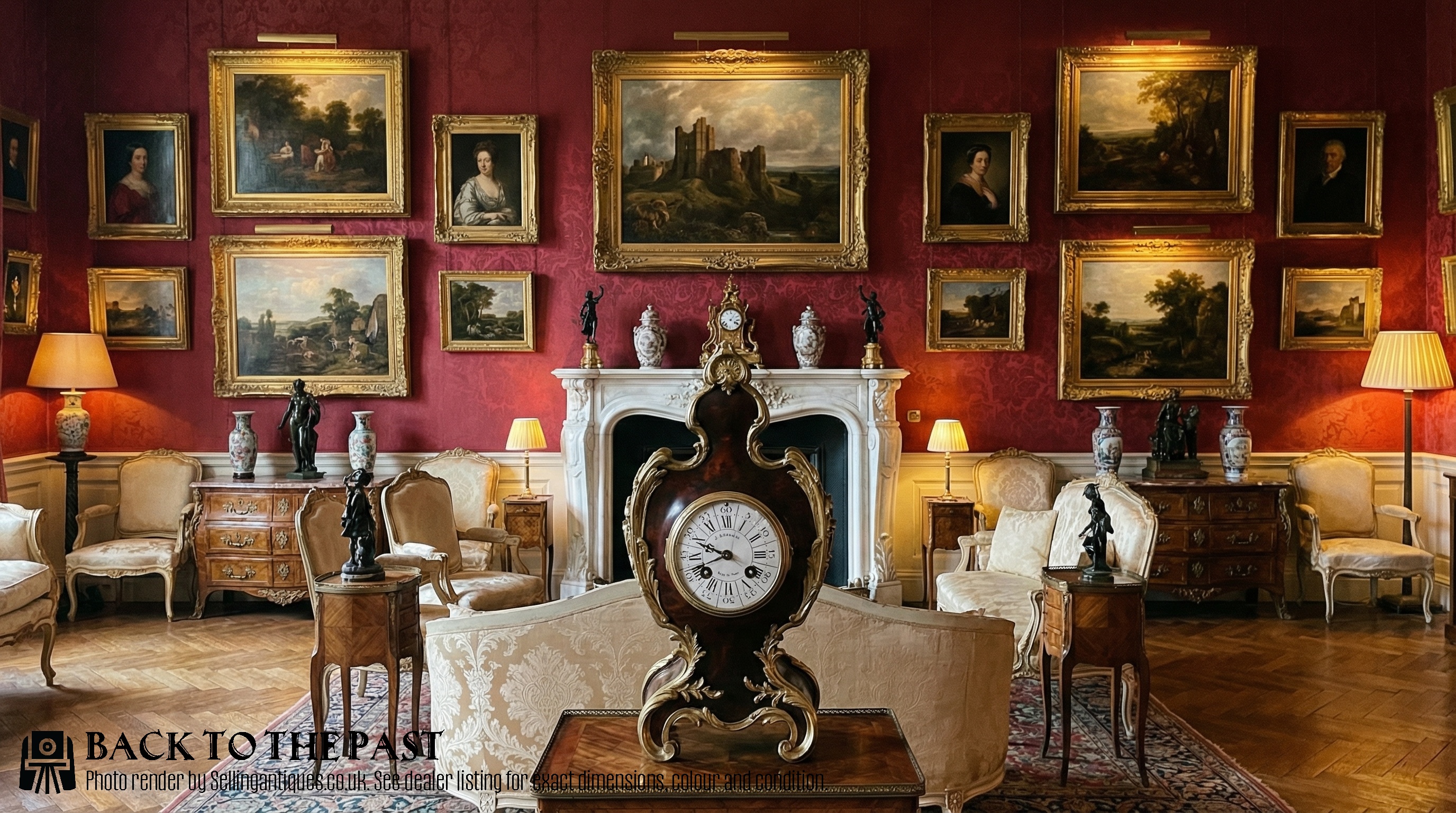
What Varies in Quality
Quality rests heavily on the crispness of the brass cutting and the depth of the tortoiseshell veneer. Superior examples show seamless integration between the metal inlay and the shell, with minimal filler and sharp, detailed ormolu casting.
The movement itself dictates much of the standing, with signed French mechanisms by established makers commanding greater attention. Finer clocks display careful finishing to the gear trains and well cast clock hands that complement the dial.
Boulle Style Mantel Clock Retail Price Guide 2026
Typical asking prices for boulle style mantel clock among the pieces listed under this phrase on Sellingantiques today, from the lower quarter to the upper quarter. They describe what is for sale here now, not the wider market.
Materials recorded across the inventory include tortoiseshell, ormolu, brass, enamel, ebonised wood and stained wood.
Thuret·Samuel Marti·Payne London·Vincenti·Charles Hour·Japy Freres
The Boulle Style Mantel Clock Glossary
- Boulle work
- A method of marquetry using tortoiseshell and brass, named after Andre Charles Boulle. It creates a contrasting pattern where metal sits inside shell or vice versa.
- Ormolu
- Gilt bronze mounts applied to furniture and clock cases for decoration. It provides a bright metallic contrast against dark wood and shell.
- Fusee
- A conical pulley used with a cord or chain to maintain equal power as the mainspring unwinds. This mechanical addition helps improve timekeeping accuracy.
- Bracket clock
- A portable clock designed to sit on a bracket or shelf. Many historical examples include a matching wall bracket for support.
- Enamel cartouche
- Individual white enamel plaques inscribed with numerals for each hour. These are pinned to the dial plate rather than painting numbers directly on a single face.
Boulle Style Mantel Clock: Frequently Asked Questions
How do I wind the clock?
Most mechanical versions use a key inserted into winding holes on the enamel dial to tension the spring inside. Care must be taken not to overwind the movement.
Keeping the clock on a stable surface ensures the pendulum beats evenly and maintains steady timekeeping.
What is the difference between Louis XIV and Louis XV styles?
Louis XIV designs lean towards symmetry, grand classical motifs and heavier proportions. Boulle work from this era emphasises formal geometric layouts.
Louis XV styles introduce asymmetry, sweeping C scrolls and organic rococo shell motifs, softening the overall outline of the case.
Are these clocks suitable for daily use?
While many retain working eight day movements, older mechanical clocks benefit from gentle handling and occasional professional servicing. They function well as timekeepers when set up carefully.
Placing them away from direct sunlight protects the tortoiseshell veneer and prevents fading of the organic materials.
How can I date my clock?
Dating relies on examining the style of the case, the signature on the movement and the construction of the brass components. Nineteenth century examples often carry maker stamps on the back plate.
Revival pieces borrow heavily from earlier centuries, so examining the materials helps narrow down the period of manufacture.