


Decorative Shelf Clock
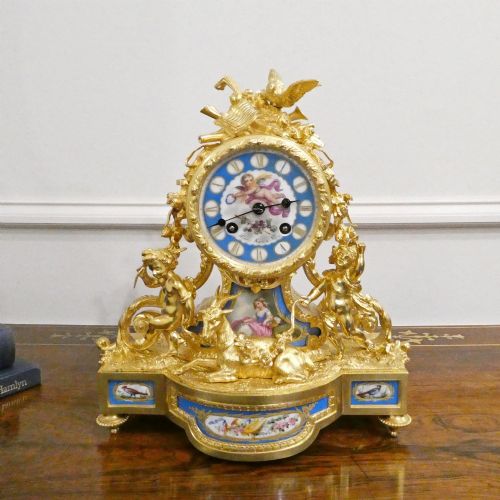
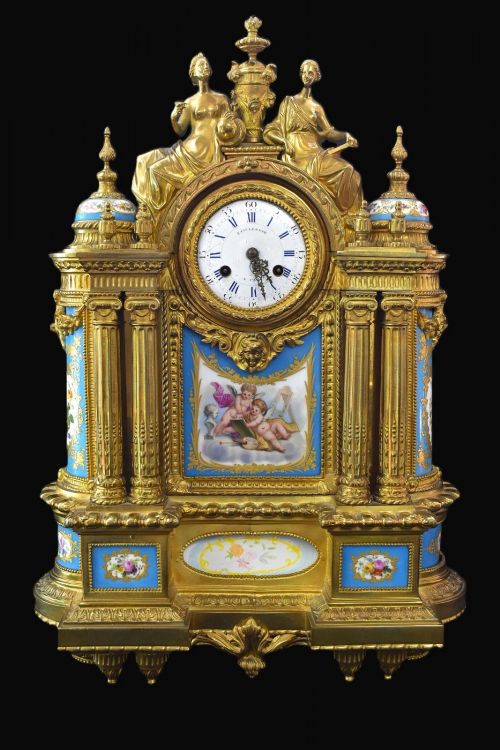
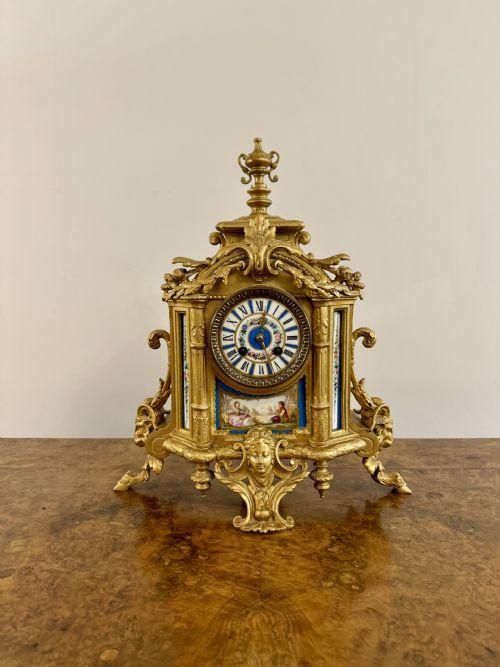
These decorative shelf clock examples bring nineteenth-century gilt bronze, marble and porcelain into a room, combining timekeeping with ornate sculpture.

Decorative Shelf Clock
When you search for a decorative shelf clock, you encounter nineteenth-century mantel clocks, bracket clocks and wall-mounted pieces originating primarily from French and English workshops. The nineteenth-century examples dominate the selection, spanning periods from the eighteen-fifties through to nineteen hundred, alongside Victorian interpretations of earlier continental styles.
The forms vary from architectural marble cases and wooden bracket clocks to elaborate figural bronzes adorned with porcelain panels. French Rococo Revival and Napoleon III designs appear frequently, often featuring classical figures, putti or floral motifs cast in ormolu and gilt metal.
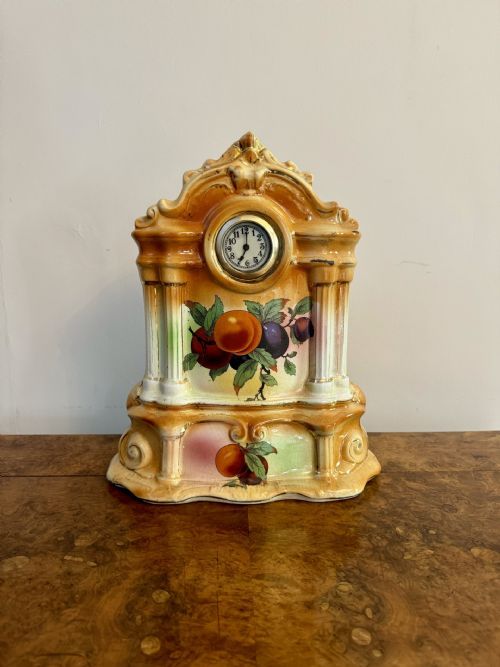
Most pieces sit upon flat surfaces such as mantels and shelves, though related wall brackets and mounts also appear to support these heavier horological objects. The materials range widely across the selection, mixing natural stone and ceramics with gleaming metallic finishes.
Materials and Construction
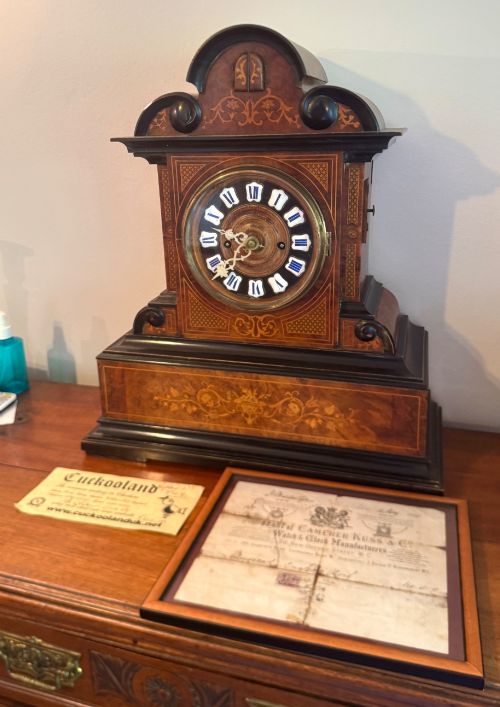
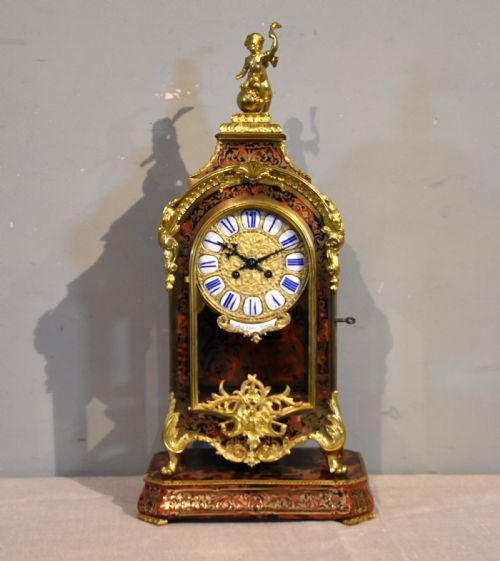
Makers constructed cases using cast ormolu, gilt bronze and brass, often combining these metals with hand-painted porcelain panels from factories such as Sevres or Meissen. Ebonised wood, walnut, rosewood and faux tortoiseshell veneer provided rich dark backdrops for the shining metallic mounts.
Dial faces frequently integrated white enamel with painted Arabic or Roman numerals, protected behind bevelled glass. Natural marble provided solid foundations for sculptural elements, while champleve enamel added vibrant patches of colour to the metal surfaces.
Materials across the listings include Sevres porcelain, champleve enamel, marble, ebonised wood, and gilt bronze.
Judging Quality
The crispness of the bronze or ormolu casting separates standard production from finer work, particularly where chiselling has refined the surface details after casting. Heavy, solid bronze frames demonstrate superior material weight compared to lighter gilt metal alternatives.
The integration of the decorative elements dictates the overall harmony of the object, such as how seamlessly porcelain plaques fit into the surrounding case. Signed movements by notable makers or retailers add historical substance to the physical construction of the clock.
Henry Marc·Etienne Lenoir·Seller of Reading·Japy Freres·Bently and Beck London·P.H Mourey·Henri Dasson
The Decorative Shelf Clock Glossary
- Ormolu
- Gilded bronze, produced by applying a mercury and gold amalgam to a bronze base and heating it. This technique creates a durable, golden surface finish common on nineteenth-century French cases.
- Champleve
- An enamelling technique where troughs are dug into a metal surface and filled with vitreous enamel before firing. It creates colourful patterns across the metal body of the clock.
- Bracket Clock
- A portable clock designed to sit upon a matching wall bracket or furniture shelf. They often feature wooden cases with carrying handles on top.
- Boulle
- Marquetry style utilising tortoiseshell and brass inlay, popularised in France. Named after cabinetmaker Andre-Charles Boulle, it gives surfaces a distinctive mottled and metallic pattern.
Decorative Shelf Clock: Frequently Asked Questions
What is a decorative shelf clock?
These timepieces combine mechanical clock movements with sculptural cases made from bronze, marble, porcelain and wood. They served as functional timekeepers and status ornaments in nineteenth-century interiors.
Most examples sit directly upon mantelpieces, sideboards and shelves, while wall brackets provide elevated platforms for specific bracket clock designs.
How do I identify French and English styles?
French pieces often display exuberant Rococo Revival, Empire or Louis XIV styling with heavy use of ormolu, putti and Sevres porcelain. English bracket clocks tend to favour polished wood cases like rosewood and walnut with understated brass mounts.
Signatures on the clock dial or movement backplate frequently confirm the country of origin and the workshop responsible.
How do I maintain an antique clock?
Mechanical clocks require careful handling, stable room temperatures and periodic professional servicing of the gear train and springs. Winding should follow the specific instructions for the movement type, whether eight-day or fusee.
Placement should avoid direct sunlight, damp environments and uneven surfaces that might disrupt the pendulum beat.
What periods do these clocks cover?
The selection spans the nineteenth century, capturing Victorian aesthetics alongside earlier Regency influences and later Art Nouveau designs. Dates range from eighteen hundred through to nineteen hundred.
Stylistic revivals during this era frequently borrowed from seventeenth and eighteenth-century French court aesthetics.