

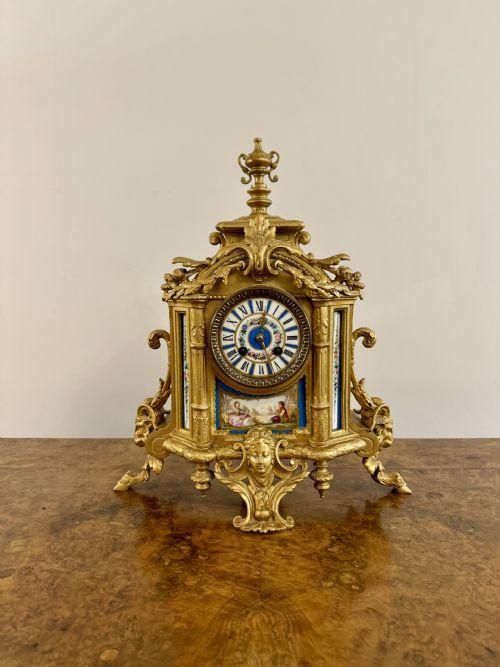


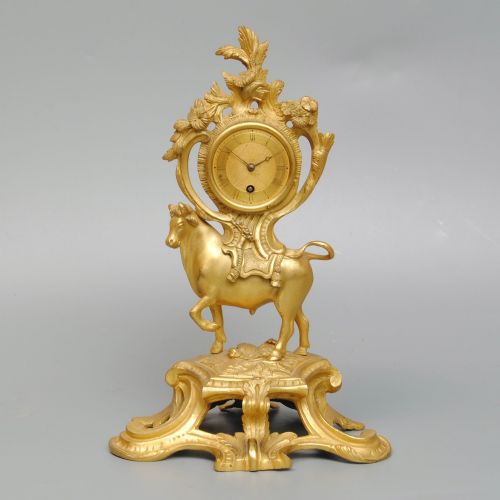


Rococo Style Mantel Clock
A rococo style mantel clock brings fluid asymmetry and gilt bronze to a room, driven by elaborate continental revivals.
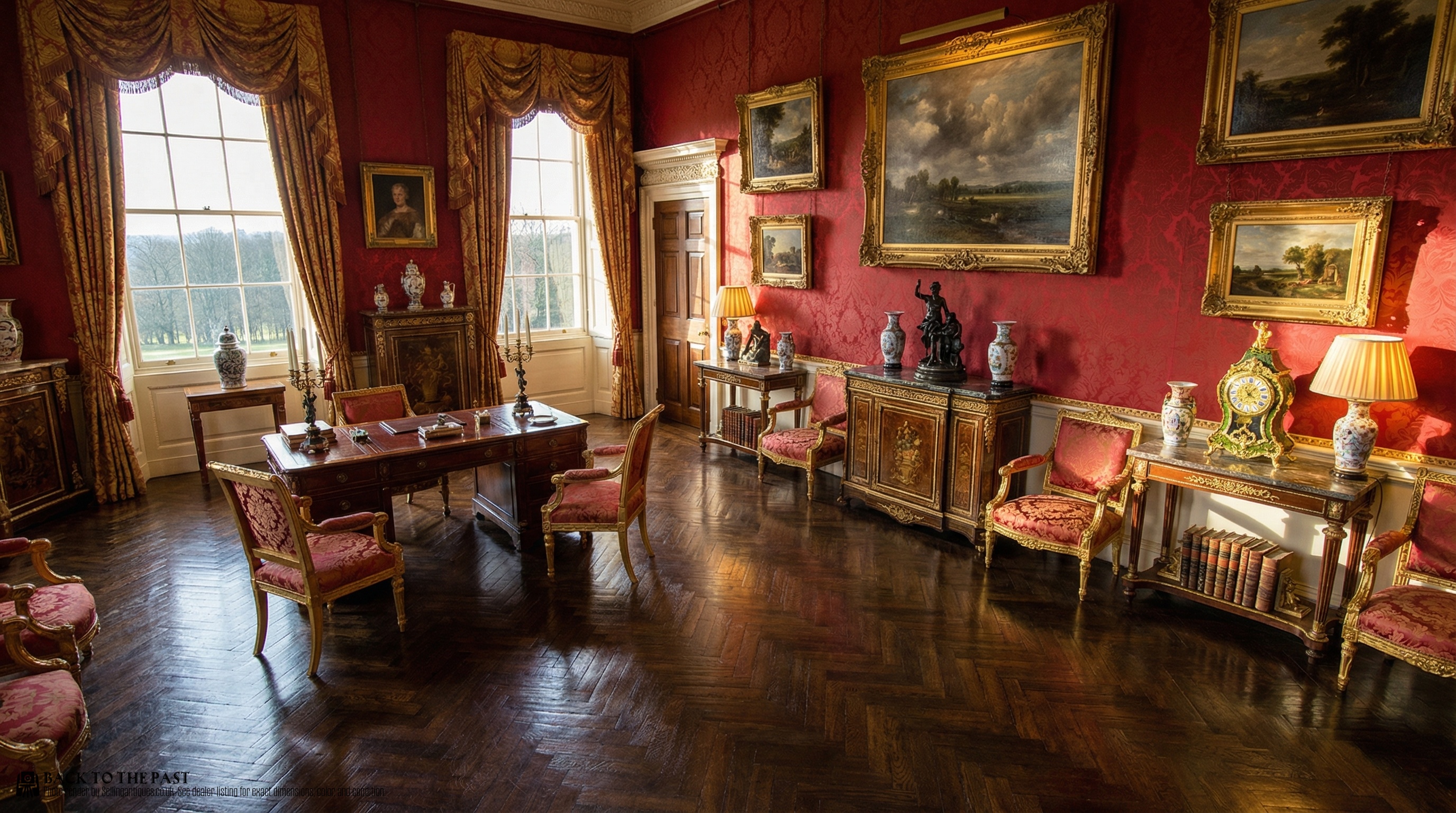
What They Are
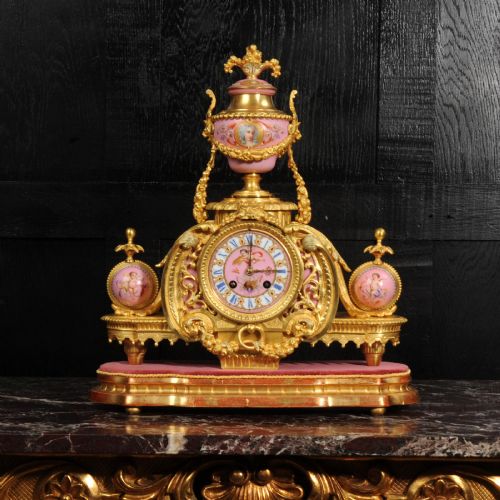
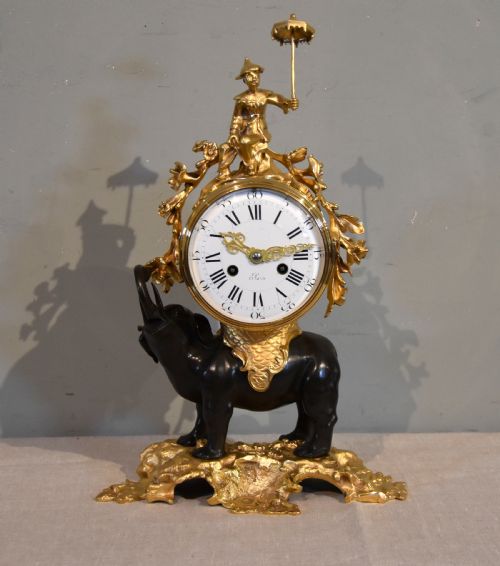
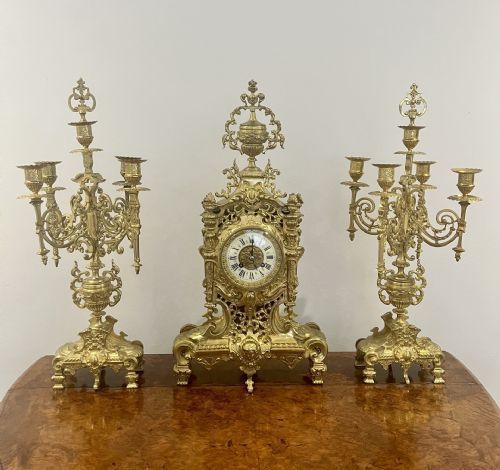
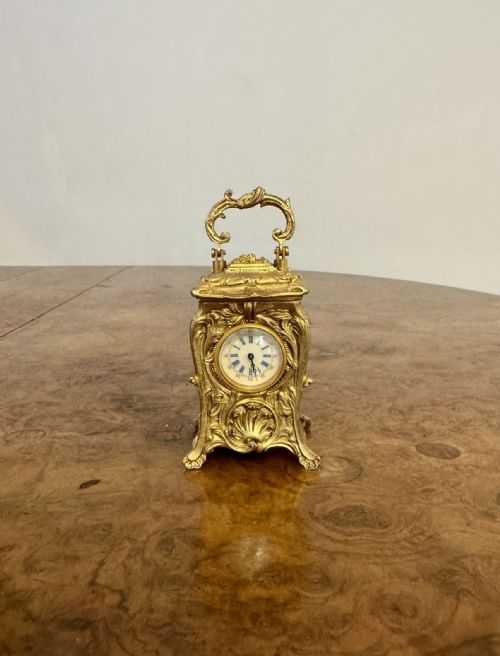
A rococo style mantel clock combines organic scrollwork, asymmetrical cartouche outlines and figural castings into a commanding domestic centrepiece. These objects emerged from nineteenth century French and English workshops inspired by earlier continental decorative movements.
Buyers meet pieces ranging from modest brass house clocks to substantial ormolu and marble figural deployments. The dominant format on this page is the nineteenth century French revival clock, often housing a quality bell striking movement.
Periodic revivals span Louis XIV, Louis XV and Louis XVI idioms alongside Victorian interpretations. Cases utilise combinations of gilt bronze, brass, slate and marble to achieve their characteristic decorative weight.

How They Were Made
Craftsmen cast cases in bronze, brass or white metal before applying mercurial gilding or galvanic ormolu finishes. Movement plates were cut from brass and driven by spring or fusee mechanisms, regulated via pendulum or balance wheel.
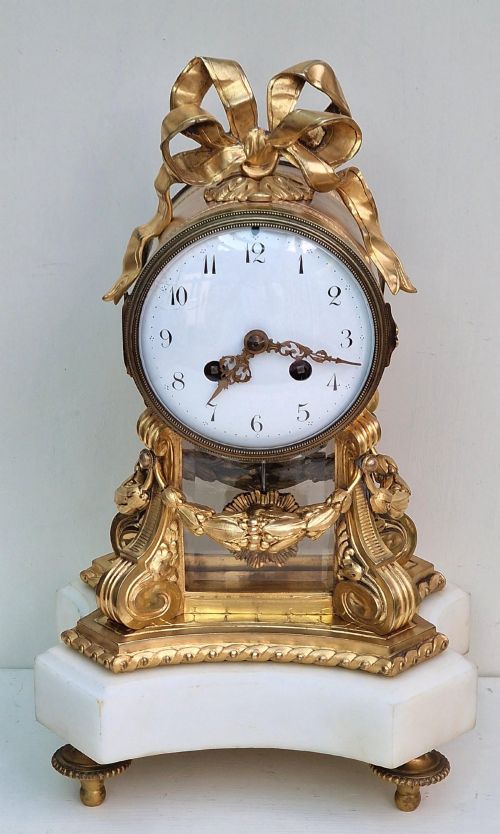
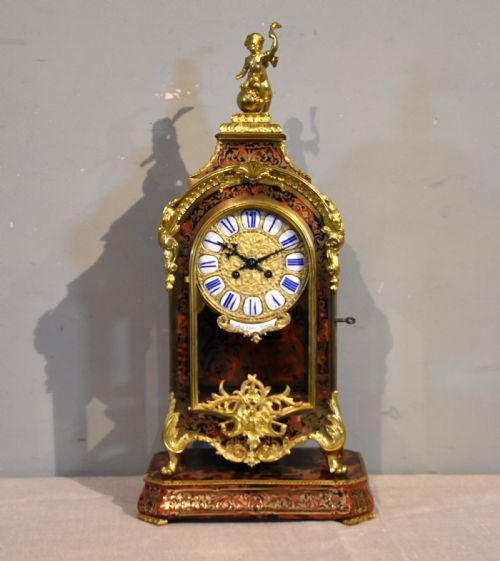
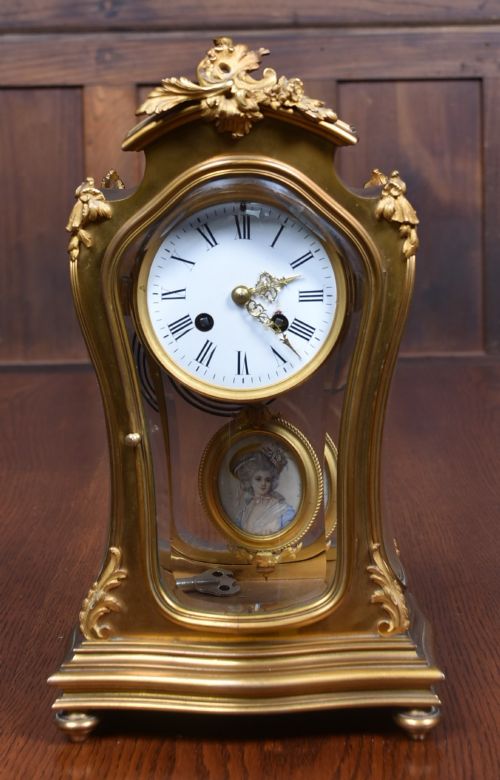
Dials frequently feature individual white enamel cartouches with painted Roman numerals, protected behind curved glassbezels. Stonework such as marble or slate was turned, polished and fitted into the metal chassis to anchor the heavy assemblies.
Retail Price Guide 2026
Typical UK retail prices for rococo style mantel clock, calculated from the Sellingantiques database of over a million retail prices indexed since 2003. This retail price guide relies exclusively on Sellingantiques data; no external sources or auction records are used, so the figures do not describe the wider market.
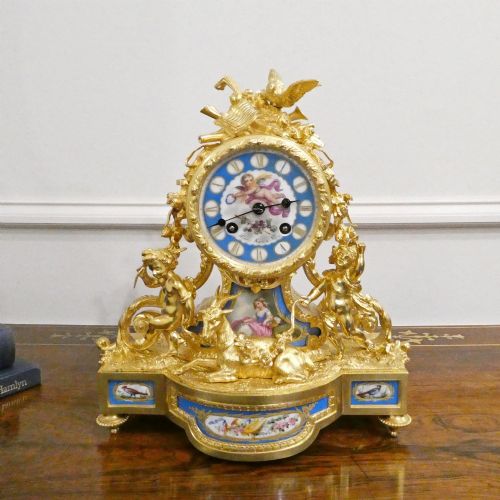
Several clocks hide elaborate figural cherubs clinging to scrolling ormolu foliage, keeping watch over the ticking hours.
What Varies in Quality
The distinction between tiers rests upon the crispness of the bronze chasing and the architectural depth of the cast case. Superior examples display hand finished relief work where every acanthus leaf and scrolling tendril retains sharp definition.
Movement execution marks the second divider, separating standard commercial output from signed maker output. Precision gear cutting, jewelled escapements and original matching pendulum signatures elevate a piece above routine factory production.
Leon Message·Jollet et Cie·Samuel Marti·John Barwise of London·John Bennett Cheapside London·Japy Freres·Vincenti·John Peterkin
The Rococo Style Mantel Clock Glossary
- Ormolu
- Gilded bronze produced by applying a gold and mercury amalgam to a cast bronze base and heating it. This technique yielded a deep, luminous golden surface common on fine French cases.
- Fusee
- A conical pulley used in clock movements to maintain even tension on the gear train as the mainspring unwinds. English makers favoured this mechanism for superior timekeeping accuracy.
- Cartouche
- A decorative tablet or panel frame with scrolled edges, frequently used on clock dials to enclose individual numerals. The motif defines the asymmetrical aesthetic of the revival style.
- Chasing
- The manual tooling of cast metal surfaces with punches and hammers to sharpen details and clear background recesses. High quality chasing separates hand finished castings from mass produced items.
Frequently Asked Questions
How do I wind a mantel clock?
Use the designated winding key on the dial face, turning it gently until resistance indicates full tension. Take care not to overwind the mainspring.
Ensure you listen for an even tick once the pendulum settles into motion, adjusting the crutch if the beat sounds uneven.
Where should I place a heavy bronze clock?
Position the piece on a stable, level surface such as a mantelpiece or heavy sideboard capable of supporting substantial metal and stone weight. Avoid areas exposed to direct sunlight or dampness.
A secure foundation prevents the clock from rocking, which is essential for maintaining accurate pendulum swing.
Why does my clock run fast or slow?
Changes in temperature and spring tension affect the rate at which the pendulum swings over extended periods. Regulation is achieved by adjusting the small nut located beneath the pendulum bob.
Turning the nut raises or lowers the bob slightly, correcting the timing until the mechanism keeps steady hours.
How do I identify the period of a clock?
Examine the materials, backplate stamps, dial construction and style signatures to determine the likely decade of manufacture. French movements often bear maker medallions and serial numbers stamped into the brass plate.
Comparing the case casting style against known revival periods helps narrow down whether a piece originates from the mid nineteenth century or later.