
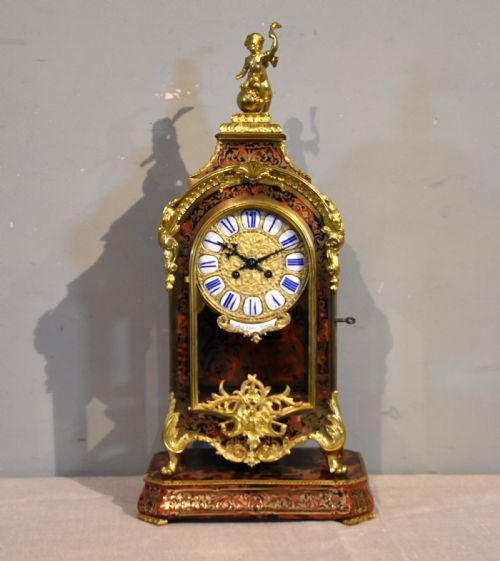
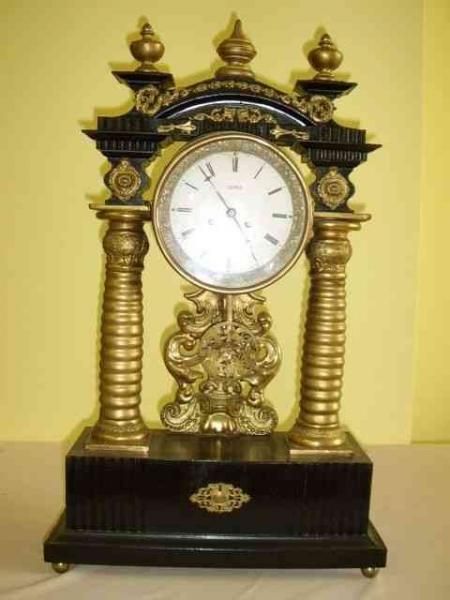


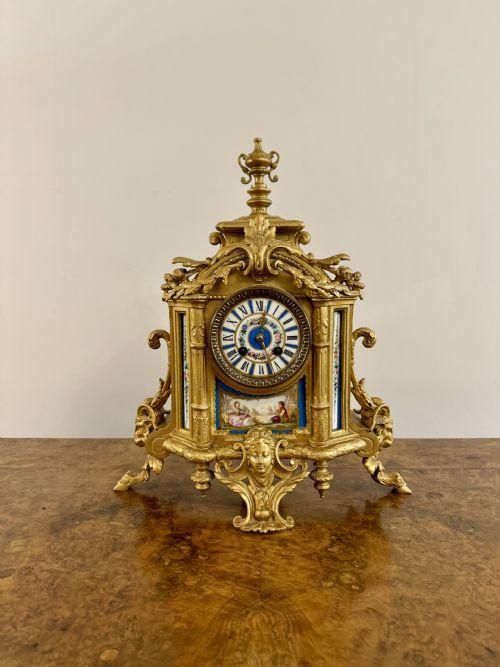


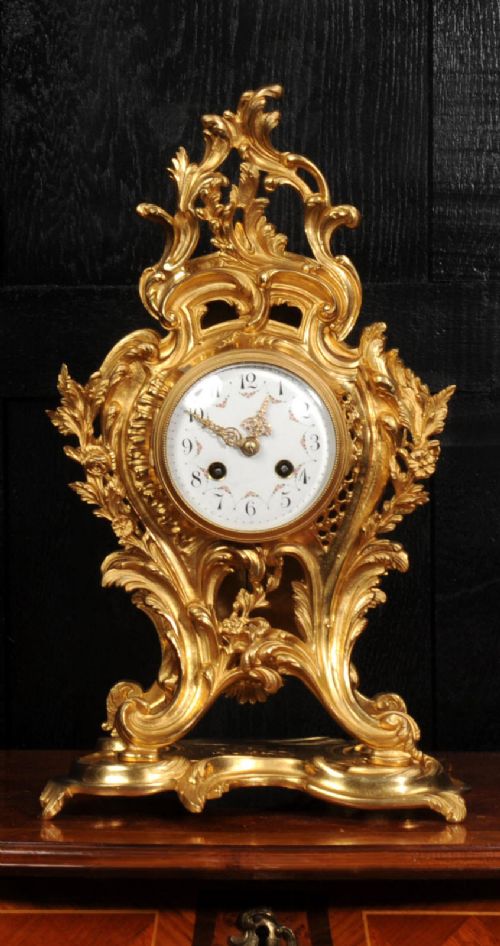


Gilt Metal Mantel Clock
A gilt metal mantel clock brings nineteenth-century drawing rooms alive with the steady tick of brass and the gleam of gilded bronze.

Gilt Metal Mantel Clock
A gilt metal mantel clock sits proudly on a shelf or fireplace, combining functional timekeeping with sculptural presence. The pieces seen here span the eighteenth, nineteenth, and twentieth centuries, originating predominantly from French workshops during the height of the Victorian and Napoleon III periods.
The domestic interior of the nineteenth century favoured ornate mantel displays, frequently pairing the central clock with matching garniture urns or candelabra. Variations range from modest carriage clocks and miniature brass travel pieces to large architectural portico clocks and elaborate Rococo Revival designs.
French makers dominate the selection, utilising styles such as Louis XVI Revival, Baroque, and French Empire alongside English Regency examples. Enamel dials and porcelain plaques often complement the metallic lustre of the cases, creating a focal point designed to catch the ambient light of a room.
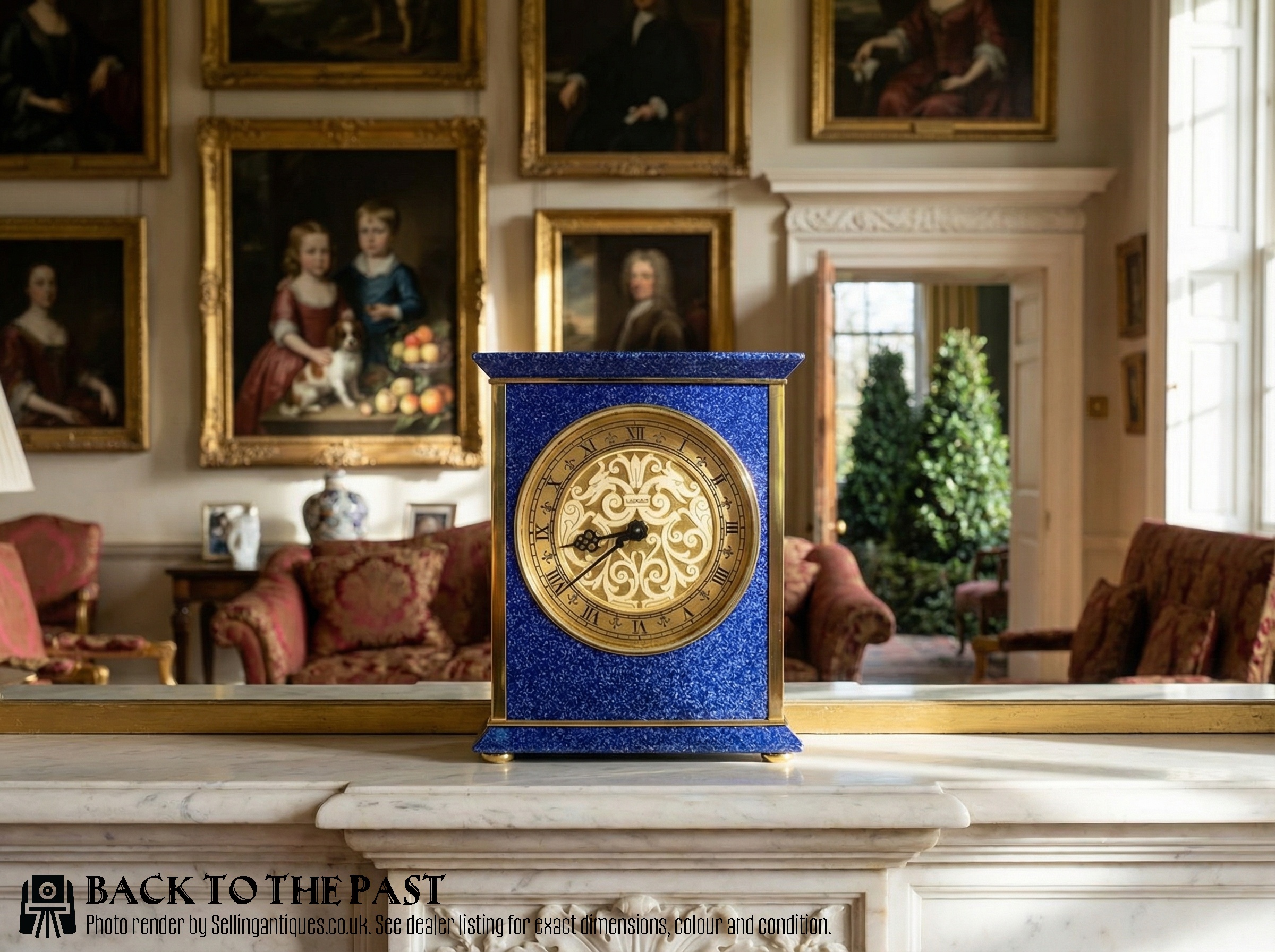
Materials and technique
Foundry work relied on casting bronze or brass, which was subsequently mercury-gilded or treated with ormolu to achieve a rich golden surface. Skilled artisans chased the metalwork by hand after casting, sharpening floral motifs, scrolls, and figural details before mounting the brass clock movements inside.
Enamel dials with delicate painted numerals required precise kiln firing, while inset porcelain panels often featured hand-painted scenes of putti, floral arrangements, or neoclassical figures. Ebonised wood, marble, and mahogany frequently served as structural housings to support the heavy metal frames and movements.
Gilt Metal Mantel Clock Retail Price Guide 2026
Typical asking prices for gilt metal mantel clock among the pieces listed under this phrase on Sellingantiques today, from the lower quarter to the upper quarter. They describe what is for sale here now, not the wider market.
Several clocks feature tiny painted putti seemingly tasked with holding up the heavy weights of time.
Quality variations
The distinction between standard production and exceptional craftsmanship rests in the crispness of the chased metalwork and the depth of the gilding. Superior examples display sharply defined cast ornamentation where every leaf and scroll retains distinct edges rather than softened, rounded contours.
Movement quality separates workshop tiers, with renowned makers employing finer escapements, striking trains, and robust eight-day mechanisms. The integration of hand-painted porcelain panels and original mercury gilding rather than later lacquering elevates the status of any piece.

Japy Freres·Leon Message·Jollet et Cie·John Barwise of London·PH Mourey·Bourdin Paris·Leroy et Fils·Jaeger LeCoultre·Luxor
The Gilt Metal Mantel Clock Glossary
- Ormolu
- Gilded bronze produced through a mercury amalgamation technique, creating a durable golden finish characteristic of eighteenth and nineteenth-century French metalwork.
- Garniture
- A set of matching decorative objects, typically comprising a central mantel clock flanked by matching vases or candelabra for symmetrical display.
- Portico clock
- A monumental clock design featuring architectural columns supporting the movement case, popular during the Empire and late nineteenth-century periods.
- Cartouche
- Enamel plates forming the chapter ring on a clock dial, often applied individually for each numeral rather than painted onto a single face.
- Chasing
- The manual finishing of cast metal using small punches and hammers to refine details and create texture on the exterior case.
Gilt Metal Mantel Clock: Frequently Asked Questions
How do I wind an eight day mantel clock?
Most traditional mechanical movements require a key inserted into the dial holes every week to tension the springs. Care must be taken not to overwind the mechanism.
Moving the hands should be done slowly and strictly in a clockwise direction to avoid damaging the delicate strike train gearing.
Where should I place a heavy bronze clock?
The surface must be completely flat and sturdy enough to support significant weight, such as a slate mantelpiece or a secure sideboard. Levelling the clock ensures the pendulum swings evenly and the escapement ticks without stopping.
Direct sunlight and damp environments should be avoided to protect both the gilded metal surfaces and the enamel dials over time.
How do I tell a Victorian clock from an earlier one?
Stylistic clues such as heavy Rococo Revival scrolling or industrial improvements in movement stamping often point toward the mid-to-late nineteenth century. Earlier pieces from the Empire or Regency periods tend to feature stricter neoclassical geometry and crisper mercury gilding.
Maker signatures engraved on the backplate of the movement provide definitive clues when cross-referenced with known working dates.
What is a clock garniture set?
A garniture consists of a central mantel clock accompanied by matching decorative side pieces, such as twin urns or candelabra. These sets were designed to create a balanced, symmetrical arrangement across a fireplace mantel.
The materials and decorative motifs on the side pieces directly mirror the case of the main clock.