
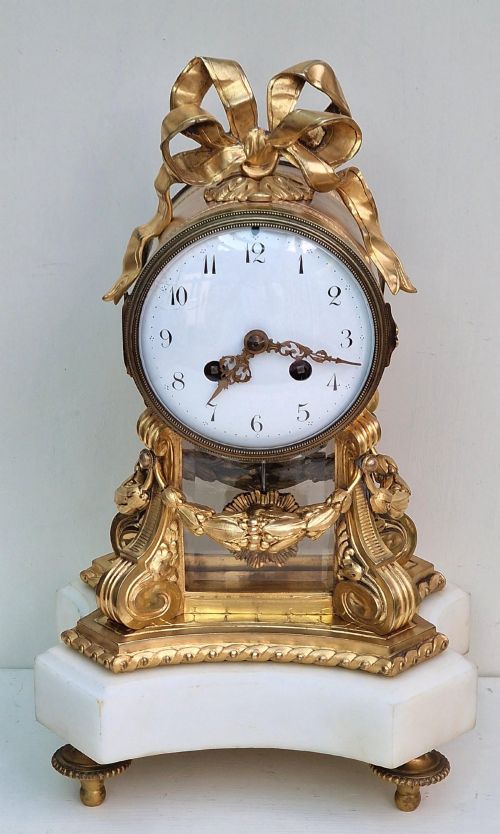
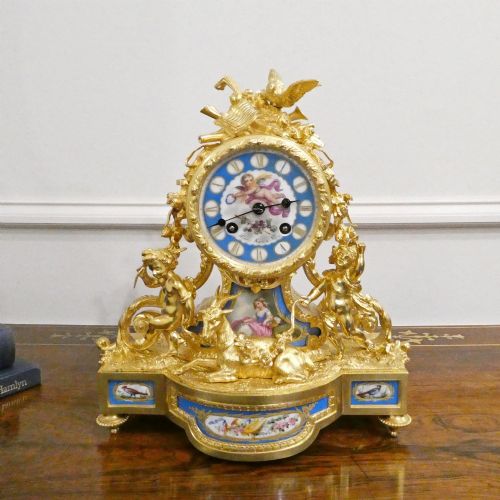
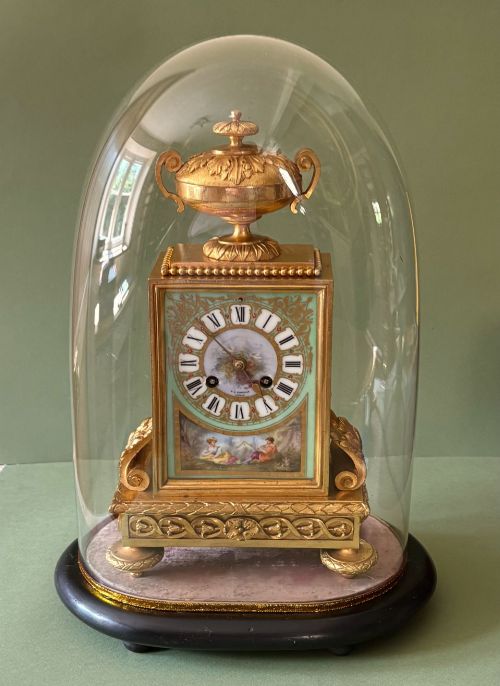
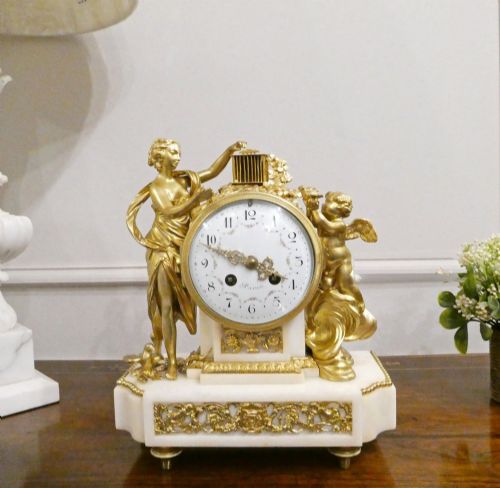
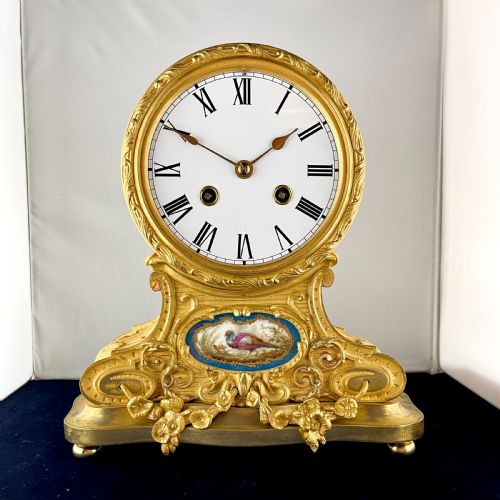
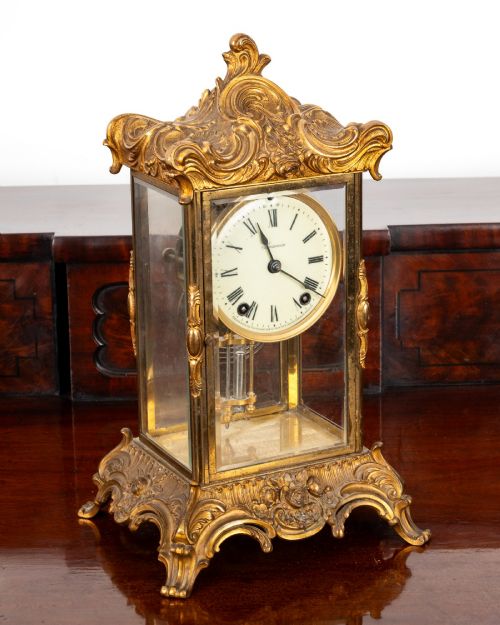
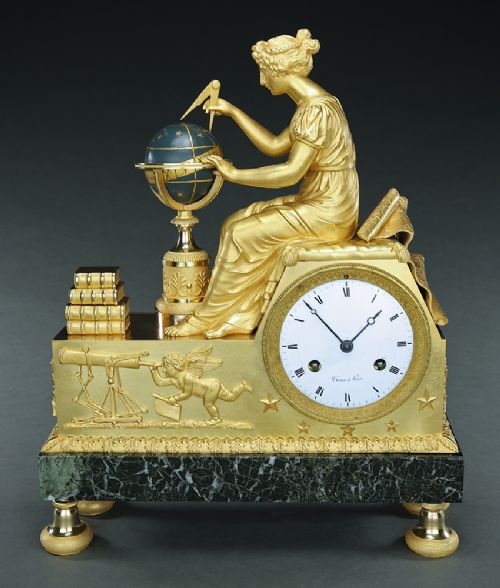
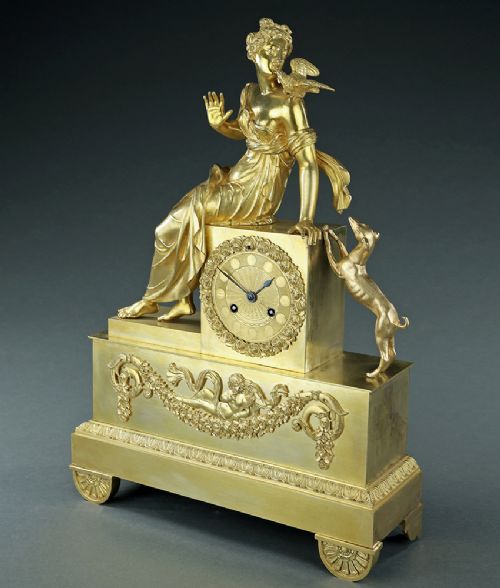
Gold Bronze Mantel Clock
These gold bronze mantel clocks bring domestic timekeeping into the grandest drawing rooms with striking metalwork and sculptural presence.
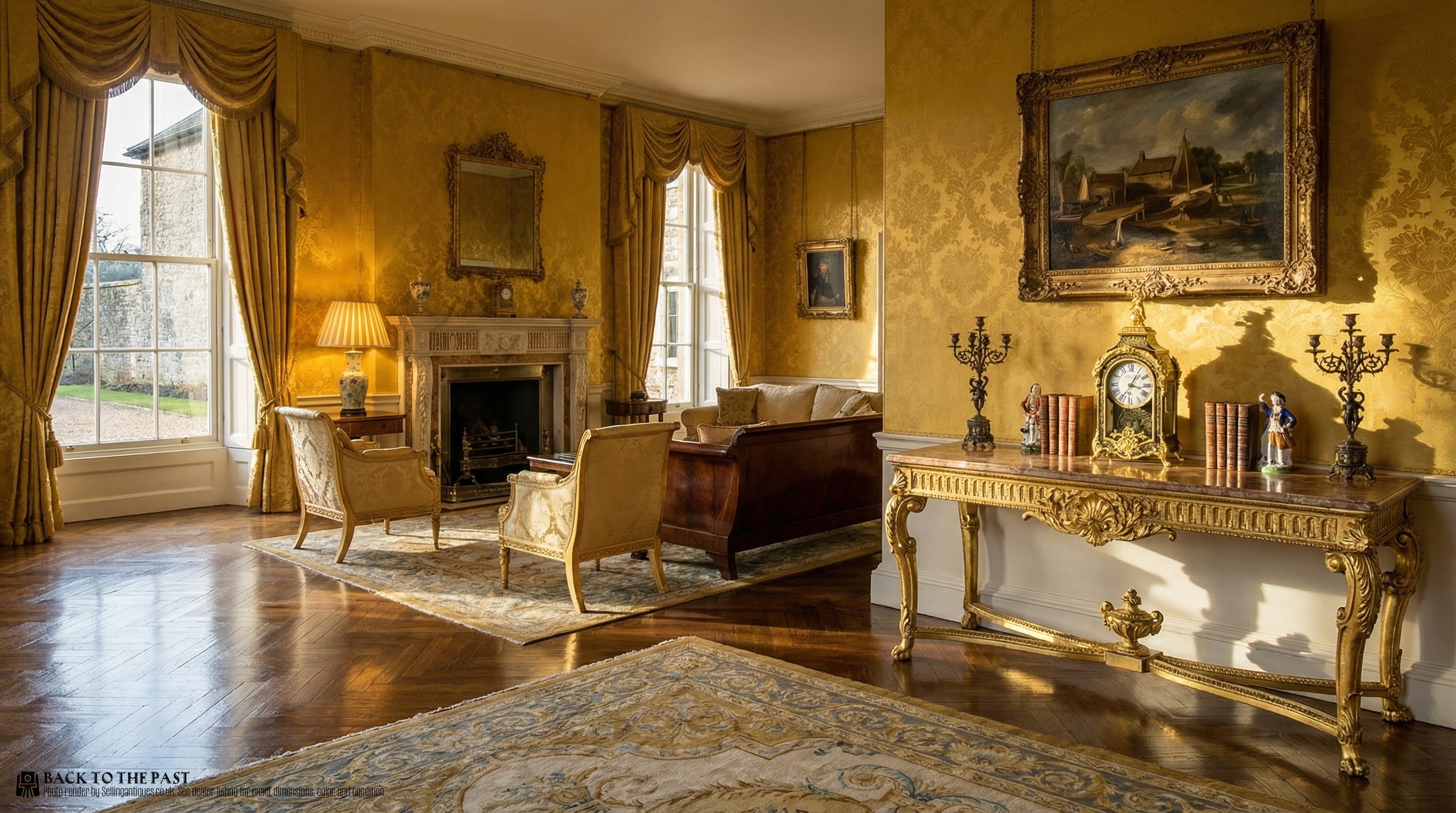
What gold bronze mantel clocks are
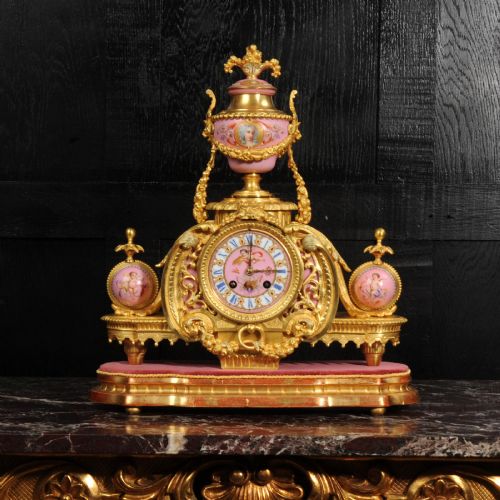
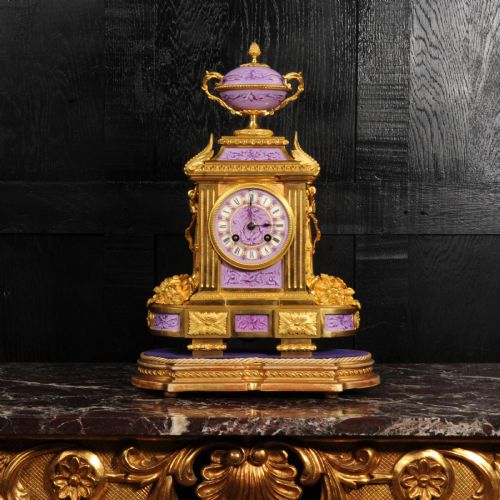
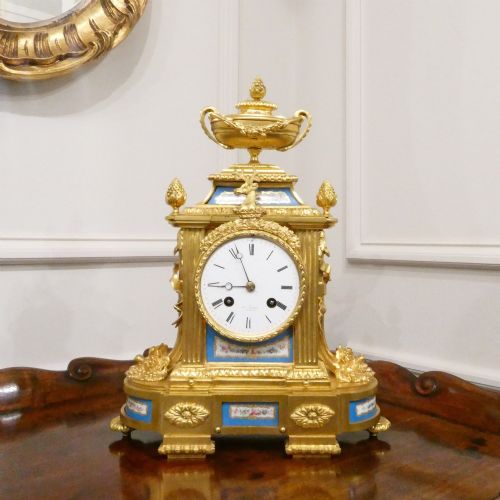
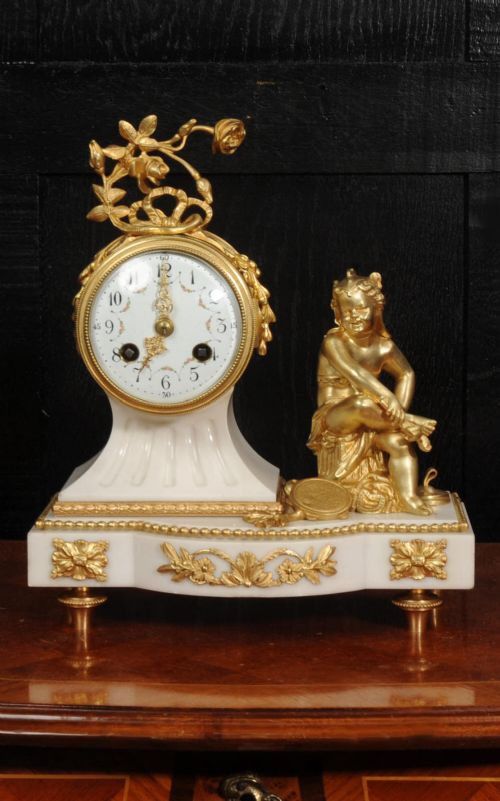
A gold bronze mantel clock stands as a decorative timepiece designed for display on a shelf or fireplace surround. The listings on this page span the nineteenth century, including pieces from the Regency period, eighteen-sixty, and eighteen-eighty.
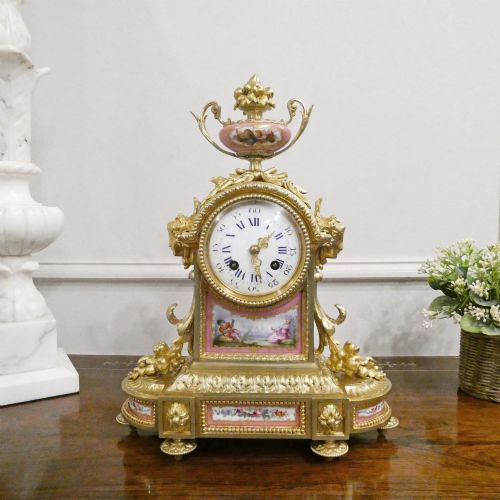
The dominant aesthetic draws on French design traditions, featuring French Empire, Louis XVI, Louis XV, French Rococo Revival, and French Baroque styles. Forms range from architectural marble cases to figural compositions depicting themes such as astronomy and exploration.
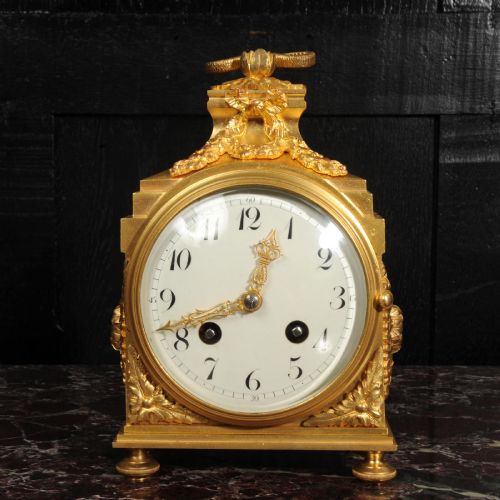
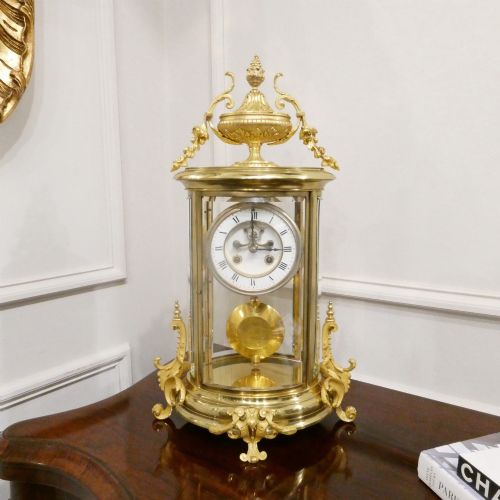
Many examples incorporate subsidiary elements such as enamel dials, glass domes, and contrasting patinated bronze alongside gilded surfaces. They utilise eight-day movements with bell striking mechanisms and traditional silk suspension systems.
How they were made
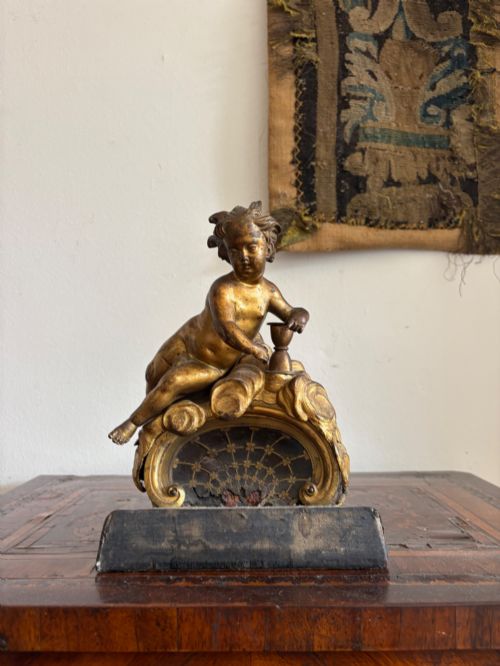
Maker workshops constructed these clocks using cast metal frames finished in gilt bronze, ormolu, gilt metal, and brass, frequently paired with carved marble bases. Patinated bronze provided dark tonal contrast against the bright gilded ornamentation.
Dial faces combined painted enamel numerals with protective glass covers, housing mechanical movements driven by springs or weights. Metal parts underwent fire gilding or chemical treatments to achieve the characteristic rich surface lustre.
Retail Price Guide 2026
Typical UK retail prices for gold bronze mantel clock, calculated from the Sellingantiques database of over a million retail prices indexed since 2003. This retail price guide relies exclusively on Sellingantiques data; no external sources or auction records are used, so the figures do not describe the wider market.
Materials recorded across the inventory include gilt bronze, ormolu, patinated bronze, marble, brass, enamel, and glass.
What varies in quality
Quality reveals itself in the crispness of the bronze casting and the depth of the gilding across the decorative mounts. Superior pieces display intricate chasing by hand that defines hair, drapery, and architectural mouldings with sharp precision.
The integration of the movement within the case and the presence of signed mechanisms distinguish higher-tier examples from standard production. Materials like dense marble and clear enamel dials further elevate the overall standard of the object.
Achille Brocot·Reiche
The Gold Bronze Mantel Clock Glossary
- Ormolu
- Gilded bronze produced by applying a mercury and gold amalgam to the metal surface before heating. This technique creates a distinctive warm golden finish found on nineteenth-century French clock cases.
- Silk suspension
- A method of hanging the pendulum from a small loop of silk thread behind the dial. This delicate arrangement appeared frequently in French clocks of the nineteenth century.
- Patinated bronze
- Bronze treated with chemical solutions to darken the surface and create contrasting tones against gilded elements. It allows makers to highlight sculptural figures and relief details.
- Boulle clock
- A timepiece featuring brass and tortoiseshell marquetry in the manner associated with seventeenth-century cabinetmaker André-Charles Boulle. The style enjoyed revivals throughout the nineteenth century.
- Enamel
- Fused glass powder applied to metal dial plates and fired at high temperatures to create a smooth, durable white surface for painted clock numerals.
Frequently Asked Questions
What is a gold bronze mantel clock?
A gold bronze mantel clock is a decorative mechanical timepiece housed in a gilded metal case designed for domestic display. These pieces were produced primarily in nineteenth-century France and incorporate elaborate sculptural ornamentation.
They combine timekeeping function with sculptural art, often referencing classical or historical design motifs such as Empire and Baroque styles.
How do you wind an antique clock?
Antique clocks require a winding key inserted into the dial holes to tension the internal springs. Care must be taken not to overwind the mechanism to avoid damaging the internal components.
Most nineteenth-century examples on this page utilise eight-day movements, meaning they need attention approximately once a week to maintain accurate time.
Where should you place a mantel clock?
These clocks belong in stable interior locations away from direct sunlight, draughts, and dampness. A level surface on a mantelpiece or sideboard ensures the pendulum swings evenly and the movement runs reliably.
Many pieces were originally designed to sit centrally on a fireplace surround, complemented by matching garnitures or candelabra.