



Blue Porcelain Mantel Clock
A blue porcelain mantel clock brings colour and mechanical precision together, capturing nineteenth-century salon taste.
Blue Porcelain Mantel Clock
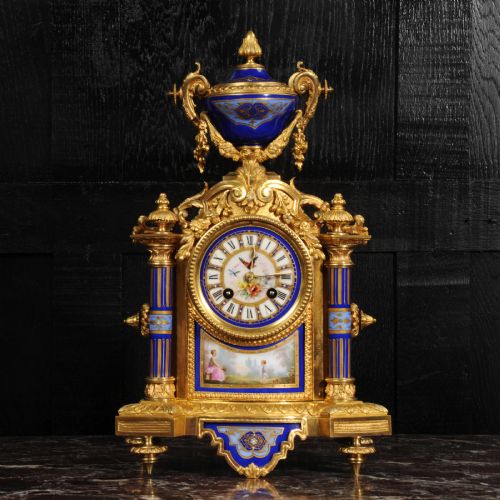
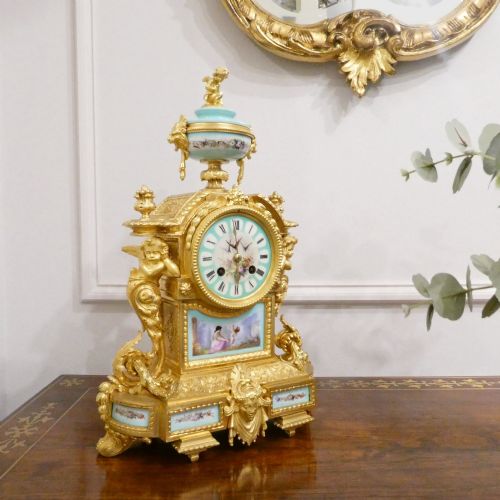
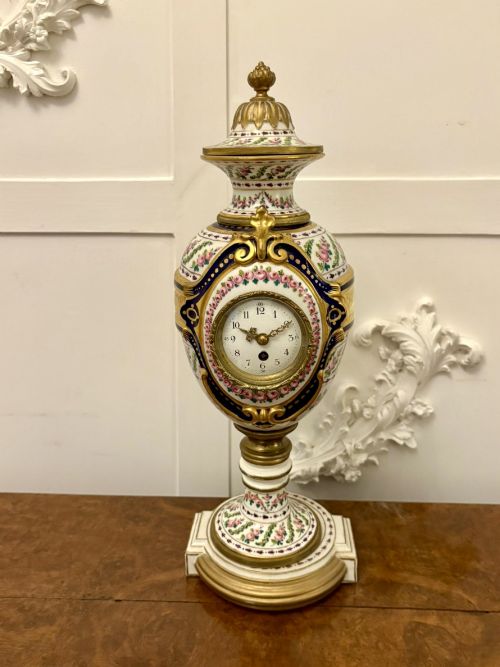
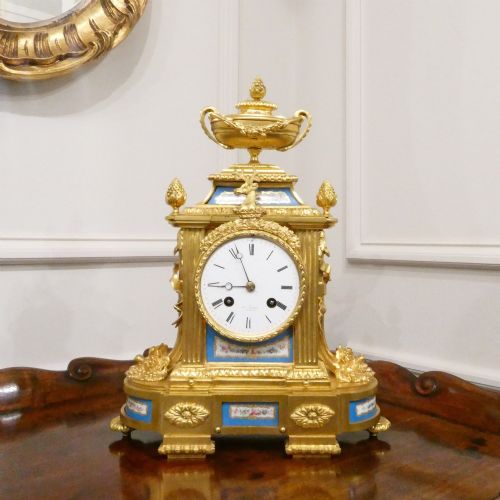
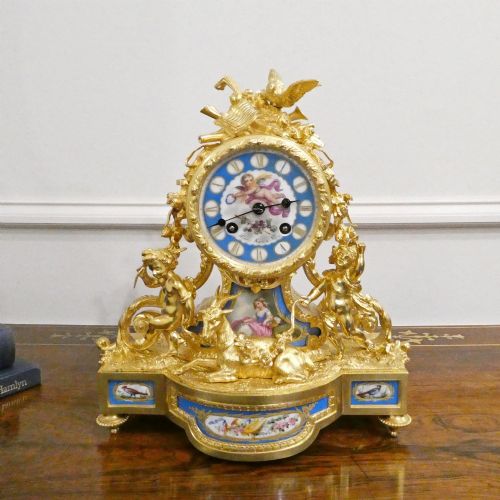
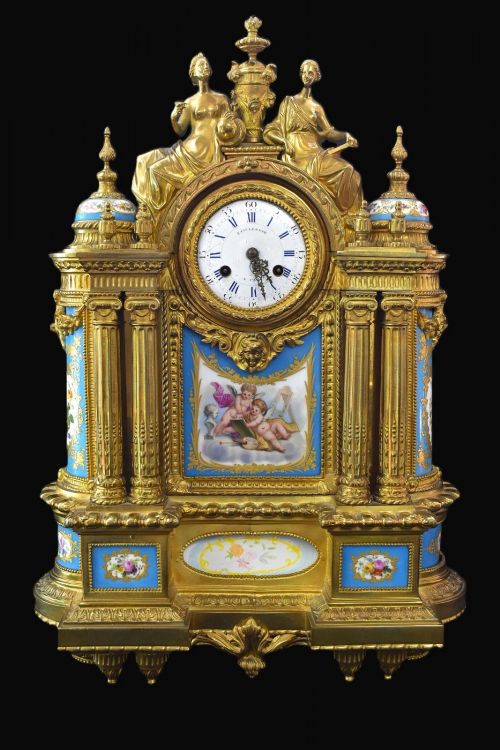
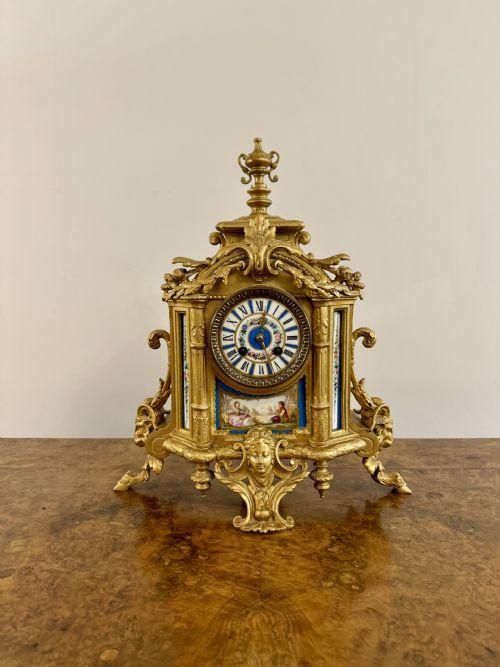
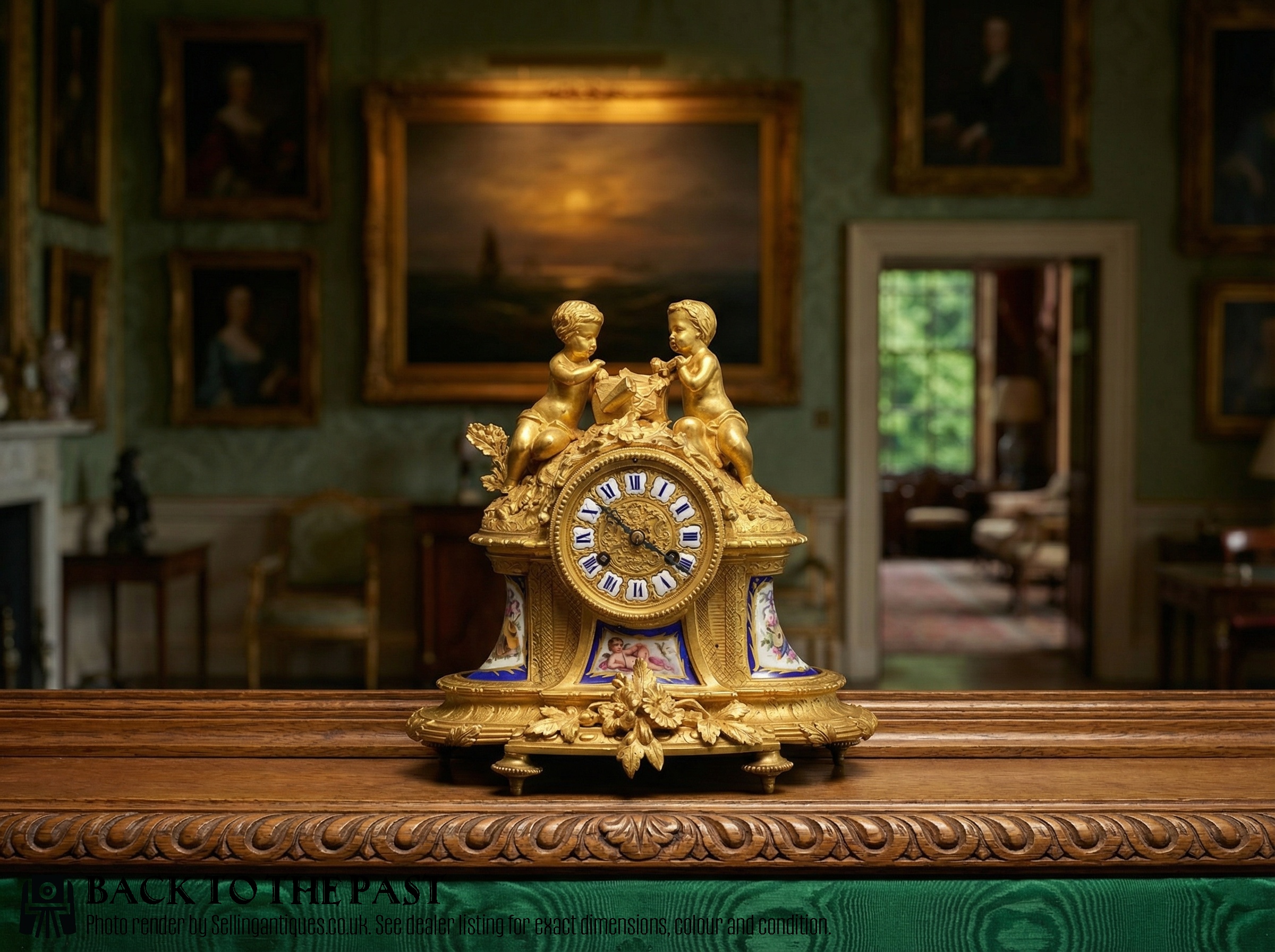
A blue porcelain mantel clock combines ceramic bodies with metal mounts, appearing primarily in nineteenth-century French designs such as the Louis XVI Revival and Rococo Revival styles. These pieces often take the form of urn-shaped, drum head, or lyre configurations, sometimes accompanied by matching garniture sets.
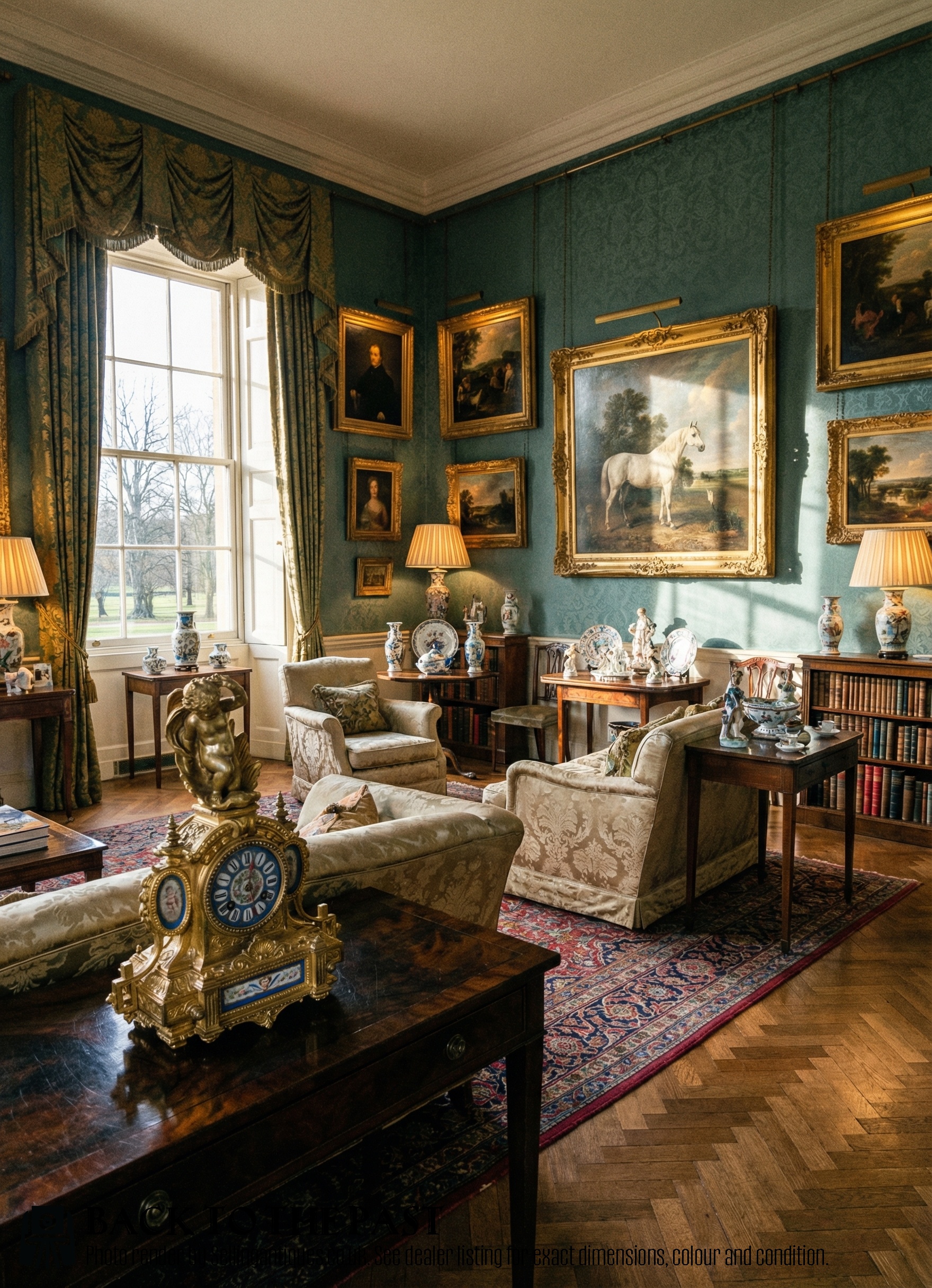
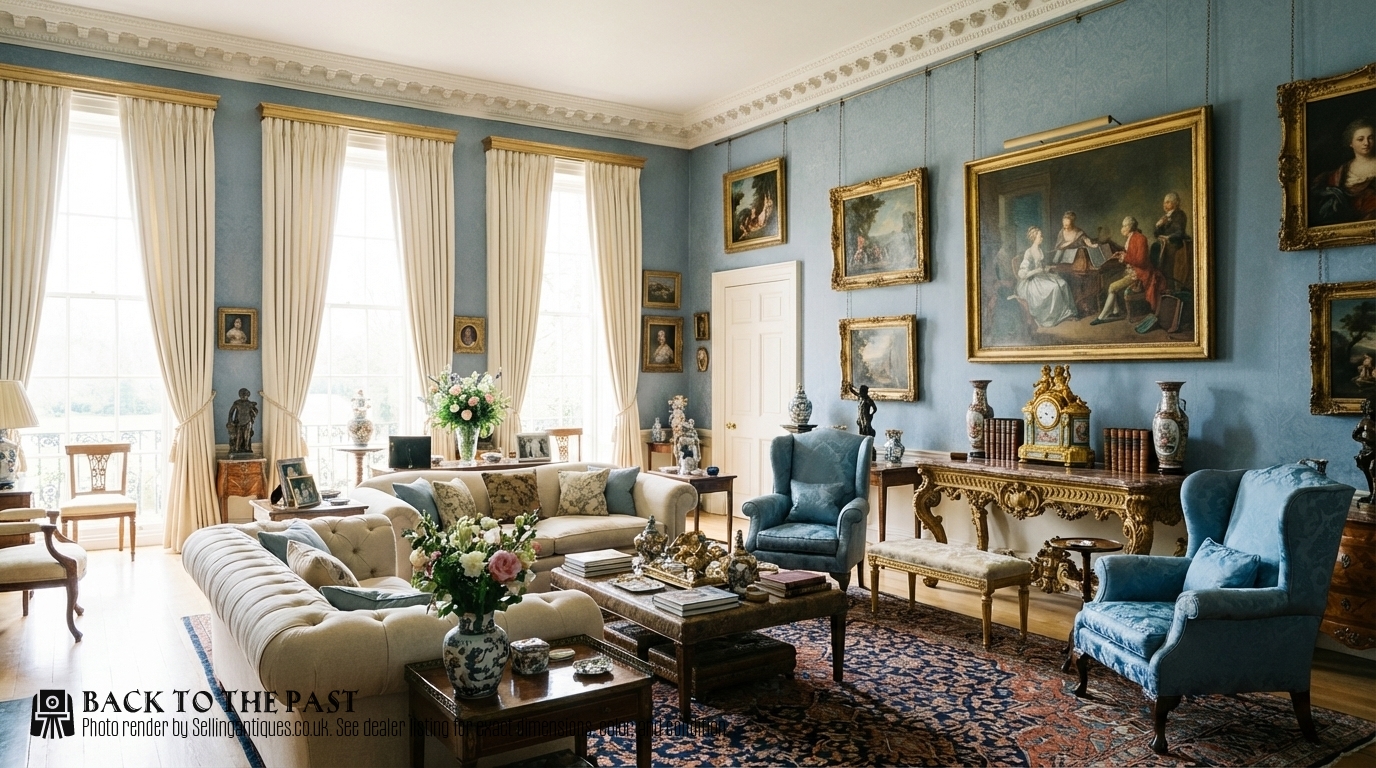
Makers and retailers placed these objects on mantelpieces and side tables to anchor formal reception rooms. The blue porcelain ground, frequently associated with Sevres or similar styles, contrasts with gilt bronze and ormolu framing.
Victorian variations span compact boudoir pieces to massive architectural bracket clocks and clock sets. The version most commonly met on this page is the French nineteenth-century gilt bronze and porcelain mantel clock.
How they were made
Craftsmen shaped porcelain bodies through traditional ceramic methods before applying hand-painted details and blue glazes. Metalworkers cast bronze and brass components, then gilded the surfaces with ormolu or gilt metal finishes to create ornate rococo and neoclassical frames.
Clockmakers integrated mechanical movements inside these combined ceramic and metal housings, frequently pairing enamel dials with visible escapements. Skilled assemblers mounted the porcelain plaques and vases securely into the cast bronze chassis.
Blue Porcelain Mantel Clock Retail Price Guide 2026
Typical asking prices for blue porcelain mantel clock among the pieces listed under this phrase on Sellingantiques today, from the lower quarter to the upper quarter. They describe what is for sale here now, not the wider market.
The inventory includes urn-shaped, drum head, and lyre clock configurations alongside matching three-piece garniture sets.
What varies in quality
The refinement of the cast bronze mounts and the intricacy of the hand-painted porcelain decoration dictate the standing of an individual piece. Finer examples display crisp chisel work on the ormolu alongside delicate brushwork on the ceramic panels.
Signed movements by known makers and complete garniture sets elevate a clock's status above standard production models. The weight of the bronze and the depth of the gilding separate ambitious workshop output from simpler commercial pieces.
Japy Freres·Henry Marc·Etienne Lenoir·PH Mourey·Japy Frers·Achille Brocot Delettrez·Finnigan Manchester·Japy Fils·Vincenti of Paris·JP Delettrez·Miroy Freres
The Blue Porcelain Mantel Clock Glossary
- Ormolu
- Gilded bronze achieved through a mercury amalgamation process on cast metal. This technique creates a bright, durable golden surface characteristic of nineteenth-century French decorative arts.
- Garniture
- A matching set of decorative objects, typically a central clock flanked by vases or candelabra. These matched ensembles created symmetrical arrangements on nineteenth-century mantelpieces.
- Sevчкаres style
- A porcelain decorative aesthetic mimicking the blue grounds and hand-painted pastoral scenes produced by the Sevres factory. Pieces bearing this descriptor emulate the soft-paste look of royal French ceramics.
- Lyre clock
- A timepiece shaped in the structural form of a musical lyre. The movement sits within the circular body while the pendulum swings behind open framework.
- Cloisonné
- An enamel technique where metal wires form raised compartments filled with coloured paste and fired. This decorative method appears on select clock garniture sets.
Blue Porcelain Mantel Clock: Frequently Asked Questions
What periods do these clocks come from?
These decorative timepieces date predominantly from the nineteenth century, spanning Victorian production years between eighteen-fifty and nineteen-ten. French workshops produced the majority of these gilt bronze and porcelain objects during the height of the Second Empire and the various revival periods.
Specific dates often tie to movement makers or stylistic markers like Louis XVI Revival architecture. Collectors encounter pieces stamped with mid-to-late nineteenth-century maker marks.
How do clock garnitures work?
A clock garniture pairs a central time-keeping mantel clock with matching side ornaments, usually porcelain urns, vases, or candelabra. These matched sets were designed to create a balanced display across a fireplace mantel or console table.
The side pieces share the exact same blue porcelain, ormolu mounts, and stylistic motifs as the central clock. Together they formed a unified decorative scheme for nineteenth-century formal interiors.
How do I care for a porcelain and bronze clock?
Place the clock on a stable, level surface away from direct sunlight and temperature fluctuations that might affect the movement or crack the porcelain glaze. Dust the gilt bronze gently with a dry, soft brush to protect the delicate ormolu finish.
Avoid using liquid cleaners or chemical polishes on either the ceramic or the metal mounts. Professional clockmakers should service the mechanical movement periodically to ensure proper timekeeping.
How are different French styles identified?
Rococo Revival pieces feature asymmetrical scrolling, naturalistic plant forms, and flowing lines executed in cast ormolu. Louis XVI Revival designs display geometric symmetry, neoclassical urn shapes, columns, and crisp architectural proportions.
Napoleon III clocks combine these historical references with opulent materials, rich blue porcelain grounds, and elaborate gilt bronze casting. Examining the mounts and ceramic shape reveals which historical movement inspired the maker.