



Sevres Porcelain Clock
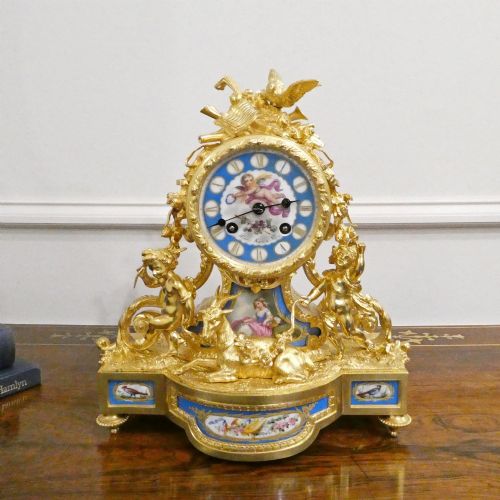
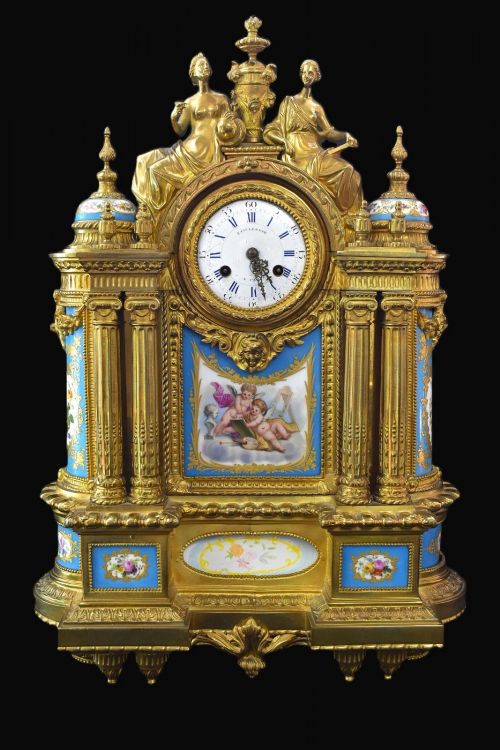
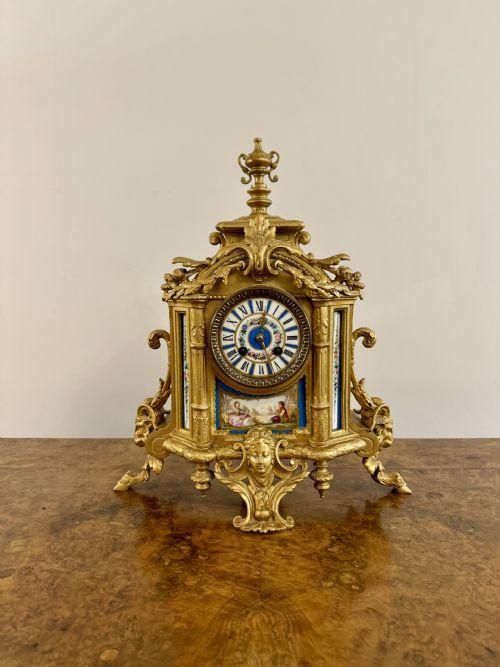
When you search for a sevres porcelain clock, you enter a world of nineteenth-century French horology where hand-painted ceramic panels meet ornate gilt metalwork.
Sevres Porcelain Clock
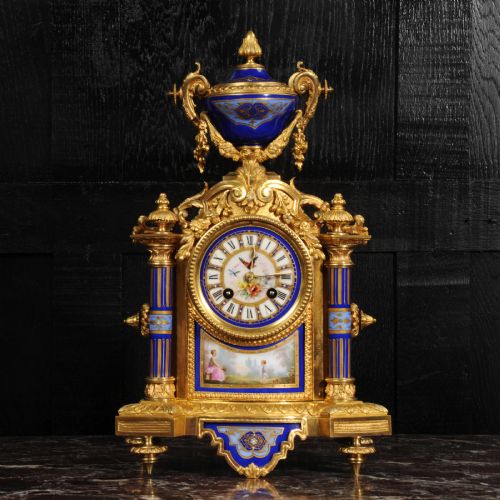
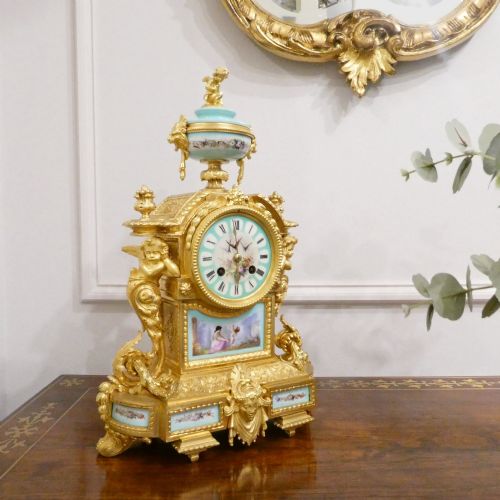
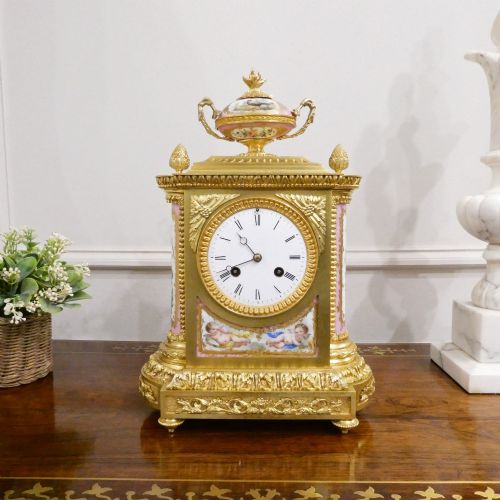
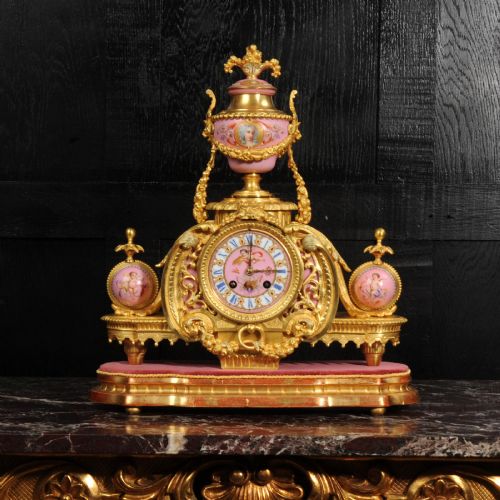
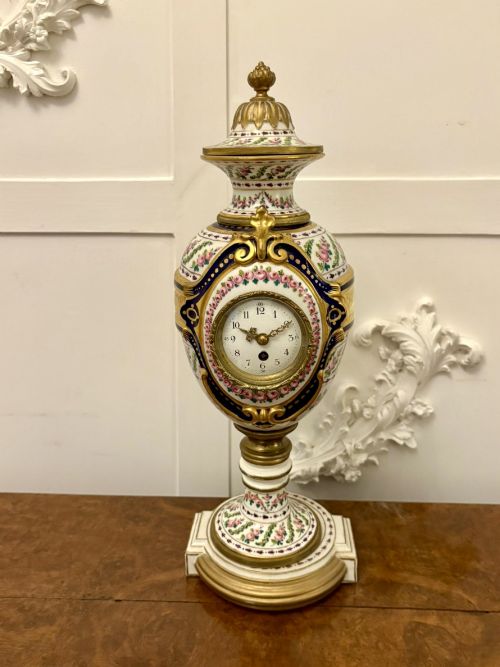
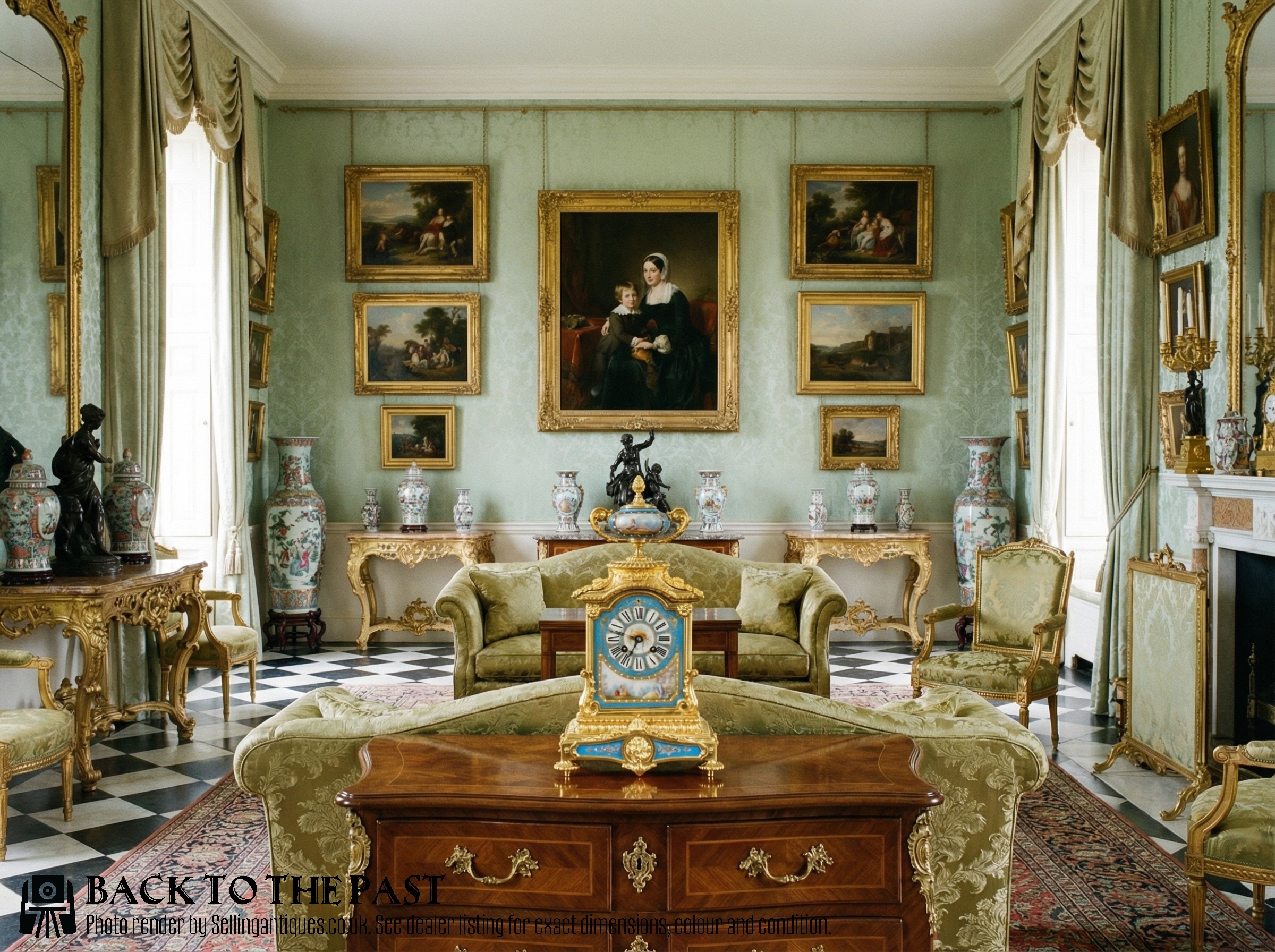
A sevres porcelain clock typically takes the form of a mantel clock, often accompanied by matching side urns or candelabra in a garniture set. These pieces originate predominantly from nineteenth-century France, spanning periods from the second empire and Victorian eras through to the late eighteen-hundreds.
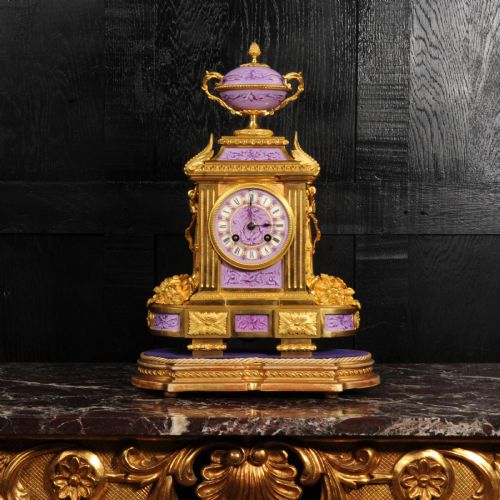
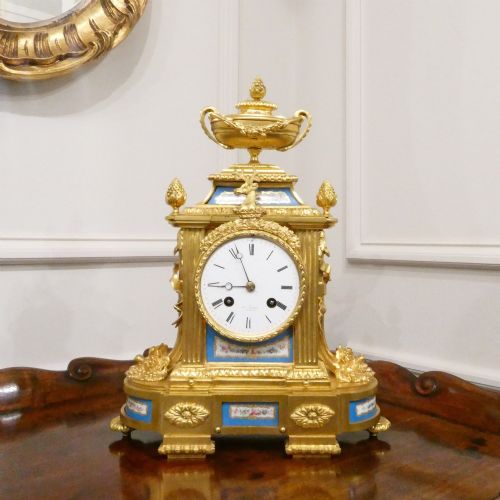
The aesthetic leans heavily into revivalist movements, featuring Louis XVI style symmetry alongside more exuberant French rococo revival designs. Architectural mantel pieces, drum head models, and lyre-shaped clocks dominate the forms available on the market.
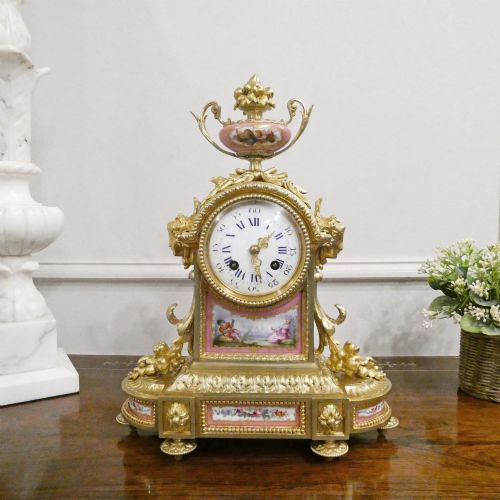
Makers integrated painted ceramic plaques depicting pastoral scenes, florals, and figures directly into metal cases, creating functional timepieces that doubled as sculptural mantel centrepieces.

How they were made
The construction relies on a marriage of porcelain and cast metal, predominantly using ormolu, gilt bronze, or gilt metal to form the structural case and decorative mounts. These metal housings were frequently cast and chased with rocaille scrolls, floral garlands, or classical architectural motifs.
Porcelain panels, often glazed in bleu de roi, were fired separately before being hand-painted with enamel details and gilt accents, then fitted into the brass or bronze frames surrounding the enamel dial and mechanical movement.
Sevres Porcelain Clock Retail Price Guide 2026
Typical asking prices for sevres porcelain clock among the pieces listed under this phrase on Sellingantiques today, from the lower quarter to the upper quarter. They describe what is for sale here now, not the wider market.
Listings feature nineteenth-century French pieces in ormolu, gilt bronze, and porcelain, spanning revival styles from rococo to Louis XVI.
What varies in quality
Quality rests heavily on the crispness of the bronze casting and the artistry of the hand-painted porcelain panels. Finer examples display deeply chased gilt metalwork with sharply defined ornamentation and delicate, finely detailed enamel painting on the ceramic faces.
The reputation of the movement maker also influences the standing of a piece, with established Parisian horologists and movement houses providing the mechanical reliability that distinguishes superior specimens from standard production models.
Japy Freres·Achille Brocot·Jean-Baptiste Delettrez·Henry Marc·Raingo Freres·Le Roy et Fils·PH Mourey·Etienne Lenoir
The Sevres Porcelain Clock Glossary
- Ormolu
- A technique of applying finely ground high-carat gold to an bronze object using a mercury amalgamation process, resulting in a rich golden finish. It provides the characteristic bright metallic gleam seen on nineteenth-century French clock cases.
- Garniture
- A set of matching decorative objects designed to be displayed together on a mantelpiece, usually comprising a central clock flanked by two matching vases, urns, or candelabra. These sets create a balanced, symmetrical display.
- Bleu de Roi
- A deep, rich royal blue ceramic glaze developed at the Sevres pottery factory. It serves as a striking background colour for hand-painted pastoral scenes and gilt decoration on clock panels.
- Drum head clock
- A clock design featuring a circular, drum-like housing for the movement mounted atop a decorative plinth or base. This distinct form places the dial prominently forward within the composition.
- Chasing
- The hand-workmanship applied to a metal casting using small steel punches and hammers to refine surface details, texture backgrounds, and sharpen edges. High-quality chasing separates master bronziers from routine manufacturers.
Sevres Porcelain Clock: Frequently Asked Questions
What is a clock garniture?
A clock garniture is a matched set consisting of a central mantel clock accompanied by side pieces such as urns or candelabra. These suites were designed to create a symmetrical, decorative arrangement on a fireplace mantel.
The matching elements share identical porcelain panels, metal mounts, and stylistic motifs, tying the entire display together as a unified interior ornament.
How do I wind my antique clock?
Antique mechanical clocks require a specialised key inserted into winding holes on the dial face to tension the internal springs or weights. Care must be taken not to over-wind the mechanism to avoid damaging the mainsprings.
Most nineteenth-century movements require attention every week or eight days, depending on whether the clock is a time-only piece or includes a striking train for hours and halves.
Where were these clocks made?
These timepieces were manufactured primarily in France, with workshops centred around Paris during the nineteenth century. Parisian horologists and bronze founders collaborated to produce the complex metal cases and movements.
While the porcelain panels often carried the aesthetic influence or marks associated with the Sevres factory, the final assembly and clockwork were completed by specialised horological firms.
How do I identify the period?
Dating relies on stylistic clues, maker signatures stamped on the back of the movement, and the evolution of revival styles. Pieces exhibiting exuberant asymmetry often align with mid-century rococo revivals, while stricter symmetry points to Louis XVI revival preferences.
Maker marks and serial numbers stamped on the brass backplates provide the most reliable path to establishing a precise decade of manufacture.