

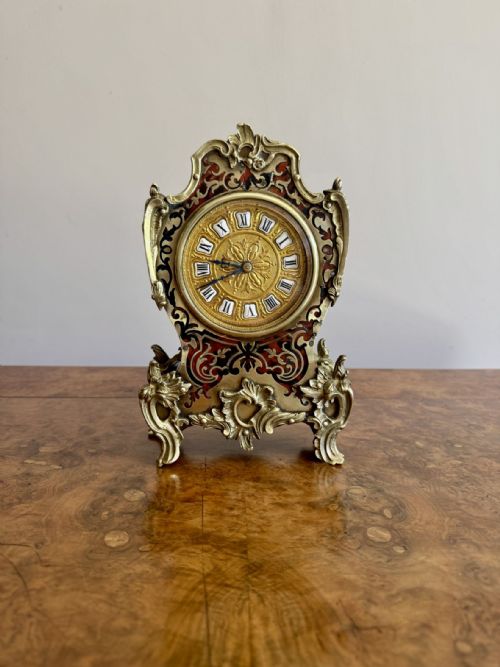


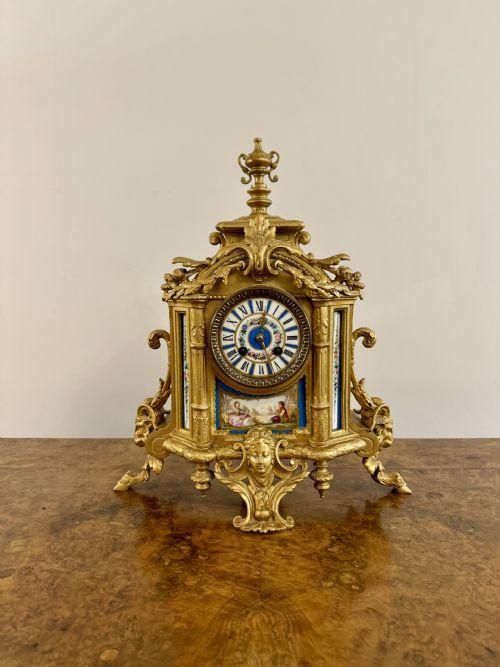


Ornate Table Clock
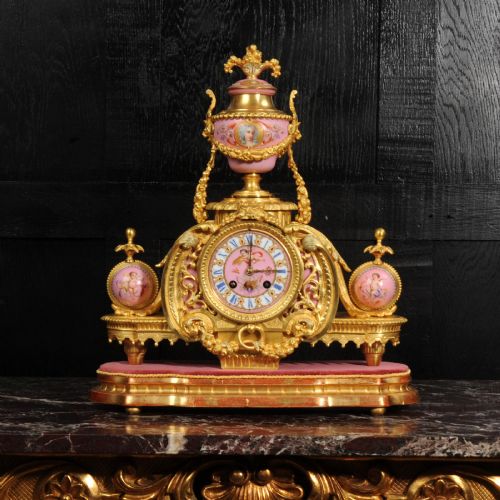
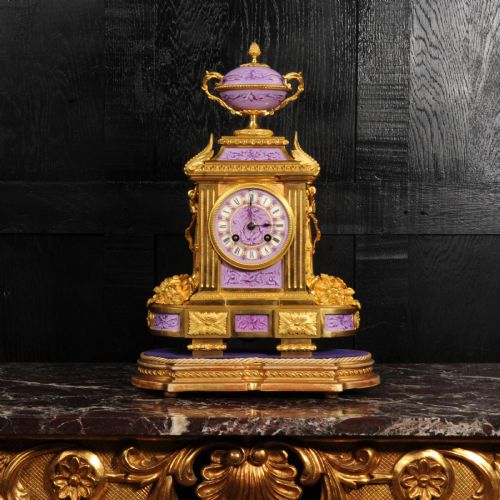
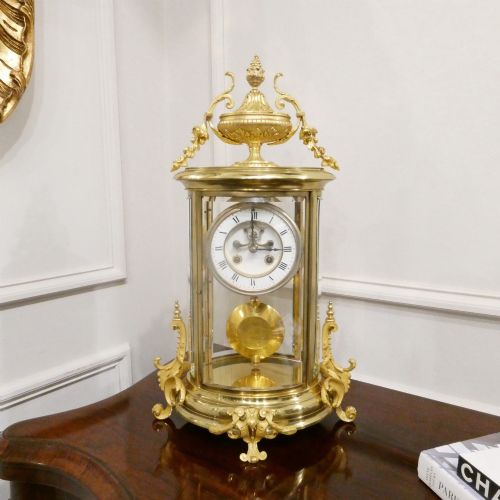
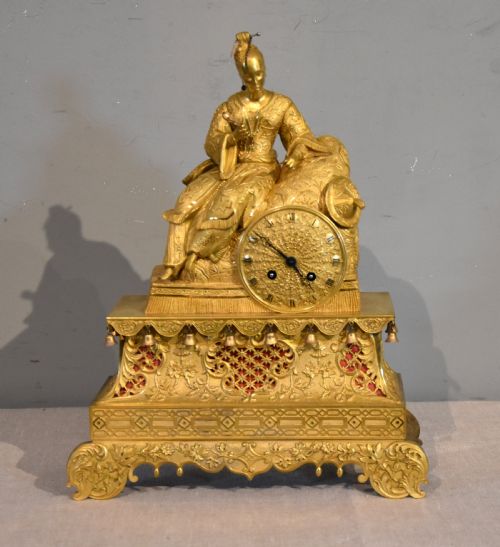
These ornate table clock examples bring elaborate nineteenth-century presence to a mantelpiece, combining brass, ormolu, marble, and porcelain into striking centrepieces.

What an ornate table clock is
An ornate table clock represents nineteenth-century decorative timekeeping, spanning styles from French Louis XVI and Napoleon III to Victorian eras. These decorative pieces function as both reliable timekeepers and decorative sculptures for the home.
Buyers encounter various formats on this page, including solid brass mantel clocks, white marble and ormolu combinations, alabaster timepieces, and porcelain-mounted designs. Larger boardroom musical bracket clocks and swinging cherub timepieces also appear within the selection.
Origins heavily lean towards French workshops of the eighteen-fifties through to nineteen-hundred, alongside nineteenth-century British bracket clock production. Each form utilises classical architectural details, figural elements, and elaborate metalwork characteristic of the period.

How they were made
Maker workshops construct these clocks using robust metallic foundations of brass, gilt bronze, and ormolu. These metal components frequently receive hand-chased surface detailing to create rich textural contrast against polished sections.
Natural stones such as white marble and alabaster provide heavy, architectural plinths and bodies for the movements. Sèvres-style porcelain panels and enamel dials are integrated into the housings, hand-painted with floral motifs or numerals.
Complex internal mechanisms power these objects, ranging from standard timepieces to triple fusee movements capable of musical output. Swinging pendulum arrangements and delicate escapements demonstrate advanced nineteenth-century mechanical skill.
Retail Price Guide 2026
Typical UK retail prices for ornate table clock, calculated from the Sellingantiques database of over a million retail prices indexed since 2003. This retail price guide relies exclusively on Sellingantiques data; no external sources or auction records are used, so the figures do not describe the wider market.
Certain nineteenth-century French clockmakers defied gravity entirely by suspending swinging cherubs from delicate botanical arches.
What varies in quality
The degree of hand-chiselling on ormolu and gilt bronze mounts dictates visual depth, separating mass-produced castings from superior studio output. Crisp, deeply undercut foliage and sharp figural casting denote higher workshop standards.
The integration of materials determines overall refinement, particularly how cleanly marble, alabaster, and porcelain elements fit against the metal chassis. Finer examples feature perfectly aligned enamel dials and unblemished porcelain plaques.
Mechanical complexity elevates certain pieces, such as triple fusee musical movements or specialised swinging pendulum designs, far above standard timepieces. The weight and solidity of the brass and bronze housing further indicate the original manufacturing investment.

Farcot
The Ornate Table Clock Glossary
- Ormolu
- Gilded bronze produced by applying a mercury-gilding amalgam to a bronze base, creating a rich golden surface finish that resists tarnish. This technique defines the opulent appearance of many nineteenth-century French pieces.
- Fusee
- A conical pulley used in spring-driven clocks to maintain equal power as the mainspring unwinds. This mechanism improves timekeeping accuracy across the duration of the wound spring.
- Alabaster
- A fine-grained, translucent stone used for carving clock bodies and architectural columns. Its soft white appearance offers a smooth contrast to gilded metal mounts.
- Spandrel
- The decorative space between the dial edge and the corners of the clock face. These areas often receive cast brass ornamentation in bracket clock designs.
- Escapement
- The internal mechanism that controls the release of gear train energy to the pendulum or balance wheel. It translates rotational force into the ticking motion of the clock.
Frequently Asked Questions
Where should I place an ornate table clock?
These decorative clocks suit principal reception rooms, dining room sideboards, or library mantelpieces where their substantial weight and detailed gilding can be appreciated.
Ensure the selected surface is completely level and sturdy enough to support heavy marble or bronze structures safely.
What periods do these clocks come from?
The available selection primarily dates from the nineteenth century, spanning the eighteen-fifties through to nineteen-hundred. Styles reflect French Second Empire, Louis XVI revival, and Victorian aesthetics.
Dates are determined by architectural styling, material combinations, and mechanical development visible in the casework and dial.
How do I clean ormolu and marble?
Dust gilt bronze and ormolu gently with a soft, dry brush to prevent accumulation in recessed chasing. Avoid liquid polishes that can strip the historic gilding.
Clean marble and alabaster surfaces with a slightly damp cloth, drying immediately to protect the porous stone from water marks.