


Empire Period Table Clock
An empire period table clock brings neoclassical bronze sculpture and precision timekeeping together on a mantelpiece.
Empire Period Table Clock
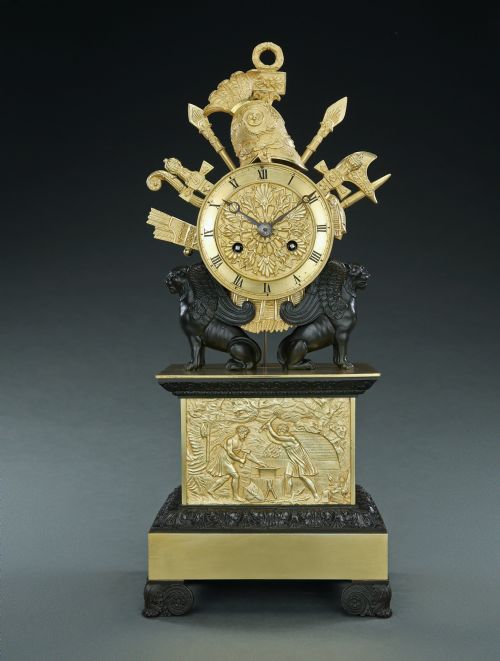
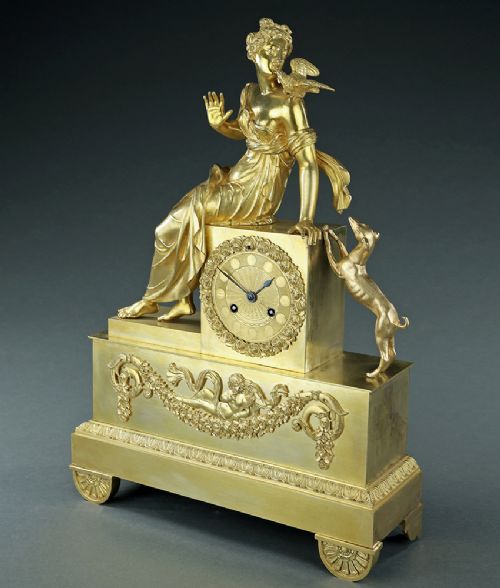
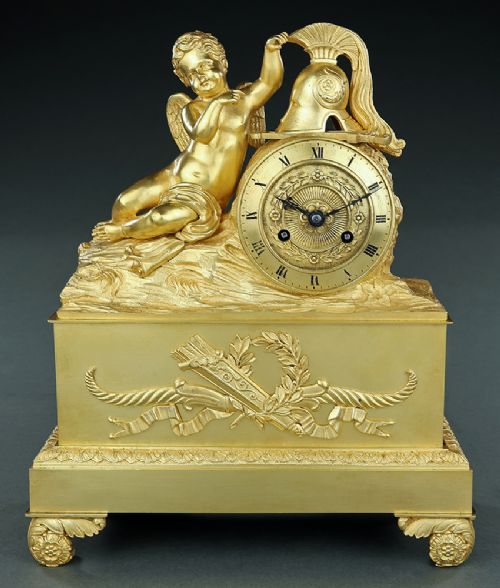
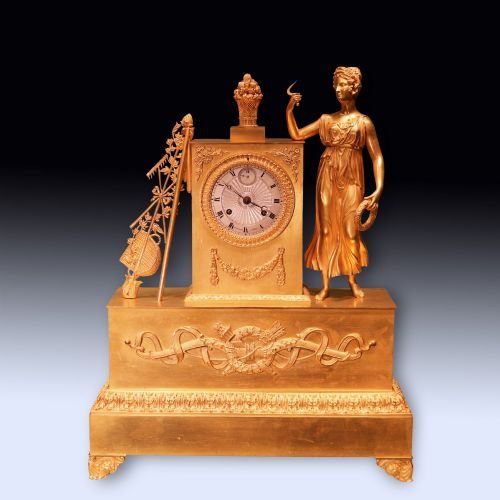
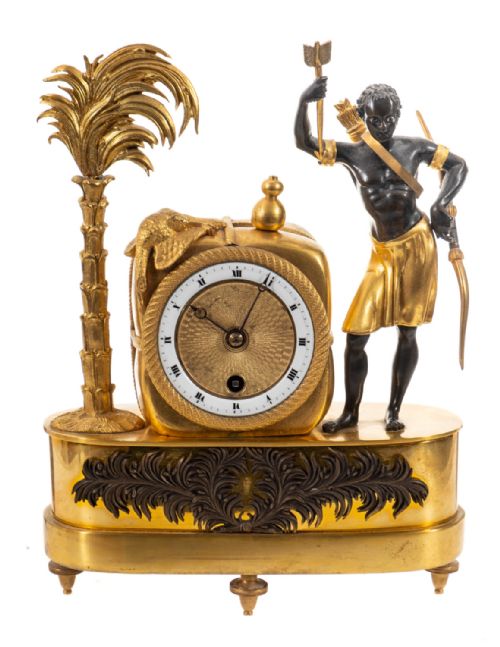
An empire period table clock is a substantial architectural or figural timepiece originating primarily from the nineteenth century. These objects frequently depict classical allegories, literary themes, or exotic subjects rendered in detailed metalwork.
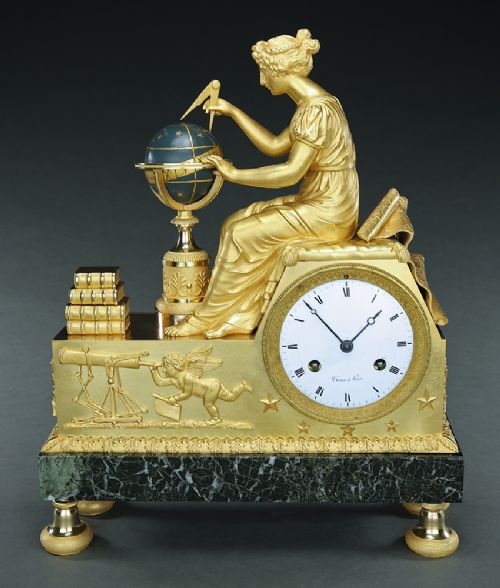
Buyers meet examples shaped as porticos, architectural columns, or figural compositions involving lions, astronomers, and mythological figures. The typical piece combines decorative sculpture with a functional dial housed inside a metal case.
Most examples emerge from French workshops adhering to the Empire and Regency styles, though variants stretch into later Victorian periods. The core design relies on balancing the weight of cast bronze with the circular geometry of a clock face.
Materials and Construction Techniques
Maker workshops constructed these timepieces using combinations of cast ormolu, gilt bronze, and patinated bronze, often mounted on marble bases. Artisans applied mercury gilding to achieve the bright, durable gold finish characteristic of ormolu elements.
Empire Period Table Clock Retail Price Guide 2026
Typical asking prices for empire period table clock among the pieces listed under this phrase on Sellingantiques today, from the lower quarter to the upper quarter. They describe what is for sale here now, not the wider market.
Several clocks double as astronomical observatories or exotic expeditions, letting you check the time while pondering the stars or tracking an explorer.
Factors Distinguishing Quality
The sophistication of the internal movement further separates standard production from exceptional work. Clocks featuring specialised fusee movements or signed by notable makers demonstrate higher mechanical and horological ambition.
Canaillor of Paris·Pons de Paul·FB Adams London·FATTON ELEVE DE BREGUET LONDON NO 35
The Empire Period Table Clock Glossary
- Ormolu
- Gilt bronze created by applying an amalgam of gold and mercury to a bronze base, then heating to vaporise the mercury. This technique produces a rich golden surface that resists tarnishing.
- Patinated bronze
- Bronze treated with chemical solutions to darken the surface to a deep brown or black tone. This finish creates visual contrast against bright ormolu mountings.
- Fusee movement
- A conical pulley mechanism designed to equalize the decreasing power of a mainspring as it unwinds. It ensures consistent tension delivered to the clock escapement.
- Portico clock
- A timepiece built in the architectural form of a portico, supported by columns flanking a central suspended pendulum. This style gained prominence during the early nineteenth century.
- Silk suspension
- A clock suspension method where the pendulum hangs from a fine loop of silk thread. It is typically found in earlier nineteenth-century French movements.
Empire Period Table Clock: Frequently Asked Questions
How do I wind an antique clock?
Use the provided winding key to turn the arbours gently until resistance indicates the mainspring is fully tensioned. Avoid over-winding to protect the historical mechanism from undue stress.
Ensure you turn the key in the correct direction specified for the particular movement. Regular, careful winding keeps the gear train moving smoothly without wearing down older teeth.
Where should I place a heavy bronze clock?
Position the piece on a stable, level surface such as a sturdy mantelpiece or heavy sideboard capable of supporting substantial bronze and marble weight. Keep the clock away from direct sunlight and sources of thermal fluctuation.
A secure, vibration-free surface ensures the pendulum swings evenly and the clock keeps accurate time. Uneven foundations quickly cause the delicate escapement to go out of beat.
How do I identify a Regency period clock?
Look for design characteristics typical of British Regency aesthetics, often featuring dark patinated bronze contrasted with rich gilt mounts. Movement construction frequently incorporates single chain fusee mechanisms.
Signatures from London watchmakers on the dial or movement backplate often confirm English origin during this period. The decorative motifs frequently lean toward military triumphs or classical antiquity.