


19th Century Bronze Clock
A 19th century bronze clock brings weight, classical form and precise French horology into a room.
19th Century Bronze Clock
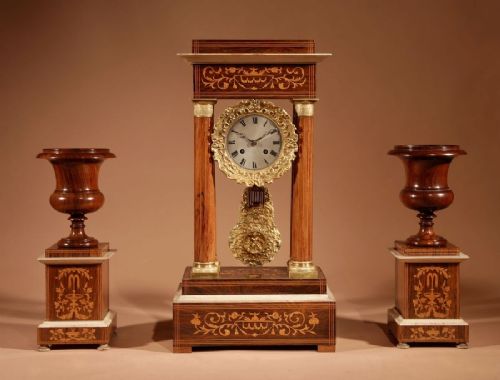
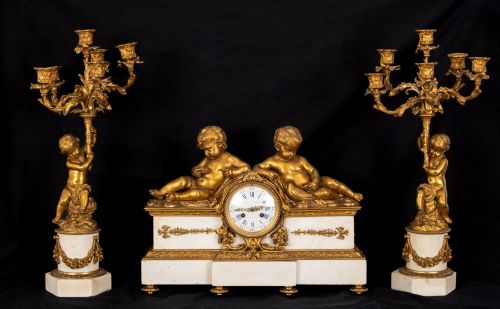
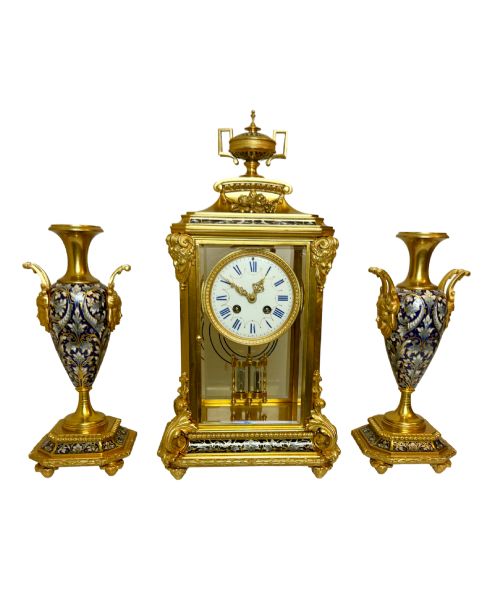
When you search for a 19th century bronze clock, you encounter mantel timepieces, portico clocks, and large garniture sets that often include matching candelabras or urns. The majority of these pieces originate from French workshops adhering to styles such as Louis XVI, Empire, and Rococo Revival.
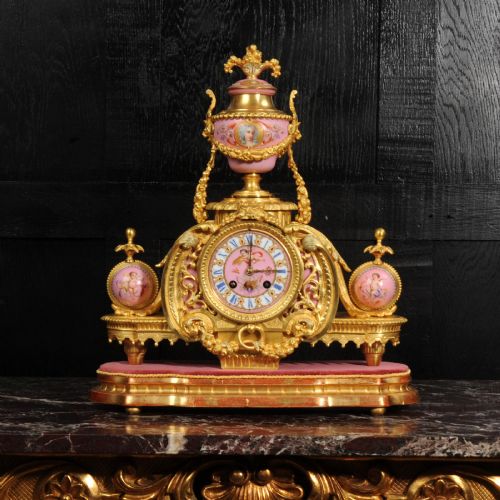
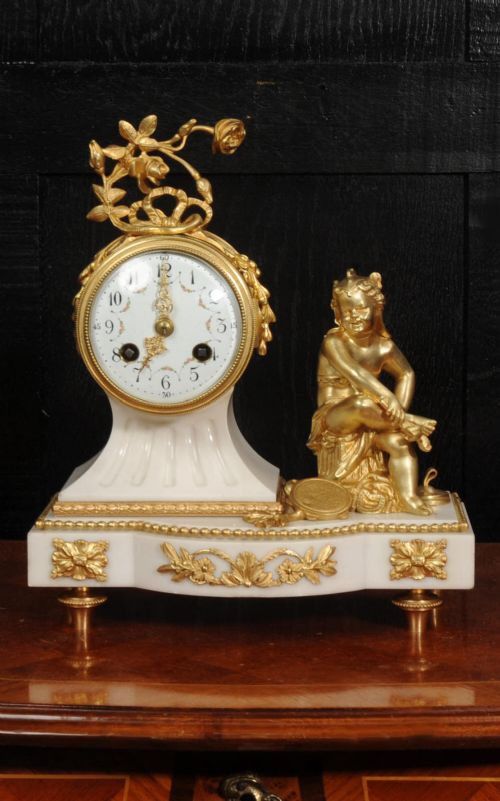
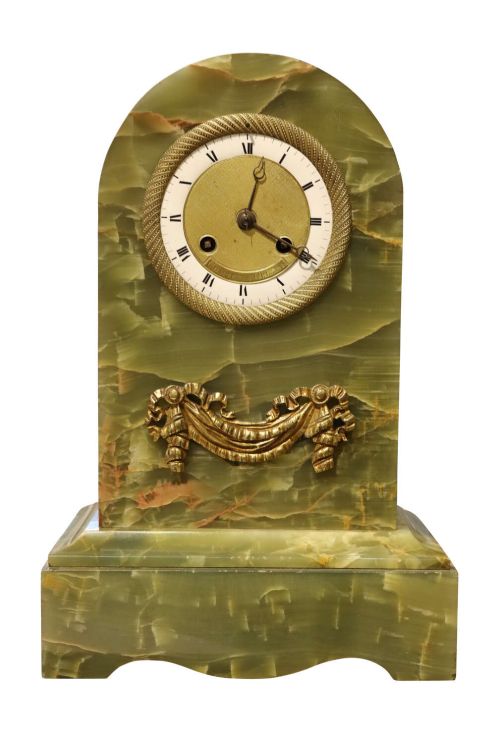
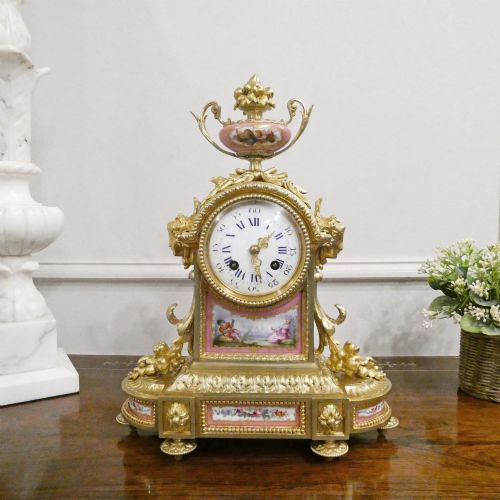
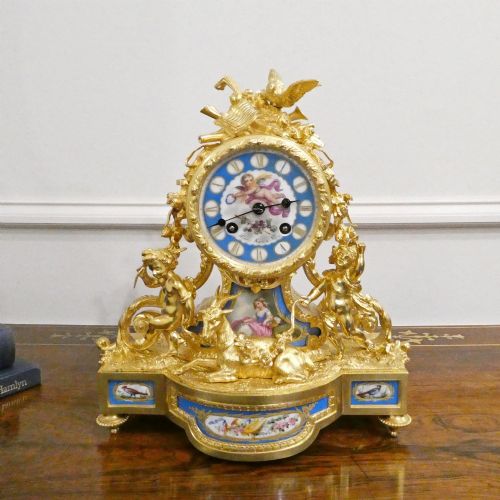
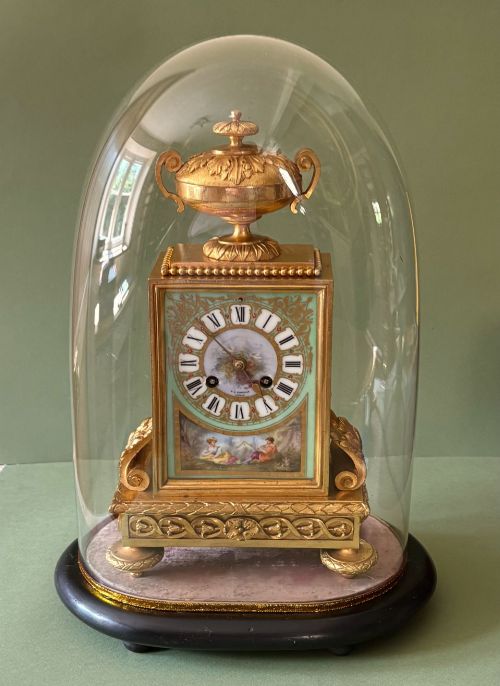
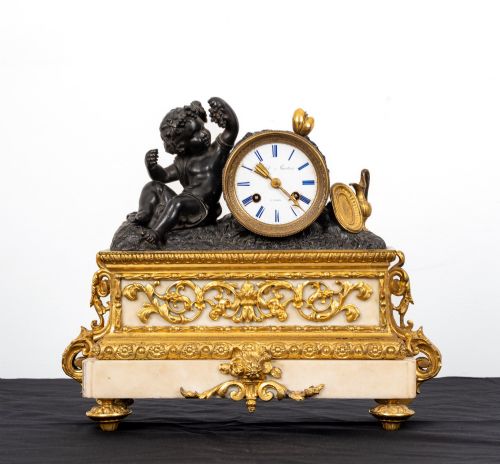
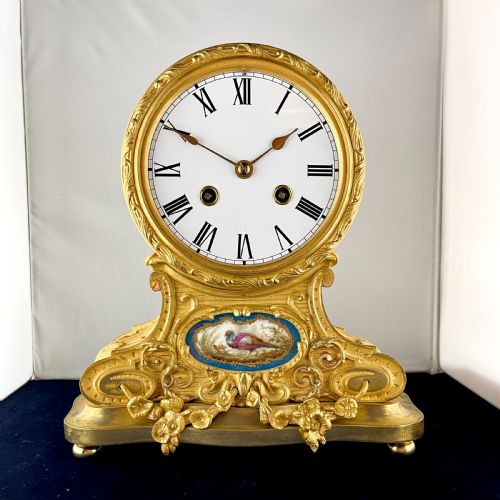
Makers housed these movements in heavy metal housings embellished with patinated bronze, gilt ormolu, and contrasting marble bases in green, white, or rouge. Many examples incorporate painted porcelain plaques or enamel dials signed by the maker or retailer on the face.
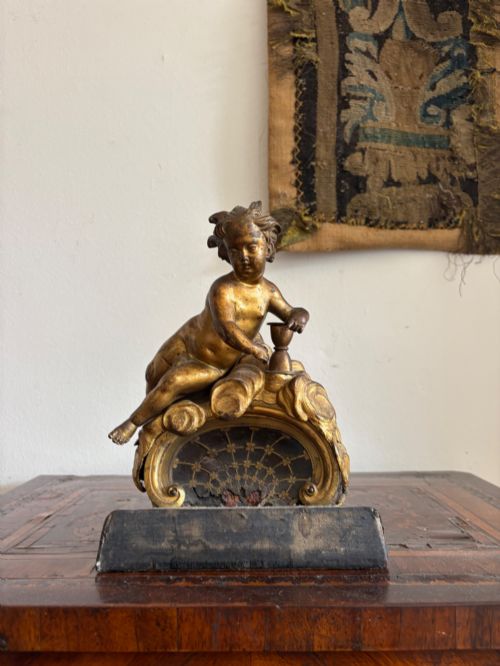
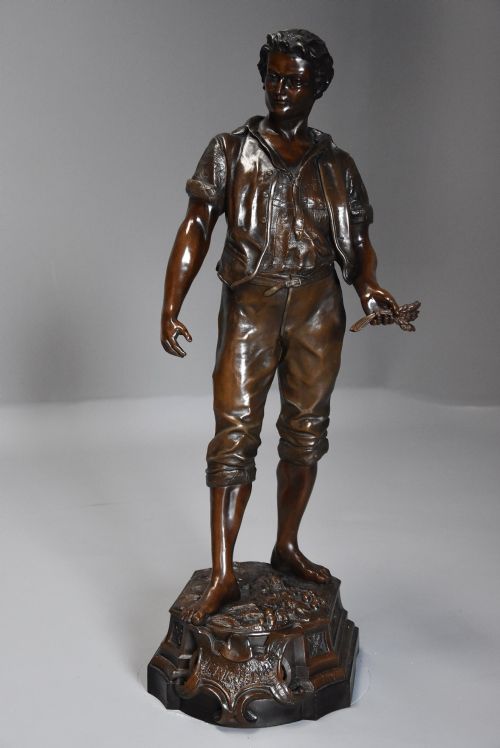
The sculptural subjects range from classical figures and cherubs to Egyptian Revival motifs and allegorical scenes. Alongside mantel clocks, the selection occasionally yields wall-hung cartels and specialised crystal regulators.
Materials and Construction
Foundries cast the main figural and architectural components in bronze, frequently finishing them with brown patination or applying layers of gold leaf known as ormolu. These metal mounts were then fastened to solid beds of marble or onyx using threaded pins and securing nuts.
Clockmakers paired these heavy housings with brass gear trains, often driving anchor escapements and striking mechanisms controlled by pendulum lengths. Dials were constructed from white enamel over copper or built as segmented cartouches with painted Roman numerals.
Decorative panels utilised Sèvres-style porcelain painted with pastoral vignettes or floral reserves, set directly into the gilt bronze bezels and cases.
19th Century Bronze Clock Retail Price Guide 2026
Typical asking prices for 19th century bronze clock among the pieces listed under this phrase on Sellingantiques today, from the lower quarter to the upper quarter. They describe what is for sale here now, not the wider market.
Materials commonly paired with bronze in these listings include white marble, green onyx, porcelain, and champlevé enamel.
Factors of Quality
The integrity of the movement and its association with the case matter significantly. Clocks retaining their original signed movements, matching pendulums, and factory-matched garniture urns command greater horological and decorative interest.
The choice and execution of secondary materials, such as finely polished marble bodies and undamaged hand-painted enamel dials, separate standard production items from masterworks.
Achille Brocot·Japy Freres·Henry Marc·Paul Sormani·Charles Frodsham
The 19th Century Bronze Clock Glossary
- Ormolu
- Gilded bronze produced by applying a mixture of mercury and gold to a cast bronze base and heating it to vaporise the mercury. This technique creates a durable, deep golden finish characteristic of French luxury goods.
- Garniture
- A set consisting of a central clock flanked by matching decorative objects such as urns, vases, or candelabras. These suites were designed to display symmetrically on a mantelpiece.
- Cartouche
- A curved ornamental tablet or plaque, frequently utilised on clock dials to frame individual enamel chapters for numerals. They provide a segmented white surface that contrasts with dark metal bezels.
- Portico clock
- A distinct architectural clock style supported by four cylindrical columns resembling a classical temple facade. They often house a suspended pendulum visible through the central opening.
- Champlevé
- An enamel technique where troughs or cells are hollowed out of the metal surface and filled with vitreous paste before firing. This produces colourful patterned borders along the bronze framework.
19th Century Bronze Clock: Frequently Asked Questions
How do I wind a 19th century bronze clock?
Most mechanical movements require a specialised key inserted into winding holes on the enamel dial to tension the spring barrels or lift the striking weights. Care must be taken not to overwind the mechanism.
pendulums should be secured with a transit screw or unhooked from the suspension spring before moving the clock to prevent internal damage.
Why do some clocks have matching garnitures?
Garniture sets were produced as unified decorative ensembles designed to fill large Victorian and nineteenth-century mantelpieces symmetrically. The flanking urns or candelabras share the exact same bronze mounts, marble bases, and stylistic motifs as the central clock.
Keeping these suites together preserves their original interior design context and visual impact.
How can I tell if the movement is original?
An original movement typically bears matching serial numbers or maker stamps that correspond to markings stamped inside the bronze or marble case. The movement backplate often displays the hallmark of the original foundry or retailer.
Replacement movements usually show altered mounting screw holes or mismatched dial signatures.
Where should I place a heavy marble clock?
These pieces require a stable, level surface capable of supporting considerable weight, such as a sturdy sideboard, desk, or reinforced mantelpiece. Uneven placement can cause the pendulum to strike the inside of the case or stop the beat entirely.
Direct sunlight and damp rooms should be avoided to protect the delicate enamel dials and gilt surfaces.