
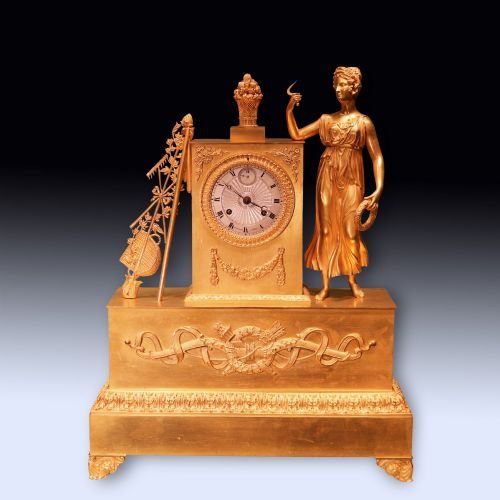


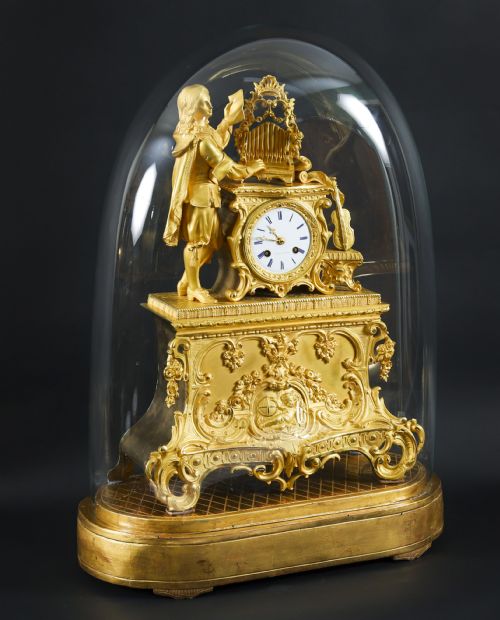


French Figural Clock
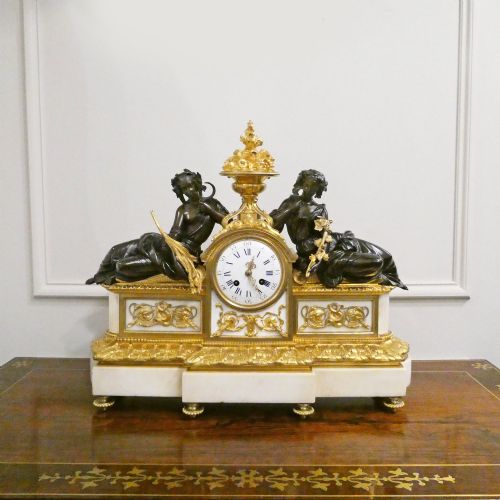
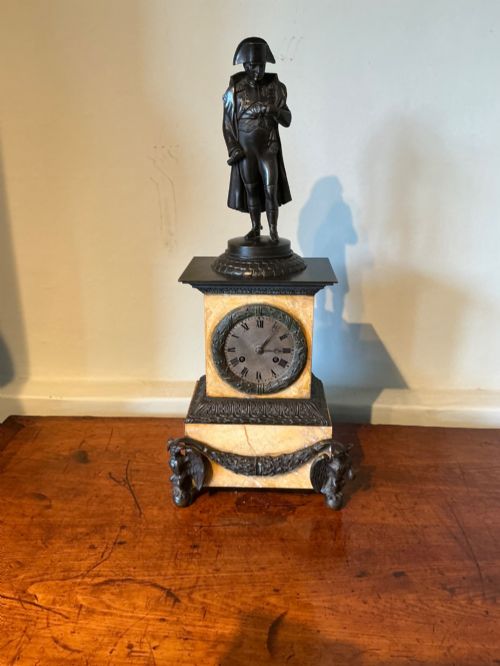
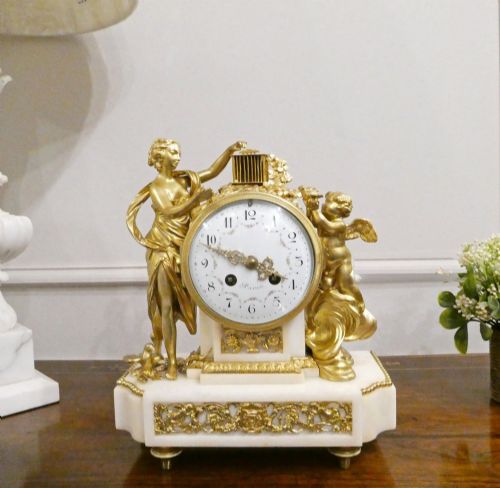
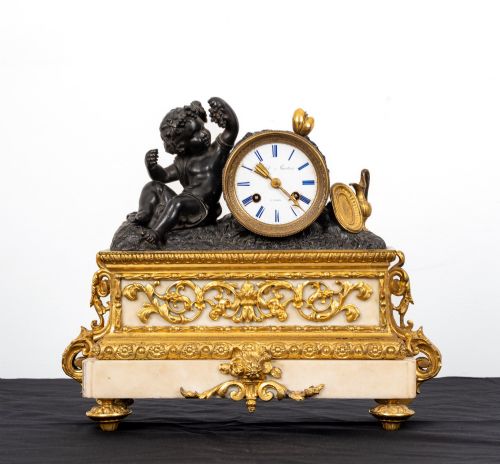
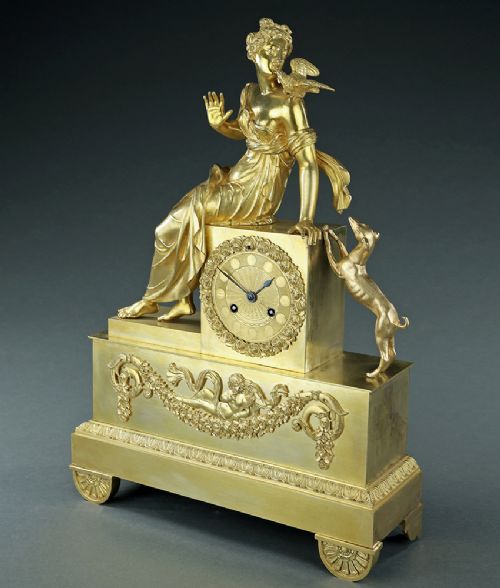
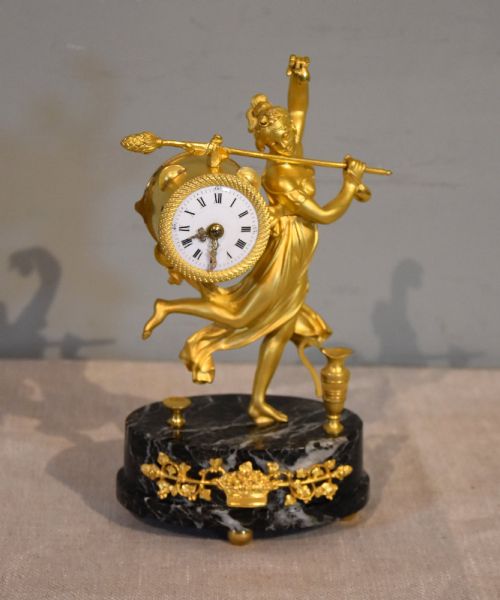
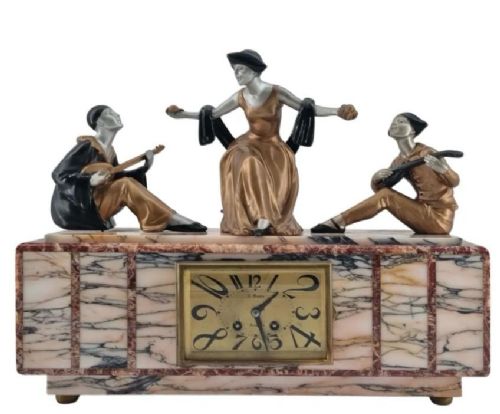
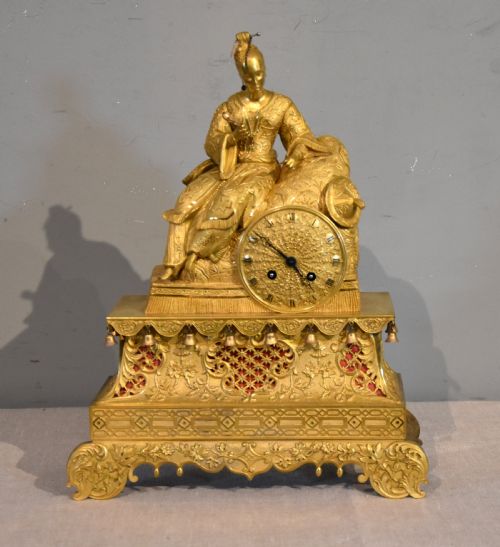
A french figural clock brings mythological figures, poets, and knights into the room, cast in bronze and mounted on marble.

French Figural Clock
A french figural clock combines timekeeping with sculptural subjects ranging from classical deities like Minerva to historical figures such as Johannes Gutenberg. These pieces function as mantel clocks and larger clock garniture sets flanked by matching ornaments.
The most common versions encountered here date from the nineteenth century, including styles inspired by the French Empire, Louis XVI, and the Victorian era. Foundry work often depicts allegorical themes like love, fidelity, or astronomy alongside animal forms and literary characters.
How They Were Made
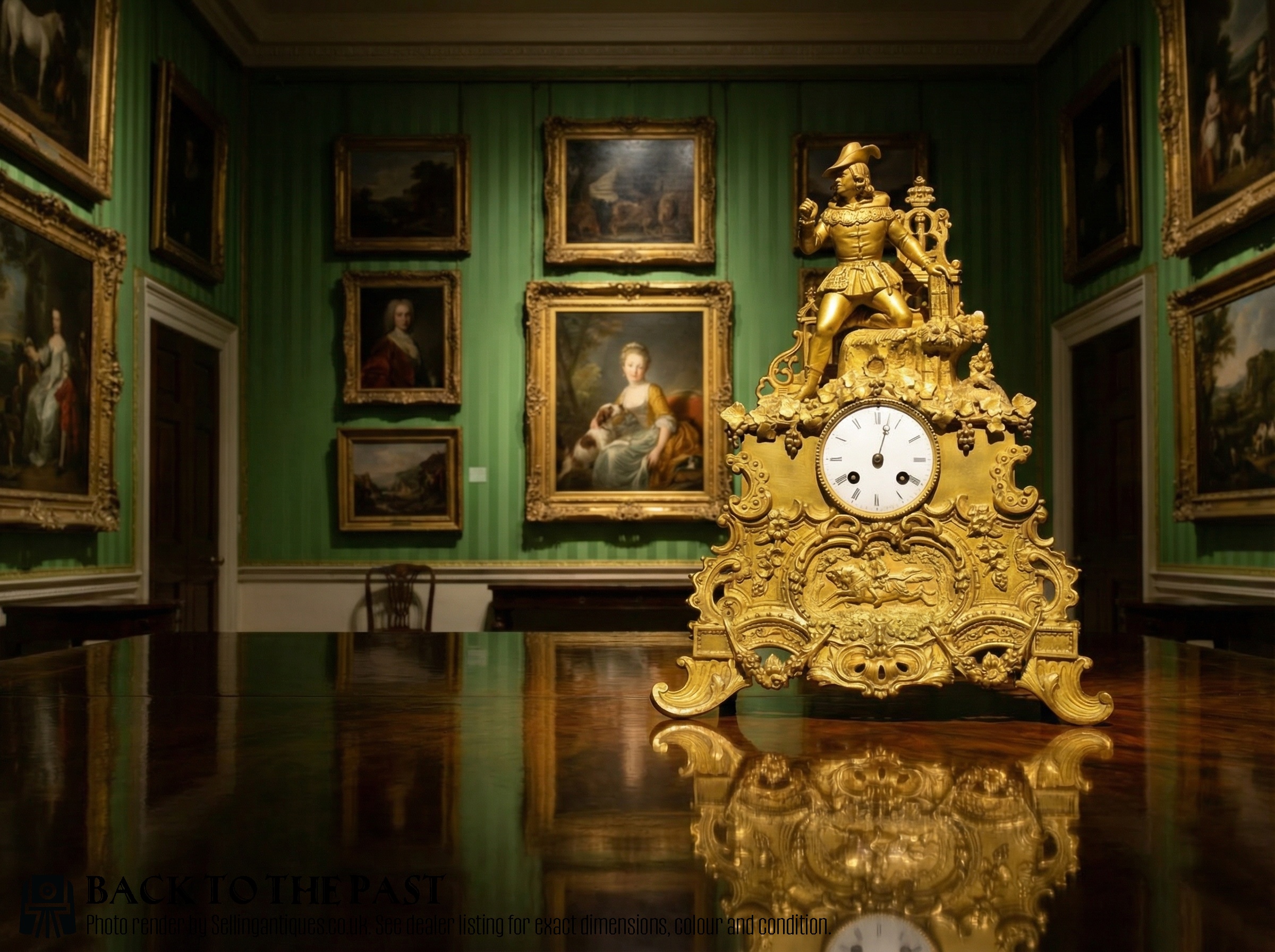
Foundries cast figures and mounts in bronze, gilt bronze, ormolu, and spelter, often finishing surfaces with patination or mercury gilding. These metal sculptures sit upon bases of white or green marble, onyx, alabaster, and glass.
Clock movements house mechanical escapements, sometimes paired with hand-painted enamel dials or porcelain plaques from factories like Sevres. Makers utilised brass and bronze components assembled by specialist horologists and bronze-workers.
French Figural Clock Retail Price Guide 2026
Typical asking prices for french figural clock among the pieces listed under this phrase on Sellingantiques today, from the lower quarter to the upper quarter. They describe what is for sale here now, not the wider market.
Printers, knights, astronomers, and poets all share mantel space here, keeping eternal company with classical gods.
What Varies in Quality
The sharpness of the cast sculpture separates standard production from superior work, particularly in the hand-chiselling of ormolu and the fine detail of patinated bronze figures. High-grade examples feature heavier marble bases and fully integrated movement signatures from known makers.
Gilding depth and the preservation of original fire-gilt surfaces dictate the visual impact of the piece. The complexity of the clock garniture set, including matching side pieces and original enamel dials, marks the upper tier of the range.
Vincenti·Siffel and Cartier·Canaillor of Paris·Japy Freres·Leroy Paris·Lemerle Charpentier·Mourey·Samuel Marti
The French Figural Clock Glossary
- Ormolu
- Gilt bronze produced by applying a mercury and gold amalgam to a bronze base and heating it. This technique creates a durable, luminous golden finish characteristic of fine nineteenth-century French metalwork.
- Clock Garniture
- A set comprising a central mantel clock accompanied by matching side ornaments, such as vases or candelabra. These matched sets were designed to sit symmetrically on a mantelpiece.
- Spelter
- A zinc alloy frequently used as a cost-effective alternative to bronze in later nineteenth-century figures. It accepts patination and metallic paint finishes to simulate heavier metals.
- Fusee
- A conical pulley used in clock movements to maintain even driving force as the mainspring unwinds. This mechanism is often found in higher-grade antique timepieces to improve accuracy.
French Figural Clock: Frequently Asked Questions
How do I wind the movement?
Winding requires a matching key inserted into the winding arbours on the dial face. Care must be taken not to overwind the mainspring.
Most nineteenth-century movements rely on a pendulum and escapement mechanism. Consulting a professional horologist for initial setup ensures the mechanical parts remain undamaged.
What is a clock garniture?
A clock garniture is a matched set containing a central mantel clock and two flanking ornaments. These side pieces often take the form of urns, candelabra, or smaller vases matching the materials of the main clock.
Displaying them together on a fireplace mantel creates a balanced decorative arrangement. They share the same marble bases, gilt bronze mounts, and stylistic motifs.
How do I date a piece?
Dating relies on stylistic clues, material choices, and maker signatures stamped on the movement backplates. Pieces reflecting French Empire or Louis XVI styles often date from the early to mid-nineteenth century, while later Victorian and 1900s examples introduce alternative alloys like spelter.
Foundry marks and dial signatures help link the clock to specific Parisian workshops active during particular decades.