
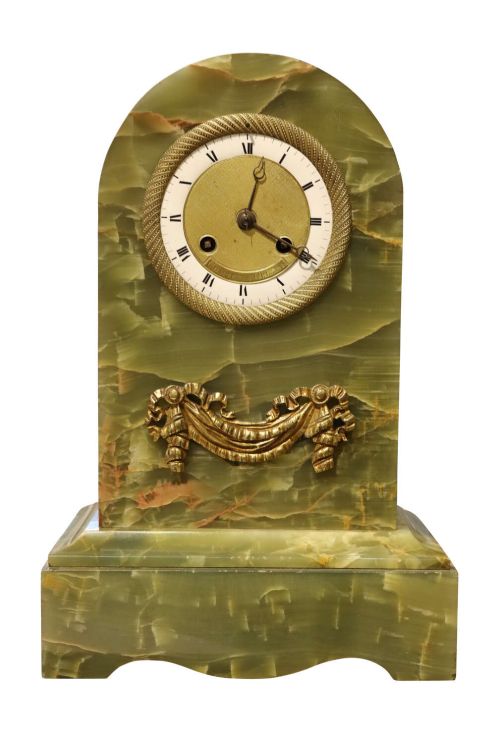


Green Onyx Clock
These green onyx clock designs range from ornate Victorian mantel pieces to striking Art Deco garnitures, offering a decorative centrepiece for any room.
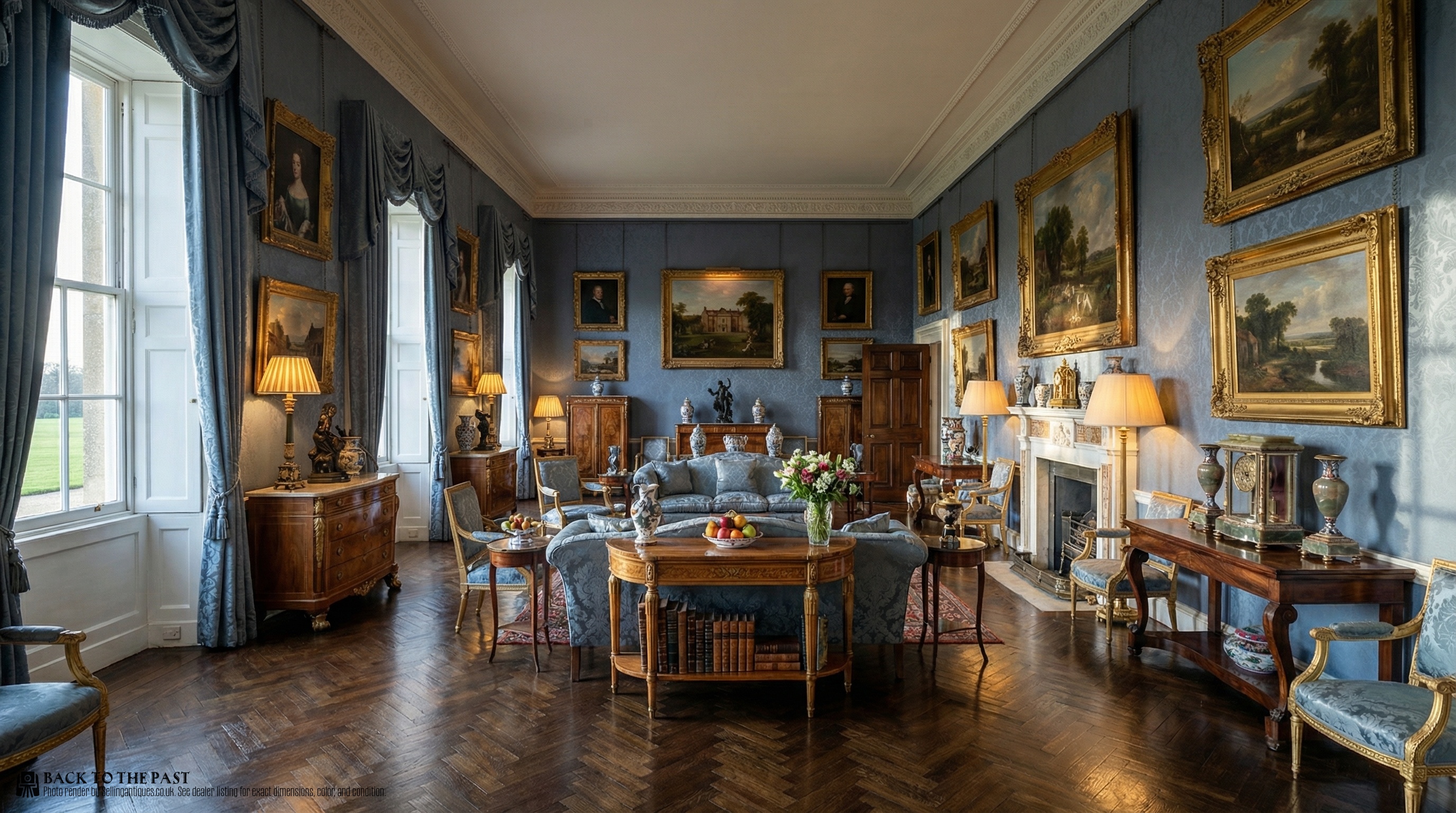
What green onyx clock pieces are
A green onyx clock is a decorative timepiece featuring a natural stone body, often paired with metal mounts and companion ornaments. Buyers seeking a green onyx clock find pieces spanning from the late nineteenth century through to the art deco period.
The selection includes French crystal regulators, boudoir sets with matching garnitures, and sculptural works featuring figures or animals. Most examples originate from French workshops or British retailers of the period.
Forms vary from substantial mantel clocks housed in brass and glass cases to streamlined geometric designs in stone and marble. These items serve both as functional timekeepers and sculptural ornaments.

How they were made
Craftsmen shaped natural green onyx and marble into architectural cases, frequently combining the polished stone with cast brass, gilt bronze, or ormolu mounts. Dial faces typically feature enamelled numerals protected behind bevelled glass doors.
Figural elements cast in spelter or bronze decorate many of the clock cases, alongside champlevé enamel detailing and chrome accents. Mechanical movements drive the internal gear trains, often utilising eight-day escapements.
Retail Price Guide 2026
Typical UK retail prices for green onyx clock, calculated from the Sellingantiques database of over a million retail prices indexed since 2003. This retail price guide relies exclusively on Sellingantiques data; no external sources or auction records are used, so the figures do not describe the wider market.
German Shepherd dogs and classical water nymphs keep watch over the ticking gears of these stone mantelpieces.
What varies in quality
Quality rests in the harmony between the stone cutting and the refinement of the metalwork mounts. Fine examples display richly figured green onyx paired with finely chased ormolu and detailed sculptural bronzes rather than standard cast spelter.
The integration of complete garniture sets, featuring matching side ornaments or candelabra, elevates a piece significantly. Superior movements signed by established makers also distinguish the finest examples from standard commercial production.
Auguste Moreau·Michel Decoux·Garrards·Samuel Marti
The Green Onyx Clock Glossary
- Garniture
- A set of ornamental objects designed to match a clock and display together on a mantelpiece. These typically include side urns or matching sculptural figures.
- Champlevé
- An enamelling technique where troughs are dug into a metal surface and filled with vitreous enamel before firing. This adds colourful decorative patterns to clock dials and bezels.
- Spelter
- A zinc alloy used as a cost-effective alternative to bronze for casting sculptural figures. It is frequently painted to simulate bronze or gilt finishes.
- Ormolu
- Gilded bronze produced by applying a mercury and gold amalgam to a bronze base. This technique creates a rich golden finish on decorative mounts.
- Crystal regulator
- A clock housed within a glass-panelled brass case that displays the internal movement from multiple angles. These pieces often feature exposed mercury-filled pendulums.
Frequently Asked Questions
How do I wind a mechanical clock?
Most antique mantel clocks utilise an eight-day movement that requires winding via a dedicated key inserted into the dial face holes.
Care must be taken not to over-wind the mainspring, stopping as soon as resistance is felt.
What is a garniture set?
A garniture comprises matching decorative ornaments, such as urns or flanking sculptures, displayed alongside the central clock.
These sets were designed to create a balanced decorative arrangement on a fireplace mantel.
How do I date a clock?
Dating relies on stylistic clues such as case materials, dial typography, and decorative motifs like art deco geometry or Victorian ornamentation.
Internal movement stamps and maker signatures also provide precise manufacturing periods.
Where should I place my clock?
These clocks suit stable, level surfaces away from direct sunlight, dampness, and extreme temperature fluctuations.
Mantelpieces, sideboards, and strong tables provide secure locations that prevent vibrations from affecting the pendulum.