
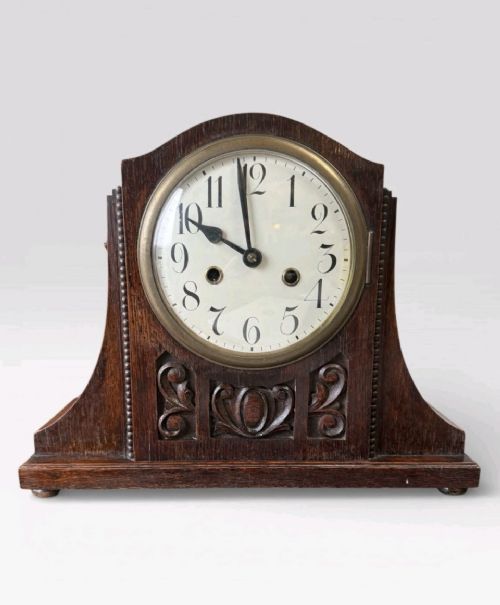


1920s Art Deco Clock
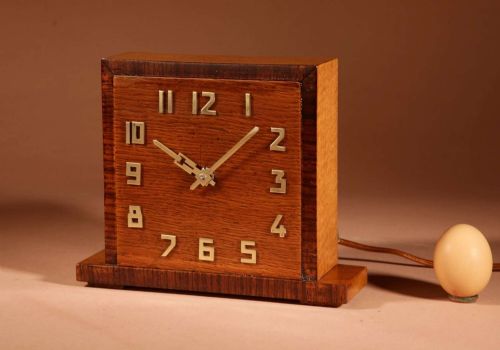
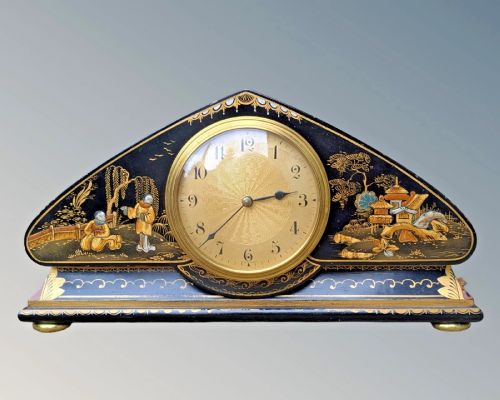
These 1920s art deco clock examples bring striking geometric forms and rich materials into a room, offering functional sculpture for the mantel.
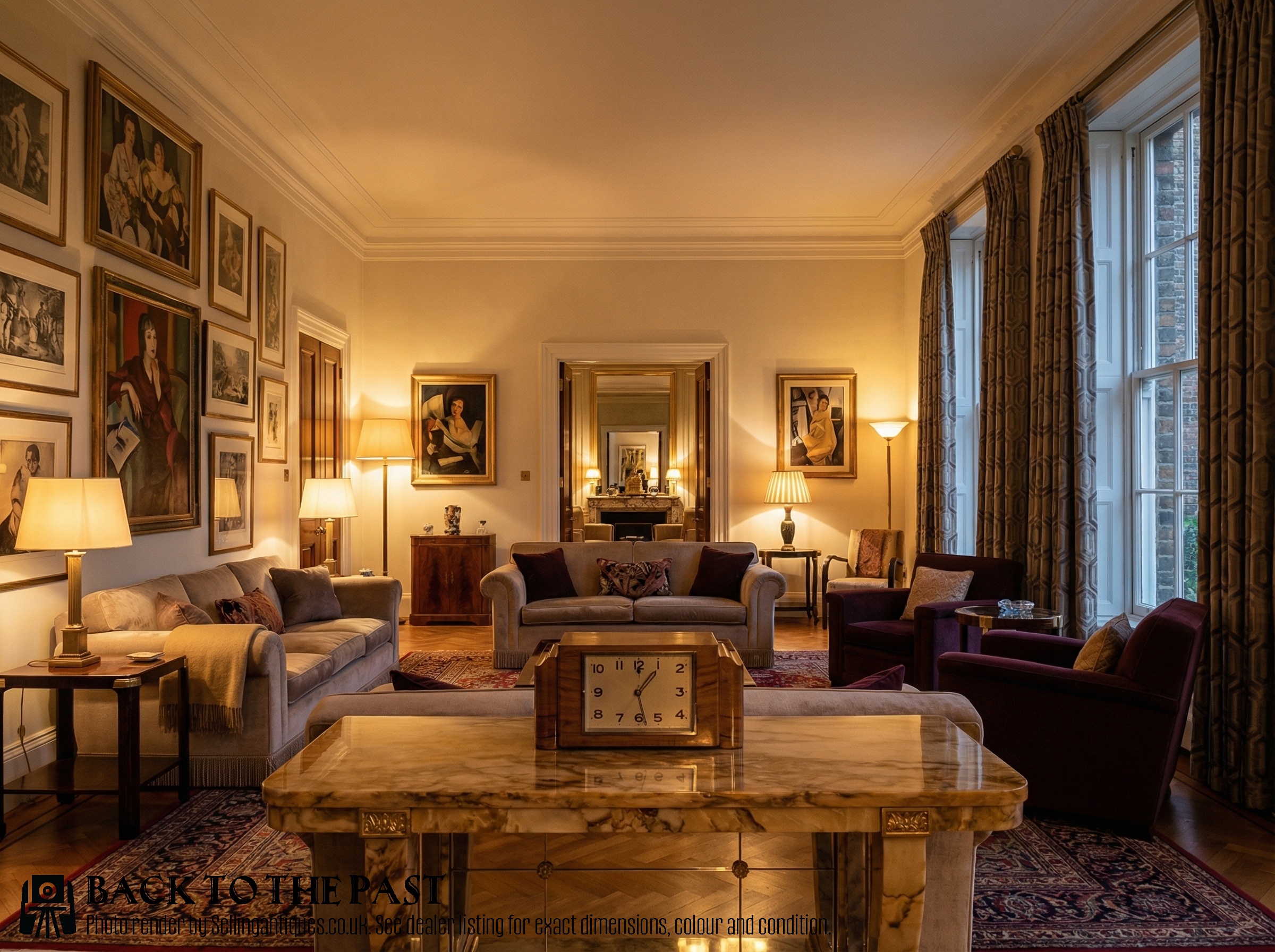
What 1920s art deco clock pieces are
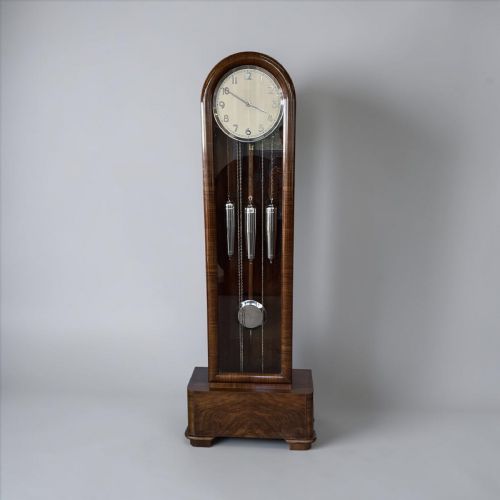
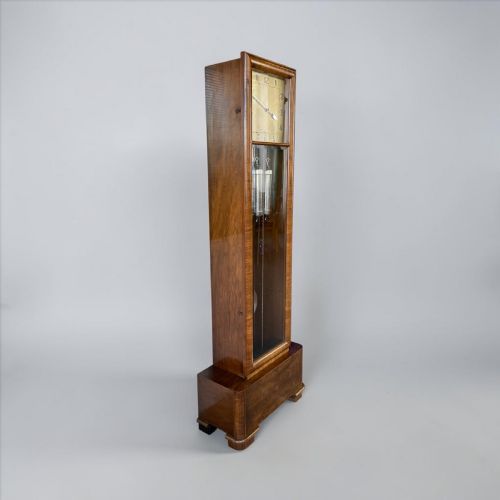
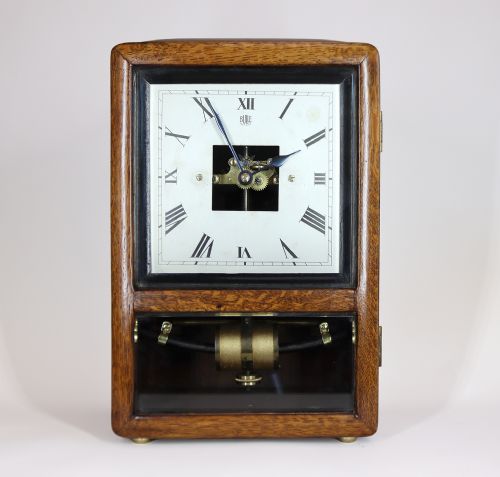
When searching for a 1920s art deco clock, buyers encounter timepieces defined by the bold lines and decorative vigour of the early twentieth century. These objects function primarily as mantel clocks and larger longcase examples designed to anchor a room.
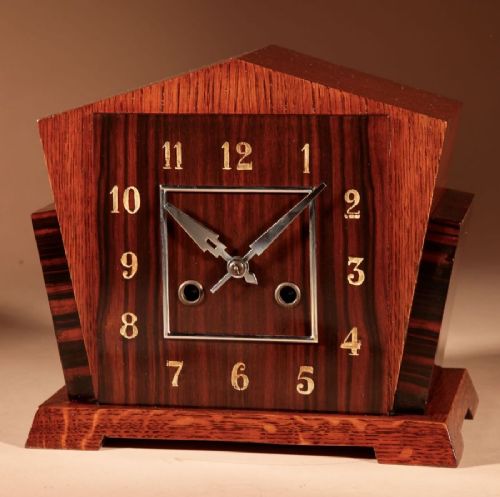
The selections available here range from compact desk pieces housed in original leather cases to substantial architectural wooden bodies. Forms draw heavily on Art Deco and Amsterdam School idioms, sometimes blending with earlier Art Nouveau curves.
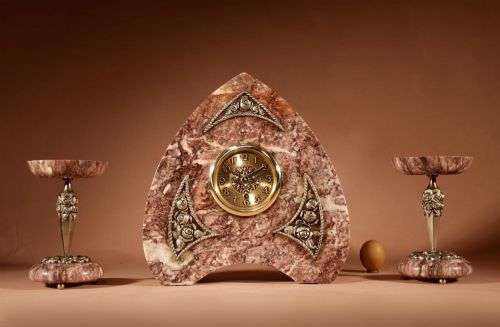
Materials span polished metals, warm hardwoods, and gleaming stone, reflecting the diverse manufacturing approaches of British and continental workshops. Buyers will most frequently meet mantel clocks executed in marble, onyx, or veneered timber.
How they were made
Construction relies on combining solid timber frames or cast metal cases with precision mechanical movements sourced from specialist makers. Cabinetmakers applied rich veneers such as walnut and macassar ebony over sturdy carcases to achieve striking visual grain patterns.
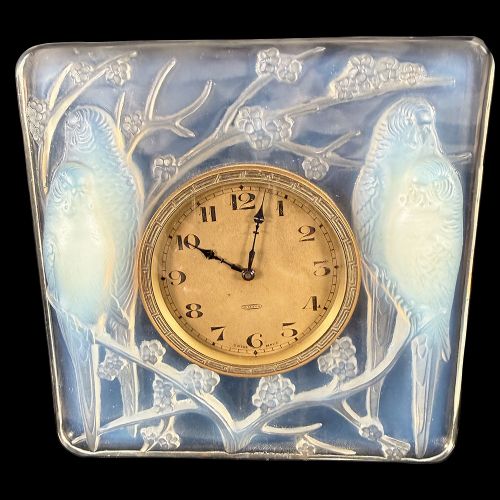
Glass elements utilised advanced moulding techniques, visible in opalescent panels featuring sculptural love birds or figurative subjects. Metalwork combined bronze, ormolu, brass, and chrome to create reflective surfaces and contrasting metallic tones.
Retail Price Guide 2026
Typical UK retail prices for 1920s art deco clock, calculated from the Sellingantiques database of over a million retail prices indexed since 2003. This retail price guide relies exclusively on Sellingantiques data; no external sources or auction records are used, so the figures do not describe the wider market.
Listings include timepieces spanning the 1910, 1920, and 1930 periods, executed in walnut, oak, chrome, brass, and glass.
What varies in quality
Quality in these timepieces rests upon the integration of artistic design with precision mechanical execution by named makers or premier retail houses. Superior examples demonstrate sculptural ambition through finely cast figural mounts and carefully matched exotic timber veneers.
Lower tiers rely on simpler geometric wooden boxes with standard mass-produced movements that lack the distinctive personality of bespoke or designer commissions. The presence of signed dials, specialised opalescent glass, or original fitted cases elevates an example significantly.
R Lalique·Garrards·Swinden Birmingham·LeCoultre·Chiparus
The 1920s Art Deco Clock Glossary
- Mantel clock
- A portable clock designed to sit on the shelf above a fireplace. These forms often feature architectural stone or wooden cases.
- Opalescent glass
- Glass containing mineral additives that create a milky, milky-blue appearance with iridescent fire. This material was favoured by leading French glass artists for decorative panels.
- Ormolu
- Gilded bronze produced by applying a mercury and gold amalgam to cast bronze. The technique yields a rich, golden surface finish popular in French decorative arts.
- Veneer
- A thin slice of figured wood glued over a stable secondary timber base. This method allows makers to display striking grain patterns without using solid expensive hardwoods.
Frequently Asked Questions
How do I wind a mechanical mantel clock?
Mechanical mantel clocks typically utilise a key inserted into specific winding holes on the dial face. Turning the key clockwise tensions the mainspring.
Care should be taken not to overwind the mechanism, stopping as soon as resistance is felt.
Where should I place a heavy marble clock?
Heavy stone and metal timepieces require a sturdy, level surface capable of supporting considerable weight. Mantelpieces and heavy sideboards provide ideal stable foundations.
Ensuring the surface is level also helps the pendulum swing evenly and keeps the movement running accurately.
How do I identify the period of a clock?
Dating relies on examining stylistic indicators such as geometric motifs, stepped cases, and signature lettering on the dial. Materials like chrome, onyx, and opalescent glass strongly point towards the interwar decades.
Maker signatures and movement stamps further confirm the production era.
What maintenance do these vintage movements need?
Vintage mechanical movements benefit from professional cleaning and lubrication every few years to prevent wear on the brass gears. Keeping the clock away from damp environments and direct heat sources protects both the movement and the wooden or stone case.
Gentle dusting with a dry cloth preserves delicate metal finishes and glass panels.