



Art Deco Glass Clock
When seeking an art deco glass clock, collectors find striking geometric forms, opalescent hues, and bold metal mounts that define modernist interior design.
Art Deco Glass Clock
An art deco glass clock functions primarily as a mantel or desk timepiece, combining utilitarian timekeeping with the sculptural aesthetics of the early twentieth century. Pieces appearing frequently on this page date predominantly from the nineteen-thirties, reflecting the height of modernist design across Britain and continental Europe.
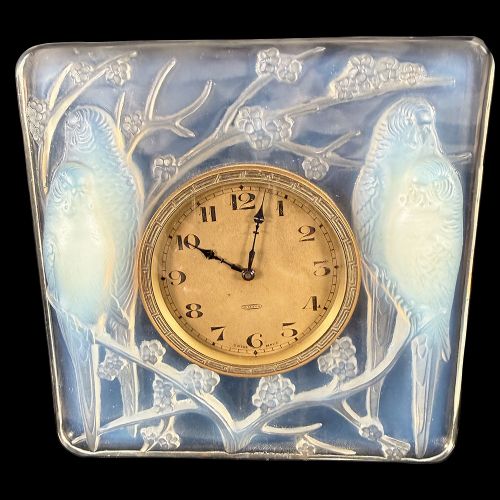
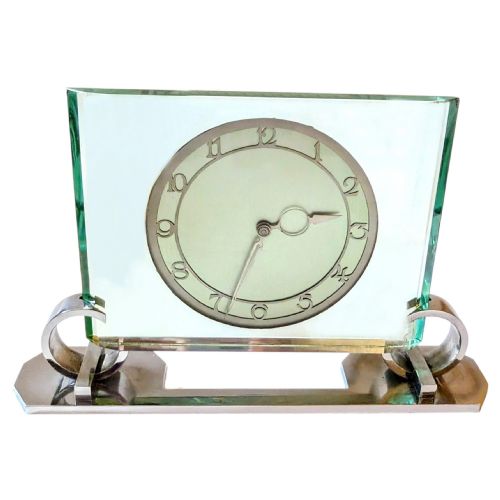
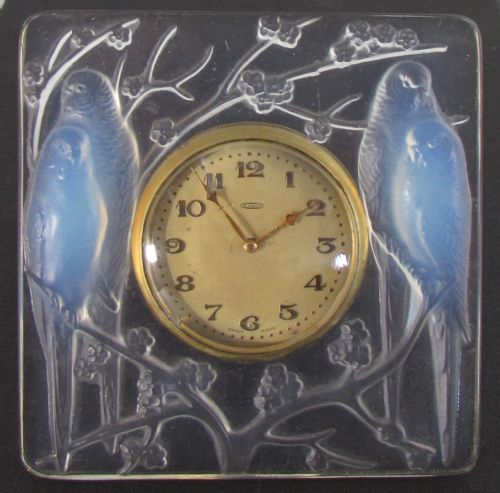
Makers utilised vibrant coloured, opaline, uranium, and mirrored glass panels alongside contrasting metal bezels to create visual depth. Forms range from symmetrical mantel clocks to wall-mounted variants, often integrating electric or mechanical movements within geometric glass housings.
How They Were Made
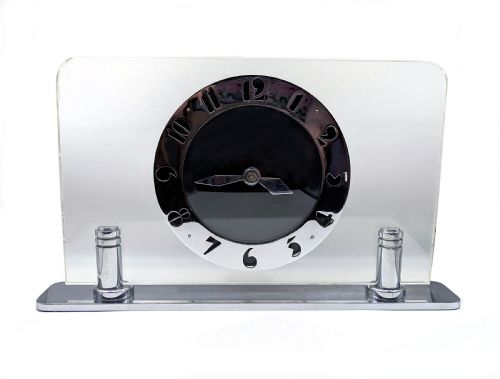
Manufacturers combined heavy moulded or mirrored glass plates with structural frames of chrome, brass, and bakelite. Dials were frequently painted or etched directly onto the glass face, paired with contrasting metal hands.
Movements varied from traditional eight-day mechanical wind-up systems to early electric mechanisms such as Bulle or synchronous systems by major clockmakers.
Art Deco Glass Clock Retail Price Guide 2026
Typical asking prices for art deco glass clock among the pieces listed under this phrase on Sellingantiques today, from the lower quarter to the upper quarter. They describe what is for sale here now, not the wider market.
Listings feature prominent use of green, blue, and peach mirror glass alongside chrome-plated metal mounts from the nineteen-thirties.
What Varies in Quality
Quality rests upon the purity and colour saturation of the glass, alongside the precision of the geometric bevelling and silvering on mirrored variants. Integrated foundry work in the chrome or brass mounts distinguishes standard production items from luxury pieces.
The sophistication of the movement, whether an intricate mechanical eight-day escapement or an early electric system by a recognised manufacturer, elevates the overall standard of the timepiece.
Smiths Clockmakers·Rene Lalique·Mappin and Webb·Jaeger-LeCoultre·Junghans
The Art Deco Glass Clock Glossary
- Opalescent glass
- Glass containing ingredients that cause it to diffuse light and display a milky, iridescent appearance. This technique creates a luminous depth highly prized in sculptural clock panels.
- Uranium glass
- Glass augmented with trace amounts of uranium oxide, causing it to glow bright green under ultraviolet light. It formed a popular material choice for striking modernist clock dials.
- Bulle clock
- An electric clock utilising a pendular mechanism driven by an electromagnetic coil. Invented in the early twentieth century, these systems appeared frequently in advanced desk and mantel designs.
- Mystery clock
- A timepiece where the dial appears to float transparently without visible mechanical connection to the movement. These utilised clever glass and hidden gear arrangements to deceive the observer.
Art Deco Glass Clock: Frequently Asked Questions
How do electric movements differ from mechanical ones?
Electric variants rely on battery power or early electromagnetic coils, such as Bulle systems, to drive the pendulum without manual winding. Mechanical versions require a key to tension the internal springs for eight-day operation.
Collectors often encounter conversions where original electric movements have been replaced with modern quartz mechanisms to ensure reliable daily timekeeping.
How do I identify uranium glass?
Uranium glass displays a distinctive translucent green or yellow hue under normal lighting conditions. When exposed to ultraviolet light, the mineral content reacts by emitting a vivid neon green glow.
This material was widely utilised during the period for its striking visual impact within mantel clock housings.
What maintenance do these clocks require?
Mechanical movements benefit from professional cleaning and lubrication every few years to prevent wear on the brass gears. Glass surfaces should be cleaned gently with mild solutions to protect painted numerals and silvered mirrors.
Original electrical wiring on vintage electric movements requires careful inspection by a specialist before connecting to a power source.
Were these clocks made in Britain or France?
British manufacturers such as Smiths produced numerous glass and chrome models for the domestic market. Simultaneously, French ateliers and makers like Lalique created elaborately moulded opalescent glass centrepieces.
Both origins contributed distinct stylistic traits, with British pieces favouring practical electric integration and French workshops focusing on sculptural glass artistry.