


Vintage Chrome Clock
A vintage chrome clock brings industrial polish and geometric elegance to a room, combining durable metal with period dials.
Vintage Chrome Clock
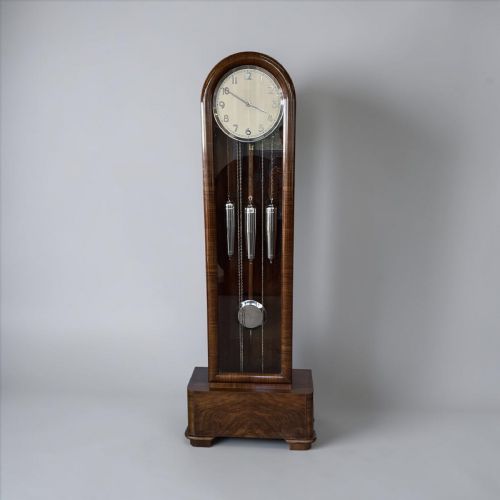
A vintage chrome clock encompasses everything from compact desk pieces and travel timepieces to substantial mantel clocks and large wall designs. These objects emerge predominantly from the Art Deco period, capturing the design priorities of the 1920s, 1930s, and 1940s alongside mid-century interpretations.
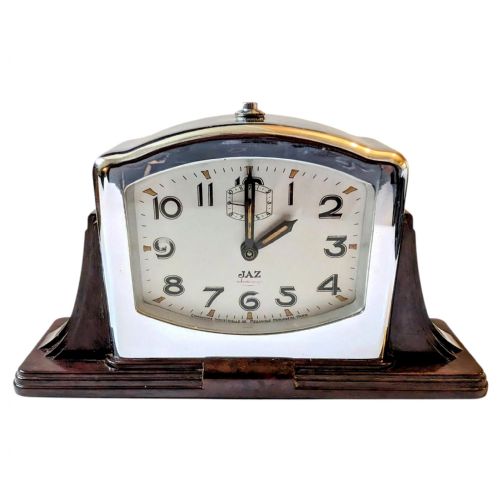
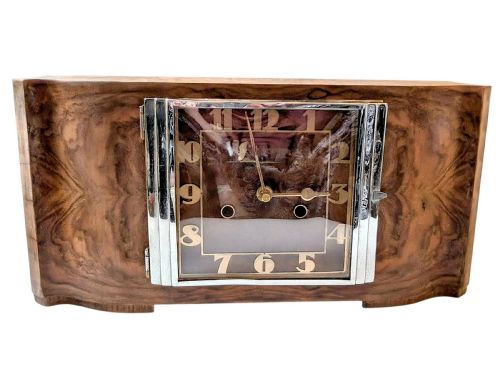
Buyers will most frequently encounter mantel clocks and desk clocks on this page, often combining chrome with walnut, bakelite, glass, or marble. Architectural shapes dominate the selection, including skyscraper silhouettes, octagonal wall formats, and pivoting easel designs.
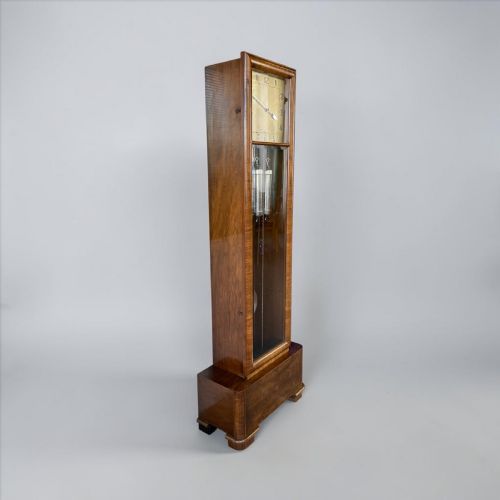
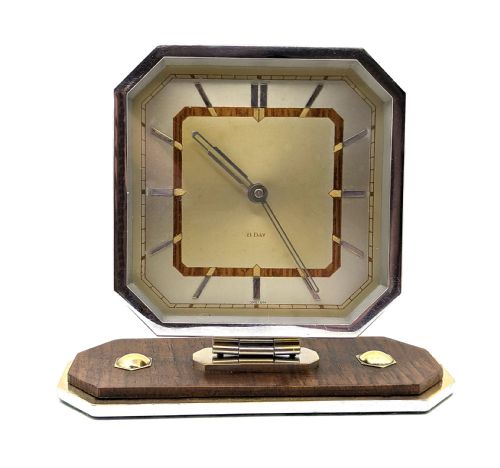
Grandfather clocks and longcase variants also appear, demonstrating how makers applied modern metallic trims to traditional tall furniture forms. Smaller items range from simple wind-up mechanisms to sophisticated eight-day movements with specialised chimes.
Materials and Construction
Makers constructed these timepieces using a foundation of solid brass, base metals, or rich timbers like walnut and oak, which were then plated in gleaming chrome to achieve a modern metallic sheen. Contrast was a central technique, pairing the cold brilliance of polished chrome with warm wooden grains, deep-coloured marble, or tactile moulded bakelite.
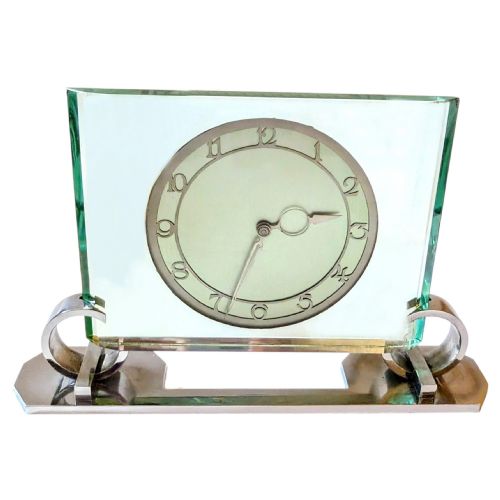
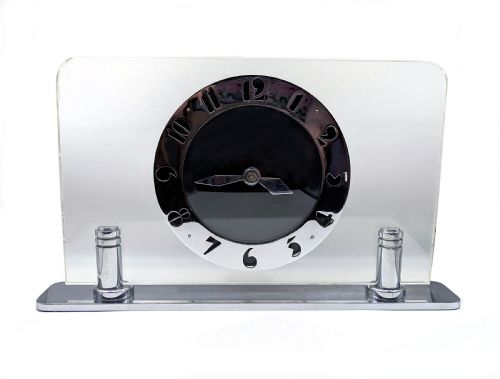
Dial faces frequently integrated glass, including peach mirror glass and opaline uranium glass, protected behind bezels or set into geometric cases. Movements relied on traditional mechanical wind-up systems, eight-day jewelled mechanisms, or early electric technologies.
Cabinetmakers and metalworkers joined disparate elements through precise screwing, bezel-mounting, and pivoting joints, allowing desk models to tilt for optimal viewing. Luxury examples incorporated specialised materials like bevelled mirror panels and cast sculptural figures.
Vintage Chrome Clock Retail Price Guide 2026
Typical asking prices for vintage chrome clock among the pieces listed under this phrase on Sellingantiques today, from the lower quarter to the upper quarter. They describe what is for sale here now, not the wider market.
The inventory records mechanical innovations including eight-day movements, mystery clocks, and electric mechanisms by prominent English and French clockmakers.
Assessing Quality and Execution
Quality in a vintage chrome clock rests upon the caliber of the movement inside and the crispness of the exterior housing. Superior examples house signed eight-day movements or specialised mechanisms by recognised makers, ensuring reliable timekeeping alongside aesthetic appeal.
The finish of the chrome plating and the integrity of secondary materials dictate the upper tier of the range. Heavy gauge metals, thick polished glass, and undamaged bakelite or walnut veneers separate high-end execution from mass-produced alternatives.
Design ambition elevates certain pieces, such as architectural skyscraper cases, pivoting stands, or integrated mechanical automatons. The balance of proportion between the metallic frame and the dial face remains a key indicator of thoughtful period design.
Smiths Clockmakers·Mappin & Webb·Harrods of London·Jaeger-LeCoultre·Asprey
The Vintage Chrome Clock Glossary
- Bakelite
- An early synthetic thermosetting plastic used for clock cases and bezels. It offers a smooth, tactile finish often found in contrasting colours alongside chrome.
- Eight Day Movement
- A mechanical clock movement that requires winding only once a week. This specification denotes a higher grade of internal engineering suitable for desk and mantel pieces.
- Garniture
- A set comprising a central clock flanked by matching decorative ornaments. These matched groupings were popular mantel arrangements in period interiors.
- Opaline Glass
- A semi-translucent glass that diffuses light gently, appearing in soft pastel or vibrant tones on mid-century clock faces. It provides a striking backdrop to polished metal bezels.
- Mystery Clock
- A timepiece where the mechanism driving the hands is concealed or seemingly absent, often using transparent glass dials. They represent mechanical ingenuity from period makers.
Vintage Chrome Clock: Frequently Asked Questions
How do I wind an eight day vintage chrome clock?
Use the designated key to turn the arbors clockwise until gentle resistance is felt, taking care not to over-wind the internal spring. This process should be repeated roughly once a week to maintain accurate timekeeping.
Ensure the clock is placed on a stable, level surface before winding to prevent any uneven strain on the mechanical escapement inside.
Can these clocks be repaired if they stop working?
Professional horologists can service and repair most mechanical movements found in these period timepieces, replacing worn springs or pivots where necessary. Many workshops specialise in restoring vintage gear trains to full working order.
For pieces converted to battery operation, modern quartz inserts sometimes replace faulty mechanical cores, though retaining the original movement preserves historical value.
Where should I place a heavy mantel clock?
Position the piece on a sturdy mantelpiece, sideboard, or desk that can comfortably support the combined weight of metal, glass, and wood. Avoid locations exposed to direct sunlight or excessive moisture, which can degrade wooden veneers and chrome plating over time.
Ensure the surface is entirely flat so that the pendulum or balance wheel beats evenly without catching.
How do I clean chrome and glass safely?
Wipe the chrome surfaces gently with a soft microfibre cloth to remove dust and fingerprints without scratching the polished metal plating. Avoid abrasive chemical cleaners that can strip the protective finish or damage adjacent wood and bakelite.
Clean glass dial covers with a mild glass cleaner applied to the cloth rather than sprayed directly onto the clock face.