


1930s Desk Clock
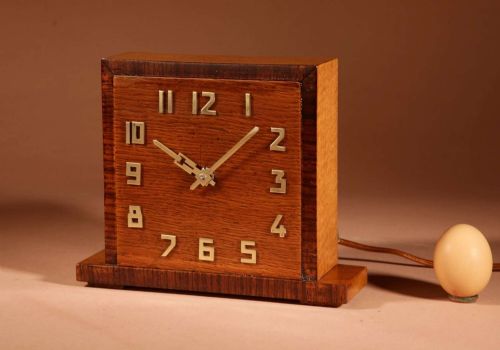
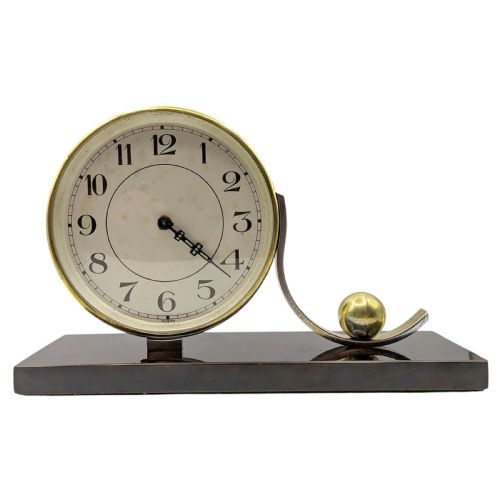
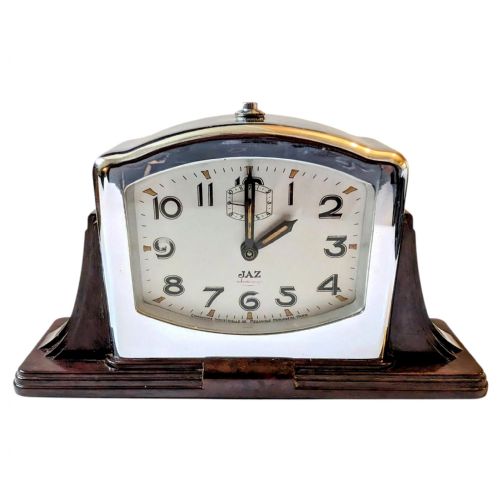
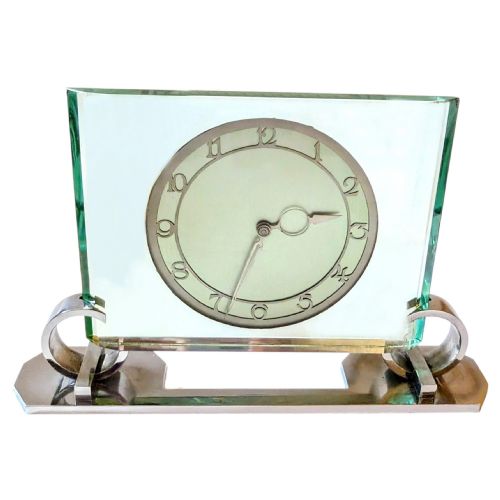
These 1930s desk clock pieces bring geometric lines and bold materials straight to a workspace or mantelpiece.
1930s Desk Clock
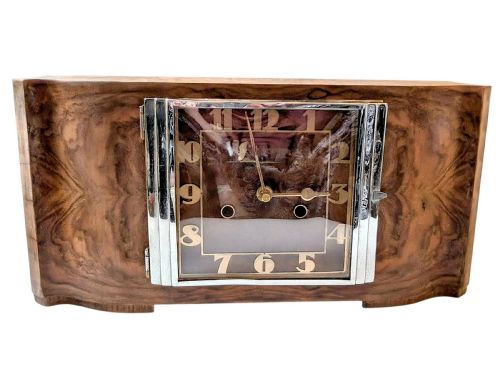
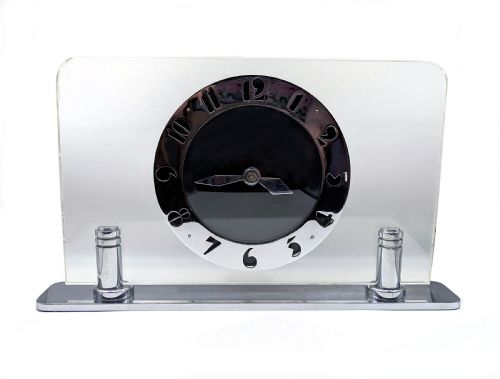
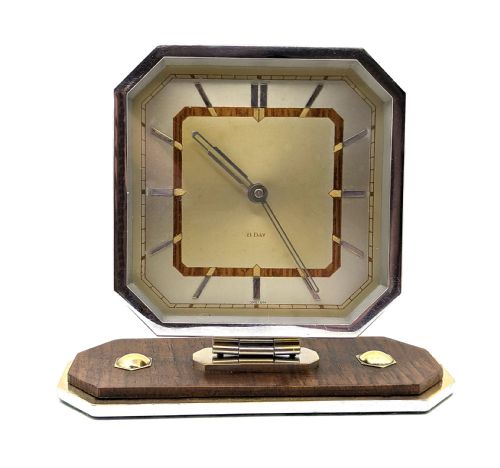
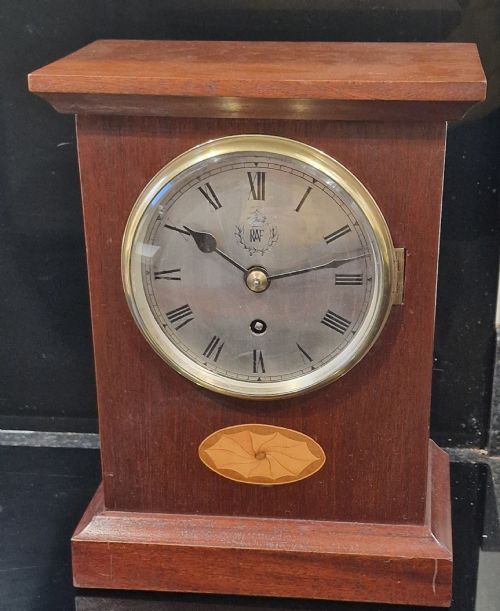
A 1930s desk clock sits squarely in the Art Deco period, offering compact timekeeping designed for tables, desks and mantelpieces. Buyers encounter various forms on this page, ranging from simple travel clocks on easels to larger chiming mantel designs.
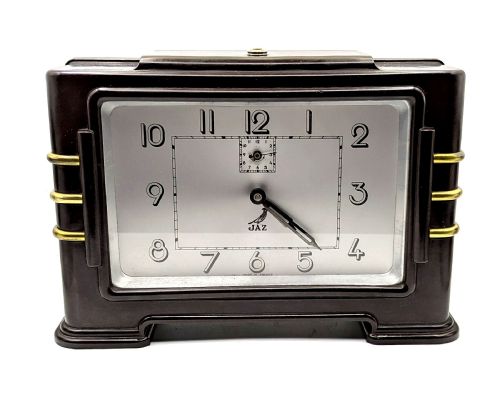
The objects frequently combine utilitarian function with modernist sculpture, reflecting the design priorities of the interwar years. Pieces span materials like chrome, bakelite and glass, often incorporating movements by established makers of the era.
Materials and construction
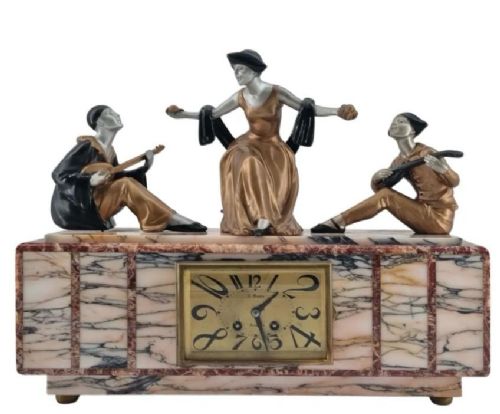
Movements inside these units vary from standard 30-hour and 8-day wind-up mechanisms to early electrical systems. Casings are assembled with visible geometric structuring, clean vertical skyscraper stepped forms and occasionally figural metal elements like spelter dancers or greyhounds.
1930s Desk Clock Retail Price Guide 2026
Typical asking prices for 1930s desk clock among the pieces listed under this phrase on Sellingantiques today, from the lower quarter to the upper quarter. They describe what is for sale here now, not the wider market.
Some desk clocks share living space with spelter Pierrot and Columbine figures or cast metal greyhounds.
Evaluating quality and execution
Quality rests upon the ambition of the design and the integrity of the materials chosen for the body and movement. Pieces housing signed movements from recognised makers hold greater weight than anonymous mass-produced alternatives.
The precision in mounting glass, chrome and stone together defines the tier of the piece. Superior examples display crisp lines, substantial heft in the marble or metal chassis, and harmonious integration of dial typography with the outer case.
Smiths Clockmakers·Jaz·Mappin and Webb·Harrods of London·Asprey·Mauthe
The 1930s Desk Clock Glossary
- Bakelite
- An early form of synthetic plastic used extensively for clock cases in this era. It allows for rich dark tones and smooth moulded shapes.
- Skyscraper
- A stepped architectural style applied to clock cases that mimics urban high-rise buildings. This form defined much of the high-end design vocabulary of the decade.
- Opaline glass
- A semi-translucent pastel glass that diffuses light softly across the clock face. It appears frequently in modernist table pieces.
- Mauthe movement
- A mechanical clock movement produced by the German clockmaker firm. These mechanisms drive many reliability-focused pieces from the period.
- Easel clock
- A timekeeper supported by a hinged metal prop at the rear for angled desk placement. Solid silver and chrome versions were popular for travel and office use.
1930s Desk Clock: Frequently Asked Questions
How do I wind an 8 day desk clock?
An 8 day desk clock requires a key or a butterfly winder turned gently clockwise until resistance meets the mainspring. Care must be taken not to over-wind the mechanism.
Most mechanical examples from this decade utilise a simple spring drive that maintains accuracy across the full weekly cycle without needing daily attention.
Were these clocks used on desks or mantels?
These timepieces served multiple domestic and professional roles, functioning equally well on office desks, bedside tables or living room mantelpieces. Smaller easel variants suited travel and portable use.
Larger variations built from marble, onyx or walnut anchored heavy mantel displays, often accompanied by matching barometers and thermometers.
What is an early electrical movement?
Early electrical movements represent an experimental phase in timekeeping where magnetic pulses or primitive batteries drove the balance wheel. These systems predated modern quartz technology.
Such mechanisms appear in specialised glass and wood cases from the period, prized today for their unusual mechanical ingenuity.
How do I identify Art Deco design?
Art Deco design relies on symmetrical geometry, stepped skyscraper profiles and industrial metals like chrome paired with dark woods or bakelite. Numerals on the dial often feature bold sans-serif lettering.
Decorative elements lean toward streamlined abstraction rather than Victorian ornamentation, emphasising speed, modernity and clean lines.