


Sterling Silver Clock
A sterling silver clock brings solid metal weight and mechanical movement to a desk or travel bag, making it a functional centrepiece.

Understanding sterling silver clock pieces
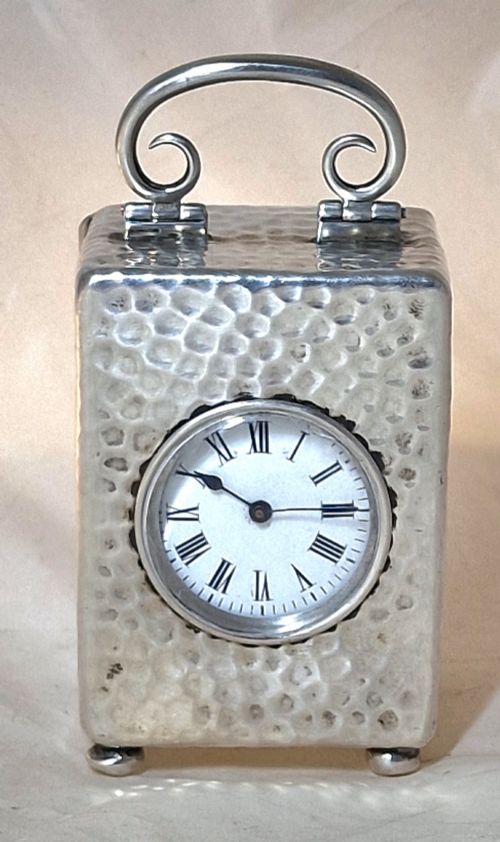
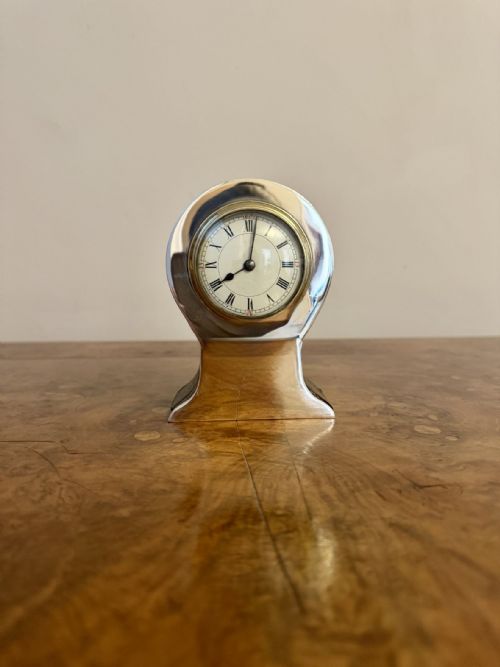
When you search for a sterling silver clock, you find items spanning the late nineteenth century through the Art Deco era of the 1930s. These pieces include miniature carriage clocks, desk timepieces, and travel clocks designed for portability or boudoir use.
The Edwardian era and the 1900s provide numerous carriage clocks and miniature designs, often hallmarked in London or Birmingham. Later pieces show the geometric influences of the Art Deco period, including skyscraper forms and folding easel cases.
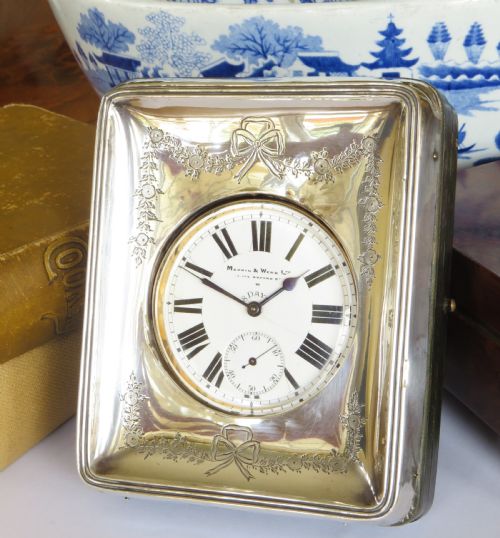
Many examples combine sterling silver cases with glass, enamel, or gilt metal elements. Travel clocks frequently feature protective cases or folding designs for use away from home.
Materials and construction methods
Silversmiths formed the outer housings using sterling silver, frequently applying hallmarks to denote purity and origin. Some items incorporated brass frameworks, gilt metal, or tortoiseshell panels to contrast with the silver surface.
Makers integrated glass panels to protect the dial and reveal the internal mechanical movement. Enamel work, sometimes featuring floral dials or blue colouration, added decorative detail to the clock faces.
Retail Price Guide 2026
Typical UK retail prices for sterling silver clock, calculated from the Sellingantiques database of over a million retail prices indexed since 2003. This retail price guide relies exclusively on Sellingantiques data; no external sources or auction records are used, so the figures do not describe the wider market.
Listings feature periods from 1890 through the Edwardian era and the 1930s, using sterling silver, glass, enamel, and brass.
Distinguishing quality across pieces
Quality shifts between standard mass-produced timepieces and those featuring detailed enamel work or specialised movements like the Octava eight-day system. The presence of clear hallmarks from noted silversmiths elevates the standing of a piece.
The integration of materials such as tortoise shell or gilt metal alongside solid sterling silver casing indicates greater ambition in design. Preserved glass panels and intact mechanical components also separate superior examples from simpler ones.
Henry Matthews
The Sterling Silver Clock Glossary
- Carriage clock
- A small, portable spring-driven clock originally designed for travelling. These typically feature a rectangular brass or silver frame with glass panels.
- Hallmark
- An official stamp applied by an assay office to indicate the purity of precious metal. British pieces commonly show town marks and date letters.
- Boudoir clock
- A small timepiece intended for a private bedroom or dressing room. They often employ refined decorative elements.
- Easel clock
- A timepiece supported by a rear hinged prop allowing it to stand upright on a desk. This format gained popularity during the Art Deco period.
- Enamel
- A glassy substance fused to metal through firing to provide colour and decoration. It frequently appears on clock dials and travel cases.
Frequently Asked Questions
What is a sterling silver clock?
A sterling silver clock is a timepiece encased in solid silver, encompassing styles from Edwardian carriage clocks to Art Deco desk pieces.
These objects combine functional mechanical movements with precious metal housings designed for desks, boudoirs, or travel.
How do I identify the date?
Dates are typically identified through hallmarks stamped directly onto the silver case, which indicate the assay office and year of testing.
Stylistic cues such as Edwardian proportions or Art Deco geometric lines also help assign pieces to specific periods like the 1900s or 1930s.
Were travel clocks common?
Travel clocks became popular for people on the move, featuring protective cases or folding designs to prevent damage during transit.
Many examples included leather or silver outer cases with integrated folding struts for use on tables.
How do I care for silver?
Silver cases benefit from gentle cleaning with a soft cloth to maintain the metal shine without damaging surrounding glass or enamel elements.
Harsh chemical dips should be avoided to preserve original hallmarks and delicate surface details.