




Small Silver Clock
A small silver clock sits neatly upon a mantel or desk, bringing quiet mechanical precision and bright polished metal to the room.
Small Silver Clock
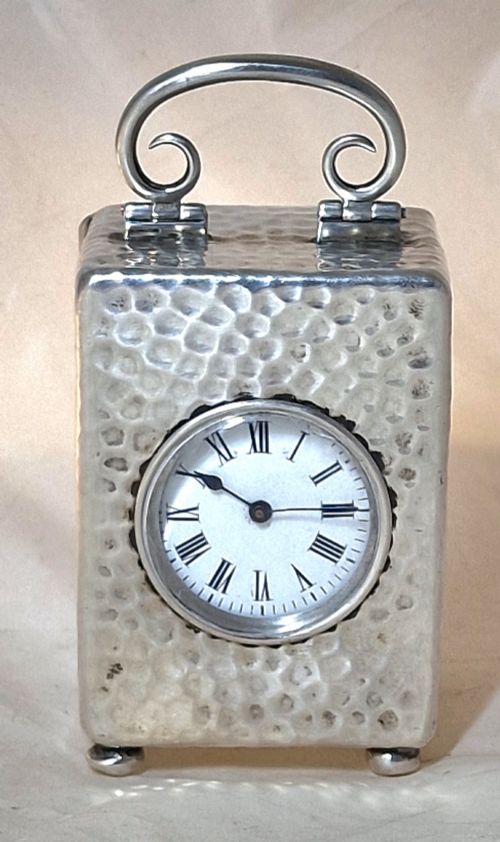
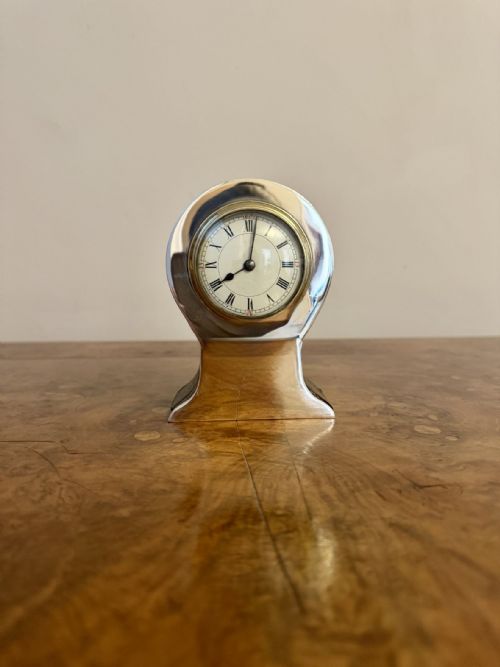
When you search for a small silver clock, you find portable timepieces spanning the eighteenth, nineteenth, and twentieth centuries, including Georgian, Victorian, Edwardian, and Art Deco examples. These objects range from miniature carriage clocks and boudoir timepieces to bracket clocks with silvered dials and tortoiseshell desk items.
Carriage clocks and small mantel pieces dominate the selection, often bearing hallmarks from London makers alongside French movements. Many utilise sterling silver cases, sometimes combined with enamel or glass panels to reveal the interior mechanics.
Earlier eighteenth-century specimens appear in mahogany cases with silvered dials, while later Edwardian and 1900s pieces showcase hammered finishes, floral enamel work, or silver gilt details. Each variant offers a compact footprint designed for desks, boudoirs, and small tables.
How they were made
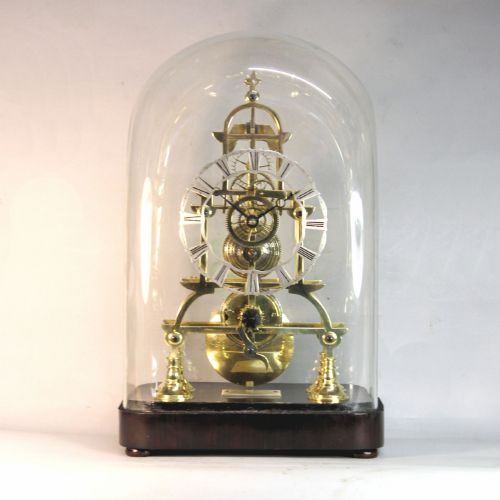
Silversmiths constructed outer cases from sterling silver, brass, or mahogany, frequently incorporating glass windows to display the escapement and gear trains. Enamel work, including guilloche patterns and floral motifs, added decorative colour to dial faces and bezels.
Movement assembly required skilled clockmakers who fitted delicate fusee, carriage, or eight-day mechanisms into diminutive proportions. Makers also applied silver plating to brass frames or integrated tortoiseshell panels into the wooden or metal bodies.
Some tiny carriage clocks were built small enough to pack into a travelling bag alongside spare collar studs and silver pill boxes.
What varies in quality
The distinction between standard output and finer work lies in the crispness of the silver hallmarking, the depth of hand-embossing, and the precision of the enamel or guilloche panels. Makers who employed solid sterling silver and delicate floral enamel produced pieces that retain greater visual sharpness today.
Movement execution also dictates the tier of the piece, separating basic plated timepieces from complex London-made fusee mechanisms or signed carriage clocks. The integrity of the wooden housing, whether mahogany or tortoiseshell, and the clarity of the silvered dial further separate average examples from superior items.
Richard Winter Of Chieveley·J Batson And Son·Perigal Of London·Frederick Rowe·William Comyns·Walker And Hall·Kendal And Dent·George Buckmaster·A L Davenport
The Small Silver Clock Glossary
- Carriage clock
- A portable spring-driven timepiece with a handle, originally designed for travelling by coach. These pieces frequently feature glass panels that expose the internal escapement.
- Fusee
- A conical pulley used in mechanical clocks to maintain even force on the gear train as the mainspring unwinds. This mechanism ensures more consistent timekeeping.
- Guilloche enamel
- A decorative technique where intricate geometric patterns are engraved beneath translucent enamel. It provides a shimmering textured background on dials and panels.
- Silvered dial
- A brass or metal clock face treated with a silver solution to create a matte white-silver finish. Numbers and markers are typically engraved and darkened for legibility.
- Hallmark
- An official stamp applied to precious metals indicating the purity, place of assay, and year of making. English silver items often display distinct town marks and date letters.
Small Silver Clock: Frequently Asked Questions
Where should I place a small silver clock?
These compact timepieces suit small surfaces such as bedside tables, mantelpieces, or office desks where their refined metal cases catch the light.
Keep them away from direct sunlight and damp environments to protect delicate enamel work, silver surfaces, and internal metal gears.
How do I wind a small silver clock?
Use the appropriate key to wind the mainspring gently through the dial face or back plate until you feel firm resistance. Avoid overwinding, as this can damage the internal spring mechanism.
Check whether the piece is an eight-day movement or a standard daily runner so you establish the correct winding routine.
How do I tell an Edwardian clock from a Victorian one?
Examine the hallmarks and stylistic details on the silver case to determine the production period. Edwardian pieces often feature lighter floral enamel or simpler geometric lines, while Victorian examples lean toward heavier embossed decoration.
Consult the assay office date letters stamped on the silver components for precise chronological confirmation.
Did these clocks travel easily?
Many carriage clocks and boudoir timepieces were built with folding top handles and robust brass or silver frames specifically for transport. Their heavy glass panels protected the delicate escapement during movement.
Even smaller desk clocks required careful handling, as their mechanical gear trains remained sensitive to sudden jars and drops.