


Edwardian Silver Carriage Clock
An Edwardian silver carriage clock brings portable timekeeping into the home with solid metal and glass.
Edwardian Silver Carriage Clock
An edwardian silver carriage clock combines travel utility with domestic elegance, appearing in forms ranging from small boudoir timepieces to large repeating clocks. These pieces span the 19th century through the 1930s, though the Edwardian period and the year 1900 dominate the selection.
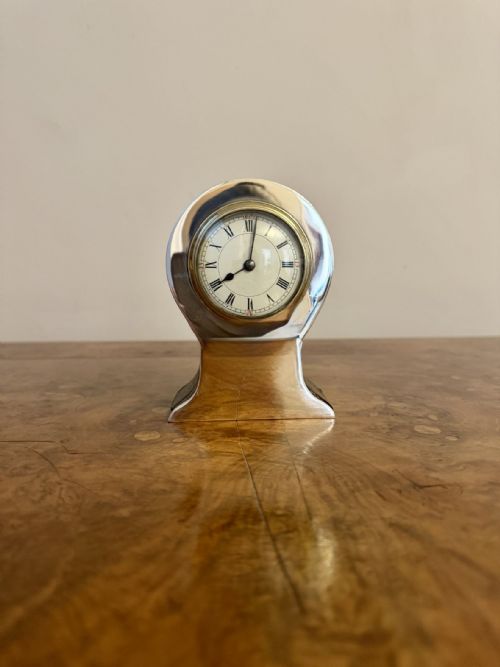
Buyers encounter distinct variations in scale, from miniature desk clocks to giant gilt examples. The selection includes specific London and Birmingham hallmarks alongside pieces originating from Vienna and France.
Object types merge traditional carriage clock formats with desk clocks and mantel clocks. Some retain travel cases, while others function as dedicated interior timepieces.
Materials and construction
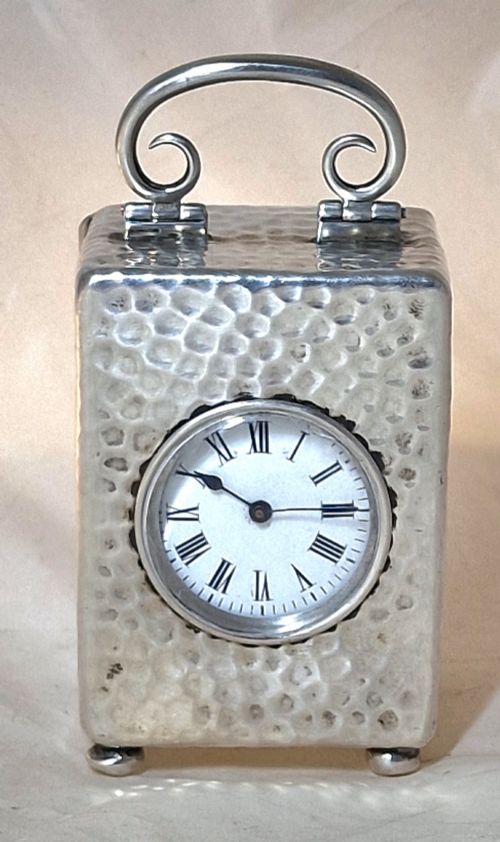
The casing relies on sterling silver, silver gilt, and brass structures, frequently combined with glass panels to reveal the movement within. Tortoiseshell, onyx, and silvered metal appear as supplementary materials adding contrast to the frames.
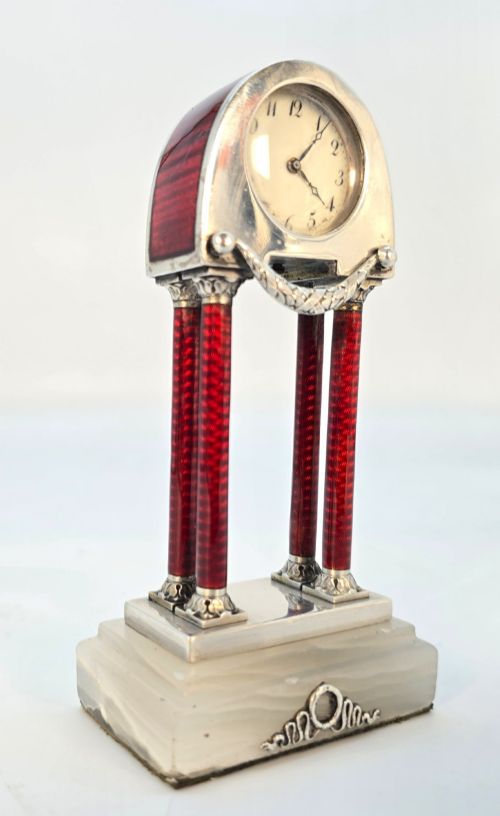
Surface decoration involves chased silver work, hammered textures, and guilloche enamel details. Makers applied coloured enamel work and floral patterns directly onto the metal surfaces to alter the visual weight of the clock.
The selection includes items from the 19th century through the Edwardian period up to 1930.
Assessing quality
Quality rests in the weight of the solid silver casing and the crispness of chased or hammered surface details. Heavier gauges of silver and intricate enamel work separate standard timepieces from finer productions.
The integration of materials dictates the tier of the piece. Combinations involving tortoiseshell, onyx, or complex guilloche enamel require superior joinery compared to plain brass and glass models.
Georg Adam Scheid·William Comyns·J Batson & Son·Henry Matthews·Walker & Hall
The Edwardian Silver Carriage Clock Glossary
- Carriage clock
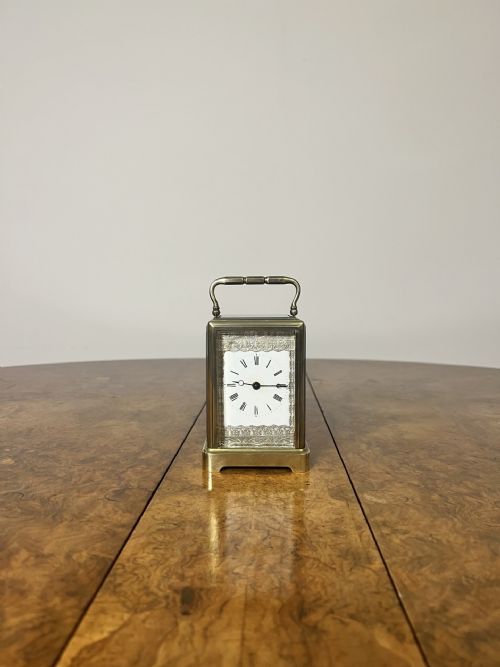
- A small, portable spring-driven clock originally designed for travel. These pieces feature glass panels on all sides to allow the movement to be seen.
- Guilloche enamel
- A decorative technique where a precise pattern is機械-engraved into metal and covered with translucent enamel. This creates repeating geometric reflections beneath the coloured surface.
- Silver gilt
- Silver that has been coated with a thin layer of gold on its surface. This treatment provides a warm golden tone while retaining a silver base.
- Portico desk clock
- A clock styled after architectural portico forms with supporting pillars. These stand upright on desks and mantelpieces rather than following traditional box-like carriage clock shapes.
- Hallmark
- An official stamp applied to precious metals indicating purity and origin. British pieces display town marks, date letters, and maker initials.
Edwardian Silver Carriage Clock: Frequently Asked Questions
What is an edwardian silver carriage clock?
An edwardian silver carriage clock is a portable timepiece enclosed in a silver frame with glass panels. They evolved from earlier travel clocks into decorative items for desks and boudoirs.
Most examples rely on spring movements and feature hallmarks from London or Birmingham. Their portable nature allowed owners to move them easily between rooms.
How do I wind these clocks?
These clocks use a key or built-in butterfly winders depending on the specific movement mechanism. Owners insert the key into the backplate to tension the mainspring.
Careful handling during winding protects the internal gear train. Most standard pieces run for eight days per wind.
Were they used for travel?
Many include fitted leather travel cases designed to protect the silver and glass during transit. The robust metal frame and thick glass panels absorbed minor shocks.
Over time, many lost their travel cases and remained stationary in domestic interiors. Smaller versions were specifically designated as bedside travel clocks.
How do I date a silver clock?
Dating relies primarily on the silver hallmarks stamped onto the casing. These stamps indicate the assay office, year of manufacture, and maker.
Stylistic markers like art nouveau curves or arts & crafts hammered finishes also point toward specific decades around 1900.