





8 Day Desk Clock
An 8 day desk clock offers reliable timekeeping combined with striking period design, making it a functional centrepiece for any study or mantelpiece.
What an 8 day desk clock is
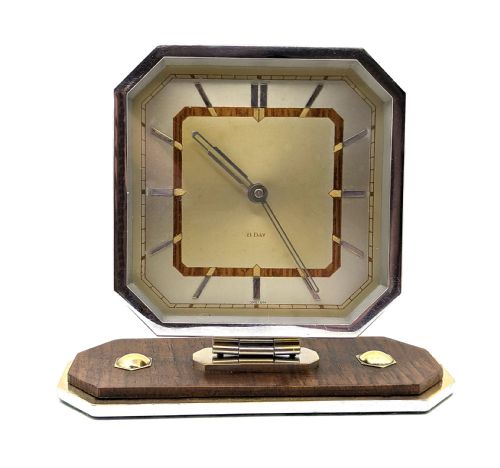
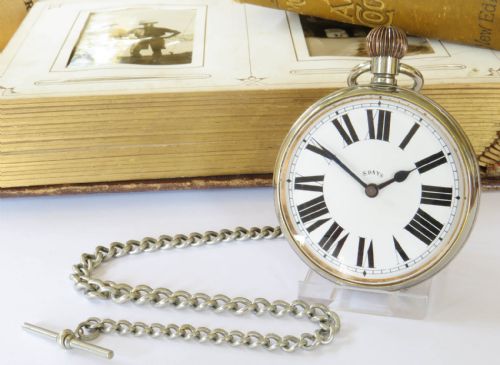
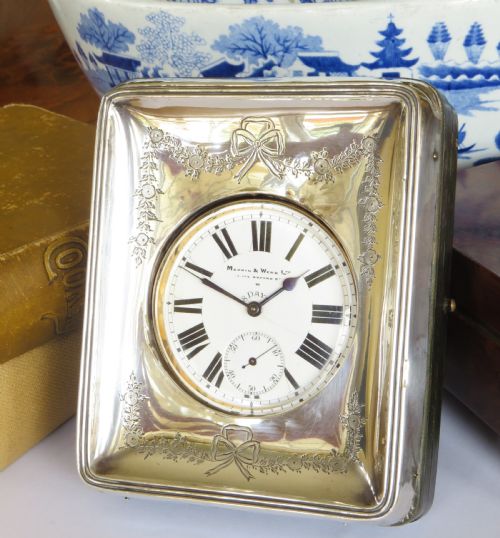
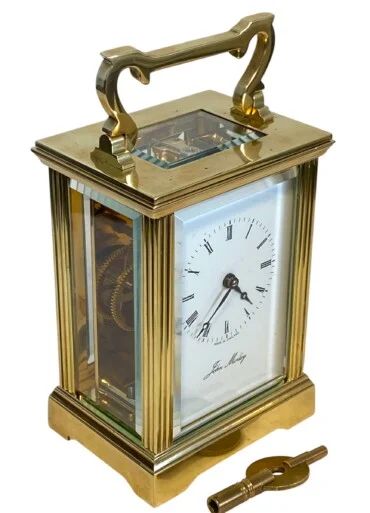
An 8 day desk clock is a timekeeper designed to run for over a week on a single wind, appearing across Edwardian, Art Deco and Mid-Century Modern periods. These pieces take various forms, from pocket watch conversions in inlaid mahogany and satinwood cases to streamlined skyscraper designs in chrome and glass.
Buyers browsing this selection most frequently encounter Art Deco examples from the nineteen thirties, often constructed in chrome with English or continental movements. Travel clocks and multi-functional weather stations featuring brass and nickel plating also feature alongside table clocks by notable makers.
How they were made
The construction of an 8 day desk clock combines robust metalwork with precision mechanics, utilising materials such as solid brass, chrome, silver and nickel plating for the outer housings and bezels. Wooden cases employ mahogany, walnut and satinwood, frequently enhanced with intricate stringing or inlay work.
Dials incorporate glass crystals and enamel faceplates, while movements rely on traditional gear trains engineered to maintain tension over extended periods. Specialised components like barometer and thermometer insertions appear in combined weather station housings.
Retail Price Guide 2026
Typical UK retail prices for 8 day desk clock, calculated from the Sellingantiques database of over a million retail prices indexed since 2003. This retail price guide relies exclusively on Sellingantiques data; no external sources or auction records are used, so the figures do not describe the wider market.
Some desk clocks double as miniature meteorological offices, telling you the time while grumbling about the approaching rain via built-in barometers.
What varies in quality
The distinction between standard and superior examples of an 8 day desk clock lies in the refinement of the movement and the architectural ambition of the casing. Pieces housing sophisticated Swiss mechanisms or bearing retailer signatures demonstrate superior manufacturing standards.
Material selection also dictates overall grade, where heavy gauge chrome, solid silver cases or finely figured walnut elevate a piece. The crispness of geometric Art Deco lines or the subtlety of Edwardian cabinetwork separates ordinary timepieces from exceptional survivals.
Mappin and Webb·Jaeger LeCoultre·Asprey·Imhof
The 8 Day Desk Clock Glossary
- Goliath watch
- An oversized pocket watch frequently housed in a fitted wooden desk case during the Edwardian era.
- Skyscraper clock
- An architectural Art Deco desk clock style featuring stepped vertical forms reminiscent of modern metropolitan buildings.
- Platform escapement
- A self-contained escapement unit mounted on a small platform, commonly utilised in portable desk and travel clocks.
- Enamel dial
- A metal face fused with powdered glass powder fired at high temperatures to create a smooth, durable white or coloured surface.
Frequently Asked Questions
How often should I wind an 8 day desk clock?
These movements are engineered to run for approximately eight days before requiring manual rewinding via the key or crown.
Wind the clock steadily until resistance is felt, taking care not to over-tighten the mainspring.
Can I travel with an 8 day desk clock?
Certain variations, particularly pocket watch conversions and folding travel clocks, were specifically designed for portability on journeys.
Standard heavy desk models remain better suited to stationary placement on a desk or mantel.
How do I identify an Art Deco desk clock?
Art Deco pieces typically display geometric forms, stepped skyscraper silhouettes, and the prominent use of chrome or polished metal finishes.
Lettering on the dial and the treatment of the bezel often reflect the modernist aesthetic of the nineteen thirties.
What maintenance does a desk clock require?
Regular servicing by a qualified horologist ensures the internal gear trains and escapements remain clean and properly lubricated.
Keep the exterior glass and metal surfaces free from dust using a soft, dry cloth.