
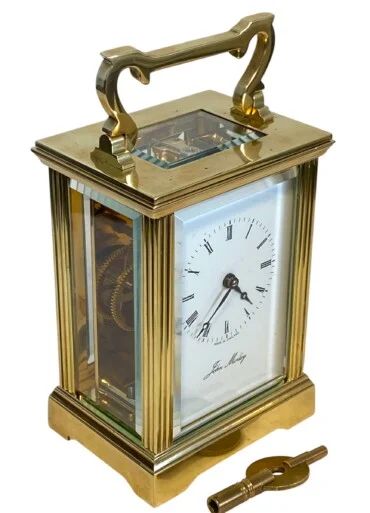


Mid Century Desk Clock
A mid century desk clock brings mechanical precision and bold modernist design to any office, pairing brass, glass, and clever engineering.
What these pieces are
A mid century desk clock encompasses table and desk timepieces produced primarily during the 1950s and 1960s. These items range from standard round dials to novelty advertising pieces and world time indicators.
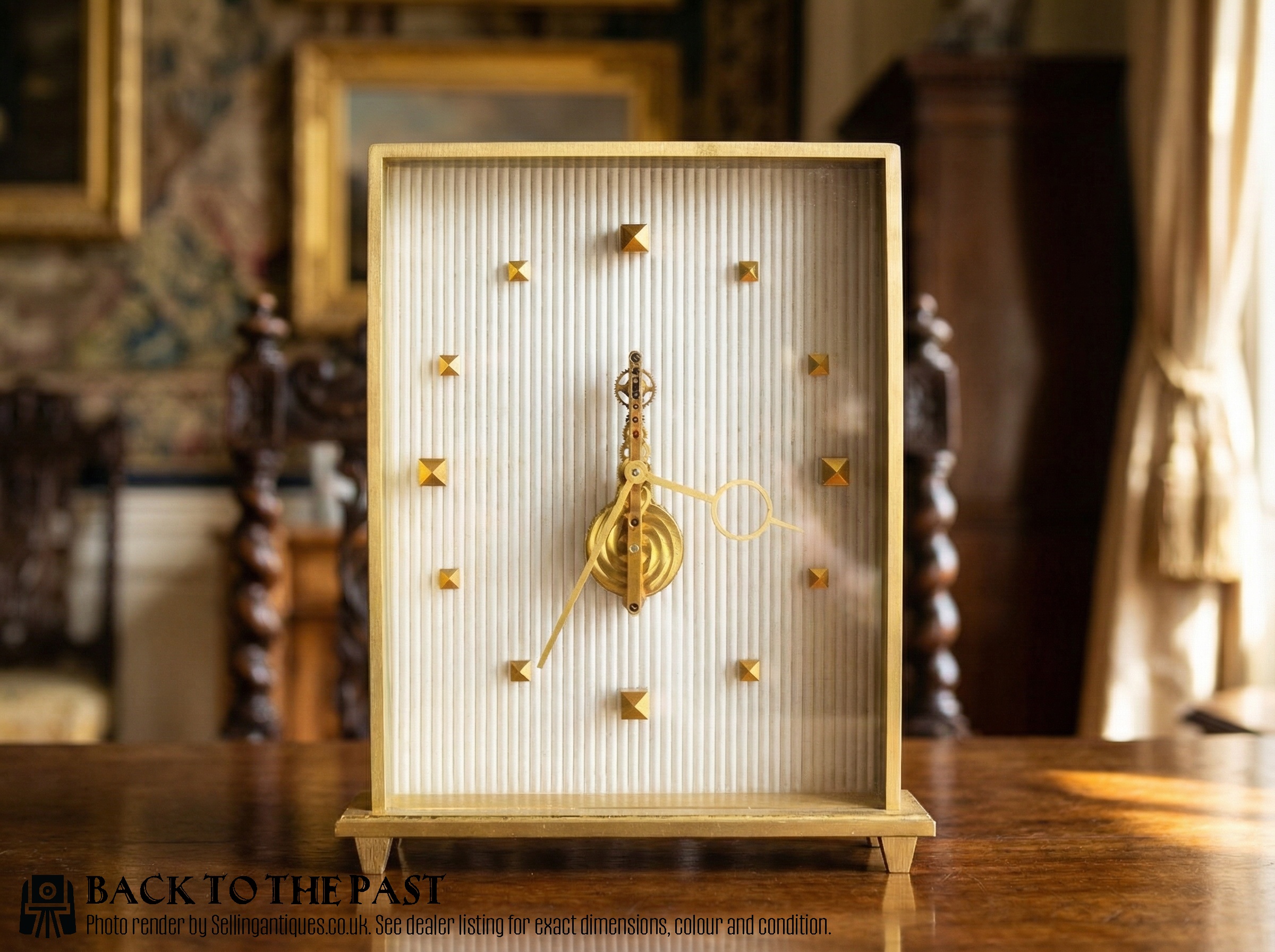
The selections available here lean heavily into Mid-Century Modern aesthetics, incorporating clever forms such as lamp posts and skeleton movements. They serve as functional office accessories and distinct sculptural objects.
Originating from makers across Europe, these desk clocks reflect a period of intense experimentation in dial layout and casing design. Most examples rely on mechanical wind movements operating over eight days.
How they were made
Manufacturers utilised metals such as brass, gilt brass, gold plate, lacquered metal, and nickel plating to build sturdy and reflective outer housings. Glass covers protect the delicate dials, while auxiliary materials like rubber and plastic appear in specific promotional or modern casing elements.
Movements rely on precision engineering, frequently featuring fifteen jewels to reduce friction in the gear train. Mechanical wind systems and electro-mechanical mechanisms drive the hands across circular or inline skeletonised layouts.
Retail Price Guide 2026
Typical UK retail prices for mid century desk clock, calculated from the Sellingantiques database of over a million retail prices indexed since 2003. This retail price guide relies exclusively on Sellingantiques data; no external sources or auction records are used, so the figures do not describe the wider market.
A promotional Goodyear Tyre desk clock from the 1950s proves that even heavy industry enjoyed a miniature rubber tread around its dial.
What varies in quality
The calibre of the movement largely dictates the standard of the piece, with multi-jewel mechanisms representing superior watchmaking ambition. High-grade examples maintain accurate timekeeping through robust internal gearing and careful servicing.
Casing finish and material choice also separate standard production from elevated items. Heavy gilt brass, pristine glass, and complex novelty forms like working world time zones or lamp post designs demand higher manufacturing skill than simple promotional pieces.
Imhof·Jaeger LeCoultre·Kienzle
The Mid Century Desk Clock Glossary
- 8-Day
- A movement capable of running for eight days on a single wind before requiring attention. This extended power reserve was a mark of quality convenience for desk and table use.
- Skeleton Clock
- A timepiece designed to reveal its internal gears and plates by omitting the traditional dial face. This construction exposes the mechanical complexity of the movement to the viewer.
- World Time
- A complication that allows the user to read local times across multiple global zones simultaneously. It often appears on specialised travel and desk pieces.
- Jewel
- A synthetic gemstone bearing used as a bearing surface for pivots within a mechanical movement. Higher jewel counts generally indicate a more refined and durable calibre.
Frequently Asked Questions
How do I wind a mechanical desk clock?
Most mechanical desk clocks utilise a key or an attached winding mechanism to tension the mainspring inside the movement. Turning the crown or key clockwise until firm resistance is felt fully winds the clock for its operational cycle.
Care should be taken not to over-wind the spring, as excessive force can damage the internal components. Regular gentle winding preserves the lifespan of vintage gear trains.
What is an inline skeleton clock?
An inline skeleton clock arranges its gear train in a linear fashion rather than a traditional circular layout. This exposes the moving parts completely between transparent panels.
Such designs highlight the minimalist structural ethos of the period, turning the mechanical innards into the primary visual feature of the object.
How accurate are vintage desk clocks?
Vintage mechanical desk clocks generally keep reasonable time for daily use, though they may gain or lose a few minutes per week. Their precision depends heavily on the quality of the movement and when it was last serviced.
Regular cleaning and adjustment by a professional horologist help maintain optimal timekeeping performance in older mechanisms.
Where were these clocks placed?
These timepieces were designed primarily for placement on office desks, study tables, and mantelpieces where they remained easily visible during the working day. Their compact proportions suited professional and domestic interior surfaces alike.
Specialist variants like world time models also found a home in executive offices and boardrooms to track international business hours.