

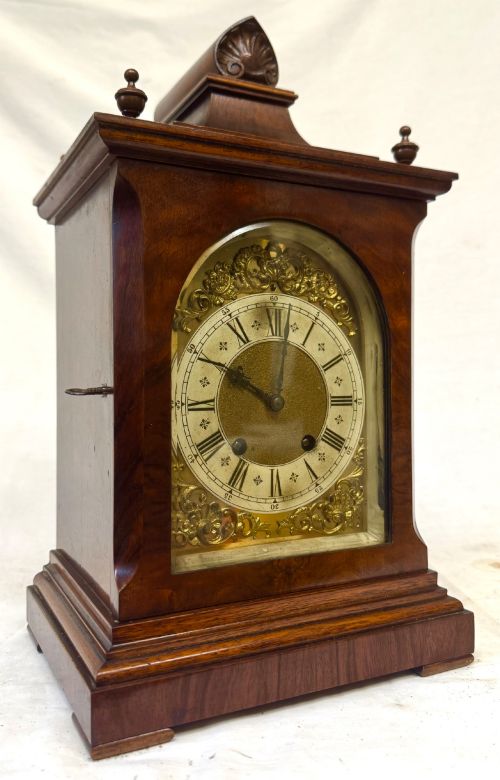
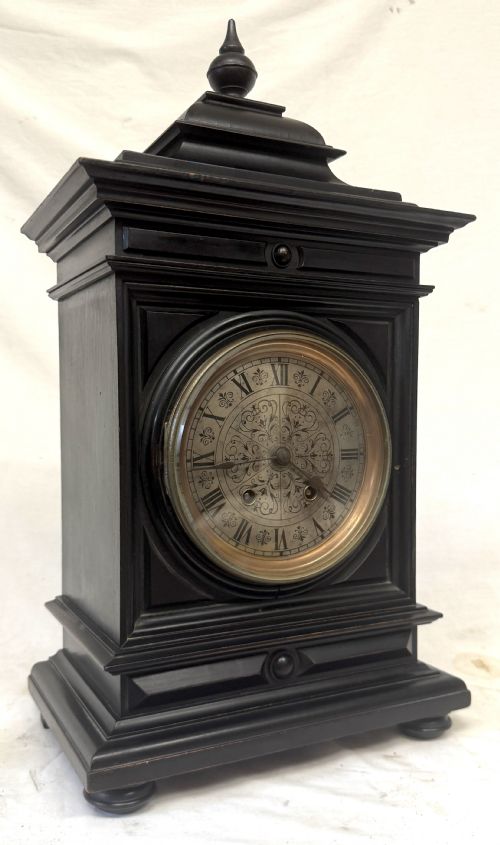
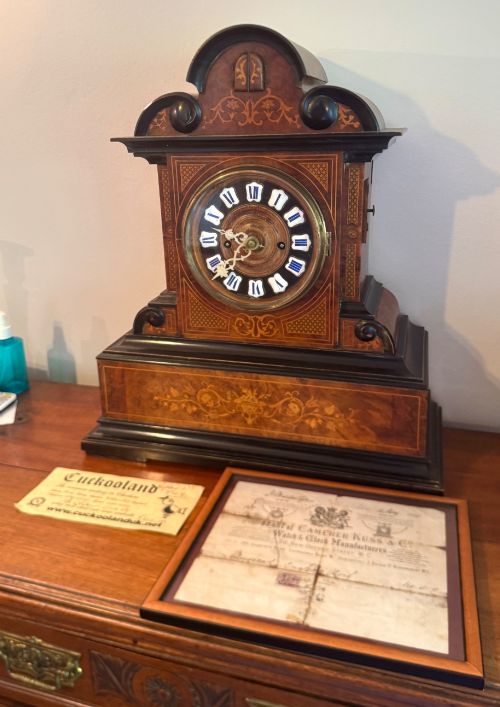
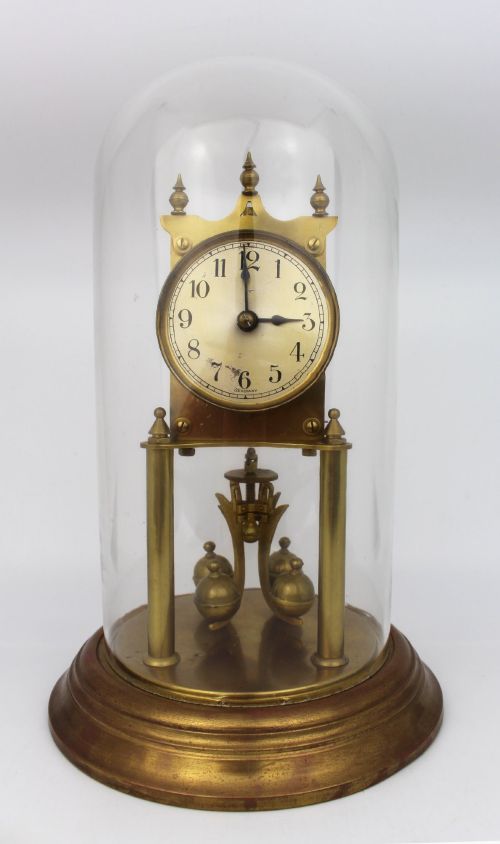


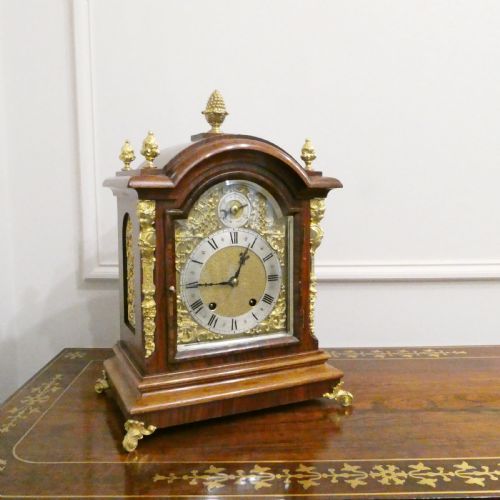


German Mantel Clock
A german mantel clock brings precision engineering and striking presence to a room, spanning nineteenth-century walnut cases to mid-century modern designs.
German mantel clocks
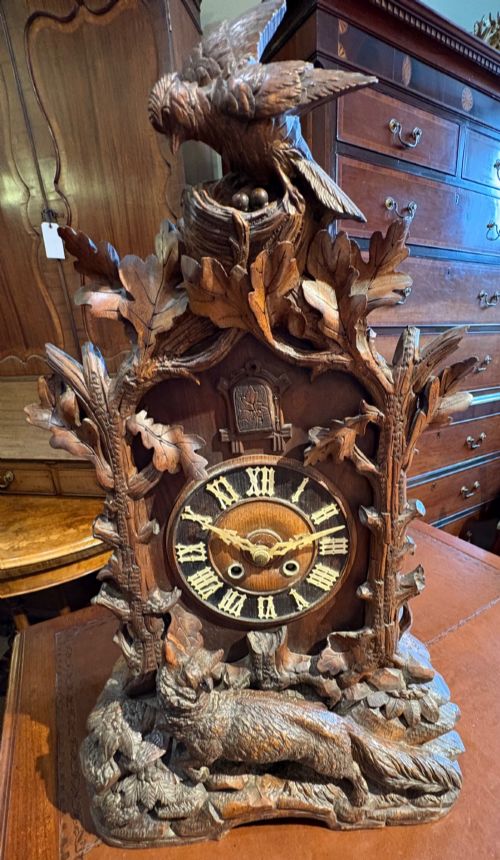
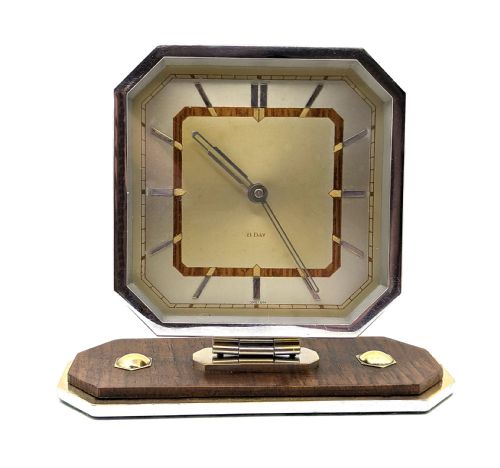
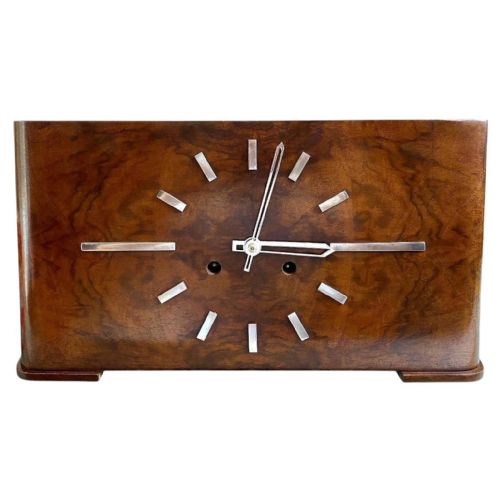
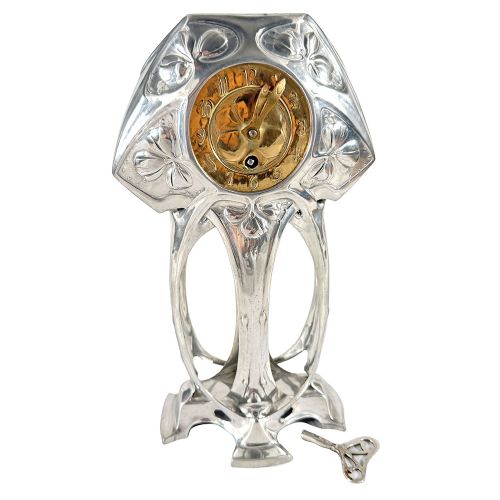
A german mantel clock is a domestic timekeeper designed to sit on a fireplace mantel or shelf, appearing frequently in nineteenth century, 1930, and 1950 forms across walnut, oak, and brass. These pieces range from substantial Victorian bracket clocks to geometric Art Deco chiming models and clean mid-century modern desk versions.
The selection here encompasses various styles including Victorian, Art Nouveau, Edwardian, and Art Deco, alongside utilitarian desk clocks. Buyers encounter works produced by notable German makers and workshops that specialised in reliable mechanical movements.
Materials and construction
Movements are mechanical, incorporating eight-day running trains, striking mechanisms, and chiming functions like ting-tang or Westminster chimes. Glass protects delicate dials, while ceramic and metal faces display numerals driven by precise gear trains.
Some clocks feature world time zones, proving that nineteenth-century desk dwellers were already planning their next global escapade.
Assessing quality
Quality rests in the sophistication of the movement and the integrity of the cabinet work, distinguishing standard production from high workshop output. Well-executed carving, harmonious timber grain, and robust mechanical engineering elevate specific examples.
The distinction between standard timepieces and top-tier models involves the complexity of the chime, the precision of the brass work, and the quality of the maker's signature or movement stamp.
Lenzkirch·Junghans·Kienzle·Winterhalder and Hofmeier·Gustav Becker
The German Mantel Clock Glossary
- Ting Tang
- A striking mechanism that sounds two different notes on the quarter hours before the full hour strike. This creates a distinct acoustic pattern easily recognised by collectors.
- Bracket Clock
- A portable clock originally designed to sit on a wall bracket but later placed on shelves or mantels. These often feature elaborate wooden cases and bell-top handles.
- Ormolu
- Gilded bronze or brass mounts applied to wooden clock cases for decoration. Makers used these metallic accents to catch the light and enhance the formal appearance.
- Westminster Chime
- A melodic four-note sequence played on bells or gongs before the hour. It is commonly found on early twentieth-century German movements.
Frequently Asked Questions
How do I wind a mechanical German mantel clock?
Use the appropriate key on the winding arbours located on the dial face, turning gently until resistance meets you. Avoid over-winding to protect the internal mainspring.
Ensure you do not force the key past the stop point. Regular, careful winding keeps the movement functioning accurately.
What is a ting tang striking movement?
A ting tang movement strikes two bells or gongs on the quarters to signal the approaching hour. It provides an audible chime distinct from standard single-strike systems.
This mechanism became popular in nineteenth-century German bracket and mantel clocks. It adds a traditional acoustic layer to the room.
How do I identify the period of a clock?
Examine the stylistic cues of the wooden case, such as Victorian carving, Edwardian inlay, or Art Deco geometric lines. Materials like chrome and specific dial typography also point towards the 1930 or 1950 eras.
Maker marks stamped on the backplate of the movement offer definitive dating evidence. Comparing these details helps narrow down the decade of production.
Where should I place a mantel clock?
Position the clock on a stable, level surface away from direct sunlight, dampness, and heavy vibrations. A firm mantelpiece or sideboard helps the pendulum swing evenly.
Level placement ensures the mechanical beat remains steady and reliable. Uneven surfaces can cause the escapement to halt prematurely.