
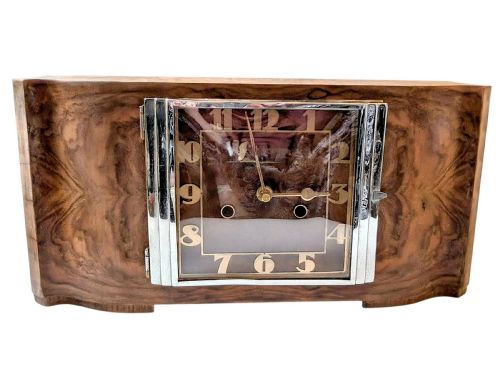


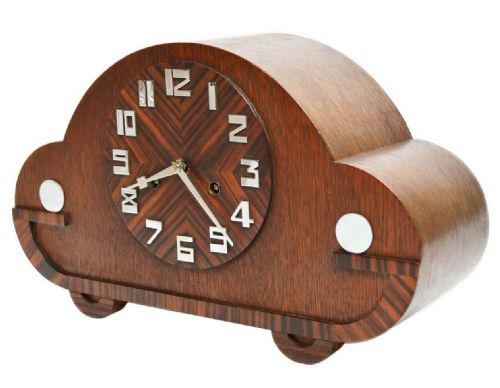
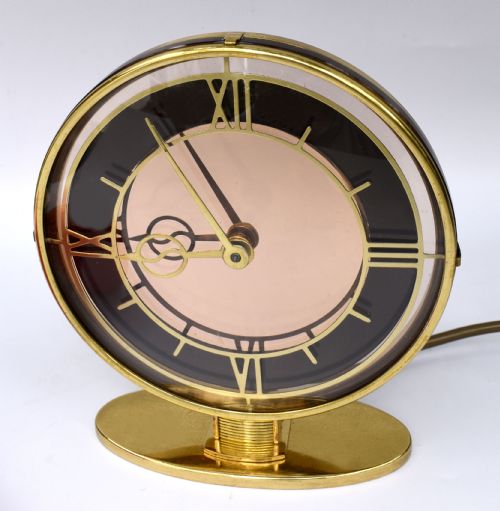


Art Deco Mantelpiece Clock
An art deco mantelpiece clock combines bold geometric lines with striking modern materials to anchor a room.
What these clocks are
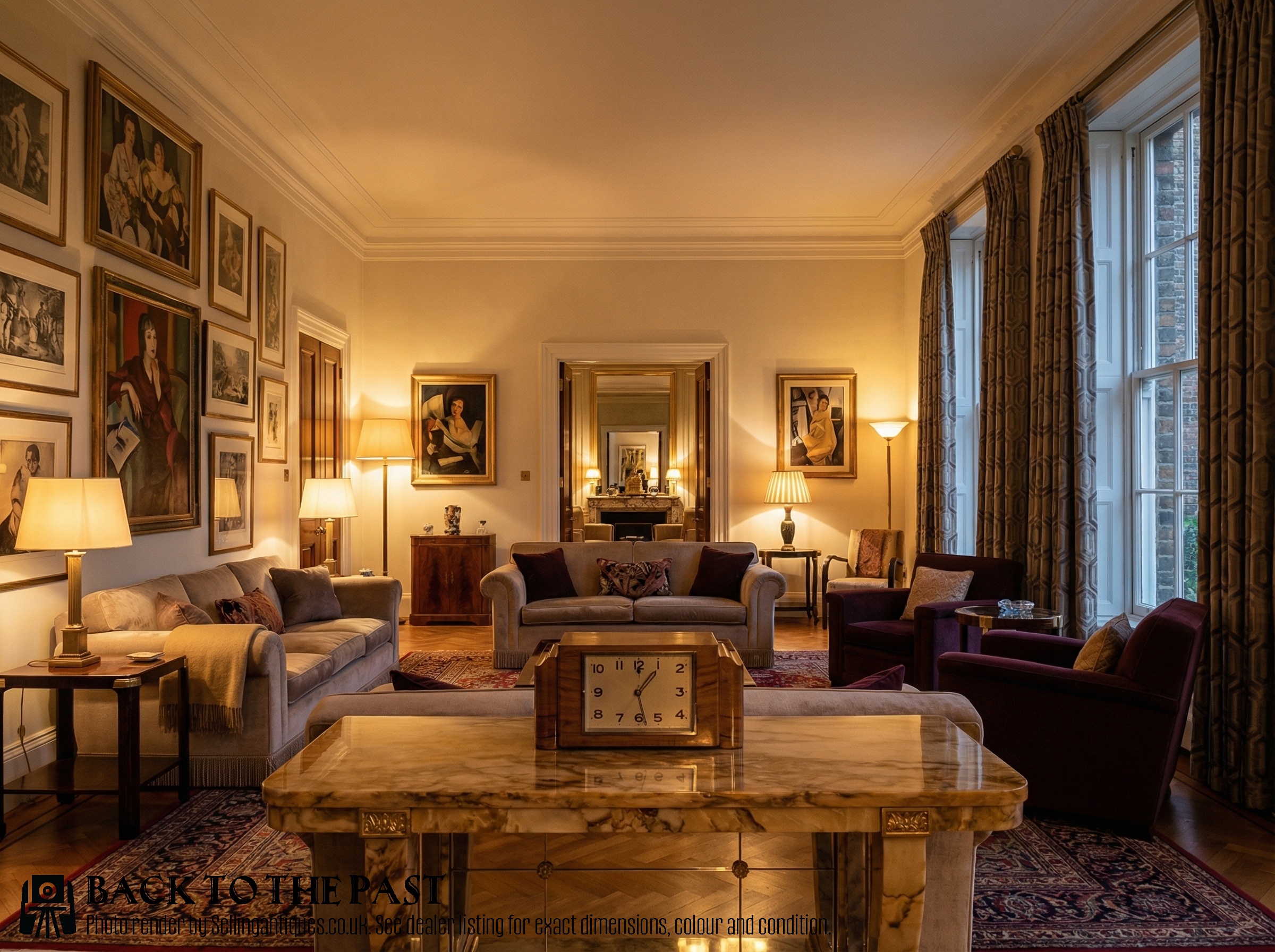
An art deco mantelpiece clock is a functional timepiece designed to sit on a fireplace ledge or surface, originating mainly from the 1920s and 1930s. These pieces include mantel clocks, desk clocks, and striking chime models that bring distinct period geometry into a room.
The versions most commonly met on this page span the nineteen-twenties and nineteen-thirties, often taking the form of substantial horizontal mantel clocks or compact desk variants.
How they were made
Maker construction relies on a diverse mix of materials, pairing metals like chrome, brass, and nickel plating with rich woods such as walnut, burr walnut, and ebonised wood. Glass and marble also feature prominently, creating strong textural contrast against polished metal bezels and dials.
Movements range from eight-day mechanisms and chiming configurations to electric systems, housed within cases shaped by the signature modernist aesthetic of the period.
Retail Price Guide 2026
Typical UK retail prices for art deco mantelpiece clock, calculated from the Sellingantiques database of over a million retail prices indexed since 2003. This retail price guide relies exclusively on Sellingantiques data; no external sources or auction records are used, so the figures do not describe the wider market.
The site listings feature clocks constructed from chrome, glass, walnut, burr walnut, brass, nickel plating, and ebonised wood.
What varies in quality
Quality rests in the harmony of materials and the sophistication of the case architecture, where mixed veneers and heavy chrome plating elevate the presence of the piece. The choice between standard timekeeping and complex eight-day chiming movements also defines the tier of the object.
The integrity of the glass panels, the depth of the walnut grain, and the crispness of the metal detailing separate standard production items from more ambitious architectural designs.
Junghans·GEC
The Art Deco Mantelpiece Clock Glossary
- Mantel clock
- A portable clock designed to stand on a shelf or mantelpiece above a fireplace. These domestic timepieces became central decorative objects in twentieth-century interiors.
- Veneer
- A thin layer of superior wood, such as walnut or burr walnut, applied over a base timber foundation. This technique allowed makers to display rich grain patterns across wide clock cases.
- Eight day movement
- A mechanical clock movement that requires winding only once every eight days. It offers greater convenience than daily-wound counterparts.
- Bakelite
- An early synthetic thermosetting plastic used for electrical insulation and casing components. Its dark, durable finish suits the streamlined look of mid-century electrical items.
Frequently Asked Questions
How do I wind an eight day clock?
An eight day movement uses a key inserted into the dial arbors to tension the mainsprings. Turn the key gently until you feel firm resistance.
Take care not to overwind the mechanism, as this can damage the internal spring assembly and affect timekeeping accuracy.
Where should I place a mantel clock?
These clocks sit best on level surfaces such as mantelpieces, sideboards, or large desks where they remain stable. A steady foundation helps mechanical pendulum and balance wheel movements keep accurate time.
Keep them away from damp walls and direct heat sources to protect the wood veneers and metal finishes.
How do I tell a nineteen-twenties clock from a thirties one?
Nineteen-twenties pieces often lean towards heavy marble structures and symmetrical neoclassical influences mixed with early geometric motifs. Items from the nineteen-thirties frequently embrace more streamlined chrome, bakelite, and glass combinations.
Examining the dial typography and case geometry helps narrow down the decade of production.