
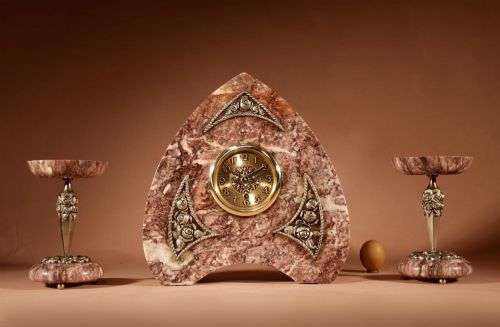


Geometric Marble Clock
A geometric marble clock brings striking architectural form and rich mineral grain into a room, making it a definitive centrepiece for any mantel.
What these clocks are
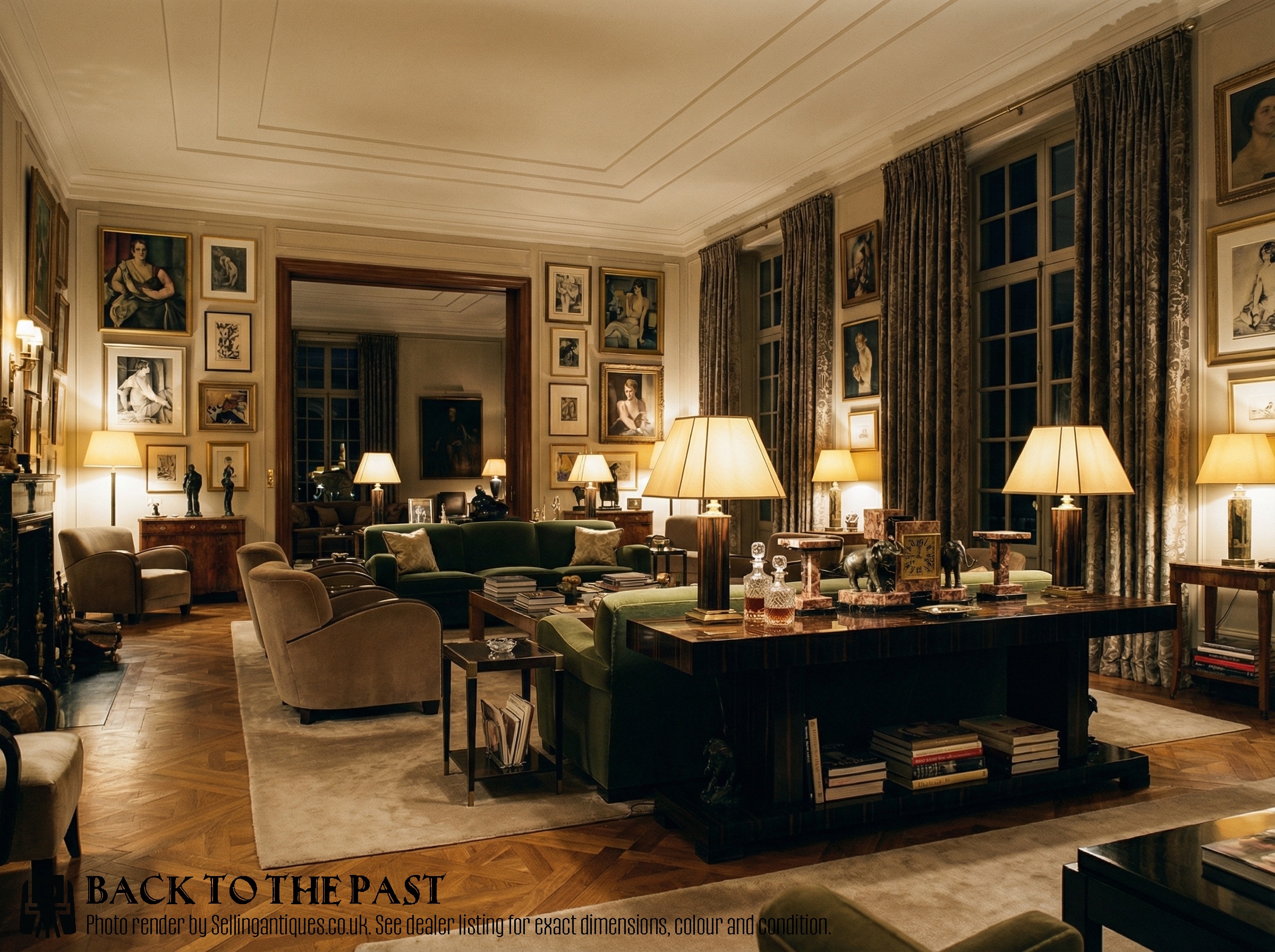
When you search for a geometric marble clock, you encounter mantel clocks and clock sets from the Art Deco period, spanning the 1920s and 1930s. These pieces combine angular stone bodies with contrasting metals and figural elements such as elephants.
How they were made
Makers constructed the bodies primarily from marble and onyx, shaping the stone into geometric blocks and stepped profiles. They integrated metals such as brass, bronze, gilt bronze, spelter, and chrome to accent the dials, bezels, and sculptural flanks.
Glass protected the clock faces, while supplementary garniture pieces often accompanied the main clock to create a unified mantel display. The assembly united heavy mineral slabs with cast metal ornaments and fitted clock movements.
Retail Price Guide 2026
Typical UK retail prices for geometric marble clock, calculated from the Sellingantiques database of over a million retail prices indexed since 2003. This retail price guide relies exclusively on Sellingantiques data; no external sources or auction records are used, so the figures do not describe the wider market.
Listings on this page span the 1920s and 1930s, featuring marble, onyx, brass, bronze, gilt bronze, spelter, glass, and chrome within the Art Deco style.
What varies in quality
The distinction between standard examples and superior pieces rests on the choice of stone and the integration of auxiliary materials. Richly variegated marble and onyx combined with finely cast bronze, gilt bronze, or spelter ornaments elevate the overall presence of the clock.
Complete clock sets that retain their matching garniture pieces demonstrate a higher level of original design integrity. The crispness of the geometric cutting and the harmonious balance between stone and metal determine the visual success of each piece.
The Geometric Marble Clock Glossary
- Art Deco
- A design style of the 1920s and 1930s characterised by geometric shapes, streamlined forms, and modern industrial materials. It replaced the flowing curves of earlier decorative movements with rigid symmetry and architectural outlines.
- Garniture
- A set of matching decorative ornaments, usually comprising a central clock flanked by matching side pieces such as vases or figures. These sets were designed to sit symmetrically on a mantelpiece.
- Spelter
- A zinc alloy commonly used in the manufacture of decorative figures and clock ornaments during the early twentieth century. It was often finished with patination or metallic paint to imitate bronze.
- Onyx
- A banded variety of chalcedony quartz frequently utilised alongside marble in the construction of interwar clock cases. Its translucent layers provide a distinctive decorative grain.
Frequently Asked Questions
What periods do these clocks come from?
These clocks originate from the 1920s and 1930s, falling squarely within the Art Deco era.
The materials and angular designs reflect the manufacturing standards and aesthetic preferences of interwar Europe, particularly France.
What materials are used in the bodies?
The primary structural material is stone, specifically marble and onyx.
Craftsmen augmented these heavy mineral blocks with brass, bronze, gilt bronze, spelter, chrome, and glass components.
What comes in a clock set?
A clock set typically includes the main mantel timepiece alongside matching decorative garniture pieces.
These supplementary items often feature sculpted subjects like elephants, designed to balance the composition on a mantelpiece.
Where were these clocks made?
The available examples on this page are predominantly of French origin.
French workshops produced these distinctive timepieces throughout the 1920s and 1930s for international markets.