


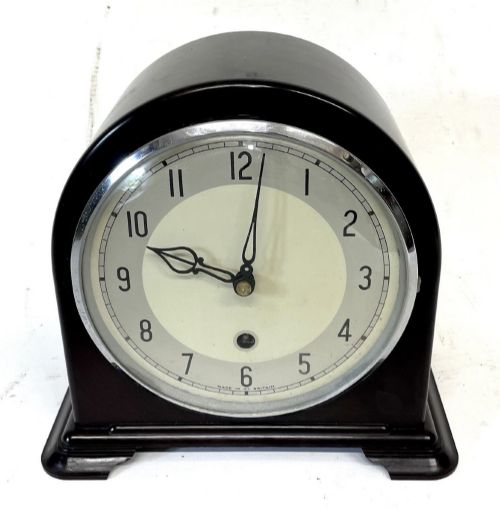


Retro Desk Clock
These retro desk clock designs combine period materials and mechanical movements to sit on a working surface.
Retro Desk Clock
A retro desk clock brings twentieth-century styling to a table, mantel or workspace. The pieces here span the 1920s through to the 1960s, capturing decades of domestic and institutional timekeeping.
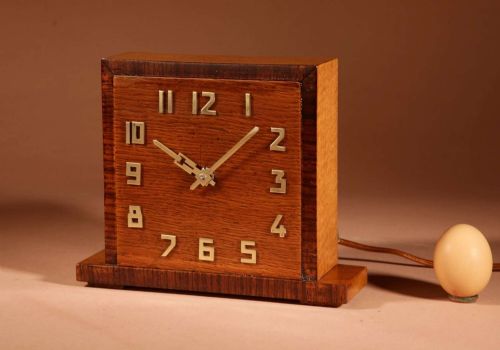
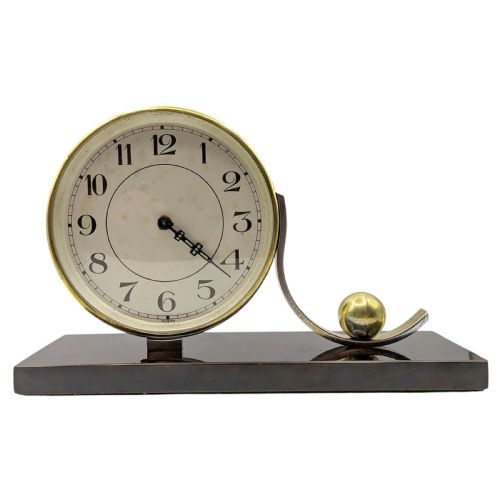
Art Deco examples dominate the selection, often pairing geometric wooden cases with contrasting metals. Alongside these sit military mess clocks, promotional pieces and mid-century modern designs.
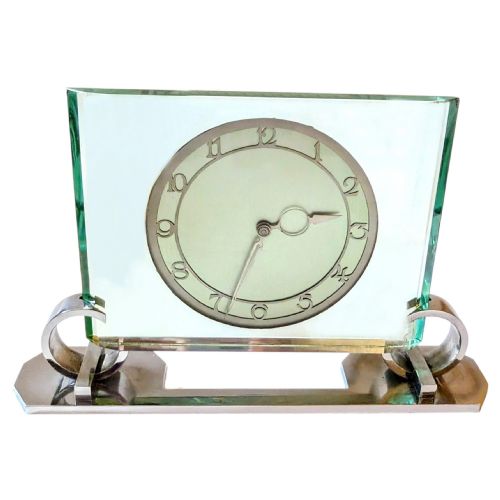
Forms vary from compact alarm clocks to substantial chiming mantel clocks and desk sets incorporating barometers. Bakelite bases, chrome trim and mirrored glass give these objects their distinct period presence.
How they were made
Manufacturers shaped early plastics like Bakelite into robust cases while mounting movements on brass or chrome frames. Wood variants utilise walnut, oak and rosewood veneers finished to show natural grain patterns.
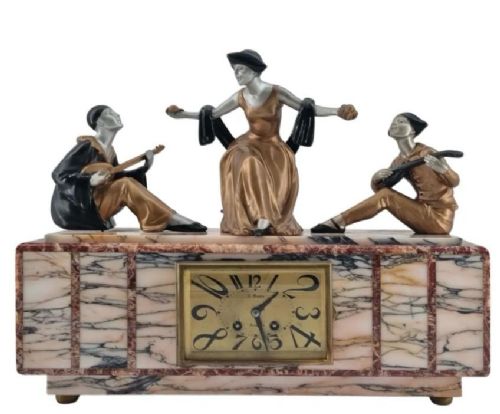
Dials employ glass covers protecting metal hands, with some examples adding mirrored panels or marble surrounds. Movements rely on mechanical wind-up mechanisms, 8-day systems or early electrical and electro-mechanical drives.
A Vitascope electric moving ship clock brings animated maritime motion directly to the desk.
What varies in quality
The distinction lies in the integration of materials and the sophistication of the movement. Pieces featuring multi-component cases, such as combined clock and barometer sets or specialised world time dials, represent more complex manufacturing.
Execution shows in the crispness of chrome plating, the depth of wooden veneers, and whether makers utilised jewelled escapements in their mechanical movements.
Smiths Clockmakers·Elliott of London·Jaeger LeCoultre·Kienzle·Bayard
The Retro Desk Clock Glossary
- Bakelite
- An early form of synthetic phenol-formaldehyde resin used extensively for moulded clock cases. It provides a durable, smooth surface characteristic of the period.
- 8-Day Movement
- A mechanical clock movement designed to run for eight days on a single winding. This reduces the frequency of intervention required by the user.
- Escapement
- The mechanical linkage that regulates the release of power in a clock movement. Higher quality versions often incorporate functional jewels to reduce friction.
- Art Deco
- A design style spanning the 1920s and 1930s characterised by geometric shapes, streamlined forms and modern industrial materials. It strongly influences the silhouettes seen in these timepieces.
Retro Desk Clock: Frequently Asked Questions
How do I wind a mechanical desk clock?
Insert the key into the winding arbor on the dial or backplate and turn it gently until resistance is felt. Avoid over-winding to protect the internal spring mechanism.
Ensure the clock rests on a level surface so the balance wheel or pendulum swings evenly after winding.
What is an 8-day movement?
An 8-day movement is a mechanical system engineered to run continuously for over a week before needing another wind. This reduces wear on the mainspring.
These movements are common in higher-specification desk and mantel clocks from the period.
How do I identify an Art Deco clock?
Art Deco clocks feature geometric forms, stepped cases and materials like chrome, mirrored glass and Bakelite. Symmetrical layouts and streamlined silhouettes define the look.
Many examples from this group date from the 1920s and 1930s.
Where were military mess clocks used?
Military mess clocks served in officers' messes and administrative offices during periods like the Second World War. They prioritized clear, legible dials and robust housings.
Markings such as broad arrows often denote official government or service ownership.