


Vintage Clock Garniture
A vintage clock garniture brings a striking centrepiece and matching side pieces together to complete a room.

Vintage Clock Garniture
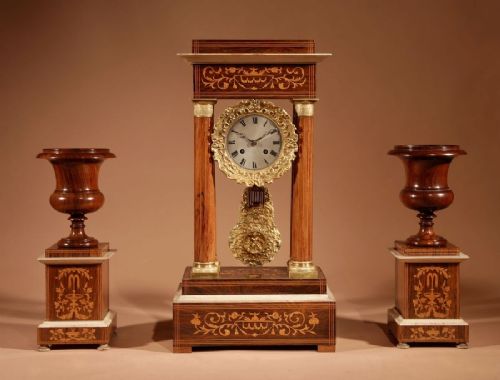
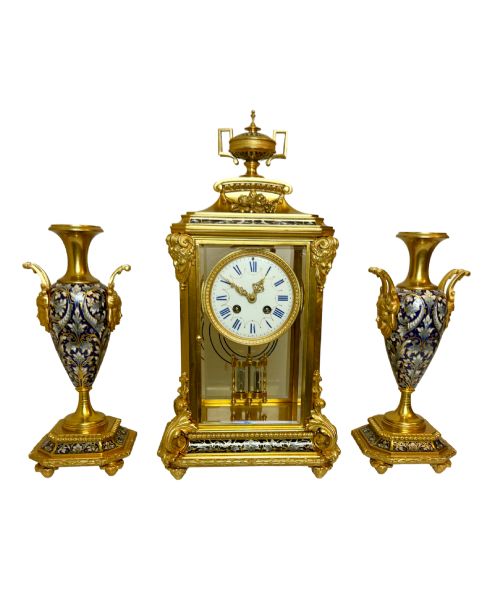
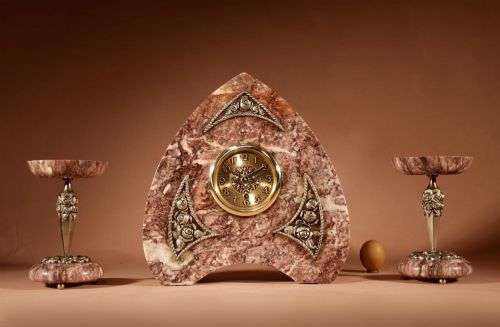
When you search for a vintage clock garniture, you are looking at matched three-piece mantel sets comprising a central clock flanked by two symmetrical side pieces such as urns, candelabras or sculptural figures. These sets originate primarily from French workshops spanning the nineteenth century through the art deco period.
The most common versions on this page pair a marble or onyx mantel clock with matching side garnitures, often incorporating brass, gilt bronze or ormolu mounts. Victorian and art deco examples dominate the selection, ranging from ornate nineteenth-century Revival styles to sleek 1920s geometric designs.
Materials and construction
Maker studios shaped heavy natural materials like marble, onyx and slate into architectural clock bodies and matching garniture bases. These stone elements were frequently combined with cast brass, gilt bronze, ormolu and champleve enamel to create decorative contrast and intricate detailing.
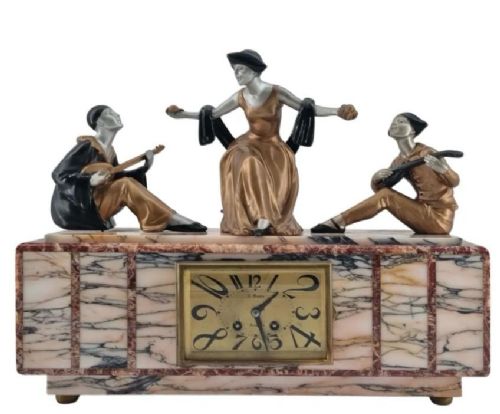
Movements were typically mechanical eight-day mechanisms paired with enamelled dials and protective glass bezels. Sculptural elements in spelter or silver-plated bronze were cast to form figural subjects like animals, Pierrot figures or cherubs.
Materials span natural stone varieties like red marble, green onyx and grey breccia paired with brass, spelter and gilt bronze.
Factors of quality
Quality in a vintage clock garniture rests upon the precision of the casting work and the grade of the stone body. Heavier marbles, genuine ormolu rather than simple brass, and crisply chased bronze mounts distinguish finer sets from standard production pieces.
The artistic merit of accompanying figural sculptures or paired garnitures dictates the upper tier of the range. Sets featuring named sculptors or integrated candelabras display a higher degree of execution across all three matched components.
Sega·Michel Decoux
The Vintage Clock Garniture Glossary
- Garniture
- A set of ornamental objects designed to match and be displayed together, typically consisting of a central clock and two side pieces. These arrangements create visual balance on a mantelpiece.
- Portico clock
- A distinct architectural clock style featuring supporting columns framing the pendulum. This classical form was popular in nineteenth-century French sets.
- Ormolu
- Finely ground high-carat gold applied to a bronze base using a mercury amalgamation technique. It provides a warm, durable metallic finish found on better period pieces.
- Spelter
- A zinc alloy commonly used as a cheaper alternative to bronze for figural castings. It accepts patination well but is softer than true bronze.
- Champleve enamel
- A technique where troughs are dug into a metal surface and filled with vitreous enamel before firing. It adds colourful decorative patterns to clock faces and mounts.
Vintage Clock Garniture: Frequently Asked Questions
What is a clock garniture?
A clock garniture is a matched set consisting of a mantel clock and two accompanying side ornaments, such as urns or candelabras. They were designed to sit together on a fireplace mantel or sideboard to create a unified decorative scheme.
The side pieces repeat the materials, motifs and finishes of the central clock to tie the arrangement together. Victorian and art deco examples frequently use marble, onyx and bronze for this balanced effect.
How were garniture sets used?
These sets served as grand decorative statements in nineteenth- and early twentieth-century drawing rooms and parlours. The central clock kept time while the side pieces framed it to anchor the mantelpiece.
Today they function similarly as decorative focal points in living spaces and dining rooms. The side pieces can be arranged symmetrically around the clock or displayed elsewhere in the room.
How do I date a marble clock set?
Dating relies on the stylistic clues of the marble body, dial design and metal mounts. Nineteenth-century pieces often feature ornate Victorian Revival styles, while 1920s sets display distinct art deco geometry or figural sculptures.
Materials also shift across eras, moving from pink and white nineteenth-century marbles to grey breccia and green onyx favoured in later art deco designs. Movement types and signature styles help narrow down the decade of manufacture.
How do I care for marble and bronze?
Maintenance requires gentle dusting with a soft, dry cloth to protect stone surfaces and metallic finishes. Avoid using harsh chemical cleaners, abrasives or water on antique marble, enamel dials and gilt ormolu mounts.
Mechanical clock movements benefit from professional servicing every few years to keep the eight-day strike mechanism running smoothly. Positioning the set away from direct heat sources protects the stone and internal springs.