


Blue Enamel Clock
A blue enamel clock brings rich colour and precise metalwork to a mantelpiece, combining bright vitreous surfaces with patinated bronze or brass.

Understanding the blue enamel clock
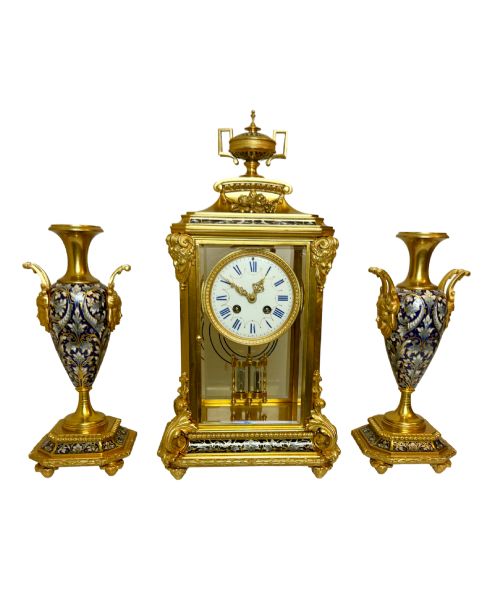
A blue enamel clock is a timepiece featuring vitreous enamel dial faces or decorative panels in various shades of blue. The examples gathered under the blue enamel clock search phrase span the Victorian era, the Belle Epoque, and the Arts and Crafts movement.
Most items appearing in this category originate from French workshops or British designers working at the turn of the twentieth century. Forms range from heavy mantel clocks and crystal regulators to portable carriage clocks housed in fitted cases.
Buyers will encounter decorative styles that stretch from French Rococo Revival and Napoleon III designs to geometric Arts and Crafts metalwork. These pieces utilise contrasting materials like ormolu, gilt brass, pewter, and glass to frame the central blue enamel components.

Materials and construction
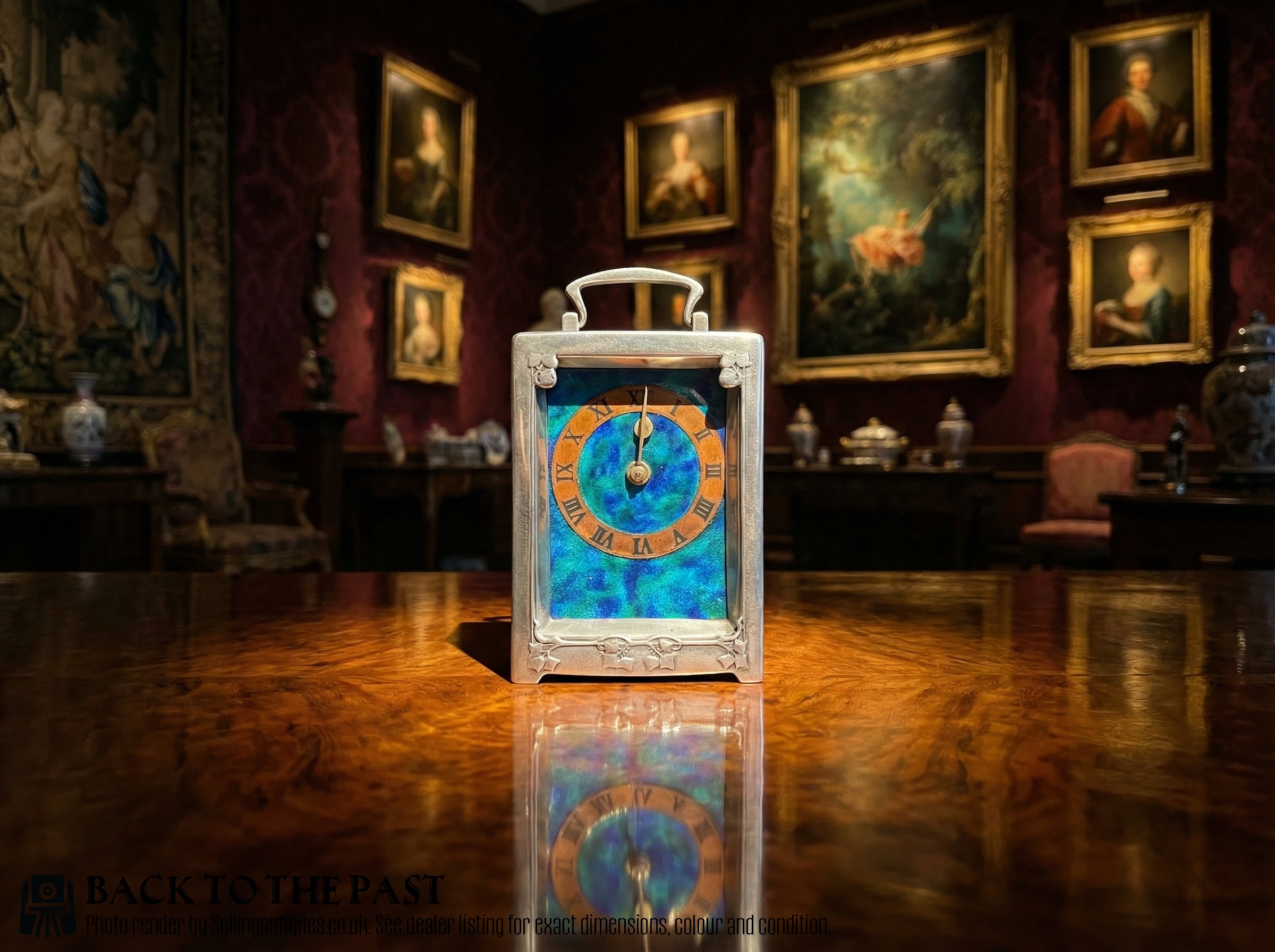
The construction of a blue enamel clock relies on the fusion of glass powder to metal bases through high-temperature firing. Artisans applied vitreous enamel onto copper, silver, or brass panels, sometimes utilising champlevé techniques where recessed cells hold the coloured paste.
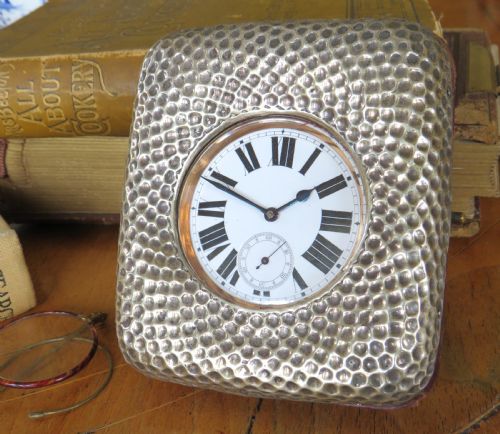
Casework incorporates cast bronze, gilt brass, ormolu, and Tudric pewter, often combined with bevelled glass panels to reveal the internal movement. Dials feature hand-painted floral motifs or engraved details set beneath protective glass.
Retail Price Guide 2026
Typical UK retail prices for blue enamel clock, calculated from the Sellingantiques database of over a million retail prices indexed since 2003. This retail price guide relies exclusively on Sellingantiques data; no external sources or auction records are used, so the figures do not describe the wider market.
Factors that distinguish quality
Quality in a blue enamel clock lies in the clarity and depth of the vitreous surface and the crispness of the surrounding metal casting. Superior examples display smooth, evenly fired enamel free from chipping or excessive pitting, alongside finely chased ormolu and engraved brass cases.
The integration of the movement within the decorative housing dictates the overall refinement of the piece. Makers who employed heavy cast bronze, signed movements, and meticulous hand-engraving produced items that retain structural integrity and decorative impact.
Margaine Of France·Archibald Knox for Liberty & Co
The Blue Enamel Clock Glossary
- Vitreous enamel
- A material made by fusing powdered glass to a metallic substrate at high temperatures. This process creates a durable, glossy coloured surface that resists fading.
- Ormolu
- Gilded bronze applied to ornamental objects, particularly French furniture and clock cases. The technique involves coating cast bronze with a mercury and gold amalgam.
- Champlevé
- An enamelwork technique where troughs or cells are hollowed out of a metal surface and filled with vitreous paste before firing. The metal partitions remain visible between the coloured areas.
- Carriage clock
- A small, spring-driven timekeeper designed for travel during the nineteenth century. These clocks typically feature glass panels and a swinging carrying handle on top.
Frequently Asked Questions
How do I wind a vintage carriage clock?
Wind a vintage carriage clock by inserting the key into the arbour located on the backplate or underside of the movement. Turn the key gently until you feel resistance, taking care not to overwind the mainspring.
Keep the original key with the clock if possible, as replacement keys require precise fitting to avoid damaging the winding squares.
Where should I place a heavy mantel clock?
Position a heavy mantel clock on a stable, level surface such as a fireplace mantel, sideboard, or sturdy table. Ensure the furniture supports the substantial weight of bronze, brass, and glass housing without tilting.
Avoid areas exposed to direct sunlight or damp conditions, which can affect the metal patination and delicate enamel surfaces over time.
How can I tell a Victorian clock from a later piece?
Examine the style of the case, the casting methods, and any maker marks stamped on the backplate of the movement. Victorian pieces often reflect historical revival styles like Rococo or Second Empire, utilising fire-gilt bronze and hand-engraved details.
Later Arts and Crafts items display simpler geometric lines, hammered pewter surfaces, and distinct signatures associated with specific workshops.
Can antique clocks be repaired if they stop working?
Professional horologists can service and repair antique clock movements by cleaning components, rebushing worn pivot holes, and adjusting the escapement. Mechanical clocks require periodic maintenance to function accurately.
Consult a specialist experienced in nineteenth-century French or British movements to preserve the original components and historical integrity of the piece.