


Small Brass Table Clock
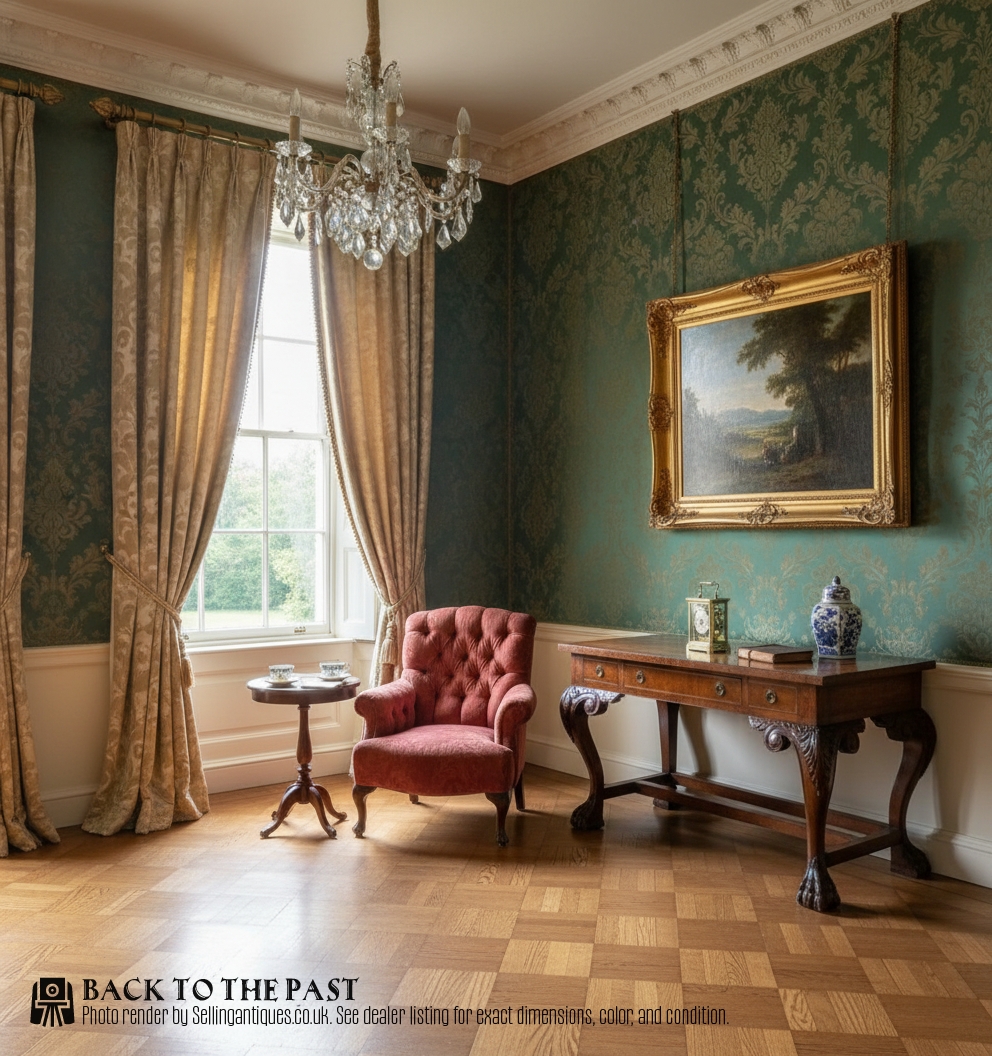
A small brass table clock brings meticulous mechanical timekeeping and warm metalwork into compact domestic spaces.
Small Brass Table Clock
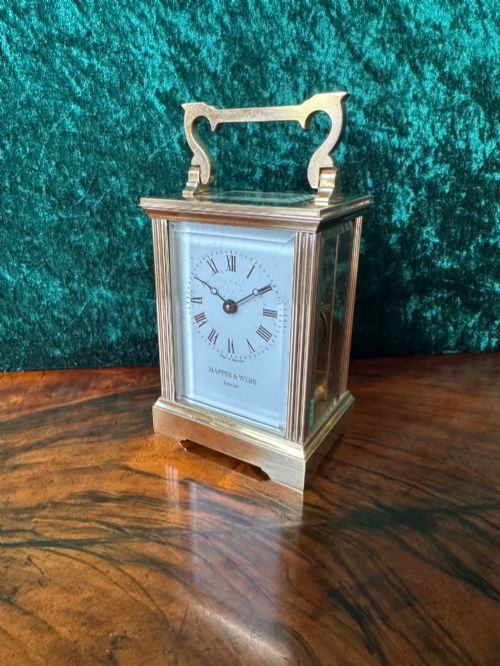
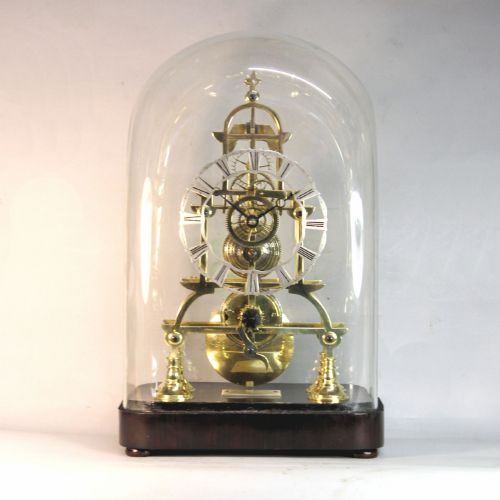
A small brass table clock is a portable timekeeper designed for desks, mantels and bedside surfaces, utilising metallic cases to house intricate wheel trains. These objects range from French carriage clocks with glass panels to English bracket clocks and miniature library timepieces.
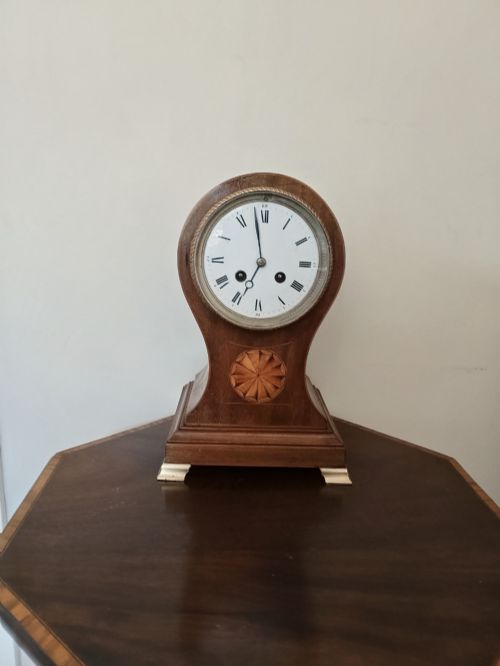
The pieces appearing on this page span the nineteenth century, the Regency period and the Edwardian era. Carriage clocks and four-glass mantel models predominate among the selections, alongside walnut, mahogany and ebonised wooden cases accented with brass or ormolu.
Buyers encounter French striking movements, English fusee mechanisms and simple eight-day platforms. Dial varieties include hand-painted enamel, silvered brass and Delft patterns, housed within architectural or balloon-shaped frames.
How they were made
Horologists constructed these mechanisms using brass plates, steel pivots and gear trains driven by mainsprings or fusee chains. Cabinets combined structural timber such as mahogany, walnut and oak with cast brass, gilt bronze and ormolu mounts.
Dials were formed from enamelled copper, silvered brass or porcelain, often featuring hand-painted numerals and delicate steel hands. Bevelled glass panels were fitted into brass carriage frames to permit all-around observation of the oscillating escapement.
What varies in quality
Quality rests in the crispness of the brass casting, the depth of gilding and the precision of the engraved detailing on the plates and dials. Heavy, fully engraved carriage clock cases and finely matted or silvered brass dials separate high workshop output from mass production.
The integrity of the internal movement governs long-term performance, where hand-finished fusee or platform escapements demonstrate superior mechanical execution compared to simpler mass-produced movements. Cabinetry also dictates worth, seen in well-figured mahogany, burr walnut or ebony veneers matched accurately across the case.
Mappin and Web·Richard Winter of Chieveley·Tiffany·Louis Recordon·Lenzkirch·Payne and Co·Perigal of London·Joseph Jump·Richard Co·J C Vickery·McCabe·Purvis of London·Perigal and Duterrau·Baldwin of Loughborough
The Small Brass Table Clock Glossary
- Fusee
- A conical pulley used in mechanical clocks to maintain even power as the mainspring unwinds. This device ensures consistent force reaches the escapement for better timekeeping accuracy.
- Escapement
- The mechanism that controls the release of power from the gear train and gives impulses to the balance wheel or pendulum. It produces the characteristic ticking sound of the clock.
- Ormolu
- Finely ground high-carat gold mercury-gilded to a bronze or brass base object. This decorative surface treatment provides a rich metallic lustre on nineteenth-century clock mounts.
- Carriage clock
- A small, spring-driven timekeeper equipped with a carrying handle, originally built for travel by coach. They typically feature glass panels on all four sides to display the moving escapement.
- Four-glass clock
- A mantel timekeeper housed within a brass frame holding four bevelled glass panels. This design allows an unobstructed view of the mechanical movement from front, back and sides.
Small Brass Table Clock: Frequently Asked Questions
How do I wind a small brass table clock?
Wind the mainspring using the matching key inserted into the dial or back plate arbor until gentle resistance indicates a full state. Take care not to overwind, as this can strain the internal spring.
Move the hands only in the permitted direction specified by the escapement type to avoid damaging delicate gear teeth.
What is the difference between a timepiece and a clock?
In horological terms, a timepiece measures and displays the hours and minutes without including a striking or chiming mechanism. Clocks with striking trains contain additional gear trains and hammers to ring bells or gongs on the hour or half-hour.
Both forms share similar cabinet styles, but timepieces operate with simpler internal layouts.
How do I care for a brass clock case?
Dust the brass and glass surfaces regularly with a soft, dry cloth to prevent particulate buildup in crevices and hinges. Avoid chemical polishes, which can strip thin gilding or discolour delicate ormolu and lacquer.
Keep the clock away from direct sunlight, heating vents and damp walls to protect internal wooden veneers and steel components.
Can these clocks be used for daily timekeeping?
These historical mechanisms function reliably when serviced properly by a qualified horologist every few years. Due to their age, they require stable placement on a level surface away from vibrations.
Setting them up with care ensures accurate daily performance while preserving fragile antique components.