



Ormolu Clock Garniture
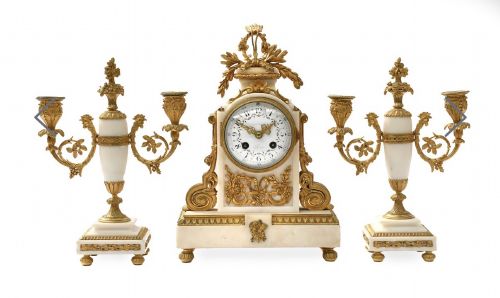
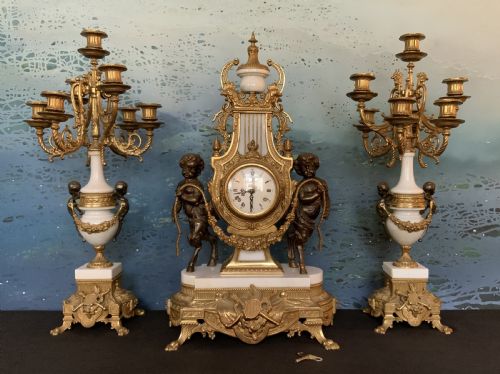
An ormolu clock garniture combines a central mantel timepiece with matched flanking candelabras or urns, creating a balanced decorative display.
Ormolu Clock Garniture
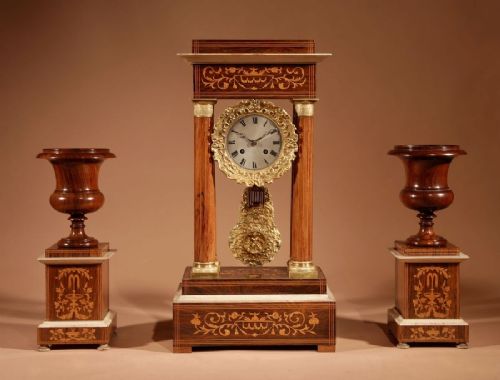
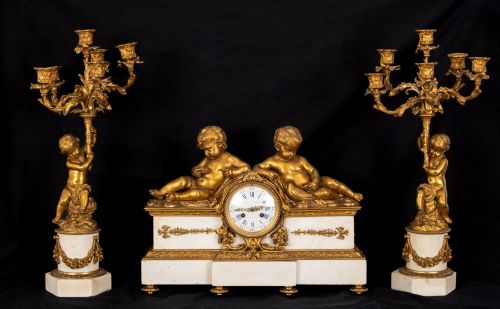
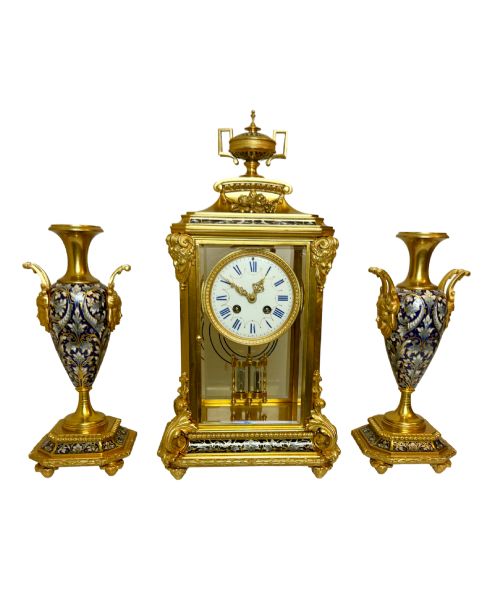
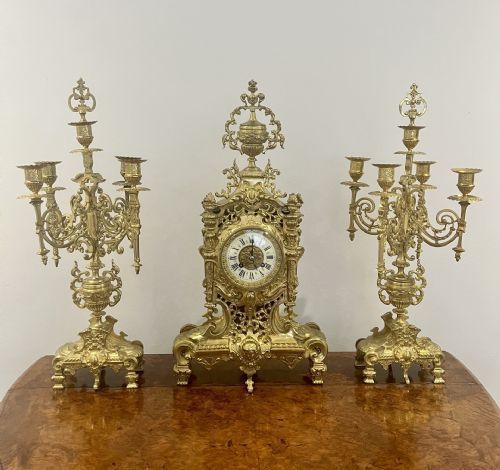
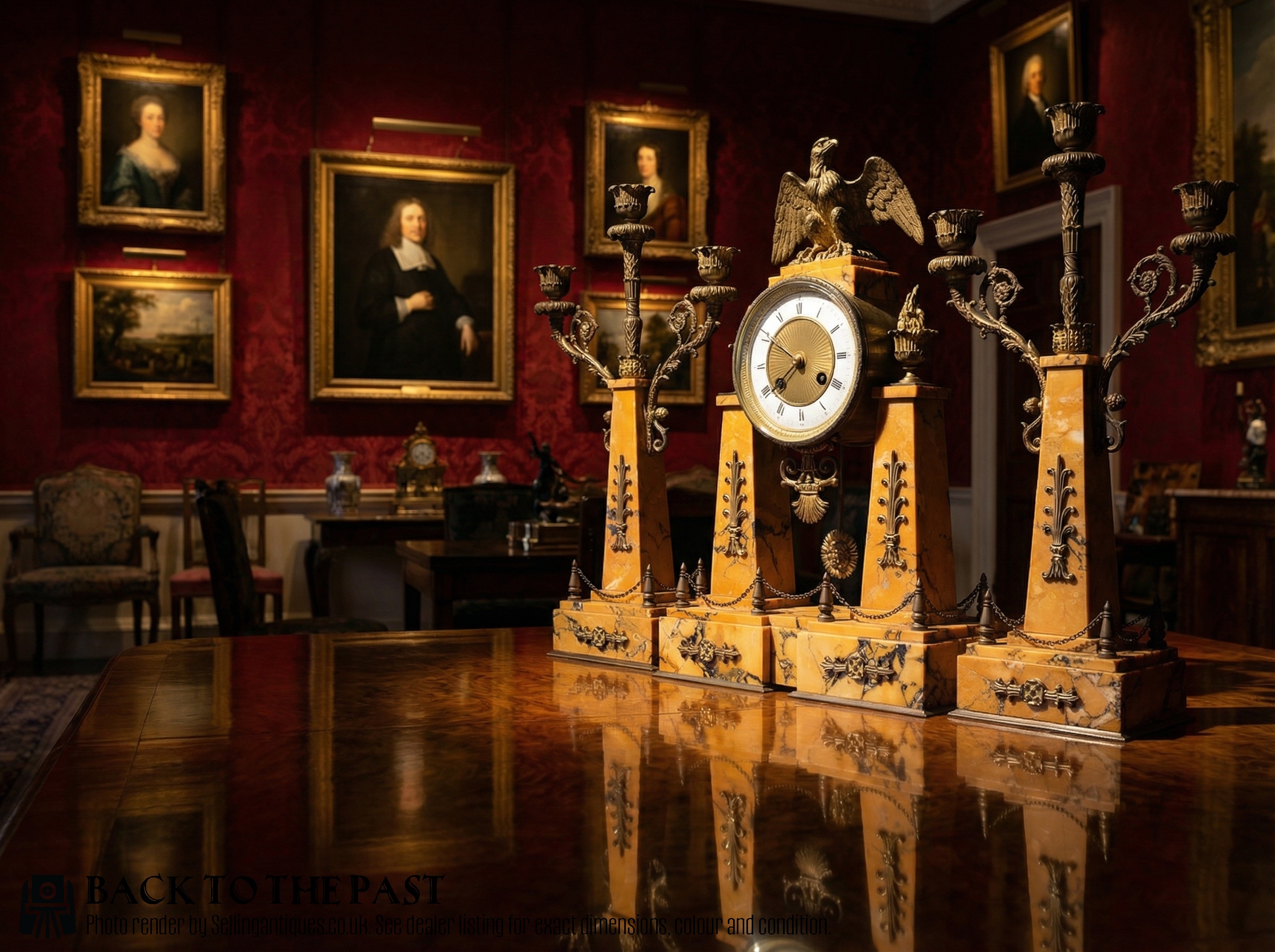
When searching for an ormolu clock garniture, a buyer encounters matching three-piece or multi-piece sets designed for mantelpieces and console tables. These groupings comprise a primary striking clock accompanied by twin candelabras, vases or urns sharing identical decorative motifs.
The prevailing examples on this page originate from nineteenth-century France, spanning periods from the reign of Louis Philippe through the Victorian era and the late 1800s. Makers frequently employed Louis XVI revival styles, French rococo and second empire aesthetics to achieve ornate symmetry.
Sets integrate functional timekeeping with sculptural metalwork, often housing eight-day movements alongside elaborate figures, cherubs or architectural housings. Buyers select these ensembles to anchor formal interior schemes with period ornamentation.
What Varies in Quality
The crispness of the bronze chasing dictates the visual success of the metalwork, separating sharply defined acanthus leaves and figural drapery from softened, secondary casts. Hand-chiseling applied after casting deepens the shadows and refines the contours of cherubs, urns and floral swags.
Material selection divides standard commercial production from master workshops, particularly in the weight of the marble plinths and the purity of the gilt bronze layer. Integrated movements signed by established makers command higher regard than unsigned generic mechanisms.
Proportion and harmony across the three pieces determine the overall cohesiveness of a garniture set, ensuring the central clock and its flanking candelabras share identical patination, gilding wear and decorative detailing.
Ormolu Clock Garniture Retail Price Guide 2026
Typical asking prices for ormolu clock garniture among the pieces listed under this phrase on Sellingantiques today, from the lower quarter to the upper quarter. They describe what is for sale here now, not the wider market.
Listings feature nineteenth-century French clock sets combining gilt bronze, marble, porcelain panels and enamel dials within Louis XVI and Rococo revival styles.

Henry Dasson·A D Mougin·H Luppens Paris·Vincenti of Paris·Samuel Marti of Paris·Japy Freres
The Ormolu Clock Garniture Glossary
- Ormolu
- Gilt bronze produced by applying a mercury and gold mixture to a bronze base and heating until the mercury vaporised. This historic technique leaves a warm, matte golden finish on nineteenth-century metalwork.
- Garniture
- A matching set of ornamental objects designed to be displayed together on a mantelpiece or sideboard. Typically comprises a central clock flanked by two matching candelabras, vases or urns.
- Champleve
- An enamelling technique where troughs or cells are hollowed out of the metal surface and filled with vitreous enamel powder before firing. The resulting coloured patterns sit flush with the surrounding bronze.
- Portico clock
- A mantel clock housed within a architectural frame supported by four or more columns. These structures often feature marble bases and prominent ormolu capitals.
- Bleu de Roi
- A deep, rich royal blue ceramic glaze utilised on porcelain panels and urns mounted within French clock sets. The shade provides a striking contrast against bright gilt bronze mounts.
Ormolu Clock Garniture: Frequently Asked Questions
What is an ormolu clock garniture?
An ormolu clock garniture is a matching decorative set designed for display, consisting of a central mantel clock accompanied by two matching side pieces such as candelabras or urns.
The ensemble shares uniform materials, styles and motifs, creating a balanced and formal decorative arrangement for a room.
How do you clean ormolu?
Cleaning ormolu requires gentle dusting with a soft dry brush to prevent damage to the delicate gold-coloured surface layer.
Harsh commercial metal polishes, abrasives or liquid cleaners must be avoided entirely, as they strip away the historic mercury gilding and expose the base bronze underneath.
Where were these clock sets made?
The vast majority of these clock garnitures were manufactured in France during the nineteenth century, particularly in Paris workshops and industrial centres.
French bronze-makers, porcelain factories and clockmakers collaborated to produce integrated sets reflecting revival styles like Louis XVI and Rococo.
How do you wind a nineteenth-century clock?
Nineteenth-century mechanical clocks utilise a dedicated winding key inserted into apertures on the dial face to tension the internal springs or lift the driving weights.
Careful rotation must match the resistance of the movement, ensuring the pendulum is left hanging straight to maintain correct timekeeping.