


Putti Mantel Clock
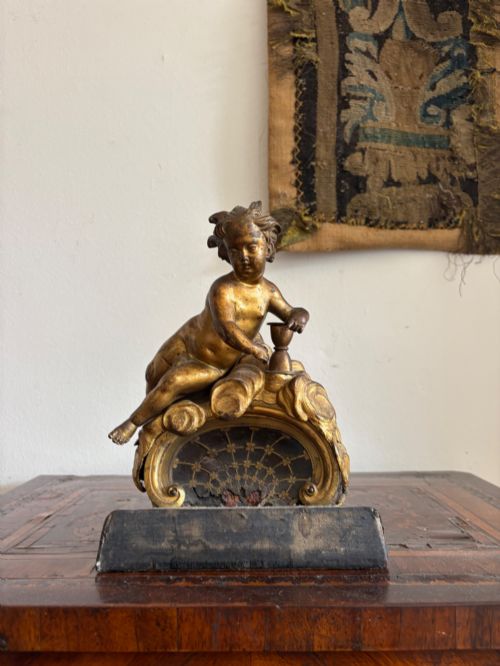
A putti mantel clock brings together classical figural sculpture and precision timekeeping, typically featuring winged cherubs in ormolu, bronze, and marble.
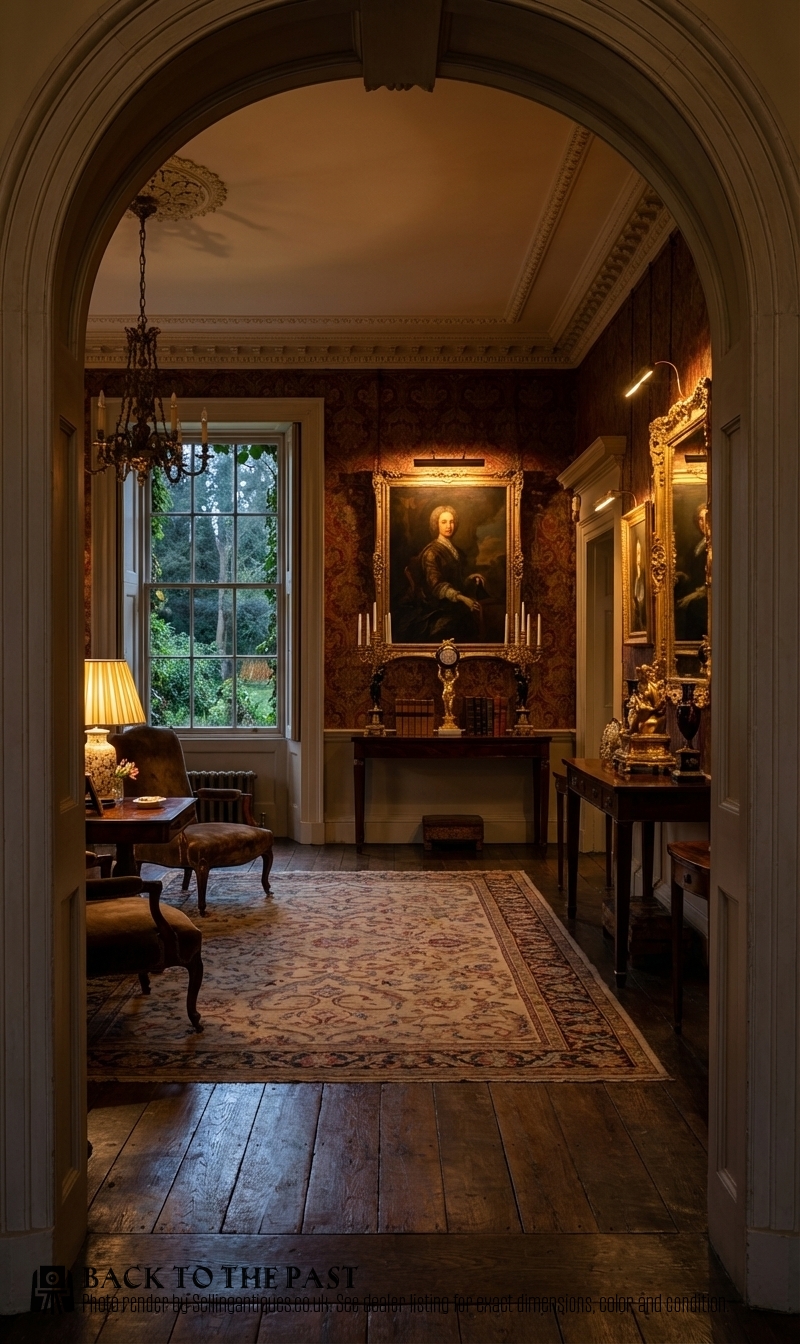
Putti Mantel Clock
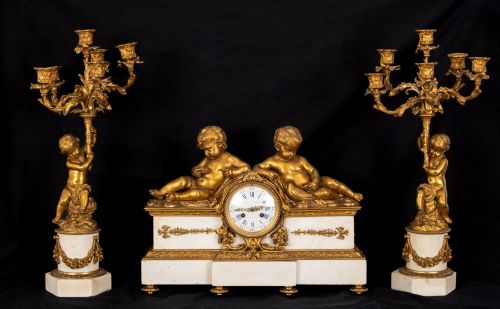
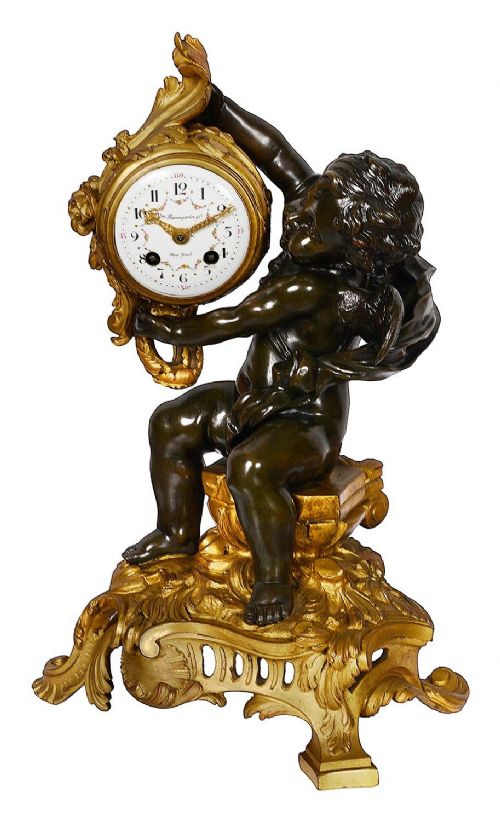
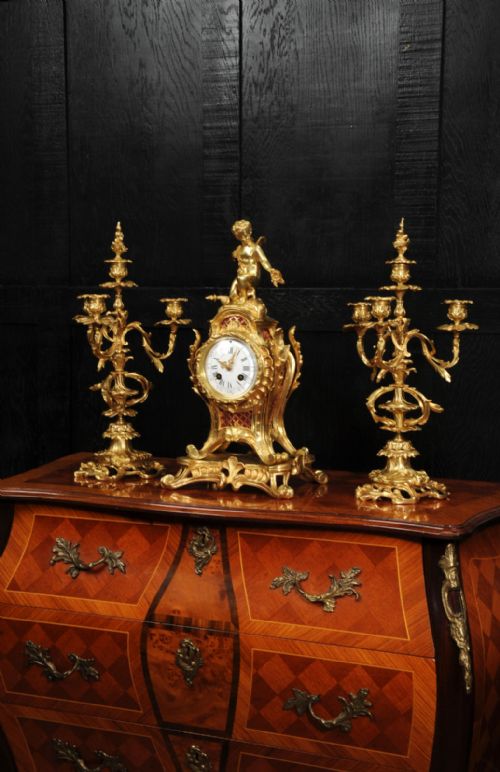
A putti mantel clock centres on sculptural figures of cherubs, cupids, or putti interacting with the clock case, often flanked by matching candelabras in complete garniture sets. These pieces date predominantly from the nineteenth century, reflecting the prevailing interest in French revival styles such as Rococo and Louis XVI.
The version most commonly met on this page is a French ormolu and white marble timepiece, where cast figures recline, sit, or point towards an enamel dial. British examples also appear, featuring gilt bronze or ormolu mounts paired with traditional fusee movements.
Beyond standalone mantel clocks, the listings encompass related forms including clock garnitures, table clocks, and decorative finial mounts. These objects demonstrate the nineteenth-century preference for elaborate, figural domestic timepieces.
Materials and construction
Makers constructed these clocks using cast ormolu and gilt bronze for the figural putti and ornamental mounts, mounting them upon bases of white marble, red marble, or black slate. Ormolu application required the skilled amalgamation of mercury and gold to achieve a durable, lustrous gilt surface on bronze elements.
Bronze cupids hold time steady while seasonal putti act out the turning calendar.
Assessing quality in the metalwork and marble
The choice and preparation of the housing materials similarly divide the range, with solid white or red marble bases and heavy, thick-gauge gilt bronze representing the higher standard. Lighter cast metal cases and simpler slate or painted substitutes occupy the more utilitarian end of the spectrum.
Le Roy Paris·Leon Message·Jollet et Cie·Phillipe H Mourey·Bellenot Paris·John Bennett Cheapside London·Henry Berkeley Square London
The Putti Mantel Clock Glossary
- Putti
- Plumed or unplumed infant figures, often representing cherubs or cupids, frequently cast in bronze or ormolu to adorn clock cases. They derive from classical art and feature prominently in Renaissance and nineteenth-century revival design.
- Ormolu
- Finely chopped gold amalgamated with mercury and applied to a bronze base through heat diffusion, creating a rich golden surface finish. This technique was widely practiced by nineteenth-century French bronziers.
- Garniture
- A set comprising a central mantel clock accompanied by matching decorative objects such as candelabras or urns. These matched groupings were designed to be displayed together on a mantelpiece or sideboard.
- Fusee
- A conical pulley used in spring-driven clocks to equalize the diminishing power of the mainspring as it unwinds. It ensures even tension is delivered to the gear train for more accurate timekeeping.
- Enamel
- A glassy substance fused to a copper or metal dial plate through high-temperature firing, providing a smooth white ground for painted clock numerals. Enamel dials require careful handling to prevent chipping or hairline cracking.
Putti Mantel Clock: Frequently Asked Questions
What is a putti mantel clock?
A putti mantel clock is a domestic timekeeper decorated with sculptural figures of winged cherubs or cupids. These figures are typically cast in bronze or ormolu and integrated into the clock case or base.
Such pieces date mainly from the nineteenth century and reflect French revival aesthetics. They range from simple tabletop timepieces to large architectural clock sets.
How do clock garnitures work?
A clock garniture pairs a central mantel clock with matching side ornaments, most commonly a pair of candelabras. These sets were manufactured to create a balanced decorative display on a fireplace mantel.
The individual pieces share matching materials, such as ormolu mounts and white marble bases, along with consistent stylistic motifs like putti and foliage.
How do I identify French nineteenth-century styles?
Nineteenth-century French clocks often draw upon earlier court aesthetics, particularly Louis XVI and Rococo revival designs. Look for asymmetrical scrolling foliage in Rococo pieces or symmetrical classical urns, ribbons, and swags in Louis XVI examples.
The presence of cast putti, fire-gilded ormolu, and white enamel dials further points to this period of manufacturing.
How do I care for marble and ormolu?
Marble and ormolu require gentle cleaning with a dry or very slightly damp microfiber cloth to remove dust. Avoid using chemical cleaners, polishes, or abrasive cloths, which can strip the thin gold layer of the ormolu.
Keep the clock away from direct sunlight and sources of heat to protect both the natural stone and the internal mechanical movement.